• Wyszukiwanie zaawansowane
  • Kategorie
  • Kategorie BISAC
  • Książki na zamówienie
  • Promocje
  • Granty
  • Książka na prezent
  • Opinie
  • Pomoc
  • Załóż konto
  • Zaloguj się

Rock-Forming Minerals in Thin Section » książka


zaloguj się | załóż konto
Logo Krainaksiazek.pl

koszyk

konto

szukaj
topmenu
Księgarnia internetowa
Szukaj
Książki na zamówienie
Promocje
Granty
Książka na prezent
Moje konto
Pomoc
 
 
Wyszukiwanie zaawansowane
Pusty koszyk
Bezpłatna dostawa dla zamówień powyżej 20 złBezpłatna dostawa dla zamówień powyżej 20 zł

Kategorie główne

• Nauka
 [2952079]
• Literatura piękna
 [1850969]

  więcej...
• Turystyka
 [71058]
• Informatyka
 [151066]
• Komiksy
 [35579]
• Encyklopedie
 [23181]
• Dziecięca
 [620496]
• Hobby
 [139036]
• AudioBooki
 [1646]
• Literatura faktu
 [228729]
• Muzyka CD
 [379]
• Słowniki
 [2932]
• Inne
 [445708]
• Kalendarze
 [1409]
• Podręczniki
 [164793]
• Poradniki
 [480107]
• Religia
 [510956]
• Czasopisma
 [511]
• Sport
 [61267]
• Sztuka
 [243299]
• CD, DVD, Video
 [3411]
• Technologie
 [219640]
• Zdrowie
 [100984]
• Książkowe Klimaty
 [124]
• Zabawki
 [2281]
• Puzzle, gry
 [3363]
• Literatura w języku ukraińskim
 [258]
• Art. papiernicze i szkolne
 [8020]
Kategorie szczegółowe BISAC

Rock-Forming Minerals in Thin Section

ISBN-13: 9789401071451 / Angielski / Miękka / 2011 / 220 str.
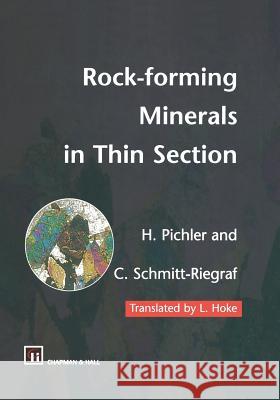
Hans Pichler; Cornelia Schmitt-Riegraf
Rock-Forming Minerals in Thin Section Pichler, Hans 9789401071451 Springer - książkaWidoczna okładka, to zdjęcie poglądowe, a rzeczywista szata graficzna może różnić się od prezentowanej.

Rock-Forming Minerals in Thin Section

ISBN-13: 9789401071451 / Angielski / Miękka / 2011 / 220 str.

Hans Pichler; Cornelia Schmitt-Riegraf
cena 603,81
(netto: 575,06 VAT:  5%)

Najniższa cena z 30 dni: 578,30
Termin realizacji zamówienia:
ok. 22 dni roboczych
Dostawa w 2026 r.

Darmowa dostawa!

Identificationof rock-forming minerals in thin section is a key skill needed by all earth science students and practising geologists. This translation of the completely revised and updated German second edition (by Leonore Hoke, Institute of Geological and Nuclear Sciences, New Zealand) provides a comprehensive guide to identifying 140 of the most important rock-forming mineral species.
The book is divided into three main parts. Part A is a practical guide to the fundamentals of crystal optics, polarization microscopy and the practical use of microscopes. Part B gives a detailed description of the characteristic optical features, special features, and the paragenesis of the most common rock-forming minerals. This well-illustrated part is divided into opaque minerals, isotropic, uniaxial and optical biaxial mineral groups. Part C contains identification tables for the minerals and diagrams showing the international classification of magmatic rocks, as well as a colour plate section showing crystal forms of minerals.
The book will provide an invaluable guide to all undergraduate earth scientists, as well as to professional geologists requiring an overview of mineral identification in thin section.


Kategorie:
Nauka, Archeologia
Kategorie BISAC:
Science > Earth Sciences - Geology
Science > Earth Sciences - Mineralogy
Science > Chemia - Fizyczna
Wydawca:
Springer
Język:
Angielski
ISBN-13:
9789401071451
Rok wydania:
2011
Wydanie:
1997. Softcover
Ilość stron:
220
Waga:
0.46 kg
Wymiary:
25.3 x 17.93 x 1.47
Oprawa:
Miękka
Wolumenów:
01

A Optical Crystallography.- 1 The polarizing microscope.- 1.1 Microscope components and their function.- 1.2 Accessory equipment.- 1.3 Adjustment of the microscope.- 1.3.1 Centring the condensing lens.- 1.3.2 Centring the objective.- 2 Orthoscopic observations.- 2.1 Observations with one polarizer.- 2.1.1 Light impervious (opaque) minerals and substances.- 2.1.2 Transparent minerals and substances.- 2.1.2.1 Characteristic crystal shapes.- 2.1.2.2 Cleavage.- 2.1.2.3 Colour and pleochroism.- 2.1.2.4 Refractive index: relief, chagrin, and the Becke line.- 2.2 Observations under crossed polars.- 2.2.1 Passage of light through isotropic media.- 2.2.2 Passage of light through anisotropic media.- 2.2.2.1 Birefringence and polarization.- 2.2.2.2 The indicatrix model.- 2.2.2.3 Optical character of elongation.- 2.2.2.4 Parallel, symmetric and oblique extinction.- 2.2.2.5 Twinning.- 3 Observations under conoscopic light.- 3.1 Introduction.- 3.2 Conoscopic examination of optically uniaxial crystals.- 3.2.1 Conoscopic images of uniaxial crystals in different orientations.- 3.2.2 Determination of the optical character of uniaxial crystals.- 3.3 Determination of the optical character of biaxial minerals in the conoscopic light path.- 3.3.1 Conoscopic images of biaxial minerals in different orientations.- 3.3.2 Identification of the optical character of biaxial crystals.- 3.3.3 Estimation of the optic axial angle 2V.- 3.3.4 Determination of optic axial angles 2V in oblique section.- Summary 1: Mineral identification with the polarizing microscope.- Summary 2: Protocol of mineral identification in thin section.- B Optical Mineralogy.- 1 Opaque minerals and substances.- 1.1 Magnetite.- 1.2 Ilmenite.- 1.3 Hematite.- 1.4 Pyrite.- 1.5 Pyrrhotite.- 1.6 Graphite.- 1.7 Carbonaceous substances.- 2 Optically isotropic (also pseudocubic) minerals and amorphous substances.- 2.1 Perovskite.- 2.2 Spinel group.- 2.3 Pyrochlore and koppite.- 2.4 Garnet group.- 2.4.1 Pyrope.- 2.4.2 Almandine.- 2.4.3 Grossularite.- 2.4.4 Melanite.- 2.5 Leucite.- 2.6 Sodalite group.- 2.7 Analcite.- 2.8 Cristobalite.- 2.9 Fluorite.- 2.10 Amorphous minerals, glass and cryptocrystalline material.- 2.10.1 Limonite.- 2.10.2 Opal.- 2.10.3 Rock-glass.- 3 Optically uniaxial minerals.- 3.1 Minerals which are optically uniaxial positive.- 3.1.1 Rutile.- 3.1.2 Cassiterite.- 3.1.3 Zircon.- 3.1.4 Xenotime.- 3.1.5 Melilite group.- 3.1.6 SiO2 group.- 3.1.6.1 Quartz.- 3.1.6.2 Chalcedony.- 3.1.6.3 Tridymite.- 3.1.7 Chabazite.- 3.2 Minerals with uniaxial negative character.- 3.2.1 Anatase.- 3.2.2 Trigonal carbonate group.- 3.2.2.1 Calcite.- 3.2.2.2 Dolomite.- 3.2.2.3 Magnesite.- 3.2.2.4 Siderite.- 3.2.3 Corundum.- 3.2.4 Vesuvianite.- 3.2.5 Tourmaline.- 3.2.6 Apatite.- 3.2.7 Beryl.- 3.2.8 Nepheline.- 3.2.9 Scapolite group.- 3.2.10 Apophyllite.- 3.2.11 Cancrinite.- 4 Biaxial crystals.- 4.1 Olivine group.- 4.2 Pyroxene group.- 4.2.1 Orthopyroxene group: enstatite, bronzite, hypersthene.- 4.2.2 Clinopyroxenes.- 4.2.2.1 Diopside group.- 4.2.2.2 Augite group.- 4.2.2.3 Titanaugite.- 4.2.2.4 Pigeonite.- 4.2.2.5 Aegirine-augite series.- 4.2.2.6 Jadeite.- 4.2.2.7 Omphacite.- Determination of the maximum extinction angle for pyroxenes and amphiboles.- 4.3 Amphibole group.- 4.3.1 Actinolite group.- 4.3.2 Green (‘common’) hornblende.- 4.3.3 Brown hornblende.- 4.3.4 Glaucophane and crossite.- 4.3.5 Arfvedsonite and riebeckite.- 4.4 Mica group.- 4.4.1 Muscovite.- 4.4.2 Phengite.- 4.4.3 Lithionite series.- 4.4.3.1 Lepidolite.- 4.4.3.2 Zinnwaldite.- 4.4.4 Biotite series.- 4.4.4.1 Phlogopite.- 4.4.4.2 Biotite s.s..- 4.4.5 Oxybiotite.- 4.4.6 Titanbiotite.- 4.5 Stilpnomelane.- 4.6 Glauconite and celadonite.- 4.7 Talc.- 4.8 Chlorite group.- 4.8.1 Orthochlorite.- 4.8.2 Leptochlorite.- 4.9 Serpentine group.- 4.9.1 Antigorite.- 4.9.2 Chrysotile.- 4.10 Feldspar family.- 4.10.1 Alkali feldspars.- 4.10.1.1 Sanidine.- 4.10.1.2 Orthoclase.- 4.10.1.3 Anorthoclase.- 4.10.1.4 Microcline.- 4.10.2 Plagioclase series.- 4.11 Zeolite family.- 4.11.1 Fibrous zeolites.- 4.11.1.1 Natrolite.- 4.11.1.2 Mesolite.- 4.11.1.3 Thomsonite.- 4.11.1.4 Scolecite.- 4.11.1.5 Mordenite.- 4.11.1.6 Laumontite.- 4.11.2 Flaky zeolites.- 4.11.2.1 Heulandite.- 4.11.2.2 Stilbite.- 4.11.2.3 Epistilbite.- 4.11.3 Cubic zeolites.- 4.11.3.1 Phillipsite.- 4.11.3.2 Harmotome.- 4.12 Aenigmatite (cossyrite).- 4.13 Sphene (titanite).- 4.14 Topaz.- 4.15 Cordierite.- 4.16 Al2SiO5 group.- 4.16.1 Andalusite.- 4.16.2 Sillimanite.- 4.16.3 Kyanite.- 4.17 Staurolite.- 4.18 Wollastonite.- 4.19 Chloritoid.- 4.20 Epidote zoisite group.- 4.20.1 Zoisite.- 4.20.2 Epidote.- 4.20.3 Clinozoisite.- 4.20.4 Orthite (allanite).- 4.21 Pumpellyite.- 4.22 Lawsonite.- 4.23 Anhydrite.- 4.24 Gypsum.- 4.25 Aragonite.- 4.26 Barite.- 4.27 Goethite.- 4.28 Prehnite.- C Appendices.- 1 Tables for the microscopic identification of rock-forming minerals.- 2 Diagrams for the classification of magmatic rocks.- 3 Diagrams of mineral and rock structures.

Prof. Dr. Hans Pichler, ein auf Vulkanologie spezialisierter emeritierter Professor an der Universität Tübingen, begann seine akademische Laufbahn 1961 am damals neu gegründeten Internationalen Vulkan-Institut in Catania, wo er sich der Erforschung der italienische Vulkane widmete, über die er ein fünfbändiges Werk verfasst hat. Weitere Schwerpunkte seiner Tätigkeit waren der Thera-Vulkan auf Santorin, die Vulkane der Anden, vor allem in Ecuador und Kolumbien, sowie Vulkane auf den Philippinen und auf Java. Er kennt fast alle der beschriebenen Vulkangebiete aus eigener Anschauung.


Udostępnij

Facebook - konto krainaksiazek.pl


Opinie o Krainaksiazek.pl na Opineo.pl

Partner Mybenefit

Krainaksiazek.pl w programie rzetelna firma Krainaksiaze.pl - płatności przez paypal

Czytaj nas na:

Facebook - krainaksiazek.pl
  • książki na zamówienie
  • granty
  • książka na prezent
  • kontakt
  • pomoc
  • opinie
  • regulamin
  • polityka prywatności

Zobacz:

  • Księgarnia czeska

  • Wydawnictwo Książkowe Klimaty

1997-2025 DolnySlask.com Agencja Internetowa

© 1997-2022 krainaksiazek.pl
     
KONTAKT | REGULAMIN | POLITYKA PRYWATNOŚCI | USTAWIENIA PRYWATNOŚCI
Zobacz: Księgarnia Czeska | Wydawnictwo Książkowe Klimaty | Mapa strony | Lista autorów
KrainaKsiazek.PL - Księgarnia Internetowa

Polityka prywatnosci - link
Krainaksiazek.pl - płatnośc Przelewy24
Przechowalnia Przechowalnia





