• Wyszukiwanie zaawansowane
  • Kategorie
  • Kategorie BISAC
  • Książki na zamówienie
  • Promocje
  • Granty
  • Książka na prezent
  • Opinie
  • Pomoc
  • Załóż konto
  • Zaloguj się

Risk Assessment Geotechnical w » książka


zaloguj się | załóż konto
Logo Krainaksiazek.pl

koszyk

konto

szukaj
topmenu
Księgarnia internetowa
Szukaj
Książki na zamówienie
Promocje
Granty
Książka na prezent
Moje konto
Pomoc
 
 
Wyszukiwanie zaawansowane
Pusty koszyk
Bezpłatna dostawa dla zamówień powyżej 20 złBezpłatna dostawa dla zamówień powyżej 20 zł

Kategorie główne

• Nauka
 [2949965]
• Literatura piękna
 [1857847]

  więcej...
• Turystyka
 [70818]
• Informatyka
 [151303]
• Komiksy
 [35733]
• Encyklopedie
 [23180]
• Dziecięca
 [617748]
• Hobby
 [139972]
• AudioBooki
 [1650]
• Literatura faktu
 [228361]
• Muzyka CD
 [398]
• Słowniki
 [2862]
• Inne
 [444732]
• Kalendarze
 [1620]
• Podręczniki
 [167233]
• Poradniki
 [482388]
• Religia
 [509867]
• Czasopisma
 [533]
• Sport
 [61361]
• Sztuka
 [243125]
• CD, DVD, Video
 [3451]
• Technologie
 [219309]
• Zdrowie
 [101347]
• Książkowe Klimaty
 [123]
• Zabawki
 [2362]
• Puzzle, gry
 [3791]
• Literatura w języku ukraińskim
 [253]
• Art. papiernicze i szkolne
 [7933]
Kategorie szczegółowe BISAC

Risk Assessment Geotechnical w

ISBN-13: 9780470178201 / Angielski / Twarda / 2008 / 480 str.
Gordon A. Fenton; D. V. Griffiths
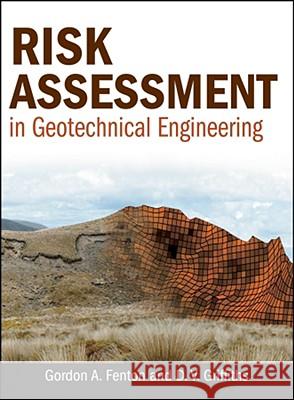
Risk Assessment Geotechnical w Fenton 9780470178201 John Wiley & Sons - książkaWidoczna okładka, to zdjęcie poglądowe, a rzeczywista szata graficzna może różnić się od prezentowanej.

Risk Assessment Geotechnical w

ISBN-13: 9780470178201 / Angielski / Twarda / 2008 / 480 str.

Gordon A. Fenton; D. V. Griffiths
cena 733,98 zł
(netto: 699,03 VAT:  5%)

Najniższa cena z 30 dni: 726,47 zł
Termin realizacji zamówienia:
ok. 30 dni roboczych
Bez gwarancji dostawy przed świętami

Darmowa dostawa!

NEW PROBABILISTIC APPROACHES FOR REALISTIC RISK ASSESSMENT IN GEOTECHNICAL ENGINEERING. This text presents a thorough examination of the theories and methodologies available for risk assessment in geotechnical engineering, spanning the full range from established single-variable and "first order" methods to the most recent, advanced numerical developments. In response to the growing application of LRFD methodologies in geotechnical design, coupled with increased demand for risk assessments from clients ranging from regulatory agencies to insurance companies, authors Fenton and Griffiths have introduced an innovative reliability-based risk assessment method, the Random Finite Element Method (RFEM). The authors have spent more than fifteen years developing this statistically based method for modeling the real spatial variability of soils and rocks. As demonstrated in the book, RFEM performs better in real-world applications than traditional risk assessment tools that do not properly account for the spatial variability of geomaterials. This text is divided into two parts: Part One, Theory, explains the theory underlying risk assessment methods in geotechnical engineering. This part's seven chapters feature more than 100 worked examples, enabling you to develop a detailed understanding of the methods. Part Two, Practice, demonstrates how to use advanced probabilistic tools for several classical geotechnical engineering applications. Working with the RFEM, the authors show how to assess risk in problems familiar to all geotechnical engineers. All the programs used for the geotechnical applications discussed in Part Two may be downloaded from the authors' Web site at www.engmath.dal.ca/rfem/ at no charge, enabling you to duplicate the authors' results and experiment with your own data. In short, you get all the theory and practical guidance you need to apply the most advanced probabilistic approaches for managing uncertainty in geotechnical design.


Kategorie:
Technologie
Kategorie BISAC:
Technology & Engineering > Civil - Soil & Rock
Wydawca:
John Wiley & Sons
Język:
Angielski
ISBN-13:
9780470178201
Rok wydania:
2008
Ilość stron:
480
Waga:
1.35 kg
Wymiary:
27.94 x 21.84 x 3.05
Oprawa:
Twarda
Wolumenów:
01

"The publication presents an examination of the theories and methodologies available for risk assessment in geotechnical engineering, spanning the full range from established single–variable and first order methods to the most recent, advanced numerical developments. In response to the growing application of LRFD methodologies in geotechnical design, coupled with increased demand for risk assessments by clients ranging from regulatory agencies to insurance companies, the authors have introduced an innovative reliability–based risk assessment method, the Random Finite Element Method (RFEM). The authors have spent more than fifteen years developing this statistically based method for modeling the real spatial variability of soils and rocks." ( MCEER, Information Service, January 5, 2009)

Preface.

Acknowledgements.

PART 1: THEORY.

Chapter 1: Review of Probability Theory.

1.1 Introduction.

1.2 Basic Set Theory.

1.3 Probability.

1.4 Conditional Probability.

1.5 Random Variables and Probability Distributions.

1.6 Measures of Central Tendency, Variability, and Association.

1.7 Linear Combinations of Random Variables.

1.8 Functions of Random Variables.

1.9 Common Discrete Probability Distributions.

1.10 Common Continuous Probability Distributions.

1.11 Extreme–Value Distributions.

Chapter2: Discrete random Processes.

2.1 Introduction.

2.2 Discrete–Time, Discrete–State Markov Chains.

2.3 Continuous–Time Markov Chains.

2.4 Queueing Models.

Chapter 3: Random Fields.

3.1 Introduction.

3.2 Covariance Function.

3.3 Spectral Density Function.

3.4 Variance Function.

3.5 Correlation Length.

3.6 Some Common Models.

3.7 Random Fields in Higher Dimensions.

Chapter 4: Best Estimates, Excursions, and Averages.

4.1 Best Linear Unbiased Estimation.

4.2 Threshold Excursions in One Dimension.

4.3 Threshold Excursions in Two Dimensions.

4.4 Averages.

Chapter 5: Estimation.

5.1 Introduction.

5.2 Choosing a Distribution.

5.3 Estimation in Presence of Correlation.

5.4 Advanced Estimation Techniques.

Chapter 6: Simulation.

6.1 Introduction.

6.2 Random–Number Generators.

6.3 Generating Nonuniform Random Variables.

6.4 Generating Random Fields.

6.5 Conditional Simulation of Random Fields.

6.6 Monte carlo Simulation.

Chapter 7: Reliability–Based Design.

7.1 Acceptable Risk.

7.2 Assessing Risk.

7.3 Background to Design Methodologies.

7.4 Load and Resistance Factor Design.

7.5 Going Beyond Calibration.

7.6 Risk–Based Decision making.

PART 2: PRACTICE.

Chapter 8: Groundwater Modeling.

8.1 Introduction.

8.2 Finite–Element Model.

8.3 One–Dimensional Flow.

8.4 Simple Two–Dimensional Flow.

8.5 Two–Dimensional Flow Beneath Water–Retaining Structures.

8.6 Three–Dimensional Flow.

8.7 Three Dimensional Exit Gradient Analysis.

Chapter 9: Flow Through Earth Dams.

9.1 Statistics of Flow Through Earth Dams.

9.2 Extreme Hydraulic Gradient Statistics.

Chapter 10: Settlement of Shallow Foundations.

10.1 Introduction.

10.2 Two–Dimensional Probabilistic Foundation Settlement.

10.3 Three–Dimensional Probabilistic Foundation Settlement.

10.4 Strip Footing Risk Assessment.

10.5 Resistance Factors for Shallow–Foundation Settlement Design.

Chapter 11: Bearing Capacity.

11.1 Strip Footings on c–ø Soils.

11.2 Load and Resistance Factor Design of Shallow Foundations.

11.3 Summary.

Chapter 12: Deep Foundations.

12.1 Introduction.

12.2 Random Finite–Element Method.

12.3 Monte Carlo Estimation of Pile Capacity.

12.4 Summary.

Chapter 13: Slope Stability.

13.1 Introduction.

13.2 Probabilistic Slope Stability Analysis.

13.3 Slope Stability Reliability Model.

Chapter 14: Earth Pressure.

14.1 Introduction.

14.2 Passive Earth Pressures.

14.3 Active Earth Pressures: Retaining Wall Reliability.

Chapter 15: Mine Pillar Capacity.

15.1 Introduction.

15.2 Literature.

15.3 Parametric Studies.

15.4 Probabilistic Interpretation.

15.5 Summary.

Chapter 16: Liquefaction.

16.1 Introduction.

16.2 Model Size: Soil Liquefaction.

16.3 Monte Carlo Analysis and Results.

16.4 Summary

PART 3: APPENDIXES.

APPENDIX A: PROBABILITY TABLES.

A.1 Normal Distribution.

A.2 Inverse Student t–Distribution.

A.3 Inverse Chi–Square Distribution

APPENDIX B: NUMERICAL INTEGRATION.

B.1 Gaussian Quadrature.

APPENDIX C. COMPUTING VARIANCES AND CONVARIANCES OF LOCAL AVERAGES.

C.1 One–Dimensional Case.

C.2 Two–Dimensional Case

C.3 Three–Dimensional Case.

Index.

Gordon A. Fenton, PhD, PEng, is a Professor in the Department of Engineering Mathematics at Dalhousie University, Halifax, Nova Scotia. He is a core member and past chair of the American Society of Civil Engineers Geo–Institute Risk Assessment and Management Committee. He is also a core member, past acting chair, and secretary of the International Society of Soil Mechanics and Geotechnical Engineering Risk Assessment and Management Committee. Finally, he serves on the Canadian Highway Bridge Design Code Foundations Committee and is currently developing reliability–based geotechnical design provisions for the next edition of that code.

D. V. Griffiths, PhD, DSc, PE, is Professor of Civil Engineering at the Colorado School of Mines. He is a Fellow and Governor of the American Society of Civil Engineers and a member of the British Institution of Civil Engineers. He is the coauthor (with I.M. Smith) of two successful texts, Programming the Finite Element Method, Fourth Edition (Wiley) and Numerical Methods for Engineers, Second Edition.

NEW PROBABILISTIC APPROACHES FOR REALISTIC RISK ASSESSMENT IN GEOTECHNICAL ENGINEERING.

This text presents a thorough examination of the theories and methodologies available for risk assessment in geotechnical engineering, spanning the full range from established single–variable and "first order" methods to the most recent, advanced numerical developments. In response to the growing application of LRFD methodologies in geotechnical design, coupled with increased demand for risk assessments from clients ranging from regulatory agencies to insurance companies, authors Fenton and Griffiths have introduced an innovative reliability–based risk assessment method, the Random Finite Element Method (RFEM). The authors have spent more than fifteen years developing this statistically based method for modeling the real spatial variability of soils and rocks. As demonstrated in the book, RFEM performs better in real–world applications than traditional risk assessment tools that do not properly account for the spatial variability of geomaterials.

This text is divided into two parts:

  • Part One, Theory, explains the theory underlying risk assessment methods in geotechnical engineering. This part′s seven chapters feature more than 100 worked examples, enabling you to develop a detailed understanding of the methods.
  • Part Two, Practice, demonstrates how to use advanced probabilistic tools for several classical geotechnical engineering applications. Working with the RFEM, the authors show how to assess risk in problems familiar to all geotechnical engineers.

All the programs used for the geotechnical applications discussed in Part Two may be downloaded from the authors′ Web site at www.engmath.dal.ca/rfem/ at no charge, enabling you to duplicate the authors′ results and experiment with your own data. In short, you get all the theory and practical guidance you need to apply the most advanced probabilistic approaches for managing uncertainty in geotechnical design.




Udostępnij

Facebook - konto krainaksiazek.pl


Opinie o Krainaksiazek.pl na Opineo.pl

Partner Mybenefit

Krainaksiazek.pl w programie rzetelna firma Krainaksiaze.pl - płatności przez paypal

Czytaj nas na:

Facebook - krainaksiazek.pl
  • książki na zamówienie
  • granty
  • książka na prezent
  • kontakt
  • pomoc
  • opinie
  • regulamin
  • polityka prywatności

Zobacz:

  • Księgarnia czeska

  • Wydawnictwo Książkowe Klimaty

1997-2025 DolnySlask.com Agencja Internetowa

© 1997-2022 krainaksiazek.pl
     
KONTAKT | REGULAMIN | POLITYKA PRYWATNOŚCI | USTAWIENIA PRYWATNOŚCI
Zobacz: Księgarnia Czeska | Wydawnictwo Książkowe Klimaty | Mapa strony | Lista autorów
KrainaKsiazek.PL - Księgarnia Internetowa

Polityka prywatnosci - link
Krainaksiazek.pl - płatnośc Przelewy24
Przechowalnia Przechowalnia



