Rise and Fall: How Empires Collapse » książka





Rise and Fall: How Empires Collapse
ISBN-13: 9783565249008 / Angielski / Miękka / 212 str.
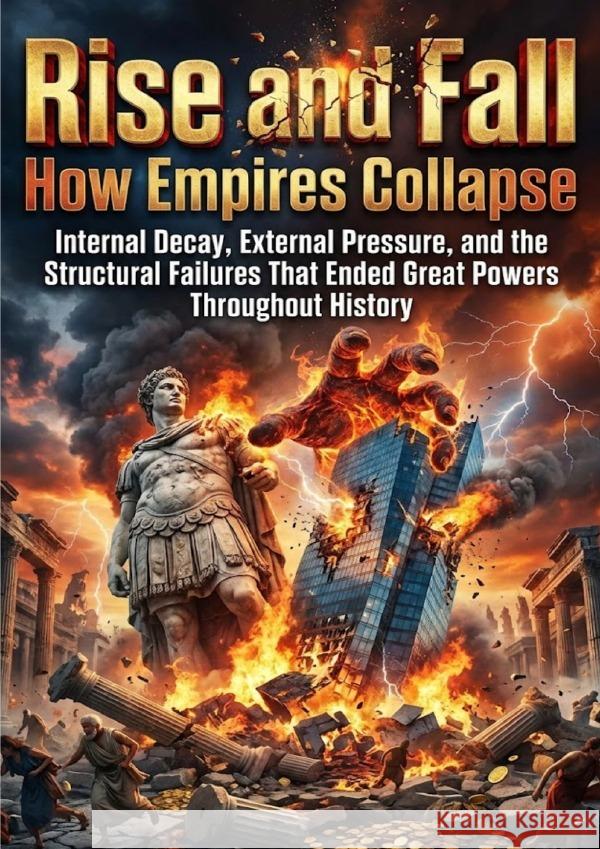
Empires rarely collapse from a single catastrophic event. Instead, they unravel through accumulated institutional weaknesses, fiscal crises, elite fragmentation, and the inability to adapt to changing circumstances. This comprehensive analysis examines the common patterns and unique factors behind imperial decline across civilizations-from Bronze Age kingdoms through Rome, Byzantium, and the Mongol Empire to early modern dynasties.Drawing on historical records, archaeological evidence, and comparative analysis, this book identifies the structural vulnerabilities that transform dominant powers into failed states. It explores how overextension strains resources, how succession crises destabilize governance, how economic inequality erodes social cohesion, and how military defeats expose systemic rot. Each case study reveals the interplay between internal dysfunction and external challenges, showing how resilient systems become brittle and ultimately fracture.The narrative examines warning signs that contemporaries missed, reforms that failed to reverse decline, and the speed with which collapse accelerated once critical thresholds were crossed. It analyzes how peripheral regions broke away, how rival powers exploited weakness, and what happened to populations during imperial disintegration. Without determinism or moralizing, this work offers rigorous analysis of why empires fail and what their collapses reveal about political stability and institutional resilience.
When the Western Roman Empire fell in 476 CE, contemporaries barely noticed. The collapse had been underway for generations, masked by institutional inertia and the fiction of continuity.




Czytaj nas na:
KrainaKsiazek.PL - Księgarnia Internetowa


