• Wyszukiwanie zaawansowane
  • Kategorie
  • Kategorie BISAC
  • Książki na zamówienie
  • Promocje
  • Granty
  • Książka na prezent
  • Opinie
  • Pomoc
  • Załóż konto
  • Zaloguj się

Rice Green Revolution in Sub-Saharan Africa » książka


zaloguj się | załóż konto
Logo Krainaksiazek.pl

koszyk

konto

szukaj
topmenu
Księgarnia internetowa
Szukaj
Książki na zamówienie
Promocje
Granty
Książka na prezent
Moje konto
Pomoc
 
 
Wyszukiwanie zaawansowane
Pusty koszyk
Bezpłatna dostawa dla zamówień powyżej 20 złBezpłatna dostawa dla zamówień powyżej 20 zł

Kategorie główne

• Nauka
 [2946912]
• Literatura piękna
 [1852311]

  więcej...
• Turystyka
 [71421]
• Informatyka
 [150889]
• Komiksy
 [35717]
• Encyklopedie
 [23177]
• Dziecięca
 [617324]
• Hobby
 [138808]
• AudioBooki
 [1671]
• Literatura faktu
 [228371]
• Muzyka CD
 [400]
• Słowniki
 [2841]
• Inne
 [445428]
• Kalendarze
 [1545]
• Podręczniki
 [166819]
• Poradniki
 [480180]
• Religia
 [510412]
• Czasopisma
 [525]
• Sport
 [61271]
• Sztuka
 [242929]
• CD, DVD, Video
 [3371]
• Technologie
 [219258]
• Zdrowie
 [100961]
• Książkowe Klimaty
 [124]
• Zabawki
 [2341]
• Puzzle, gry
 [3766]
• Literatura w języku ukraińskim
 [255]
• Art. papiernicze i szkolne
 [7810]
Kategorie szczegółowe BISAC

Rice Green Revolution in Sub-Saharan Africa

ISBN-13: 9789811980459 / Angielski / Twarda / 2023 / 474 str.
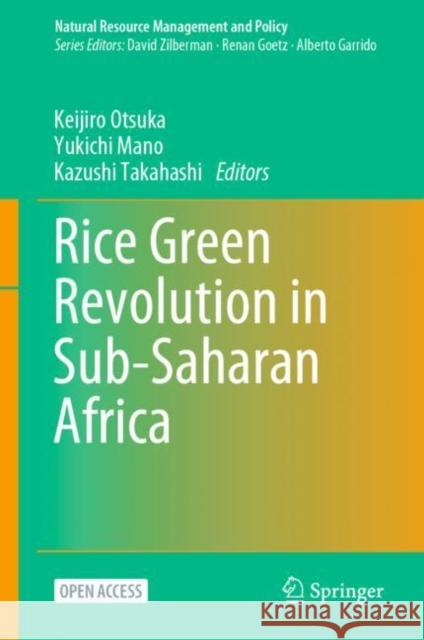
Keijiro Otsuka; Yukichi Mano; Kazushi Takahashi
Rice Green Revolution in Sub-Saharan Africa Keijiro Otsuka Yukichi Mano Kazushi Takahashi 9789811980459 Springer - książkaWidoczna okładka, to zdjęcie poglądowe, a rzeczywista szata graficzna może różnić się od prezentowanej.

Rice Green Revolution in Sub-Saharan Africa

ISBN-13: 9789811980459 / Angielski / Twarda / 2023 / 474 str.

Keijiro Otsuka; Yukichi Mano; Kazushi Takahashi
cena 201,72
(netto: 192,11 VAT:  5%)

Najniższa cena z 30 dni: 192,74
Termin realizacji zamówienia:
ok. 22 dni roboczych
Bez gwarancji dostawy przed świętami

Darmowa dostawa!
inne wydania

This open access book seeks effective strategy to realize a rice Green Revolution in sub-Saharan Africa based on more than ten years of research team’s inquiries into determinants and consequences of new technology adoption in rice farming in seven countries in this region. Rigorous statistical analyses are carried out by using valuable household data of rice farmers. The book is actually sequel to the two earlier books on the same subject published by Springer and edited by K. Otsuka and D.F. Larson, An African Green Revolution published in 2013 and In Pursuit of an African Green Revolution in 2016. The main message of the first book was that rice is the most promising cereal crop in SSA because of the high transferability of Asian rice technology, whereas that of the second book was that rice cultivation training programs are effective in significantly increasing rice yield in SSA. This third book has wider coverage in terms of topics, study periods, and study sites. It continues to show the significant impacts of rice cultivation training on productivity and newly demonstrates the high sustainability of the productivity impact of the training and the existence of spillover effects from trainees to other farmers by using panel data. We newly assess the important role of mechanization in intensification of rice farming, high returns to large-scale irrigation schemes, and the critical role of rice millers in improving the quality of milled rice. Based on these studies, this book provides clear pathways toward full-fledged Green Revolution in rice farming in sub-Saharan Africa.


This open access book seeks effective strategy to realize a rice Green Revolution in sub-Saharan Africa based on more than ten years of research team’s inquiries into determinants and consequences of new technology adoption in rice farming in seven countries in this region. Rigorous statistical analyses are carried out by using valuable household data of rice farmers. The book is actually sequel to the two earlier books on the same subject published by Springer and edited by K. Otsuka and D.F. Larson, An African Green Revolution published in 2013 and In Pursuit of an African Green Revolution in 2016. The main message of the first book was that rice is the most promising cereal crop in SSA because of the high transferability of Asian rice technology, whereas that of the second book was that rice cultivation training programs are effective in significantly increasing rice yield in SSA. This third book has wider coverage in terms of topics, study periods, and study sites. It continues to show the significant impacts of rice cultivation training on productivity and newly demonstrates the high sustainability of the productivity impact of the training and the existence of spillover effects from trainees to other farmers by using panel data. We newly assess the important role of mechanization in intensification of rice farming, high returns to large-scale irrigation schemes, and the critical role of rice millers in improving the quality of milled rice. Based on these studies, this book provides clear pathways toward full-fledged Green Revolution in rice farming in sub-Saharan Africa.

Kategorie:
Nauka, Biologia i przyroda
Kategorie BISAC:
Business & Economics > Industries - Agribusiness
Social Science > Developing & Emerging Countries
Business & Economics > Development - Economic Development
Wydawca:
Springer
Seria wydawnicza:
Natural Resource Management and Policy
Język:
Angielski
ISBN-13:
9789811980459
Rok wydania:
2023
Dostępne języki:
Numer serii:
000052978
Ilość stron:
474
Oprawa:
Twarda
Dodatkowe informacje:
Wydanie ilustrowane

Preface

PART I: EXTENSIFICTION, INTENSIFICATION, AND REVOLUTION


Chapter 1: Issues of Rice Green Revolution in sub-Saharan Africa

  Keijiro Otsuka, Yukichi Mano, and Kazushi Takahashi

1-1.                 Failure in the Past

1-2.                 Prospects in Future

1-3.                 Structure of the Book


Chapter 2: Role of Extension for Green Revolution

   Kazushi Takahashi and Keijiro Otsuka

    2-1.  Role of Extension in Dissemination of New Technology

    2-2.  Impact of Rice Cultivation Training

    2-3.  Missing Issues


Chapter 3: Mechanization and Irrigation for Intensification of Rice Farming

   Hiroyuki Takeshima and Yukichi Mano

   3-1. Role of Mechanization in SSA

   3-2. Role of Irrigation in SSA

   3-3. Missing Issues


PART II: IMAPCT OF RICE CULTIVATION TRAINING


Chapter 4: The Case of Tanzania

    Yuko Nakano

    4-1. An Overview

    4-2. From Key Farmers to Ordinary Farmers

    4-3. Impact of Rice Intensification Program


  Chapter 5: The Case of Uganda

    Yoko Kijima

    5-1. An Overview

    5-2. Sustainability of Rice Cultivation Training Program


  Chapter 6: The Case of Cote d’Ivoire

    Kazushi Takahashi, Yukichi Mano, and Keijiro Otsuka

    6-1. An Overview

    6-2. Extension from Treated to Controlled Farmers


  Chapter 7: The Case of Mozambique

    Kei Kajisa

    7-1. An Overview

    7-2. An Impact Assessment of Rice Cultivation Training


PART III: MECHANIZATION AND INTENSIFICATION


Chapter 8: The Case of Cote d’Ivoire

    Yukichi Mano, Kazushi Takahashi, and Keijiro Otsuka


  Chapter 9: The Case of Tanzania

    E.F. Magezi, Yuko Nakano, and Takeshi Sakurai


PART IV: RETURN TO LARGE-SCALE IRRIGATION INVESTMENT


Chapter 10: The Case of Kenya

    Masao Kikuchi, Yukichi Mano, Timothy Njagi, D. Merrey and K. Otsuka


Chapter 11: The Case of Senegal

   Takeshi Sakurai


Part V: RICE MILLERS AND RICE QUALITY


Chapter 12: The Case of Kenya

   Yukichi Mano, Tim Njagi, and Keijiro Otsuka


Chapter 13: The Case of Ghana

   Tetsuya Ogura, Joseph A. Awuni, and Takeshi Sakurai


PART VI: CONCLUSION


Chapter 14: Towards Full-Fledged Rice Green Revolution in SSA

    Keijiro Otsuka, Yukichi Mano, and Kazushi Takahashi

Keijiro Otsuka is a professor of development economics at the Graduate School of Economics, Kobe University and an executive senior research fellow at the Institute of Developing Economies - JETRO, in Japan since 2016. He received Ph.D. in economics from the University of Chicago in 1979. Prior to joining Kobe University, he was a professor at the National Graduate Institute for Policy Studies from 2001 to 2016 and a core member of the World Development Report: Jobs at the World Bank from 2011 to 2012. He was a chairman of the Board of Trustees of the International Rice Research Institute from 2004 to 2007, the president of the International Association of Agricultural Economists from 2009 to 2012, and is currently the president of the Japanese Association for Development Economics. He majors in Green Revolution, land tenure and land tenancy, natural resource management, poverty reduction, and industrial development in Asia and sub-Saharan Africa. He has published 146 articles in internationally renowned journals and is a coauthor or coeditor of 26 books. He received Purple Ribbon Medal from the Japanese Government in 2010 and is a member of the Japan Academy since 2018. He also received the Quality of Research Discovery Award from the American Agricultural Economics Association in 1992, Nikkei Outstanding Book Publication Award from the Japan Economic Journal in 1995 and 2004, and the Best Journal Article Award from the Agricultural Economics Society of Japan in 1999. He was selected as an honorary life member of International Association of Agricultural Economists in 2012, a fellow of Agricultural and Applied Economics Association in 2013, and a distinguished fellow of African Association of Agricultural Economists in 2013.

 
Yukichi Mano is a professor at Hitotsubashi University, Japan, and is a fellow at Tokyo Center for Economic Research (TCER). Before joining Hitotsubashi University, he was an assistant professor at National Graduate Institute for Policy Studies (GRIPS) from 2007 to 2012. He received B.A. in Economics and Master in Social Science from 
Tokyo Metropolitan University, and his Master and Ph.D. in Economics from the University of Chicago in 2007. His scholarly interests include agricultural technology adoption, horticulture and high-valued crop production, business and management training (KAIZEN), human capital investment, migration and remittance, and universal health coverage in Asia and sub-Saharan Africa. He has published his research mainly in agricultural and development economics journals, including agricultural 
economics, world development, Journal of African Economies, Journal of Development Studies, and Journal of Population Economics.

Kazushi Takahashi is a professor at the National Graduate Institute for Policy Studies (GRIPS) and is a director of the GRIPS Global Governance Program, Japan. Before joining GRIPS, he was an associate professor and a professor at Sophia University from 2015 to 2019, a visiting research fellow at the Charles H. Dyson School of Applied Economics and Management of Cornell University from 2010 to 2012, and a research fellow at the Institute of Developing Economies-Japan External Trade Organization from 2006 to 2015. He received his B.A. in Policy Management from Keio University and both his Master in International Development Studies and Ph.D. in Development Economics from GRIPS. His scholarly interests include agricultural technology adoption, rural poverty dynamics, microfinance, human capital investment, and aid effectiveness in Asia and sub-Saharan African countries. He has published his research in major agricultural and development economics journals, such as American Journal of Agricultural Economics, Developing Economies, Economic Development and Cultural Change, World Bank Economic Review, and World Development. He serves on the editorial board of Developing Economies in 2009–2010 and 2012–2015 as well as the associate editor of Food Security from 2021.

This open access book seeks effective strategy to realize a rice Green Revolution in sub-Saharan Africa based on more than ten years of research team’s inquiries into determinants and consequences of new technology adoption in rice farming in seven countries in this region. Rigorous statistical analyses are carried out by using valuable household data of rice farmers. The book is actually sequel to the two earlier books on the same subject published by Springer and edited by K. Otsuka and D.F. Larson, An African Green Revolution published in 2013 and In Pursuit of an African Green Revolution in 2016. The main message of the first book was that rice is the most promising cereal crop in SSA because of the high transferability of Asian rice technology, whereas that of the second book was that rice cultivation training programs are effective in significantly increasing rice yield in SSA. This third book has wider coverage in terms of topics, study periods, and study sites. It continues to show the significant impacts of rice cultivation training on productivity and newly demonstrates the high sustainability of the productivity impact of the training and the existence of spillover effects from trainees to other farmers by using panel data. We newly assess the important role of mechanization in intensification of rice farming, high returns to large-scale irrigation schemes, and the critical role of rice millers in improving the quality of milled rice. Based on these studies, this book provides clear pathways toward full-fledged Green Revolution in rice farming in sub-Saharan Africa.




Udostępnij

Facebook - konto krainaksiazek.pl


Opinie o Krainaksiazek.pl na Opineo.pl

Partner Mybenefit

Krainaksiazek.pl w programie rzetelna firma Krainaksiaze.pl - płatności przez paypal

Czytaj nas na:

Facebook - krainaksiazek.pl
  • książki na zamówienie
  • granty
  • książka na prezent
  • kontakt
  • pomoc
  • opinie
  • regulamin
  • polityka prywatności

Zobacz:

  • Księgarnia czeska

  • Wydawnictwo Książkowe Klimaty

1997-2025 DolnySlask.com Agencja Internetowa

© 1997-2022 krainaksiazek.pl
     
KONTAKT | REGULAMIN | POLITYKA PRYWATNOŚCI | USTAWIENIA PRYWATNOŚCI
Zobacz: Księgarnia Czeska | Wydawnictwo Książkowe Klimaty | Mapa strony | Lista autorów
KrainaKsiazek.PL - Księgarnia Internetowa

Polityka prywatnosci - link
Krainaksiazek.pl - płatnośc Przelewy24
Przechowalnia Przechowalnia



