• Wyszukiwanie zaawansowane
  • Kategorie
  • Kategorie BISAC
  • Książki na zamówienie
  • Promocje
  • Granty
  • Książka na prezent
  • Opinie
  • Pomoc
  • Załóż konto
  • Zaloguj się

Rethinking Islamic Finance: Markets, Regulations and Islamic Law » książka

zaloguj się | załóż konto
Logo Krainaksiazek.pl

koszyk

konto

szukaj
topmenu
Księgarnia internetowa
Szukaj
Książki na zamówienie
Promocje
Granty
Książka na prezent
Moje konto
Pomoc
 
 
Wyszukiwanie zaawansowane
Pusty koszyk
Bezpłatna dostawa dla zamówień powyżej 20 złBezpłatna dostawa dla zamówień powyżej 20 zł

Kategorie główne

• Nauka
 [2946912]
• Literatura piękna
 [1852311]

  więcej...
• Turystyka
 [71421]
• Informatyka
 [150889]
• Komiksy
 [35717]
• Encyklopedie
 [23177]
• Dziecięca
 [617324]
• Hobby
 [138808]
• AudioBooki
 [1671]
• Literatura faktu
 [228371]
• Muzyka CD
 [400]
• Słowniki
 [2841]
• Inne
 [445428]
• Kalendarze
 [1545]
• Podręczniki
 [166819]
• Poradniki
 [480180]
• Religia
 [510412]
• Czasopisma
 [525]
• Sport
 [61271]
• Sztuka
 [242929]
• CD, DVD, Video
 [3371]
• Technologie
 [219258]
• Zdrowie
 [100961]
• Książkowe Klimaty
 [124]
• Zabawki
 [2341]
• Puzzle, gry
 [3766]
• Literatura w języku ukraińskim
 [255]
• Art. papiernicze i szkolne
 [7810]
Kategorie szczegółowe BISAC

Rethinking Islamic Finance: Markets, Regulations and Islamic Law

ISBN-13: 9780367663957 / Angielski / Miękka / 2020 / 112 str.
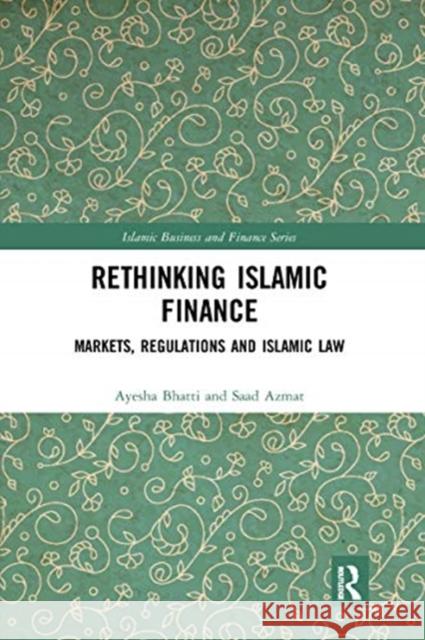
Ayesha Bhatti; Saad Azmat
Rethinking Islamic Finance: Markets, Regulations and Islamic Law Ayesha Bhatti Saad Azmat 9780367663957 Routledge - książkaWidoczna okładka, to zdjęcie poglądowe, a rzeczywista szata graficzna może różnić się od prezentowanej.

Rethinking Islamic Finance: Markets, Regulations and Islamic Law

ISBN-13: 9780367663957 / Angielski / Miękka / 2020 / 112 str.

Ayesha Bhatti; Saad Azmat
cena 203,56
(netto: 193,87 VAT:  5%)

Najniższa cena z 30 dni: 201,44
Termin realizacji zamówienia:
ok. 22 dni roboczych
Bez gwarancji dostawy przed świętami

Darmowa dostawa!
inne wydania

This book argues that the financial impact of Islamic and conventional instruments has its origin in the way they are priced and structured. The authors examine what makes Islamic finance different and focuses on the differences that occur as a result of the adherence to Islamic law.


Kategorie:
Nauka, Ekonomia i biznes
Kategorie BISAC:
Business & Economics > Finance - General
Wydawca:
Routledge
Język:
Angielski
ISBN-13:
9780367663957
Rok wydania:
2020
Ilość stron:
112
Oprawa:
Miękka
Wolumenów:
01
Dodatkowe informacje:
Bibliografia

Acknowledgments; Preface; Chapter 1: Introduction; Chapter 2: The Paradox of Risk Sharing; 2.1 Introduction; 2.2 Islamic Instruments; 2.3 The Dominance of Debt Based Contracts; 2.4 Concluding Remarks; Chapter 3: Freedom From Interest; 3.1 Introduction; 3.2 Islamic Instrument Structures; 3.3 Convergence of Conventional and Islamic Banking Rates; 3.4 Concluding Remarks; Chapter 4: Financial Crisis and Islamic Finance; 4.1 Introduction; 4.2 Islamic Banking, Financial Intermediation, and Risk Sharing; 4.3 Implications During Financial Crisis; 4.4 Concluding Remarks; Chapter 5: The Little Difference Between Sukuk and Bonds; 5.1 Introduction; 5.2 Sukuk Structures; 5.3 Determinants of Credit Ratings of Islamic Bonds; 5.4 Concluding Remarks; Chapter 6: Issuer’s Choice of Islamic Bond Type; 6.1 Introduction; 6.2 Islamic Bond Structures; 6.3 Theories of Capital Structure; 6.4 Implications for Islamic Financing Choices; 6.5 Concluding Remarks; Chapter 7: Risk in Risk Sharing Sukuk; 7.1 Introduction; 7.2 Credit Risk in Risk Sharing Bonds; 7.3 Structural Credit Risk Models; 7.4 Concluding Remarks; Chapter 8: The Challenge of Shariah Compliance; 8.1 Introduction; 8.2 The Complexity of Shariah Compliant Structures; 8.3 The Agency Problem in Islamic Banks; 8.4 The Shariah Certification Dilemma; 8.5 The Role of the Regulator and Shariah Conscious Investor; 8.6 Concluding Remarks; Chapter 9: Replicating Conventional Finance; 9.1 Introduction; 9.2 Instrument Structures; 9.3 Behavioral Explanations; 9.4 Implications for Investor Preferences; 9.5 Concluding Remarks; Chapter 10: Can Islamic Banks Have Their Own Benchmark?; 10.1 Introduction; 10.2 Islamic Interbank Benchmark Rate (IIBR); 10.3 IIBR-LIBOR Benchmark Rates and Convergence; 10.4 Determinants of the ‘Piety Premium’; 10.5 Empirical Analysis; 10.6 Conclusion; Chapter 11: Islamic Versus Conventional Equities; 11.1 Introduction; 11.2 The Structure of Islamic Equities; 11.3 Diversification Benefits; 11.4 The Performance of Islamic Equities; 11.5 A Theoretical and Empirical Perspective; 11.6 Concluding Remarks; Chapter 12: Charity in Islamic Banks – A Distinguishing Feature?; 12.1 Introduction; 12.2 Penalty Versus Charity; 12.3 The Size of the Charity Pie; 12.4 Charity Contribution Versus Asset Size; 12.5 Social Distribution of Charity; 12.6 Concluding Remarks; Chapter 13: Rethinking Islamic Finance: The Limits of Our Understanding; 13.1 Introduction; 13.2 Pillars of Islamic Economics; 13.3 Barriers to Understanding Islamic Finance; 13.4 Concluding Remarks; Chapter 14: Rethinking Islamic Finance: An Ethical Perspective; 14.1 Introduction; 14.2 Rethinking Islamic Finance – An Ethical Framework; 14.3 Integrative Social Contract Theory; 14.4 Rethinking Islamic Finance Through ISCT; 14.5 Way Forward; 14.6 Concluding Remarks; Chapter 15: Conclusion; Bibliography; Index

Ayesha Bhatti is an Assistant Professor at the Lahore University of Management Sciences (LUMS), Lahore, Pakistan. She is a Fellow of the Institute of Chartered Accountants of England and Wales and completed her master’s degree in Applied Statistics from the University of Oxford, UK. Ayesha has been associated with the LUMS Centre for Islamic Finance since its inception in 2015 and has served as the Director of Training and Chair of the Centre. She teaches in the area of Financial and Managerial Accounting at LUMS and has written and taught several case studies in this area as well as on Islamic finance.


Saad Azmat is an Associate Professor of Finance at the Lahore University of Management Sciences (LUMS), Lahore, Pakistan. He completed his PhD in Accounting and Finance at Monash University, Australia and a master’s degree in Economics from University of British Columbia, Canada. At LUMS he has served as the Associate Dean of Research, Director of PhD Program, and the Founding Chair of the Centre for Islamic Finance. He teaches courses in the area of Islamic Banking and Finance to undergraduate, master’s and PhD students at LUMS.


Udostępnij

Facebook - konto krainaksiazek.pl


Opinie o Krainaksiazek.pl na Opineo.pl

Partner Mybenefit

Krainaksiazek.pl w programie rzetelna firma Krainaksiaze.pl - płatności przez paypal

Czytaj nas na:

Facebook - krainaksiazek.pl
  • książki na zamówienie
  • granty
  • książka na prezent
  • kontakt
  • pomoc
  • opinie
  • regulamin
  • polityka prywatności

Zobacz:

  • Księgarnia czeska

  • Wydawnictwo Książkowe Klimaty

1997-2025 DolnySlask.com Agencja Internetowa

© 1997-2022 krainaksiazek.pl
     
KONTAKT | REGULAMIN | POLITYKA PRYWATNOŚCI | USTAWIENIA PRYWATNOŚCI
Zobacz: Księgarnia Czeska | Wydawnictwo Książkowe Klimaty | Mapa strony | Lista autorów
KrainaKsiazek.PL - Księgarnia Internetowa

Polityka prywatnosci - link
Krainaksiazek.pl - płatnośc Przelewy24
Przechowalnia Przechowalnia






