• Wyszukiwanie zaawansowane
  • Kategorie
  • Kategorie BISAC
  • Książki na zamówienie
  • Promocje
  • Granty
  • Książka na prezent
  • Opinie
  • Pomoc
  • Załóż konto
  • Zaloguj się

Restructuring Translation Education: Implications from China for the Rest of the World » książka


zaloguj się | załóż konto
Logo Krainaksiazek.pl

koszyk

konto

szukaj
topmenu
Księgarnia internetowa
Szukaj
Książki na zamówienie
Promocje
Granty
Książka na prezent
Moje konto
Pomoc
 
 
Wyszukiwanie zaawansowane
Pusty koszyk
Bezpłatna dostawa dla zamówień powyżej 20 złBezpłatna dostawa dla zamówień powyżej 20 zł

Kategorie główne

• Nauka
 [2952079]
• Literatura piękna
 [1850969]

  więcej...
• Turystyka
 [71058]
• Informatyka
 [151066]
• Komiksy
 [35579]
• Encyklopedie
 [23181]
• Dziecięca
 [620496]
• Hobby
 [139036]
• AudioBooki
 [1646]
• Literatura faktu
 [228729]
• Muzyka CD
 [379]
• Słowniki
 [2932]
• Inne
 [445708]
• Kalendarze
 [1409]
• Podręczniki
 [164793]
• Poradniki
 [480107]
• Religia
 [510956]
• Czasopisma
 [511]
• Sport
 [61267]
• Sztuka
 [243299]
• CD, DVD, Video
 [3411]
• Technologie
 [219640]
• Zdrowie
 [100984]
• Książkowe Klimaty
 [124]
• Zabawki
 [2281]
• Puzzle, gry
 [3363]
• Literatura w języku ukraińskim
 [258]
• Art. papiernicze i szkolne
 [8020]
Kategorie szczegółowe BISAC

Restructuring Translation Education: Implications from China for the Rest of the World

ISBN-13: 9789811331664 / Angielski / Twarda / 2019 / 164 str.
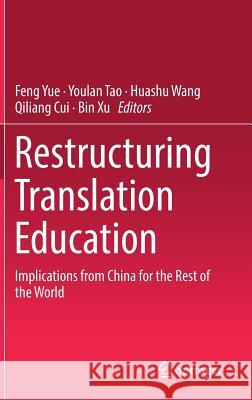
Feng Yue; Youlan Tao; Huashu Wang
Restructuring Translation Education: Implications from China for the Rest of the World Yue, Feng 9789811331664 Springer - książkaWidoczna okładka, to zdjęcie poglądowe, a rzeczywista szata graficzna może różnić się od prezentowanej.

Restructuring Translation Education: Implications from China for the Rest of the World

ISBN-13: 9789811331664 / Angielski / Twarda / 2019 / 164 str.

Feng Yue; Youlan Tao; Huashu Wang
cena 402,53
(netto: 383,36 VAT:  5%)

Najniższa cena z 30 dni: 385,52
Termin realizacji zamówienia:
ok. 22 dni roboczych
Dostawa w 2026 r.

Darmowa dostawa!
Kategorie:
Nauka, Językoznawstwo
Kategorie BISAC:
Language Arts & Disciplines > Translating & Interpreting
Education > Language Experience Approach
Language Arts & Disciplines > Study & Teaching
Wydawca:
Springer
Język:
Angielski
ISBN-13:
9789811331664
Rok wydania:
2019
Wydanie:
2019
Ilość stron:
164
Waga:
0.45 kg
Wymiary:
23.5 x 15.5
Oprawa:
Twarda
Wolumenów:
01
Dodatkowe informacje:
Wydanie ilustrowane

Part I  Challenges of Translational Profession
Chapter 1 The Evolution of the Global Language Service Market
       1.1 Introduction
       1.2 Continuous Growth in Language Service Demands
       1.3 Continuous Expansion of Language Service Scope
       1.4 Increasingly Diversified Content of Language Services
       1.5 Rapid Development of Language Technologies
       1.6 Diversified Roles of Language Services
       1.7 Language Services Moving Towards Standardization
       1.8 Conclusion
Chapter 2 The Development of Translation Technology in the Era of Big Data
       2.1. Introduction
       2.2. Basic Concepts of Translation Technology
       2.3. The Main Functions of Translation Technology
           2.3.1 Automatic Translation
           2.3.2 Repeated Utilization of Language Assets
           2.3.3 Improvement in Translation Quality
           2.3.4 Simplified Translation Formats
           2.3.5 Aided Translation Coordination
           2.3.6 Aided Translation Management
       2.4. The Development Trends in Translation Technology
           2.4.1 Continuous Integrations of Translation Tools
           2.4.2 Increasing Visualization in Translation
           2.4.3 Boom in Open Source Translation Technology
           2.4.4Prevalence of the “CAT+MT+PE” model
         2.4.5 Rapid Development of Intelligent Translation Technology
        2.4.6 Broad Application Prospects for Cloud-based Technology
       2.5. Conclusion

Part II Status Quo And Concerns  
Chapter 3 Problems and Solutions: 
        The Undergraduate Translator Education in Chinese Mainland
        3.1 Introduction
        3.2 Problems and challenges
           3.2.1 teaching philosophy
           3.2.2 curriculum designing
           3.2.3 teachers’ qualification
        3.3 Possible solutions and suggestions
           3.3.1 To innovate teaching philosophy by setting achievable goals and renovating    teaching philosophy and learning methods
           3.3.2 To diversify the courses by integrating interest, skills and knowledge into the curriculum
           3.3.3 To improve teachers’ quality by perfecting evaluation standards and encouraging self-learning and lifelong learning
        3.4 Conclusion
Chapter 4 MTI Programs: Teaching and Learning
        4.1 Introduction
        4.2 Survey
           4.2.1 Survey Objective
           4.2.2 Survey Respondent
           4.2.3 Survey Method
          4.2.4 Survey Schedule
          4.2.5 Survey Content
      4.3 Data
         4.3.1 MTI Teachers
         4.3.2 MTI Students
        4.4 Findings
          4.4.1 Current Status of MTI Education
          4.4.2 Existing Problems within MTI Education
        4.5 Suggestion
        4.6 Conclusion
        References
Chapter 5 MTI Programs:  Employment Investigation
       5.1 Introduction
       5.2 Survey
          5.2.1 Survey Objectives
          5.2.2 Survey Respondent
          5.2.3 Survey Method
          5.2.4 Survey Schedule
          5.2.5 Survey Content
       5.3 Data
          5.3.1 Teachers
          5.3.2 Graduates
          5.3.3 Employers
       5.3.1 Teachers
       5.4 Findings
         5.4.1 The situation of MTI employment
         5.4.2 Problems in MTI Education
       5.5 Suggestion
       5.6 Conclusion
       References

Part III Restructuring Translation Education: Theories and Experiments
Chapter 6 Translation and Typesetting for Publishers
       6.1 Translating for Publishers and Translation Teaching in Universities
       6.2 The Feasibility of CAT for Book Translation
       6.3 Drawbacks in Traditional Methods of Publishing Translation Project   
          Management
       6.4 Methods and Advantages of Applying CAT in Publishing Translation    
          Projects
          6.4.1 General method of publishing translation project management under CAT
          6.4.2 Word processing and typesetting
          6.4.3 CAT in ensuring translation quality
       6.5 Conclusion
       References
Chapter 7 Liberal Education for Undergraduate Translation and Interpreting Programs: From Ideas to Practice
        7.1 Introduction
        7.2 The essence and development of liberal education
        7.3 Cultural/intercultural competence and liberal education
        7.4 Translator and interpreter training vs. translator and interpreter   
           education
        7.5 T&I education at undergraduate level
        7.6 Liberal education for BTI Programme in action: from ideas to practice
           7.6.1 Curriculum design: offering extending courses
           7.6.2 Instructional approach:inquiry-based learning for the third-year and fourth-year students
           7.6.3 Course contents: a balance between professional skills and liberal education
           7.6.4 Campus culture: cultivating a positive and diverse environment
           7.6.5 Faculty: fostering a faculty with multidisciplinary and liberal education background
        7.7 Conclusion
        References
Chapter 8 Translation of Public Opinion Updates
         8.1 Introduction
         8.2 A Case Study of MTI Inside-School Practice Base Construction
            8.2.1 Website Section
            8.2.2Microblog Section
            8.2.3 Journal Section
            8.2.4 Regional Section
            8.2.5 WeChat Section
         8.3 Achievements of MTI Inside-School Practice Base
            8.3.1 Innovation of Personnel Cultivation
            8.3.2 Enhancement of Construction of Disciplines and Teaching Resources
            8.3.3 Improvement of Academic Exchanges and International Cooperation
         8.4 Conclusion
         References
 Chapter 9 Translation Education Based on Inter-organizational Collaboration
         9.1 Introduction
         9.2 Fujian Normal University: Online Internship
         9.3 Nankai University: Translation Internship Base
         9.4 UIBE: Assembly of Diverse Interorganizational Resources
         9.5 Discussion and Conclusion
         References
 Chapter 10 Exploring a New Pattern of Translation Curriculum: 
           A Learner-centered FIST Program
        10.1 Introduction
        10.2 Design and features of the program
           10.2.1 Teachers and students
           10.2.2 Course arrangement
           10.2.3 Learner-centered teaching approach
        10.3 Course contents and highlights
            10.3.1 Actual course contents
            10.3.2 Simulated translation project
            10.3.3 Translation workshop
        10.4 Course evaluation: students’ feedback
            10.4.1 Advantages
                  10.4.1.1 Communicative competence
                  10.4.1.2 Professional competence
                  10.4.1.3 Translational competence
            10.4.2 Space for improvement
        10.5 Conclusion
        References
Chapter 11 Technical Writing as a Supplement
        11.1 Introduction
        11.2 Technical writing course: objectives and designing
        11.3 Course highlights
        11.4 Conclusion
Chapter 12 On-line Practicum of Specialized Translation
       12.1 The Lack of Opportunities of Translation Internship
       12.2 Initiating On-line Practicum of Specialized Translation
       12.3 Textbooks for On-line Practicum
       12.4 Evaluating Students’ Translation through On-line Practicum
       12.5 The On-line Training of the Procedures of Business Translation
       12.6 The Impact of On-line Practicum of Specialized Translation

Feng Yue has been teaching translation at Fujian Normal University since 1992, and has had a 30-year career as a translator for a TV station, various enterprises and publishers. As a teacher, practitioner and researcher of translation, he understands what the market expects of translators. He has been the leader of ten projects concerning the restructuring of translation education, has written more than 70 articles and 25 books, and has received over 40 awards in this field, one of which is the top academic prize conferred by Fujian Provincial Government in 2016. He has been invited by the academic journal Contemporary Foreign Languages Study to chair regular translational seminars participated in by scholars, governmental representatives and managers from enterprises, bridging the gap between universities and enterprises.

Youlan Tao is a Professor of Translation Studies, currently teaching at the Department of Translation and Interpreting, College of Foreign Languages and Literature, Fudan University. As well as working as a part-time translator and interpreter, she has focused her research on translation pedagogy, applied translation theories, corpus-based translation studies, English teaching strategies and theories, and has published three monographs, five co-authored textbooks, several translated works, and a number of papers in leading national and international academic journals. Funded by the Humboldt Foundation from 2009 to 2011, she was a Visiting Scholar at Heidelberg University and the University of Oxford. From 2018 to 2019, she will visit Kent State University as a Fulbright scholar under the supervision of Prof. Brian James Baer.  

Huashu Wang is a leading scholar in translation and localization technology and project management. In recent years, he has published over 40 articles, and 8 textbooks and monographs in this field. He has been the Chairman of Translation Technology Education Society (affiliated to World Interpreting and Translation Teaching Associate) since 2017 and the Vice Secretary General of the Localization Service Committee of the Translators Association of China since 2015. He is also a lecturer in translation technology for the National Training Program for Specialized Translation Teachers and a Translation Technology Advisor for both the Association of Language Service Providers of China (ALSP) and SDL (a global innovator in language technology and services). He has been invited to give lectures on translation technology at more than 50 universities and provided training and consulting for over 30 enterprises and institutions in China.

Qiliang Cui obtained his Ph.D. in Mechanical Design and theory from Donghua University in 1999. He has been a teacher of translation and localization with the University of International Business and Economics (UIBE) since 2014. Before joining UIBE, he worked with world-leading localization vendors such as Welocalize, Bowne Global Solutions and Lionbridge in both production and training for twelve years. As well as working on engineering and testing for localization, he has also been the Deputy Director of the localization service committee of the Translators Association of China, where he co-designed and published four Chinese localization service specifications with colleagues. He has published numerous books and survey reports in the field of translation, localization, computer-aided translation and localization project management and is a leading expert on translation and localization. 

Bin Xu is an Associate Professor and the Director of the MTI program at the School of Foreign Languages at Shandong Normal University. His research field is translation studies and computer-aided translation (CAT). He started researching and using CAT tools in 1998 and became an important researcher in this field in China. He has published 20 papers on computer-aided translation in various major journals in China in recent years. His translation works include At Home in the Universe, Science and Religion, Linked—The New Science of Networks, Einstein's Cosmos, Drawing Act, The Artful Universe (Extended), and Universe—A Biography. He is also the author of the academic books The Research Paper: A Guide to Computer-Aided Research, and CAT—A New Horizon for Translating Research and Practice.

This book offers data-based insights into the problems of translation education and their causes in the context of localization and globalization in the era of big data. By examining language services around the globe, illustrating applications of big-data technology and their future development, and describing crowdsourcing and online collaborative translations, speech-to-speech translation and cloud-based translation, it makes readers aware of the important changes taking place in the professional translation market and consequently recognize the insufficiency of translation education and the need for it to be restructured accordingly. Furthermore, the book includes data-based analyses of translation education problems, such as teaching philosophy, curriculum design and faculty development of both undergraduate and postgraduate education in China. More importantly, it proposes solutions that have already been successful in experiments in a number of universities in China for other institutions of higher education to imitate in restructuring translation education. The discussion is of interest for current and future translation policy makers, translation educators, translators and learners.




Udostępnij

Facebook - konto krainaksiazek.pl


Opinie o Krainaksiazek.pl na Opineo.pl

Partner Mybenefit

Krainaksiazek.pl w programie rzetelna firma Krainaksiaze.pl - płatności przez paypal

Czytaj nas na:

Facebook - krainaksiazek.pl
  • książki na zamówienie
  • granty
  • książka na prezent
  • kontakt
  • pomoc
  • opinie
  • regulamin
  • polityka prywatności

Zobacz:

  • Księgarnia czeska

  • Wydawnictwo Książkowe Klimaty

1997-2025 DolnySlask.com Agencja Internetowa

© 1997-2022 krainaksiazek.pl
     
KONTAKT | REGULAMIN | POLITYKA PRYWATNOŚCI | USTAWIENIA PRYWATNOŚCI
Zobacz: Księgarnia Czeska | Wydawnictwo Książkowe Klimaty | Mapa strony | Lista autorów
KrainaKsiazek.PL - Księgarnia Internetowa

Polityka prywatnosci - link
Krainaksiazek.pl - płatnośc Przelewy24
Przechowalnia Przechowalnia




