• Wyszukiwanie zaawansowane
  • Kategorie
  • Kategorie BISAC
  • Książki na zamówienie
  • Promocje
  • Granty
  • Książka na prezent
  • Opinie
  • Pomoc
  • Załóż konto
  • Zaloguj się

Restorative Justice: Promoting Peace and Wellbeing » książka


zaloguj się | załóż konto
Logo Krainaksiazek.pl

koszyk

konto

szukaj
topmenu
Księgarnia internetowa
Szukaj
Książki na zamówienie
Promocje
Granty
Książka na prezent
Moje konto
Pomoc
 
 
Wyszukiwanie zaawansowane
Pusty koszyk
Bezpłatna dostawa dla zamówień powyżej 20 złBezpłatna dostawa dla zamówień powyżej 20 zł

Kategorie główne

• Nauka
 [2946912]
• Literatura piękna
 [1852311]

  więcej...
• Turystyka
 [71421]
• Informatyka
 [150889]
• Komiksy
 [35717]
• Encyklopedie
 [23177]
• Dziecięca
 [617324]
• Hobby
 [138808]
• AudioBooki
 [1671]
• Literatura faktu
 [228371]
• Muzyka CD
 [400]
• Słowniki
 [2841]
• Inne
 [445428]
• Kalendarze
 [1545]
• Podręczniki
 [166819]
• Poradniki
 [480180]
• Religia
 [510412]
• Czasopisma
 [525]
• Sport
 [61271]
• Sztuka
 [242929]
• CD, DVD, Video
 [3371]
• Technologie
 [219258]
• Zdrowie
 [100961]
• Książkowe Klimaty
 [124]
• Zabawki
 [2341]
• Puzzle, gry
 [3766]
• Literatura w języku ukraińskim
 [255]
• Art. papiernicze i szkolne
 [7810]
Kategorie szczegółowe BISAC

Restorative Justice: Promoting Peace and Wellbeing

ISBN-13: 9783031131004 / Angielski / Twarda / 2022 / 224 str.
Gabriel Velez;Theo Gavrielides
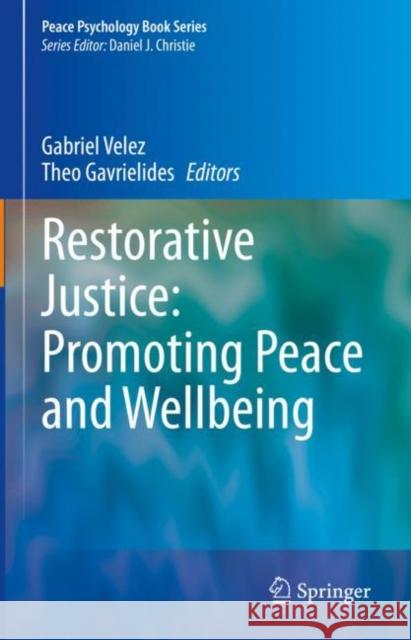
Restorative Justice: Promoting Peace and Wellbeing Gabriel Velez Theo Gavrielides  9783031131004 Springer International Publishing AG - książkaWidoczna okładka, to zdjęcie poglądowe, a rzeczywista szata graficzna może różnić się od prezentowanej.

Restorative Justice: Promoting Peace and Wellbeing

ISBN-13: 9783031131004 / Angielski / Twarda / 2022 / 224 str.

Gabriel Velez;Theo Gavrielides
cena 443,82
(netto: 422,69 VAT:  5%)

Najniższa cena z 30 dni: 385,52
Termin realizacji zamówienia:
ok. 22 dni roboczych
Bez gwarancji dostawy przed świętami

Darmowa dostawa!
inne wydania

This timely collection of chapters written by international experts bridges the gap between peace psychology and restorative justice. The Editors combined their respective fields of expertise to start a much-needed debate on the potential but also risks that are associated when implementing restorative justice in the peace psychology field. The volume highlights how psychological theory and research can inform and evaluate the potential of restorative practices in formal and informal educational settings as well as the criminal justice space. The chapters cover both negative and positive peace across levels while introducing the reader to various case studies from across the world. All in all, the book explores how restorative justice can promote positive peace through its connection fostering dialogue, empathy, forgiveness, and other key psychological elements of peace.


Kategorie:
Nauka, Psychologia
Kategorie BISAC:
Psychology > Personality
Psychology > Applied Psychology
Political Science > General
Wydawca:
Springer International Publishing AG
Język:
Angielski
ISBN-13:
9783031131004
Rok wydania:
2022
Dostępne języki:
Numer serii:
000402373
Ilość stron:
224
Waga:
0.54 kg
Wymiary:
23.39 x 15.6 x 1.6
Oprawa:
Twarda
Dodatkowe informacje:
Wydanie ilustrowane

Section 1: Intrapersonal Peace

Chapter 1: Developing Peaceful Self-Identities Through Restorative Practices
Adolescence and emerging adulthood are key times in the formation of values, identities, and life trajectories. This chapter would focus on how young people’s participation in restorative justice in schools or courtrooms can promote the development of values associated with peace and identities connected to being a peaceful person.
Chapter 2: Restorative Practices as Peace Pedagogy
As restorative justice implementation has grown and expanded its reach, it has required much thought and development about how to teach it. This chapter would focus on how training and practice of restorative justice can be understood as peace education related to conflict resolution and response regulation. The focus will be on how pedagogical approaches to restorative justice can foster internal peace.
Chapter 3: Promoting Coping and Resilience Through Reparation
When harm is committed, individuals suffer psychosocial consequences that can range in intensity and severity. These impacts touch on all those involved—victims, offenders, community members, families. This chapter would focus on the potential for restorative practices to support mental health of victims, ex-combatants and others. Specifically, the chapter would address how restorative justice can promote forgiveness and reconciliation, thus fostering individuals’ psychosocial wellbeing.
Section 2: Interpersonal, Intergroup, and Intercommunity Peace
Chapter 4: Bridging the Unbridgeable Divides
Intractable conflict by definition is deeply rooted attitudes, histories, and identities that perpetuate violence across generations. This chapter would focus on how in these contexts, restorative justice can open up spaces for dialogue and recognition of the perspectives of others that lay a groundwork for peace.
Chapter 5: Preventing and Healing Community Violence
Community violence—homicide, violent crime, etc.—impacts individuals, communities, and the futures of both (e.g., through the reverberations of the trauma it can cause). While increasing policing and harsher sentencing are often approaches taken to intervening in these situations, this chapter would focus on how restorative justice can be used to promote interpersonal peace as an alternative way to address violence within communities.
Chapter 6: Addressing Systemic Injustice and Oppression
Restorative justice is predicated on a value of inclusivity both through community building elements and in responding to acts of harm. This chapter would focus on how
restorative practices within communities can create greating equity and inclusion, particularly by raising up the voices of groups that have been historically marginalized or oppressed.
Chapter 7: Peace and Harmony in Post-Conflict Societies
Healing and reconciliation are fundamental processes for post-conflict socities looking to build peaceful futures. Transitional justice must address past injustices and violence that have left marks between different groups within a society, such as in Rwanda, Cyprus, Ireland or South Africa, where “post-conflict” often still involves tension and discord. This chapter would focus on how restorative justice as part of transitional justice can promote peaceful coexistence after intergroup violence.
Chapter 8: Restoring from Non-Western Lenses
Social representations and practices of peace are embedded within cultural, historical, and political contexts. This chapter would focus on how restorative justice emerges from and intersects with non-Western ideas about justice and reparation, thus allowing for greater focus on harmony and local approaches to peace.
Chapter 9: Bridging Racial/Ethnic Divides
Bias and prejudice are tied to deeply ingrained psychological frameworks for how people view the world, as well as identities and social context. But, these lens often create interpersonal conflict or can lead to violence between groups. This chapter would explore how engagement with a restorative framework and the inclusive dialogue involved can serve to bridge these barriers to peaceful intergroup relations that create psychosocial divides between different ethnic and racial groups.
Section 3: Institutional, International and Non-state Actors
Chapter 9: Changing School Cultures
School cultures have traditionally been set by adults with vertical alignment of authority and discipline. Within the United States, the environment these structures promote has further structural and cultural violence against groups that are marginalized due to race/ethnicity, socioeconomic status, ability, and more. This chapter would focus on how restorative justice can change the institutional climate at schools, promoting a sense of belonging, inclusion, and agency for all students.
Chapter 10: Reshaping Discipline: Ending Inequities of Retributive Measures in Schools
In the United States, the 1990s and 2000s saw an increasing adoption of zero tolerance policies to discipline in schools. These punitive and harsh policies have created a “school-to-prison” pipeline in which Black, Brown, and Indigenous youth are more likely to be suspended, expelled, and end up in the juvenile and adult justice systems. This chapter would focus on how restorative justice in schools provides an equity-focused framework to responding to harm, as opposed to inequality, racial and gender disparities and the school-to-prison pipeline.
Chapter 11: Forgiving and Repairing: Restorative Justice and the Criminal Justice System
Many criminal justice systems are set up on punitive foundations that provide minimal sense of justice or healing for victims, their families, and communities. This chapter would focus on how restorative justice in the criminal justice system can be an effective means to true forgiveness and reconciliation, thus promoting psychosocial wellbeing of the victims, perpetrators, and communities.
Chapter 12: Former Combatants and Reintegration
A challenge with members of communities and socieities who have been deeply involved in violent groups is their reintegration into society. The psychological and social obstacles are even more significant when these individuals belonged to groups whose particular aims were violent overthrow or change of the systems they are being reintegrated into. This chapter would focus on how restorative justice intersects with reconciliation and successful reintegration for armed actors such as revolutionary forces, terrorists, and paramiliatary groups.
Chapter 13: Reparations and Addressing State Atrocities
In socities across the globe, addressing questions of equity and justice in order to build a culture of peace involves states’ roles in atrocities and injustice in the past. Reparations and restitution integrally involve healing and humanizing discourses, as well as recognition and redress of complicity in structural and cultural violence. This chapter would focus on how restorative justice can be integrated into processes of reparation in order to further these goals.

Gabriel Mateo Velez, PhD, Educational Policy and Leadership, College of Education, Marquette University

Professor Theo Gavrielides, PhD, is a legal philosopher and a world-known restorative justice expert. He is the Founder and Director of the Restorative Justice for All (RJ4All) International Institute, and holds various visiting positions as a professor, fellow and scholar in many universities across the world.


This timely collection of chapters written by international experts bridges the gap between peace psychology and restorative justice. The Editors combined their respective fields of expertise to start a much-needed debate on the potential but also risks that are associated when implementing restorative justice in the peace psychology field. The volume highlights how psychological theory and research can inform and evaluate the potential of restorative practices in formal and informal educational settings as well as the criminal justice space. The chapters cover both negative and positive peace across levels while introducing the reader to various case studies from across the world. All in all, the book explores how restorative justice can promote positive peace through its connection fostering dialogue, empathy, forgiveness, and other key psychological elements of peace.




Udostępnij

Facebook - konto krainaksiazek.pl


Opinie o Krainaksiazek.pl na Opineo.pl

Partner Mybenefit

Krainaksiazek.pl w programie rzetelna firma Krainaksiaze.pl - płatności przez paypal

Czytaj nas na:

Facebook - krainaksiazek.pl
  • książki na zamówienie
  • granty
  • książka na prezent
  • kontakt
  • pomoc
  • opinie
  • regulamin
  • polityka prywatności

Zobacz:

  • Księgarnia czeska

  • Wydawnictwo Książkowe Klimaty

1997-2025 DolnySlask.com Agencja Internetowa

© 1997-2022 krainaksiazek.pl
     
KONTAKT | REGULAMIN | POLITYKA PRYWATNOŚCI | USTAWIENIA PRYWATNOŚCI
Zobacz: Księgarnia Czeska | Wydawnictwo Książkowe Klimaty | Mapa strony | Lista autorów
KrainaKsiazek.PL - Księgarnia Internetowa

Polityka prywatnosci - link
Krainaksiazek.pl - płatnośc Przelewy24
Przechowalnia Przechowalnia




