• Wyszukiwanie zaawansowane
  • Kategorie
  • Kategorie BISAC
  • Książki na zamówienie
  • Promocje
  • Granty
  • Książka na prezent
  • Opinie
  • Pomoc
  • Załóż konto
  • Zaloguj się

Resource Devastation on Native American Lands: Toxic Earth, Poisoned People » książka


zaloguj się | załóż konto
Logo Krainaksiazek.pl

koszyk

konto

szukaj
topmenu
Księgarnia internetowa
Szukaj
Książki na zamówienie
Promocje
Granty
Książka na prezent
Moje konto
Pomoc
 
 
Wyszukiwanie zaawansowane
Pusty koszyk
Bezpłatna dostawa dla zamówień powyżej 20 złBezpłatna dostawa dla zamówień powyżej 20 zł

Kategorie główne

• Nauka
 [2949965]
• Literatura piękna
 [1857847]

  więcej...
• Turystyka
 [70818]
• Informatyka
 [151303]
• Komiksy
 [35733]
• Encyklopedie
 [23180]
• Dziecięca
 [617748]
• Hobby
 [139972]
• AudioBooki
 [1650]
• Literatura faktu
 [228361]
• Muzyka CD
 [398]
• Słowniki
 [2862]
• Inne
 [444732]
• Kalendarze
 [1620]
• Podręczniki
 [167233]
• Poradniki
 [482388]
• Religia
 [509867]
• Czasopisma
 [533]
• Sport
 [61361]
• Sztuka
 [243125]
• CD, DVD, Video
 [3451]
• Technologie
 [219309]
• Zdrowie
 [101347]
• Książkowe Klimaty
 [123]
• Zabawki
 [2362]
• Puzzle, gry
 [3791]
• Literatura w języku ukraińskim
 [253]
• Art. papiernicze i szkolne
 [7933]
Kategorie szczegółowe BISAC

Resource Devastation on Native American Lands: Toxic Earth, Poisoned People

ISBN-13: 9783031218958 / Angielski / Twarda / 2023 / 228 str.
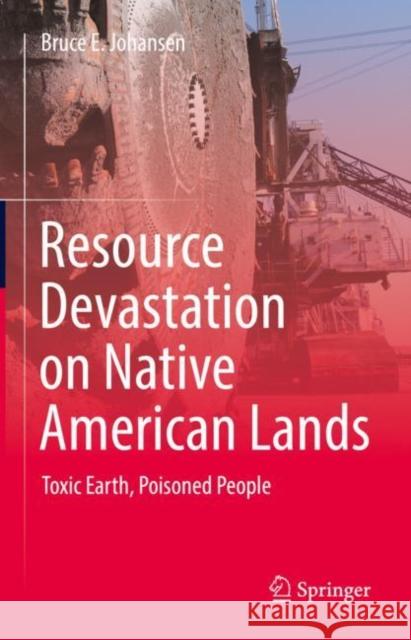
Bruce E. Johansen
Resource Devastation on Native American Lands: Toxic Earth, Poisoned People Johansen, Bruce E. 9783031218958 Springer - książkaWidoczna okładka, to zdjęcie poglądowe, a rzeczywista szata graficzna może różnić się od prezentowanej.

Resource Devastation on Native American Lands: Toxic Earth, Poisoned People

ISBN-13: 9783031218958 / Angielski / Twarda / 2023 / 228 str.

Bruce E. Johansen
cena 564,88
(netto: 537,98 VAT:  5%)

Najniższa cena z 30 dni: 501,19
Termin realizacji zamówienia:
ok. 22 dni roboczych
Bez gwarancji dostawy przed świętami

Darmowa dostawa!
inne wydania

This book focuses on the toxic legacy of Native North America, which is pervasive but largely invisible to most non-Native peoples. Many toxic sites are located in out-of-the-way rural areas largely forgotten by the majority of America, but which nonetheless have supplied its industries with the rudiments of manufacturing for the better part of a century before being closed and cast aside. Thousands of contaminated sites exist in the United States due to dumped, left out, or otherwise improperly managed hazardous waste. These sites include manufacturing facilities, processing plants, landfills, and mining sites. Based on the 1980 Comprehensive Environmental Response, Compensation and Liability Act (CERCLA), the US Environmental Protection Agency (EPA) cleans up these so-called Superfund sites, of which roughly 40 percent are located in Native country.The book links present-day Native American cultural and economic revival to a fundamental struggle to restore the health of both Native peoples and their homelands. It links past and present with a sense of Native Americans’ perceptions of nature and the sacred land. By doing so, it also provides the majority society with an example to emulate as we emerge, by necessity, from the age of fossil fuels into a sustainable energy paradigm.This makes the book a must-read for students, scholars, and researchers of Native American studies, US politics, environmental studies, public policy, as well as policy-makers interested in a better understanding of the environmental devastation of Native land and its consequences.

This book focuses on the toxic legacy of Native North America, which is pervasive but largely invisible to most non-Native peoples. Many toxic sites are located in out-of-the-way rural areas largely forgotten by the majority of America, but which nonetheless have supplied its industries with the rudiments of manufacturing for the better part of a century before being closed and cast aside. Thousands of contaminated sites exist in the United States due to dumped, left out, or otherwise improperly managed hazardous waste. These sites include manufacturing facilities, processing plants, landfills, and mining sites. Based on the 1980 Comprehensive Environmental Response, Compensation and Liability Act (CERCLA), the US Environmental Protection Agency (EPA) cleans up these so-called Superfund sites, of which roughly 40 percent are located in Native country.



The book links present-day Native American cultural and economic revival to a fundamental struggle to restore the health of both Native peoples and their homelands. It links past and present with a sense of Native Americans’ perceptions of nature and the sacred land. By doing so, it also provides the majority society with an example to emulate as we emerge, by necessity, from the age of fossil fuels into a sustainable energy paradigm. 

This makes the book a must-read for students, scholars, and researchers of Native American studies, US politics, environmental studies, public policy, as well as policy-makers interested in a better understanding of the environmental devastation of Native land and its consequences. 

Kategorie:
Nauka, Polityka
Kategorie BISAC:
Political Science > General
Science > Environmental Science (see also Chemistry - Environmental)
History > Americas (North Central South West Indies)
Wydawca:
Springer
Język:
Angielski
ISBN-13:
9783031218958
Rok wydania:
2023
Dostępne języki:
Ilość stron:
228
Oprawa:
Twarda
Dodatkowe informacje:
Wydanie ilustrowane

Chapter 1. Introduction.- Chapter 2. Land of the Toxic Turtles.- Chapter 3. The Deadly Yellow Dirt.- Chapter 4. Pig-shit Showers: A Neighbourly Stench.- Chapter 5. An Ice World Melts.- Chapter 6. The Inuit (and Others): If It Swims, It’s Poison.- Chapter 7. Alberta’s Moonscape: If This Sounds Apocalyptic, It Is.- Chapter 8. Mining: Angering the Water Babies and Tearing at Mother’s Breast.

​​Bruce E. Johansen is a Frederick W. Kayser research professor emeritus for Communication and Native American Studies at the University of Nebraska at Omaha, USA, where he taught and researched from 1982 to 2019, then retired with emeritus status. Johansen has earned a national and international reputation as a scholar and interpreter of Native American history and present-day concerns, as well as environmental issues, most notably global warming and toxic chemical pollution. Johansen’s writing has been published, debated, and reviewed in many academic venues, among them the William and Mary Quarterly, American Historical Review, Current History, and Nature, as well as in many popular newspapers and magazines, such as The New York Times and The National Geographic. An expert and prolific writer on the topic, he has published several books with a related thematic focus, such as Environmental Racism in the United States and Canada (Praeger, 2020) and Seattle’s El Centro de la Raza: Martin Luther King, Jr.’s Living Laboratory (Lexington, 2020).

This book focuses on the toxic legacy of Native North America, which is pervasive but largely invisible to most non-Native peoples. Many toxic sites are located in out-of-the-way rural areas largely forgotten by the majority of America, but which nonetheless have supplied its industries with the rudiments of manufacturing for the better part of a century before being closed and cast aside. Thousands of contaminated sites exist in the United States due to dumped, left out, or otherwise improperly managed hazardous waste. These sites include manufacturing facilities, processing plants, landfills, and mining sites. Based on the 1980 Comprehensive Environmental Response, Compensation and Liability Act (CERCLA), the US Environmental Protection Agency (EPA) cleans up these so-called Superfund sites, of which roughly 40 percent are located in Native country.


The book links present-day Native American cultural and economic revival to a fundamental struggle to restore the health of both Native peoples and their homelands. It links past and present with a sense of Native Americans’ perceptions of nature and the sacred land. By doing so, it also provides the majority society with an example to emulate as we emerge, by necessity, from the age of fossil fuels into a sustainable energy paradigm. 

This makes the book a must-read for students, scholars, and researchers of Native American studies, US politics, environmental studies, public policy, as well as policy-makers interested in a better understanding of the environmental devastation of Native land and its consequences. 


Udostępnij

Facebook - konto krainaksiazek.pl


Opinie o Krainaksiazek.pl na Opineo.pl

Partner Mybenefit

Krainaksiazek.pl w programie rzetelna firma Krainaksiaze.pl - płatności przez paypal

Czytaj nas na:

Facebook - krainaksiazek.pl
  • książki na zamówienie
  • granty
  • książka na prezent
  • kontakt
  • pomoc
  • opinie
  • regulamin
  • polityka prywatności

Zobacz:

  • Księgarnia czeska

  • Wydawnictwo Książkowe Klimaty

1997-2025 DolnySlask.com Agencja Internetowa

© 1997-2022 krainaksiazek.pl
     
KONTAKT | REGULAMIN | POLITYKA PRYWATNOŚCI | USTAWIENIA PRYWATNOŚCI
Zobacz: Księgarnia Czeska | Wydawnictwo Książkowe Klimaty | Mapa strony | Lista autorów
KrainaKsiazek.PL - Księgarnia Internetowa

Polityka prywatnosci - link
Krainaksiazek.pl - płatnośc Przelewy24
Przechowalnia Przechowalnia




