• Wyszukiwanie zaawansowane
  • Kategorie
  • Kategorie BISAC
  • Książki na zamówienie
  • Promocje
  • Granty
  • Książka na prezent
  • Opinie
  • Pomoc
  • Załóż konto
  • Zaloguj się

Research Methods in Neurochemistry: Volume 3 » książka


zaloguj się | załóż konto
Logo Krainaksiazek.pl

koszyk

konto

szukaj
topmenu
Księgarnia internetowa
Szukaj
Książki na zamówienie
Promocje
Granty
Książka na prezent
Moje konto
Pomoc
 
 
Wyszukiwanie zaawansowane
Pusty koszyk
Bezpłatna dostawa dla zamówień powyżej 20 złBezpłatna dostawa dla zamówień powyżej 20 zł

Kategorie główne

• Nauka
 [2939893]
• Literatura piękna
 [1808953]

  więcej...
• Turystyka
 [70366]
• Informatyka
 [150555]
• Komiksy
 [35137]
• Encyklopedie
 [23160]
• Dziecięca
 [608786]
• Hobby
 [136447]
• AudioBooki
 [1631]
• Literatura faktu
 [225099]
• Muzyka CD
 [360]
• Słowniki
 [2914]
• Inne
 [442115]
• Kalendarze
 [1068]
• Podręczniki
 [166599]
• Poradniki
 [468390]
• Religia
 [506548]
• Czasopisma
 [506]
• Sport
 [61109]
• Sztuka
 [241608]
• CD, DVD, Video
 [3308]
• Technologie
 [218981]
• Zdrowie
 [98614]
• Książkowe Klimaty
 [124]
• Zabawki
 [2174]
• Puzzle, gry
 [3275]
• Literatura w języku ukraińskim
 [260]
• Art. papiernicze i szkolne
 [7376]
Kategorie szczegółowe BISAC

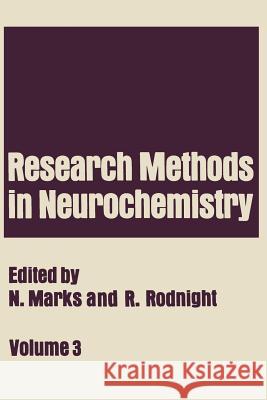
Research Methods in Neurochemistry: Volume 3

ISBN-13: 9781461344605 / Angielski / Miękka / 2011 / 468 str.
Neville Marks
Research Methods in Neurochemistry: Volume 3 Marks, Neville 9781461344605 Springer - książkaWidoczna okładka, to zdjęcie poglądowe, a rzeczywista szata graficzna może różnić się od prezentowanej.

Research Methods in Neurochemistry: Volume 3

ISBN-13: 9781461344605 / Angielski / Miękka / 2011 / 468 str.

Neville Marks
cena 200,77
(netto: 191,21 VAT:  5%)

Najniższa cena z 30 dni: 192,74
Termin realizacji zamówienia:
ok. 22 dni roboczych.

Darmowa dostawa!

With the continued rapid expansion of neurochemical research, there has been no shortage of new developments in methodology for this third volume of Research Methods in Neurochemistry. As in previous volumes we have again tried to provide some balance in the subjects represented. The wisdom of this policy may be questioned since it can lead to delay in publica tion, but there are many approaches to the chemical study of the nervous system and a methods book needs to stand on its own as well as be part of a series. In one respect, however, the present volume departs from this policy, in that we have included two chapters on micromethods for analyzing amines and amino acids, both giving special emphasis to dansylation techniques. These chapters are complementary and we feel justified in publishing them in one volume in view of the importance of such micromethods for the study of neural systems. At the other end of the scale, particular attention may be drawn to the chapter by D. D. Gilboe and colleagues describing their remarkable procedures for studying metabolism in the isolated canine brain. We were fortunate also in persuading S. S. Oja to extend the general prin ciples of transport systems he described in Volume 2 to amino acids in brain slices. In addition, there are the usual chapters on components of neural tissues, which once again we have found convenient to divide into enzymes, macromolecules, and other constituents."


Kategorie:
Nauka, Medycyna
Kategorie BISAC:
Medical > Neuroscience
Wydawca:
Springer
Język:
Angielski
ISBN-13:
9781461344605
Rok wydania:
2011
Wydanie:
Softcover Repri
Ilość stron:
468
Waga:
0.71 kg
Wymiary:
22.9 x 15.2
Oprawa:
Miękka
Wolumenów:
01
Dodatkowe informacje:
Wydanie ilustrowane

Section I Properties of Intact Neural Tissues.- 1 Use of the Isolated Canine Brain in Studies of Cerebral Metabolism, Metabolite Transport, and Cerebrovascular Physiology.- I. Introduction.- II. Methods.- A. Procedure for the Isolation of the Canine Brain.- B. Anesthesia.- C. Perfusion Fluid.- D. Blood Gases.- E. The Perfusion System.- F. Criteria of Viability.- III. Experimental Procedures.- A. Net Metabolite Flux.- B. Unidirectional Metabolite Influx.- C. Intermediary Metabolism.- D. Vascular Physiology.- IV. Initial Equipment Needs.- References.- 2 Axoplasmic Transport.- I. Introduction.- II. Criteria.- III. Central Nervous System.- A. The Optic Pathway.- B. Nonvisual CNS Systems.- IV. Peripheral Nervous System.- A. Radioisotopic Methods.- B. Histochemical and Enzymic Methods.- C. Bidirectional and Retrograde Axoplasmic Flow.- V. Invertebrate Preparations.- VI. Radioautography.- VII. Conclusions.- A. Isolated Systems.- B. In Vivo Systems.- References.- 3 Transport of Amino Acids in Brain Slices.- I. Introduction.- II. Current Transport Mechanism Concepts.- A. Diffusion.- B. Carrier Transport.- C. Simultaneous Transport Mechanisms.- D. Solute Interactions in Carrier Transport.- III. The Study of Influx.- A. General Technical Procedures.- B. Determination of the Compound Transported.- C. Swelling or Shrinking of Slices During Incubation.- D. Intracellular and Extracellular Spaces.- E. Data Analysis.- F. Evaluation of Influx Constants.- G. A Method for Studying the Influx of Phenylalanine.- IV. Studies on Efflux.- A. Data Analysis.- B. A Method of Studying the Efflux of Tryptophan.- V. Equilibrium Experiments.- A. Incubation Conditions.- B. Data Analysis.- VI. Conclusions.- References.- 4 Glycine Enzymes and Uptake Systems.- I. Introduction.- II. Enzymes of Glycine Metabolism.- A. General Considerations.- B. Serine Hydroxymethyltransferase.- C. Glycine Transaminase.- D. 3-Phosphoglycerate and Glycerate Dehydrogenases.- E. Glycine Cleavage System.- III. Uptake Systems.- A. Uptake into Tissue Slices.- B. Uptake into Subcellular Particles.- References.- Section IIA Components of Neural Tissues: Enzymes.- 5 Assay and Purification of Brain Monoamine Oxidase.- I. Introduction.- II. Assay Methods of MAO.- A. Histochemical Localization of MAO.- B. Histochemical Localization on Polyacrylamide Gels.- C. Spectrophotometric Assay.- D. Fluorometric Determination Assays.- E. Oxygen Polarographic Assay.- F. Ammonia Determination.- G. Radioactive Assay.- H. In Vivo Assay of MAO.- I. Estimation of MAO by Titration with Irreversible 14C Inhibitors.- III. Preparation of Particulate and Soluble Brain MAO.- A. Distribution.- B. Intracellular Distribution.- C. Preparation of Crude Mitochondrial—Synaptosomal Fraction by Differental Centrifugation.- D. Density Gradient Centrifugation.- E. Purification of Brain MAO.- F. Electrophoretic Separation of Multiple Forms of MAO.- G. Immunological Identity of the Multiple Forms of Mitochondrial MAO.- IV. Future Developments.- V. Guide to Monoamine Oxidase Assay Procedures.- A. Histochemical Localization.- B. Histochemical Localization on Gel.- C. Spectrophotometric Assay.- D. Radioactive Assay.- E. Oxygen and Ammonia Determination.- F. In Vivo Assay.- G. Titration of MAO with 14C Inhibitors.- References.- 6 Acetylcholinesterase.- I. Introduction.- II. Assay Methods.- A. Biochemical Assays.- B. Histochemical Techniques.- III. Purification.- A. Conventional Techniques.- B. Affinity Chromatography.- IV. Methods of Molecular Characterization.- A. Gel Filtration.- B. Electrophoretic Techniques.- C. Density Gradient Centrifugation.- D. Analytical Ultracentrifugation.- E. Active Site Titrations.- F. Amino Acid Analysis.- G. Electron Microscopy.- V. Concluding Remarks.- References.- 7 Radiochemical Assays for Choline Acetyltransferase and Acetylcholinesterase.- I. Introduction.- II. Choline Acetyltransferase.- A. Enzyme Preparation.- B. Assay Methods.- C. Procedures for Choline Acetyltransferase Assay.- III. Acetylcholinesterase.- A. Procedure.- Appendix—Special Reagents.- References.- 8 Phosphate-Activated Glutaminase in Brain.- I. Introduction.- II. Assay of Glutaminase.- A. Determination of Ammonia.- B. Determination of Glutamate.- III. Purification of Phosphate-Activated Pig Brain Glutaminase.- A. Acetone Powder Preparation.- B. Sodium Sulfate Fractionation.- C. Repeated Solubilizations and Precipitations in Tris-HCl Buffer and Phosphate—Borate Buffer, Respectively.- D. Purity Tests.- IV. Properties.- A. Molecular Properties.- B. Kinetic Properties and Metabolic Regulation.- References.- Section IIB Components of Neural Tissues: Lipids, Proteins, and Polylipids.- 9 Analysis of Phospholipids by Sequential Chemical Degradation.- I. Introduction.- II. Factors Involved in the Procedures.- A. Optimum Conditions.- B. Prevention of Side-Product Formation.- C. Partition of Products.- D. Fractionation of Products.- III. Procedure.- References.- 10 Analysis of Free and Esterified Fatty Acids in Neural Tissues Using Gradient-Thickness Thin-Layer Chromatography (GT-TLC).- I. Introduction.- II. Design Features.- III. General Precautions.- IV. Lipid Extraction.- A. Lipid Extraction from Whole Brain Tissue.- B. Lipid Extraction from Subcellular Fractions, Membranes, and Incubation Media.- C. Lipid Extraction from Frozen Neuroanatomical Regions.- D. Lipid Extraction with Recovery of Acid-Soluble Precursors.- V. Preparation of Gradient Layers.- VI. Quantitative Techniques.- VII. Preparative Techniques.- VIII. Preparation of Derivatives.- IX. Gas-Liquid Chromatography (GLC).- References.- 11 Methods for Studying Protein Phosphorylation in Cerebral Tissues.- I. Introduction.- II. Determination of Phosphoproteins in Neural Tissue.- A. Alternative Approaches to Determining Protein-Bound Phosphorus.- III. In Vitro Study of Protein Phosphorylation in Intact Preparations of Cerebral Tissue.- A. Experimental Design.- B. Determination of [32P] Protein Phosphorus.- C. Expression and Interpretation of Data.- IV. Determination of Protein Kinase Activity.- A. Protein Kinase Activity Toward Extrinsic Substrates.- B. Intrinsic Protein Kinase Activity.- V. Determination of Protein Phosphatase Activity.- A. Available Methods.- B. Protein Phosphatase Activity Toward Extrinsic Substrates.- VI. Conclusions.- References.- 12 Assays of Hypothalamic Releasing and Inhibiting Hormones.- I. Introduction.- II. Assay for TRH Activity.- A. Stimulation of TSH in Vitro in Short-Term Incubation of Rat Pituitaries.- B. Release of the Pituitary Hormone from Rat Hemipituitaries in Vitro During Two Successive Incubations.- C. Stimulation of TSH Release in Vitro from Sheep and Goat Pituitaries.- D. Stimulation of TSH Release in Vitro from Cultures of Dispersed Rat Pituitary Cells.- E. Stimulation of TSH Secretion in Organ Cultures of Rat Anterior Pituitaries.- F. The Release of 131I from Thyroid Glands of Mice Treated with Codeine and Thyroxine (T4).- G. Release of 125I or 131I from Thyroid Glands of Mice Treated with a Low Dose of Triiodothyronine (T3).- H. RIA for TRH.- III. Assay for LH-RH and FSH-RH.- A. Release of LH or FSH from Rat Pituitaries in Vitro.- B. Release of LH and FSH from Cultures of Rat Pituitary Cells.- C. Elevation of Serum LH in Ovariectomized Estrogen-Progesterone-Treated Rats.- D. Elevation of Serum LH and FSH in Immature Male Rats by Prolonged Infusion of LH-RH/FSH-RH.- E. Induction of Ovulation in Rabbits, Rats, and Hamsters.- F. Determination of LH-RH by Radioimmunoassay.- IV. Assay for CRH.- A. ACTH Release from Rat Pituitaries in Vitro.- B. ACTH Release in Vivo.- V. Assay for GH-RH and GH-RIH.- A. GH Release from Rat Pituitary Fragments in Vitro.- B. GH Release from Cultured Rat Pituitary Cells.- C. GH Release by Infusion of GH-RH into a Hypophyseal Portal Vessel of the Rat.- D. Other in Vivo Methods for GH-RH Using Rats.- VI. PRIH or PIF and PRH.- A. In Vitro Method for PRIH and PRH.- B. In Vivo Assays for PRIH and PRH.- VII. Assay for MRIH (MIF) and MRH.- A. In Vivo Assay for MRIH Using Nembutal, Morphine, and Ether-Treated Rats.- B. In Vivo Assay for MRIH by Direct Application of MRIH Preparations to Exposed Frog Pituitaries.- VIII. Binding Assay for Hypothalamic Hormones.- References.- 13 Structure—Activity Relationship of LH and FSH Releasing Hormone.- I. Introduction.- II. Isolation Methods for LH-RH.- III. Synthesis of LH-RH.- A. Solid-Phase Syntheses.- B. Classical Syntheses.- IV. Analogs of LH-RH.- A. The 1-Pyroglutamic Acid Position.- B. The 2-Histidine Position.- C. The 3-Tryptophan Position.- D. The 4-Serine Position.- E. The 5-Tyrosine Position.- F. The 6-Glycine Position.- G. The 7-Leucine Position.- H. The 8-Arginine Position.- I. The 9-Proline Position.- J. The 10-Glycine Position.- K. Peptides Shorter than the Decapeptide.- L. Peptide Inhibitors of LH-RH.- References.- Section IIC Components of Neural Tissues: Amino Acids.- 14 Assay Procedures for Polyamines and GABA in Animal Tissues with Special Reference to Dansylation Methods.- I. Introduction.- II. Analytical Procedures for Polyamines and GABA.- A. Chemical Methods.- B. Biological Assays.- C. Enzymatic Methods.- III. Principles of the Dansylation Reaction.- IV. Quantitative Analysis of GABA and Polyamines.- A. Reaction of Polyamines and GABA with Dansyl-Cl.- B. Chromatographic Separation.- C. Quantitative Evaluation of Thin-Layer Plates.- V. Conclusion.- References.- 15 The Use of Dansyl-Chloride for the Detection of Amino Acids and Serotonin in Nervous Tissue.- I. Introduction.- II. Procedures.- A. Microanalysis Using [14C]dansyl-Chloride.- B. Fluorescence Spectrophotometry.- C. Mass Spectrometry.- III. Use of the Dansyl-Chloride Technique in Neurochemical Studies.- A. Free Amino Acids and Serotonin in Isolated Snail Neurons Using [14C]Dansyl-Chloride.- B. Studies on “Turnover” of Glucose and Glutamic Acid in Isolated Snail Neurons.- C. Amino Acid Content of Vertebrate and Invertebrate Nervous Tissue.- D. Effects of Drugs on Isolated Snail Neurons.- E. Amino Acids and Serotonin in Different Anatomical Regions of the Rat Brain.- IV. Use of the Dansyl-Chloride Technique in the Analysis of Peptides and Proteins.- A. End-Group Determinations.- B. “Fingerprinting” Techniques.- V. Conclusion.- References.


Udostępnij

Facebook - konto krainaksiazek.pl


Opinie o Krainaksiazek.pl na Opineo.pl

Partner Mybenefit

Krainaksiazek.pl w programie rzetelna firma Krainaksiaze.pl - płatności przez paypal

Czytaj nas na:

Facebook - krainaksiazek.pl
  • książki na zamówienie
  • granty
  • książka na prezent
  • kontakt
  • pomoc
  • opinie
  • regulamin
  • polityka prywatności

Zobacz:

  • Księgarnia czeska

  • Wydawnictwo Książkowe Klimaty

1997-2026 DolnySlask.com Agencja Internetowa

© 1997-2022 krainaksiazek.pl
     
KONTAKT | REGULAMIN | POLITYKA PRYWATNOŚCI | USTAWIENIA PRYWATNOŚCI
Zobacz: Księgarnia Czeska | Wydawnictwo Książkowe Klimaty | Mapa strony | Lista autorów
KrainaKsiazek.PL - Księgarnia Internetowa

Polityka prywatnosci - link
Krainaksiazek.pl - płatnośc Przelewy24
Przechowalnia Przechowalnia






