(Re)membering Kenya Vol 2. Interrogating Marginalization and Governance » książka





(Re)membering Kenya Vol 2. Interrogating Marginalization and Governance
ISBN-13: 9789966028402 / Angielski / Miękka / 2013 / 232 str.
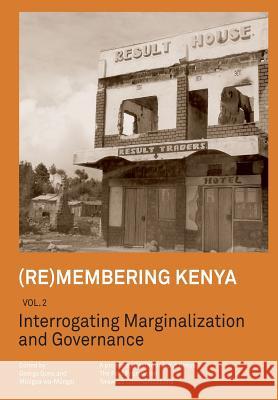
Out of the first series of public lectures titled (Re)membering Kenya organised by the Volume editors together with Twaweza Communications and supported by the Goethe Institut Kenya, The Ford Foundation and the Institute for International Education, and whose key outcome was the publication of Remembering Kenya Vol.1 (2010) grew a second round of lecture series. The second series took cognisance of the fact that the problems that bedevil Kenya as a nation go far beyond questions of culture and identity that Volume 1 dealt with. Thus, the second presentations revolved mainly around issues of economics, governance and power. The awareness of the role and/or lack of equity and social justice in causing Kenya's persistent problems informed all these presentations. Issues of how to bring marginalised groups into the mainstream were discussed. This Volume, in part, arises from the second presentations. The authors of chapters attempt to provide answers to the question: what entails (re)membering in post-conflict Kenya? From their work, it is clear that there is a lot to (re)member in Kenya, and many ways in which to reconfigure project Kenya. (Re)membering is re-thinking and reorganising our ways of doing things. It entails a juggling of priorities; between peace and reconciliation, peace and justice, and seeking justice and reconciliation without undermining peace, all of which are arduous exercises. Reconciling misconceptions about places, issues and people is part of this reconstitution too. New pathways require being embraced, past mistakes (individual and collective) acknowledged and giving earnest meaning to the vow 'never again ' Yet, as observed in this Volume, Kenyans must be vigilant against individuals and groups that have often resisted change. There are also material constraints to the achievement of the various economic activities that come with reconfiguring the Kenyan nation. Worse still there exist certain cultural underpinnings that continue to have a debilitating effect on efforts to forge a sustainable peace after conflict. These aspects require deep reflection and honest work. In part, the contributors to this Volume suggest how it can be done. There is a hint in these chapters that we need to find new organizing spaces and principles on which a 'new' Kenya can move forward. Equally, debating the very meanings of social justice and reconciliation against the background of potential conflict should be a project of this endeavor. Questioning and identifying where impunity begun is key to this process. In doing so, we begin liberating ourselves from Kenyan society's deep-rooted impunity. (Re)membering Kenya, after all, calls for a reconstruction of 'the journey to the conflict' in order to find the right balance between the right of remembrance and the duty of forgetfulness.
Out of the first series of public lectures titled (Re)membering Kenya organised by the Volume editors together with Twaweza Communications and supported by the Goethe Institut Kenya, The Ford Foundation and the Institute for International Education, and whose key outcome was the publication of Remembering Kenya Vol.1 (2010) grew a second round of lecture series. The second series took cognisance of the fact that the problems that bedevil Kenya as a nation go far beyond questions of culture and identity that Volume 1 dealt with. Thus, the second presentations revolved mainly around issues of economics, governance and power. The awareness of the role and/or lack of equity and social justice in causing Kenyas persistent problems informed all these presentations. Issues of how to bring marginalised groups into the mainstream were discussed. This Volume, in part, arises from the second presentations. The authors of chapters attempt to provide answers to the question: what entails (re)membering in post-conflict Kenya? From their work, it is clear that there is a lot to (re)member in Kenya, and many ways in which to reconfigure project Kenya. (Re)membering is re-thinking and reorganising our ways of doing things. It entails a juggling of priorities; between peace and reconciliation, peace and justice, and seeking justice and reconciliation without undermining peace, all of which are arduous exercises. Reconciling misconceptions about places, issues and people is part of this reconstitution too. New pathways require being embraced, past mistakes (individual and collective) acknowledged and giving earnest meaning to the vow never again! Yet, as observed in this Volume, Kenyans must be vigilant against individuals and groups that have often resisted change. There are also material constraints to the achievement of the various economic activities that come with reconfiguring the Kenyan nation. Worse still there exist certain cultural underpinnings that continue to have a debilitating effect on efforts to forge a sustainable peace after conflict. These aspects require deep reflection and honest work. In part, the contributors to this Volume suggest how it can be done. There is a hint in these chapters that we need to find new organizing spaces and principles on which a new Kenya can move forward. Equally, debating the very meanings of social justice and reconciliation against the background of potential conflict should be a project of this endeavor. Questioning and identifying where impunity begun is key to this process. In doing so, we begin liberating ourselves from Kenyan societys deep-rooted impunity. (Re)membering Kenya, after all, calls for a reconstruction of the journey to the conflict in order to find the right balance between the right of remembrance and the duty of forgetfulness.




Czytaj nas na:
KrainaKsiazek.PL - Księgarnia Internetowa


