• Wyszukiwanie zaawansowane
  • Kategorie
  • Kategorie BISAC
  • Książki na zamówienie
  • Promocje
  • Granty
  • Książka na prezent
  • Opinie
  • Pomoc
  • Załóż konto
  • Zaloguj się

Religion That Heals, Religion That Harms: A Guide for Clinical Practice » książka


zaloguj się | załóż konto
Logo Krainaksiazek.pl

koszyk

konto

szukaj
topmenu
Księgarnia internetowa
Szukaj
Książki na zamówienie
Promocje
Granty
Książka na prezent
Moje konto
Pomoc
 
 
Wyszukiwanie zaawansowane
Pusty koszyk
Bezpłatna dostawa dla zamówień powyżej 20 złBezpłatna dostawa dla zamówień powyżej 20 zł

Kategorie główne

• Nauka
 [2952079]
• Literatura piękna
 [1850969]

  więcej...
• Turystyka
 [71058]
• Informatyka
 [151066]
• Komiksy
 [35579]
• Encyklopedie
 [23181]
• Dziecięca
 [620496]
• Hobby
 [139036]
• AudioBooki
 [1646]
• Literatura faktu
 [228729]
• Muzyka CD
 [379]
• Słowniki
 [2932]
• Inne
 [445708]
• Kalendarze
 [1409]
• Podręczniki
 [164793]
• Poradniki
 [480107]
• Religia
 [510956]
• Czasopisma
 [511]
• Sport
 [61267]
• Sztuka
 [243299]
• CD, DVD, Video
 [3411]
• Technologie
 [219640]
• Zdrowie
 [100984]
• Książkowe Klimaty
 [124]
• Zabawki
 [2281]
• Puzzle, gry
 [3363]
• Literatura w języku ukraińskim
 [258]
• Art. papiernicze i szkolne
 [8020]
Kategorie szczegółowe BISAC

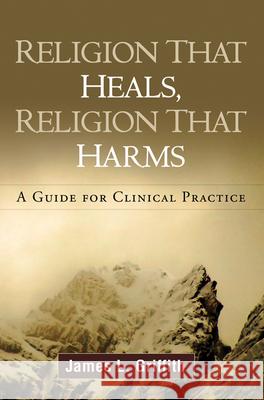
Religion That Heals, Religion That Harms: A Guide for Clinical Practice

ISBN-13: 9781606238899 / Angielski / Twarda / 2010 / 274 str.
James L Griffith
Religion That Heals, Religion That Harms: A Guide for Clinical Practice Griffith, James L. 9781606238899  - książkaWidoczna okładka, to zdjęcie poglądowe, a rzeczywista szata graficzna może różnić się od prezentowanej.

Religion That Heals, Religion That Harms: A Guide for Clinical Practice

ISBN-13: 9781606238899 / Angielski / Twarda / 2010 / 274 str.

James L Griffith
cena 208,83
(netto: 198,89 VAT:  5%)

Najniższa cena z 30 dni: 206,48
Termin realizacji zamówienia:
ok. 22 dni roboczych
Dostawa w 2026 r.

Darmowa dostawa!

Helps clinicians to intervene effectively in situations where religion is causing harm. This title includes examples that illustrate how religious beliefs and practices may propel suicide, violence, self-neglect, or undue suffering in the face of medical or emotional challenges.

Kategorie:
Nauka, Psychologia
Kategorie BISAC:
Psychology > Psychotherapy - General
Medical > Psychiatria
Social Science > Social Work
Język:
Angielski
ISBN-13:
9781606238899
Rok wydania:
2010
Ilość stron:
274
Waga:
0.50 kg
Wymiary:
22.86 x 15.49 x 2.79
Oprawa:
Twarda
Wolumenów:
01
Dodatkowe informacje:
Bibliografia
Obwoluta
Wydanie ilustrowane

Exploring the shadow side of religion, Griffith is frank about the religious and political engagements that motivate his work, and passionate in his commitment to mental health care that fully engages our humanity. With great skill and creativity, he reveals how religious and spiritual dilemmas, when confronted with clarity and compassion, may hold the keys to positive transformation. This work is courageous, clear sighted, and essential.--Laurence J. Kirmayer, MD, James McGill Professor and Director, Division of Social and Transcultural Psychiatry, McGill University

This profound book reminds us that religion has been associated with not only the most impressive accomplishments of humankind, but also its darkest periods. Griffith provides a wealth of cross-cultural clinical examples in which religion serves as a foundation for psychopathology or self-harm. Yet he also explicates how personal spirituality and organized religion can provide paths towards recovery and equanimity. I highly recommend this book because of its philosophical depth, practicality, and uniqueness in the clinical realm. Griffith reminds clinicians of all faith orientations to give serious attention to our clients’ spirituality.--Barent W. Walsh, PhD, Executive Director, The Bridge of Central Massachusetts, Inc.

This is a wise book, carefully crafted by a psychiatrist who is well acquainted with the empirical literature on the psychology of religion. Griffith avoids both naive apologetics and reductionism in providing insights into how to work with what he terms religiously determined patients, including those whose beliefs are distant from one's own. No simple answers are provided; rather the reader is gradually pulled into the guiding thread of the entire text--the importance of maintaining a therapeutic stance of neighborly respect, even when beliefs may be linked to psychological crises and potentially destructive behaviors.--Ralph W. Hood, Jr., PhD, Department of Psychology, University of Tennessee at Chattanooga
An important, original book on a topic we face daily, in both our professional and personal lives. With flowing prose, Griffith mines complex areas of research--sociobiology, neurobiology, and attachment theory chief among them--to make crucial distinctions among benign and destructive religious beliefs and practices. After reading this book, clinicians will feel better equipped to engage in meaningful dialogue with patients for whom distinguishing between symptoms of mental illness and 'troubling but nonetheless normal' religious ideas and behavior is essential. The book’s blend of conceptual and clinical case material, along with practical suggestions, will appeal to graduate students as well as seasoned clinicians. This is a wise and compassionate book that will be a lasting reference.--Kaethe Weingarten, PhD, Department of Psychiatry, Harvard Medical School; Director, The Witnessing Project
-
Griffith...delivers precisely what his book's title promises. This is a well-balanced guidebook for clinicians across health-related fields who treat what Griffith terms 'religiously determined' clients or patients. The author deftly uses sociobiology and neurobiology to generate an interpretive framework for contextualizing and accessing a wide range of factors that can influence the roles played by religion (and more broadly by spiritual orientation) in human lives, as well as their unanticipated and sometimes potentially problematic consequences. In addition to professional clinicians, Griffith's book would reward students of mystical traditions, including specialists in spiritual direction, psychology of religion scholars, and those interested in cross-cultural comparisons....Griffith's convenient single volume provides an apt integration of current thought concerning science and healing, is enriched by relevant stories derived from recent clinical experience, and can serve as a practical resource for all sorts of healers and helpers. Recommended. Lower-level undergraduates through professionals/practitioners; general readers.
--Choice, 8/11/2010

Introduction. When Religion Goes Bad: A Mental Health Problem?
I. A Map for Navigating the Terrain of Religion
1. What Sociobiology Explains about Destructive Uses of Religion
2. What Neurobiology Explains about Destructive Uses of Religion
3. Setting the Stage: Opening Dialogue about Religious Life
4. Locating Personal Spirituality through Existential Inquiry
II. When Religious Life Propels Suffering
5. Seeking a Parent in God: Clinical Problems from Insecure Attachments
6. Seeking Security within the Flock: Clinical Problems from Social Hierarchy, Peer Affiliation, and Reciprocal Altruism
7. Asserting Primacy of Personal Spirituality over Sociobiological Religion
8. The Religious Who Protect Only Their Own: Clinical Problems from Peer Affiliation, Kin Recognition, and Social Exchange
III. When Mental Illness Infiltrates Religious Life
9. Religion That Is a Voice for Mental Illness
10. Dark Nights and Exaltation: Religion Distorted by a Mood Disorder
11. Worlds Confused: Religion Disorganized by Psychosis
12. Fear and Dread: Religion Shrunken by an Anxiety Disorder
IV. A Clinician’s Stance
13. Finding a Place to Stand: Conversing with Religiously Determined Patients

James L. Griffith, MD, is Professor of Psychiatry and Neurology and Associate Chair of the Department of Psychiatry and Behavioral Sciences at the George Washington University Medical Center in Washington, DC. He also is Director of the Psychiatry Residency Program and Director of the Psychiatric Consultation–Liaison Service at George Washington University Hospital. As an educator, Dr. Griffith has developed a program of psychiatric residency training that balances biological and psychosocial therapies in the treatment of patients within their family, community, and cultural contexts. Currently, he provides psychiatric treatment for immigrants, refugees, and survivors of political torture at Northern Virginia Family Services in Falls Church, Virginia. He is a recipient of the Human Rights Community Award from the United Nations Association of the National Capital Area, the Margaret B. and Cyril A. Schulman Distinguished Service Award from the George Washington University Medical Center, the Psychiatrist of the Year Award from the Washington Psychiatric Society, the Distinguished Teacher Award from the George Washington University School of Medicine,and, most recently, the Creative Scholarship Award from the Society for the Study of Psychiatry and Culture.




Udostępnij

Facebook - konto krainaksiazek.pl


Opinie o Krainaksiazek.pl na Opineo.pl

Partner Mybenefit

Krainaksiazek.pl w programie rzetelna firma Krainaksiaze.pl - płatności przez paypal

Czytaj nas na:

Facebook - krainaksiazek.pl
  • książki na zamówienie
  • granty
  • książka na prezent
  • kontakt
  • pomoc
  • opinie
  • regulamin
  • polityka prywatności

Zobacz:

  • Księgarnia czeska

  • Wydawnictwo Książkowe Klimaty

1997-2025 DolnySlask.com Agencja Internetowa

© 1997-2022 krainaksiazek.pl
     
KONTAKT | REGULAMIN | POLITYKA PRYWATNOŚCI | USTAWIENIA PRYWATNOŚCI
Zobacz: Księgarnia Czeska | Wydawnictwo Książkowe Klimaty | Mapa strony | Lista autorów
KrainaKsiazek.PL - Księgarnia Internetowa

Polityka prywatnosci - link
Krainaksiazek.pl - płatnośc Przelewy24
Przechowalnia Przechowalnia



