Reimag(in)ing the Victorians in Contemporary Art: Britain and Beyond » książka





Reimag(in)ing the Victorians in Contemporary Art: Britain and Beyond
ISBN-13: 9783031284922 / Angielski
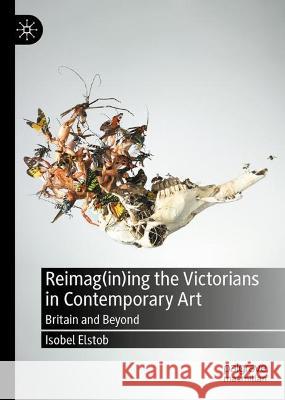
From contemporary deployments of taxidermy, magic lanterns and microscopy to the visualization of forgotten lives, marginalized narratives and colonial histories, this book explores how the work of artists including Mat Collishaw, Yinka Shonibare, Tessa Farmer, Mark Dion, Dorothy Cross and Ingrid Pollard reimag(in)es the Victorians in the ‘present’. Examining how recent paintings, sculptures, photographs, installations and films revisit and re-present nineteenth-century technologies, practices and events, the book’s rich interdisciplinary approach applies literary, media and linguistic theories to its analysis of visual artworks, alongside in-depth discussions of the Victorian inventions, discourses and narratives that they invoke. The book’s emphasis on how – and why – we represent the historical past in the present makes its contribution particularly timely. And by drawing attention to the importance of historiography to the work of these artists, it also unravels the complicated history of History itself. This book will speak to diverse audiences including those interested in art history, visual culture, Victorian and neo-Victorian studies, as well as literature, media, histories of science, postcolonialism, museology, gender studies, postmodern and poststructuralist theory, and the history of ideas.
From contemporary deployments of taxidermy, magic lanterns and microscopy to the visualization of forgotten lives, marginalized narratives and colonial histories, this book explores how the work of artists including Mat Collishaw, Yinka Shonibare, Tessa Farmer, Mark Dion, Dorothy Cross and Ingrid Pollard reimag(in)es the Victorians in the ‘present’. Examining how recent paintings, sculptures, photographs, installations and films revisit and re-present nineteenth-century technologies, practices and events, the book’s rich interdisciplinary approach applies literary, media and linguistic theories to its analysis of visual artworks, alongside in-depth discussions of the Victorian inventions, discourses and narratives that they invoke. The book’s emphasis on how – and why – we represent the historical past in the present makes its contribution particularly timely. And by drawing attention to the importance of historiography to the work of these artists, it also unravels the complicated history of History itself. This book will speak to diverse audiences including those interested in art history, visual culture, Victorian and neo-Victorian studies, as well as literature, media, histories of science, postcolonialism, museology, gender studies, postmodern and poststructuralist theory, and the history of ideas.




Czytaj nas na:
KrainaKsiazek.PL - Księgarnia Internetowa


