• Wyszukiwanie zaawansowane
  • Kategorie
  • Kategorie BISAC
  • Książki na zamówienie
  • Promocje
  • Granty
  • Książka na prezent
  • Opinie
  • Pomoc
  • Załóż konto
  • Zaloguj się

Regenerative Agriculture: What's Missing? What Do We Still Need to Know? » książka


zaloguj się | załóż konto
Logo Krainaksiazek.pl

koszyk

konto

szukaj
topmenu
Księgarnia internetowa
Szukaj
Książki na zamówienie
Promocje
Granty
Książka na prezent
Moje konto
Pomoc
 
 
Wyszukiwanie zaawansowane
Pusty koszyk
Bezpłatna dostawa dla zamówień powyżej 20 złBezpłatna dostawa dla zamówień powyżej 20 zł

Kategorie główne

• Nauka
 [2949965]
• Literatura piękna
 [1857847]

  więcej...
• Turystyka
 [70818]
• Informatyka
 [151303]
• Komiksy
 [35733]
• Encyklopedie
 [23180]
• Dziecięca
 [617748]
• Hobby
 [139972]
• AudioBooki
 [1650]
• Literatura faktu
 [228361]
• Muzyka CD
 [398]
• Słowniki
 [2862]
• Inne
 [444732]
• Kalendarze
 [1620]
• Podręczniki
 [167233]
• Poradniki
 [482388]
• Religia
 [509867]
• Czasopisma
 [533]
• Sport
 [61361]
• Sztuka
 [243125]
• CD, DVD, Video
 [3451]
• Technologie
 [219309]
• Zdrowie
 [101347]
• Książkowe Klimaty
 [123]
• Zabawki
 [2362]
• Puzzle, gry
 [3791]
• Literatura w języku ukraińskim
 [253]
• Art. papiernicze i szkolne
 [7933]
Kategorie szczegółowe BISAC

Regenerative Agriculture: What's Missing? What Do We Still Need to Know?

ISBN-13: 9783030722265 / Angielski / Miękka / 2022
Dent, David
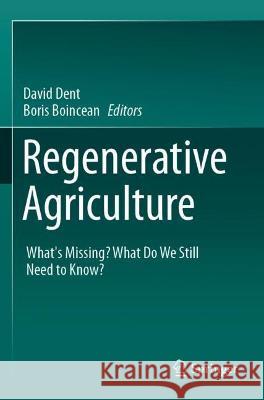
Regenerative Agriculture: What's Missing? What Do We Still Need to Know? Dent, David 9783030722265 Springer International Publishing - książkaWidoczna okładka, to zdjęcie poglądowe, a rzeczywista szata graficzna może różnić się od prezentowanej.

Regenerative Agriculture: What's Missing? What Do We Still Need to Know?

ISBN-13: 9783030722265 / Angielski / Miękka / 2022

Dent, David
cena 1210,50
(netto: 1152,86 VAT:  5%)

Najniższa cena z 30 dni: 1156,64
Termin realizacji zamówienia:
ok. 22 dni roboczych
Bez gwarancji dostawy przed świętami

Darmowa dostawa!

The food system is our last coal-fired power station, our last diesel engine. This book is a trans-disciplinary approach to what needs to be done to make our food system sustainable and to regenerate soil and water resources, habitat, economy and society. The book brings back classical principles of agronomy and integrates economic, agro-ecological and social perspectives, drawing on a wealth of expertise on the political economy of the food system, Conservation Agriculture, and long-term field experiments.Regenerative agriculture builds on known knowns – like crop rotation, water and nutrient requirements, soil and water conservation, farm-gate prices, international trade and supply chains. It grapples with known unknowns – like weed, pest and disease control without agrochemicals, cover crops for profit as well as protection, mitigating and adapting to the climate crisis, resilience and tipping points in ecosystems, farming systems and societies, and how we can pay for imperative changes.  Lastly, it acknowledges unknown unknowns – the things we are oblivious to but which we really must know – like how to liberate the ghettos of the mind inhabited by farmers, agronomists, politicians and societies.


Kategorie:
Nauka, Biologia i przyroda
Kategorie BISAC:
Technology & Engineering > Agriculture - General
Science > Earth Sciences - General
Technology & Engineering > Environmental - General
Wydawca:
Springer International Publishing
Język:
Angielski
ISBN-13:
9783030722265
Rok wydania:
2022
Waga:
0.57 kg
Wymiary:
23.5 x 15.5
Oprawa:
Miękka
Dodatkowe informacje:
Wydanie ilustrowane

Policy issues

The Cost of Food.   Consequences of not valuing soil, water and those who manage them.  Tony Allan, Professor Emeritus at Kings College and SOAS London,  Stockholm, Prince Albert of Monaco and Bardini Foundation award winner

Changing the Paradigm of agricultural intensification. Challenges faced by agriculture in Moldova.  Urie Usurelu, General Secretary, Ministry of Agriculture, Regional Development and Environment, Republic of Moldova

The Alberta Experience.  Climate change action plan, cap-and-trade legislation for carbon emissions, and carbon credits for farmers.  Tom Goddard, Senior Adviser, Ministry of Agriculture, Edmonton, Canada 

The Social Food Service market – a lever for change.  Maurizio Mariani, Eating City.com, Marcieux, France

Discussion, chaired and summarized by Prof. Dr Valeriu Tabara, President of the Romanian Academy of Agricultural and Forest Sciences, formerly Minister of Agriculture, Romania


What is missing?

Is the future of Agriculture Perennial?  The fundamental difference between natural ecosystems and agro-ecosystems.  Dr Tim Crews, The Land Institute, Salina, Kansas, USA

Lessons and perspectives from Conservation Agriculture in Brazil.   John Landers OBE, CA pioneer, Dr honoris causa, Heidelberg and Emil Mrak awardwinner

Managing chernozem to achieve Sustainable Development Goals.   Rattan Lal, Distinguished Professor at Ohio State University, Columbus OH, USA, Japan Prizewinner

Quality and health of anthropically transformed Black Earth.  Dr Nina Frunz, Nicolae Dimo Institute, Chisinau, Moldova

Seeking an alternative for weed control in Conservation Agriculture.  Organic farming in Austria. Alfred Grand, Austria

Step-by-step to fill the gaps along the path to sustainability.  Dr Hans Ramesier, BioSuisse, Basel, Switzerland

 Discussion chaired and summarized by Professor BP Boincean and Dr David Dent ACM


Action towards sustainable agriculture for food and water security and to mitigate and adapt to the climate crisis

Agricultural Research and the Agriculture of the Future.  Prof. Dr Valeriu Tabără, Ioan Jelev & Marian Bogoescu , Academy of Agricultural and Forestry Sciences, Bucharest, Romania

The LONE Concept, Agriculture of the Future.  Dr Eugene Triboi, INRA, Clermont Ferrand, France

Adaptation to climate change through plant breeding: the status of winter wheat.  Dr Karoline Kunz, Germany

Long-term research on crop rotation.  Dr Gheorghe Sin & Dr Elena Partal, National Agricultural Research-Development Institute, Fundulea, Romania

Sustainable intensification of agriculture on the Bălţi steppe. Crop diversity, irrigation, and no-till in crop rotations.  Professor Dr hab. Boris Boincean and others, Selectia Institute of Arable Crops and Alecu Russo Bălţi State University, Moldova

Restoration of the degraded plough layer of Chernozem prior to implementation of Zero Tillage.  Professor, Dr hab. Valerian Cerbari and Dr Tamara Leah, Nicolae Dimo Institute of Pedology, Agrochemistry and Soil Protection, Chisinau, Moldova

The Big Picture - some ideas for research and action: an International Hydrological Network for Food-water; needs and opportunities for financing regenerative agriculture across the steppes through Green Bonds.  Dr David Dent

Further contributions from colleagues in Russia, Ukraine and Kazakhstan still to be confirmed. We have invited the lead speakers introduce poster contributions from young colleagues. 


Conclusions, Recommendations and Declaration

Pointers for decision-makers, researchers and practical farmers

Boris Boincean knows the black earth. As a son of the steppe, he has spent his professional life cheek by jowl with chernozem. He holds the degree of Dr Hab. agricultural sciences from Moscow Timireazev Akademy (University) and, for many years, has directed the long-term field experiments at the Selectia Research Institute for Field Crops on the Bălţi Steppe, in Moldova  - the very soil described by Dokuchaev in 1887 as 'first class'. He also holds the Chair of Natural Resources and Agro-ecology at Alecu Russo Bălţi State University.


David Dent is an independent scientist. He has worked in soil survey, land evaluation and land use planning on every continent - in the public service as a researcher and university teacher, and as a consultant to governments, international organisations and the private sector. Most recently, he was Director of ISRIC World Soil Information in Wageningen, The Netherlands, and he now works from his farmhouse in Norfolk.

The food system is our last coal-fired power station, our last diesel engine. This book is a trans-disciplinary treatment of what needs to be done to make it not only sustainable but also to regenerate soil and water resources, habitat, economy and society. The book brings back classical principles of agronomy and integrates economic, agro-ecological and social perspectives, drawing on a wealth of expertise on the political economy of the food system, Conservation Agriculture, and long-term field experiments.

Regenerative agriculture builds on known knowns – like crop rotation, water and nutrient requirements, soil and water conservation, farm-gate prices, international trade and supply chains. It grapples withknown unknowns – like weed, pest and disease control without agrochemicals, cover crops for profit as well as protection, mitigating and adapting to the climate crisis, resilience and tipping points in ecosystems, farming systems and societies, and how we can pay for imperative changes.  Lastly, it acknowledges unknown unknowns – the things we are oblivious to but which we really must know – like how to liberate the ghettos of the mind inhabited by farmers, agronomists, politicians and societies.




Udostępnij

Facebook - konto krainaksiazek.pl


Opinie o Krainaksiazek.pl na Opineo.pl

Partner Mybenefit

Krainaksiazek.pl w programie rzetelna firma Krainaksiaze.pl - płatności przez paypal

Czytaj nas na:

Facebook - krainaksiazek.pl
  • książki na zamówienie
  • granty
  • książka na prezent
  • kontakt
  • pomoc
  • opinie
  • regulamin
  • polityka prywatności

Zobacz:

  • Księgarnia czeska

  • Wydawnictwo Książkowe Klimaty

1997-2025 DolnySlask.com Agencja Internetowa

© 1997-2022 krainaksiazek.pl
     
KONTAKT | REGULAMIN | POLITYKA PRYWATNOŚCI | USTAWIENIA PRYWATNOŚCI
Zobacz: Księgarnia Czeska | Wydawnictwo Książkowe Klimaty | Mapa strony | Lista autorów
KrainaKsiazek.PL - Księgarnia Internetowa

Polityka prywatnosci - link
Krainaksiazek.pl - płatnośc Przelewy24
Przechowalnia Przechowalnia



