• Wyszukiwanie zaawansowane
  • Kategorie
  • Kategorie BISAC
  • Książki na zamówienie
  • Promocje
  • Granty
  • Książka na prezent
  • Opinie
  • Pomoc
  • Załóż konto
  • Zaloguj się

Regenerating Cities: Reviving Places and Planet » książka


zaloguj się | załóż konto
Logo Krainaksiazek.pl

koszyk

konto

szukaj
topmenu
Księgarnia internetowa
Szukaj
Książki na zamówienie
Promocje
Granty
Książka na prezent
Moje konto
Pomoc
 
 
Wyszukiwanie zaawansowane
Pusty koszyk
Bezpłatna dostawa dla zamówień powyżej 20 złBezpłatna dostawa dla zamówień powyżej 20 zł

Kategorie główne

• Nauka
 [2949965]
• Literatura piękna
 [1857847]

  więcej...
• Turystyka
 [70818]
• Informatyka
 [151303]
• Komiksy
 [35733]
• Encyklopedie
 [23180]
• Dziecięca
 [617748]
• Hobby
 [139972]
• AudioBooki
 [1650]
• Literatura faktu
 [228361]
• Muzyka CD
 [398]
• Słowniki
 [2862]
• Inne
 [444732]
• Kalendarze
 [1620]
• Podręczniki
 [167233]
• Poradniki
 [482388]
• Religia
 [509867]
• Czasopisma
 [533]
• Sport
 [61361]
• Sztuka
 [243125]
• CD, DVD, Video
 [3451]
• Technologie
 [219309]
• Zdrowie
 [101347]
• Książkowe Klimaty
 [123]
• Zabawki
 [2362]
• Puzzle, gry
 [3791]
• Literatura w języku ukraińskim
 [253]
• Art. papiernicze i szkolne
 [7933]
Kategorie szczegółowe BISAC

Regenerating Cities: Reviving Places and Planet

ISBN-13: 9783030905613 / Angielski / Miękka / 2023 / 235 str.
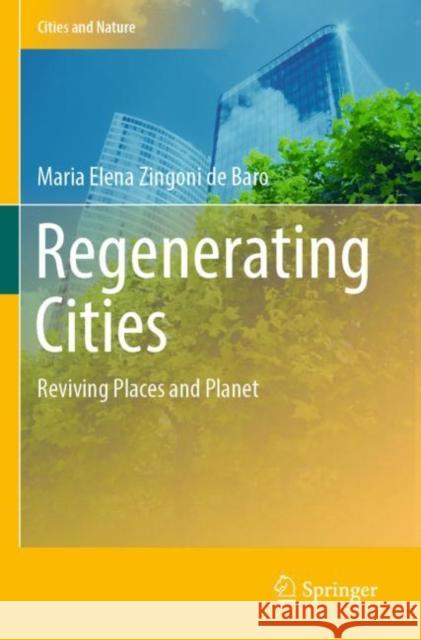
Maria Elena Zingoni de Baro
Regenerating Cities: Reviving Places and Planet Maria Elena Zingon 9783030905613 Springer - książkaWidoczna okładka, to zdjęcie poglądowe, a rzeczywista szata graficzna może różnić się od prezentowanej.

Regenerating Cities: Reviving Places and Planet

ISBN-13: 9783030905613 / Angielski / Miękka / 2023 / 235 str.

Maria Elena Zingoni de Baro
cena 524,53
(netto: 499,55 VAT:  5%)

Najniższa cena z 30 dni: 501,19
Termin realizacji zamówienia:
ok. 22 dni roboczych
Bez gwarancji dostawy przed świętami

Darmowa dostawa!
inne wydania

This book sets out the discussion on how cities can contribute solutions to some of the challenges the urbanised world is facing, such as the pressure of growing populations, mitigation of effects of, and adaptation to globally changing environmental, climate and public health conditions.Presenting a detailed explanation of the causes behind the current state of modern cities, the book advocates for a paradigm shift to improve the quality of life of ever-increasing urban inhabitants whilst nourishing the natural systems that sustain human and non-human life in the planet. Recognising the precious role that nature plays in the functioning of cities, it delves into the study of biophilic design and regenerative development. The book argues that these social-ecological design approaches can act as catalysts to develop conditions in urban settings that are beneficial for natural and human systems to thrive and flourish, both in ecosystem services and social-cultural systems. This is particularly relevant for the design of new quality precincts or the regeneration of degraded urban spaces to promote health, wellbeing and urban resilience. A framework is proposed to guide the process of thinking about, designing and building healthier, more liveable and resilient urban environments that raise the quality of life in cities.The method can be used by researchers, practitioners -urban designers, urban planners, architects and landscape architects- interested in developing their work within a social-ecological perspective. It can also be used by local governments and agencies to underpin policy making, and by educational institutions to prepare graduates with necessary skills to respond to current and future built environment challenges.


This book sets out the discussion on how cities can contribute solutions to some of the challenges the urbanised world is facing, such as the pressure of growing populations, mitigation of effects of, and adaptation to globally changing environmental, climate and public health conditions. Presenting a detailed explanation of the causes behind the current state of modern cities, the book advocates for a paradigm shift to improve the quality of life of ever-increasing urban inhabitants whilst nourishing the natural systems that sustain human and non-human life in the planet. Recognising the precious role that nature plays in the functioning of cities, it delves into the study of biophilic design and regenerative development. The book argues that these social-ecological design approaches can act as catalysts to develop conditions in urban settings that are beneficial for natural and human systems to thrive and flourish, both in ecosystem services and social-cultural systems. This is particularly relevant for the design of new quality precincts or the regeneration of degraded urban spaces to promote health, wellbeing and urban resilience. A framework is proposed to guide the process of thinking about, designing and building healthier, more liveable and resilient urban environments that raise the quality of life in cities.The method can be used by researchers, practitioners -urban designers, urban planners, architects and landscape architects- interested in developing their work within a social-ecological perspective. It can also be used by local governments and agencies to underpin policy making, and by educational institutions to prepare graduates with necessary skills to respond to current and future built environment challenges.

Kategorie:
Nauka, Geografia
Kategorie BISAC:
Science > Earth Sciences - Geography
Architecture > Sustainability & Green Design
Science > Life Sciences - Ecology
Wydawca:
Springer
Seria wydawnicza:
Cities and Nature
Język:
Angielski
ISBN-13:
9783030905613
Rok wydania:
2023
Wydanie:
2022
Numer serii:
000472004
Ilość stron:
235
Waga:
0.36 kg
Wymiary:
23.39 x 15.6 x 1.35
Oprawa:
Miękka
Wolumenów:
01
Dodatkowe informacje:
Wydanie ilustrowane

1             Addressing current challenges

1.1      Introduction

1.2      Background to regenerative sustainability

1.3      Shifting worldviews

1.4      Incorporating social-ecological approaches to urban design and planning

1.5      Framing the problem

1.6      Research questions and objectives

1.7      Research design and methodology

1.8      Research scope and limitations

1.9      Book structure

1.10   Use of terms

References


2             The Anthropocene and the urbanising world

2.1      The challenges of the Anthropocene

2.1.1  The anthropogenic world and the planetary boundaries

2.1.2  The Great Acceleration

2.1.3  The planetary boundaries paradigm

2.2      Cities in the Anthropocene

2.2.1  Urban utopias of the great Acceleration

2.3      Conclusions

References


3             A shifting paradigm for an urbanised world

3.1      The importance of worldviews and paradigms

3.2      The shifting worldview and paradigms

3.2.1  The mechanistic worldview

3.2.2  The ecological worldview

3.2.3  Understanding the built environment as a socisl-ecological system

3.3      Conclusions

References


4             Two social-ecological approaches to regenerative sustainability

4.1      Regenerative sustainability paradigm

4.2      Biophilia, biophilic design and biophilic urbanism

4.2.1  Biophilia at the urban scale

4.3      Regenerative development and design

4.3.1  A brief historyof regenerative development and design foundational theory

4.3.2  Regenerative Development & Design framework and methodology

4.3.3  Core principles of the regenerative methodology

4.3.4  Main concepts to sustain practice

4.3.5  Regenerative sustainability theoretiical underpinning

4.4      Conclusions

References


5             An integrated framework for regenerative sustainable urbanism

5.1      Integrating principles for regenerative sustainable urbanism

5.2      Application of the framework to practice

5.3      Analytic strategy

5.4      Conclusions

References


6             Curitiba case study

6.1      Geographic information

6.2      Brief history

6.3      Urban planning history

6.4      Planning methodology: a new mindset for urban planning

6.4.1  Urban acupunctures

6.4.2  Strange archaeology

6.5      Curitiba’s Green Plan

6.5.1  Biodiversity and ecosystem services

6.5.2  The Biocity Program:Live Barigui and Green Line projects

6.5.3  The Live Barigui Project

6.5.4  The Green Line Project

6.5.5  Green policies and incentives

6.6      Analytical strategy applied to Curitiba

6.6.1  Urban planning traditions and processes analysis

6.6.2  Framework application to Curitiba

References


7             Singapore case study

7.1      Geographic information

7.2      Brief history

7.3      Urban planning history

7.3.1  Singapore’s biophilic vision

7.4      Planning methodologies

7.4.1  Skyrise greenery

7.4.2  New era of greening programs

7.4.3  The Active, Beautifuland Clean (ABC) Waters Program

7.5      Environmental policies, incentives and campaigns

7.5.1  Main environmental laws and policies

7.5.2  Greening programs

7.6      Analytical strategy applied to Singapore

7.6.1  Urban planning traditions and processes analysis

7.6.2  Framework application to Singapore

References


8             Cross-case analysis and discussion of results

8.1      Cross-case analysis

8.1.1  Commonalities and dissimilarities, convergence of evidence

8.1.2  Supportive evidence

8.1.3  Generalisation of findings

8.2      Rival interpretations  

8.3      Regenerative sustainability as a theoretical construct


9             Conclusions

9.1      Book findings

9.2      Future work


This book sets out the discussion on how cities can contribute solutions to some of the challenges the urbanised world is facing, such as the pressure of growing populations, mitigation of effects of, and adaptation to globally changing environmental, climate and public health conditions. 

Presenting a detailed explanation of the causes behind the current state of modern cities, the book advocates for a paradigm shift to improve the quality of life of ever-increasing urban inhabitants whilst nourishing the natural systems that sustain human and non-human life in the planet. Recognising the precious role that nature plays in the functioning of cities, it delves into the study of biophilic design and regenerative development. The book argues that these social-ecological design approaches can act as catalysts to develop conditions in urban settings that are beneficial for natural and human systems to thrive and flourish, both in ecosystem services and social-cultural systems. This is particularly relevant for the design of new quality precincts or the regeneration of degraded urban spaces to promote health, wellbeing and urban resilience. A framework is proposed to guide the process of thinking about, designing and building healthier, more liveable and resilient urban environments that raise the quality of life in cities.

The method can be used by researchers, practitioners -urban designers, urban planners, architects and landscape architects- interested in developing their work within a social-ecological perspective. It can also be used by local governments and agencies to underpin policy making, and by educational institutions to prepare graduates with necessary skills to respond to current and future built environment challenges.




Udostępnij

Facebook - konto krainaksiazek.pl


Opinie o Krainaksiazek.pl na Opineo.pl

Partner Mybenefit

Krainaksiazek.pl w programie rzetelna firma Krainaksiaze.pl - płatności przez paypal

Czytaj nas na:

Facebook - krainaksiazek.pl
  • książki na zamówienie
  • granty
  • książka na prezent
  • kontakt
  • pomoc
  • opinie
  • regulamin
  • polityka prywatności

Zobacz:

  • Księgarnia czeska

  • Wydawnictwo Książkowe Klimaty

1997-2025 DolnySlask.com Agencja Internetowa

© 1997-2022 krainaksiazek.pl
     
KONTAKT | REGULAMIN | POLITYKA PRYWATNOŚCI | USTAWIENIA PRYWATNOŚCI
Zobacz: Księgarnia Czeska | Wydawnictwo Książkowe Klimaty | Mapa strony | Lista autorów
KrainaKsiazek.PL - Księgarnia Internetowa

Polityka prywatnosci - link
Krainaksiazek.pl - płatnośc Przelewy24
Przechowalnia Przechowalnia




