Reducing Firearm Injury and Death: A Public Health Sourcebook on Guns » książka





Reducing Firearm Injury and Death: A Public Health Sourcebook on Guns
ISBN-13: 9780813524214 / Angielski / Miękka / 1997 / 196 str.
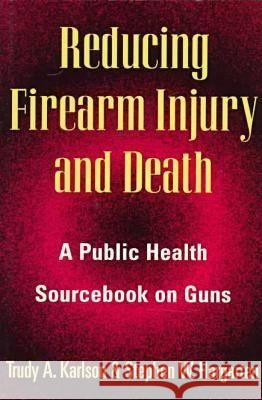
"This much-needed book sends a powerful message: we can prevent firearm deaths and injuries-especially if we learn our lessons about gun design and distribution."-Susan P. Baker, author of The Injury Fact Book "The book is a clearly written primer on guns and ammunition and examines the public health policy implications of these consumer products and the injury and death that they cause. The epidemiology, mechanisms, costs, and means for prevention and reducing injury and death from guns are discussed. It is a valuable resource for those involved in protecting the health of the public and in creating a safer America."-Murray L. Katcher, M.D., Ph.D., Professor of Pediatrics and of Family Medicine, University of Wisconsin Medical School "An extremely informative guide that expands the focus on firearms and the criminal justice field to approaches based on the science of injury control. A must for public health and mental health professionals dealing with violence and suicide prevention."-Susan Scavo Gallagher, M.P.H., Education Development Center, Inc. Two experts in public health and injury control show readers how guns are products, designed to injure and kill, and how changes in the design, technology, and marketing of firearms can lead to reductions in the number of injuries and fatalities. The injury control perspective of the book illustrates how the characteristics of guns and ammunition are associated with their ability to cause injury and death. It also provides options for how guns can be re-engineered to ensure a greater degree of safety. Reducing Firearm Injury and Death teaches basic facts about guns and gun injuries, and by reframing the problem of firearms as a public health issue, offers hope for saving lives. Trudy A. Karlson is an epidemiologist at the University of Wisconsin Madison, Center for Health Systems Research and Analysis. One of the first people to earn a doctorate in injury control, Karlson has studied and developed strategies for preventing injuries from firearms and motor vehicles. Stephen W. Hargarten holds degrees in medicine and public health, and is currently an associate professor in the Department of Emergency Medicine at the Medical College of Wisconsin.




Czytaj nas na:
KrainaKsiazek.PL - Księgarnia Internetowa


