• Wyszukiwanie zaawansowane
  • Kategorie
  • Kategorie BISAC
  • Książki na zamówienie
  • Promocje
  • Granty
  • Książka na prezent
  • Opinie
  • Pomoc
  • Załóż konto
  • Zaloguj się

Reconstituting the Curriculum » książka

zaloguj się | załóż konto
Logo Krainaksiazek.pl

koszyk

konto

szukaj
topmenu
Księgarnia internetowa
Szukaj
Książki na zamówienie
Promocje
Granty
Książka na prezent
Moje konto
Pomoc
 
 
Wyszukiwanie zaawansowane
Pusty koszyk
Bezpłatna dostawa dla zamówień powyżej 20 złBezpłatna dostawa dla zamówień powyżej 20 zł

Kategorie główne

• Nauka
 [2946600]
• Literatura piękna
 [1856966]

  więcej...
• Turystyka
 [72221]
• Informatyka
 [151456]
• Komiksy
 [35826]
• Encyklopedie
 [23190]
• Dziecięca
 [619653]
• Hobby
 [140543]
• AudioBooki
 [1577]
• Literatura faktu
 [228355]
• Muzyka CD
 [410]
• Słowniki
 [2874]
• Inne
 [445822]
• Kalendarze
 [1744]
• Podręczniki
 [167141]
• Poradniki
 [482898]
• Religia
 [510455]
• Czasopisma
 [526]
• Sport
 [61590]
• Sztuka
 [243598]
• CD, DVD, Video
 [3423]
• Technologie
 [219201]
• Zdrowie
 [101638]
• Książkowe Klimaty
 [124]
• Zabawki
 [2473]
• Puzzle, gry
 [3898]
• Literatura w języku ukraińskim
 [254]
• Art. papiernicze i szkolne
 [8170]
Kategorie szczegółowe BISAC

Reconstituting the Curriculum

ISBN-13: 9781118472897 / Angielski / Twarda / 2013 / 536 str.
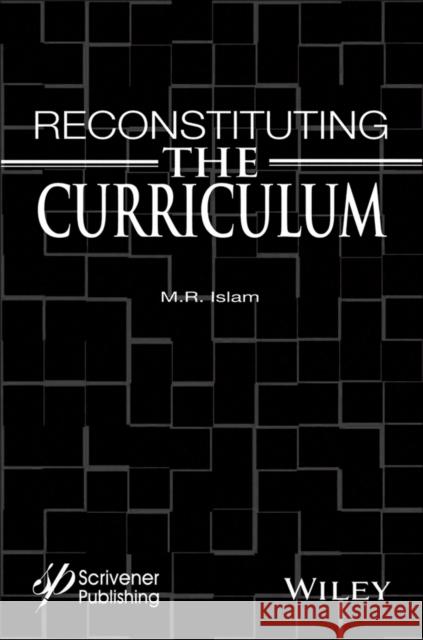
M. Islam
Reconstituting the Curriculum M. Islam 9781118472897 Wiley-Scrivener - książkaWidoczna okładka, to zdjęcie poglądowe, a rzeczywista szata graficzna może różnić się od prezentowanej.

Reconstituting the Curriculum

ISBN-13: 9781118472897 / Angielski / Twarda / 2013 / 536 str.

M. Islam
cena 431,05 zł
(netto: 410,52 VAT:  5%)

Najniższa cena z 30 dni: 426,64 zł
Termin realizacji zamówienia:
ok. 30 dni roboczych
Bez gwarancji dostawy przed świętami

Darmowa dostawa!

This inspiring work presents a truly knowledge-based approach to education as an alternative to the current curriculum that is based on consolidating pre-conceived ideas. It demonstrates the advantages of the new curriculum, both in terms of acquiring knowledge and preventing current problems such as technological disasters, global injustice, and environmental destruction. It also shows how it can eliminate plagiarism, low retention in classrooms, non-representative grading, and other common problems. Examples are given from various disciplines, ranging from science and engineering to philosophy and law.


Kategorie:
Podręczniki
Kategorie BISAC:
Education > Curricula
Education > Philosophy, Theory & Social Aspects
Education > Educational Policy & Reform
Wydawca:
Wiley-Scrivener
Język:
Angielski
ISBN-13:
9781118472897
Rok wydania:
2013
Ilość stron:
536
Waga:
0.85 kg
Wymiary:
23.62 x 16.0 x 3.3
Oprawa:
Twarda
Wolumenów:
01
Dodatkowe informacje:
Bibliografia
Wydanie ilustrowane

Foreword xiii

Acknowledgments xv

Preface xvii

1 Introduction 1

1.1 Widespread malaise a Summary 1

1.2 Thought as Material 8

1.3 Renewal of Thought–Material Resources and the Nature–Science Approach 9

2 Curriculum The Place Where Tangible Content Wrestles Intangible Process 19

2.1 Introduction 19

2.2 What is Human Thought Material ? 21

2.3 Why This Starting Point? 22

2.4 HTM from the Nature–Science Standpoint 24

2.5 Commodification of HTM 46

2.6 HTM vs Commodification 47

2.7 Skills Development versus Learning from Acts of Finding Out 57

2.8 Current Practices in Education 65

2.9 The Need for the Science of Intangibles as the Basis for Education 69

2.10 The Tangible–Intangible Nexus 70

2.11 The Encounter between European and Islamic Outlooks a Delinearized History 74

2.12 Final Words About Education and Training 85

3 Intention: Its Individual and Social Purposes 87

3.1 Introduction 87

3.2 Human Thought Material: A Root + Pathway Analysis 88

3.3 Foetal Learning 88

3.4 Aspects of Pre–School Learning and Early Development of Individuals own Thought–Material 90

3.5 Intention: Origins 91

3.6 Nature for Sale? 102

3.7 Conclusions 107

4 Fundamental Changes in Curriculum Development 109

4.1 Introduction 109

4.2 Struggle for Educational Reform: Internal and External Factors 111

4.3 Muslim–Christian Conflict: A Delinearized Short History 112

4.4 Why did the Scientific Revolution Break Out in Europe and Not the Islamic World? 116

4.5 Education and Civilization: a Delinearized History 117

4.6 Education and Civilization: the Delinearized Future Prospect of a Reconstituted Curriculum 123

5 Sustainability and Change in Curriculum Development: The HSSA Syndrome and Other Maladies 125

5.1. Truth is Knowledge, Knowledge is Peace, So What s the Problem? 125

5.2 What is Sustainability? 126

5.3 What Happens When a Process is Not Sustainable 127

5.4 Theories Proven Wrong? How About Laws ? 131

5.5 Could this be Averted, and if so, How? 136

5.6 Theory, Empirical Outlook and Disinformation in the Social Sciences 141

6 The Nature–Science Criterion 151

6.1 Introduction Can Modern Science Distinguish Truth From Falsehood? 151

6.2 Tangible–Intangible Nexus & the criterion of Truth vs Falsehood 159

6.3 Negative Impacts of the Science of Tangibles 163

7 The HSSRAR Phenomenon 191

7.1 Introduction 191

7.2 The HSSRAR (Honey Sugar SaccharinR AspartameR) Pathway 193

8 Concluding Remarks & Observations 207

8.1 Introduction 207

The Appendices 209

Appendix 1a 211

Appendix 2a 325

Appendix 3a 411

References and Bibliography 463

Index 505

M. Rafiq Islam has nearly 30 years of experience in teaching and research, during which time he has supervised over 150 graduate and undergraduate students and postdoctoral fellows and completed over $20 million of funded research. During his career, he has published over 700 research papers and some dozen books on topics ranging from petroleum reservoir modeling to economics. He is the founding executive editor of Journal of Nature Science and Sustainable Technology, Advances in Sustainable Petroleum Engineering Science, Journal of Characterization and Development of Novel Materials, and Journal of Information, Intelligence and Knowledge.

Gary M. Zatzman has decades of investigative journalism and research experience, dozens of articles in technical journals, and three previously published books: Sustainable Resource Development, Sustainable Energy Pricing, and Economics of Intangibles (with M.R. Islam).

Jaan S. Islam is the executive editor of Ummah Youth Journal published in Halifax, Nova Scotia. He has been involved in research in the social sciences as well as technology development and has published numerous papers.

Based on groundbreaking new ideas, this treatise signals a return to a rebuilding and reshaping of the curriculum as the primary tool for education

This book presents a new definition of "curriculum" and what it should consist of, with a view toward creating a more ethical, educated, and thinking person. Rather than treating students as "products" for society, this approach returns to a view of the curriculum as a tool for educating students to reason through problems, be bold in creating new solutions, and contribute to a more vibrant, just world.

The university curriculum introduced in the post–Renaissance era, dominated by doctrinal philosophy, is based on "learning" or "skill development," suitable for creating a "learned" society that would eventually serve the establishment. This curriculum has been promoted as the only form suitable for the modern education system. It has introduced a tremendous amount of tangible advancement in all fields of the structured education system. These tangible gains are often promoted as "knowledge." This has created confusion between education (acquiring knowledge) and learning, training or skill development.

This book seeks to clarify the difference between these two divergent views of education. It has been shown that the current curriculum is not conducive to increasing a student′s knowledge because it is based on consolidating preconceived ideas that have been either passed on from previous generations or gained through personal experience. In most cases, this mode of cognition will not create a pathway for gaining knowledge that brings one closer to discovery. The term "education," on the other hand, is always meant to be a process of "bringing forth" one′s inherent qualities and unique traits, necessary and sufficient for increasing one′s knowledge.

Reconstituting the Curriculum:

  • Describes and gives examples of a new philosophy of the curriculum that is a departure from the one currently in use
  • Includes a synopsis of the history of education and the curriculum and explains "how we got here"
  • Observes the Third World and its growing importance on the global stage and how this affects our curriculum
  • Documents interviews with educators, politicians, and entrepreneurs concerning the state of the curriculum and its place in our everyday lives


Udostępnij

Facebook - konto krainaksiazek.pl


Opinie o Krainaksiazek.pl na Opineo.pl

Partner Mybenefit

Krainaksiazek.pl w programie rzetelna firma Krainaksiaze.pl - płatności przez paypal

Czytaj nas na:

Facebook - krainaksiazek.pl
  • książki na zamówienie
  • granty
  • książka na prezent
  • kontakt
  • pomoc
  • opinie
  • regulamin
  • polityka prywatności

Zobacz:

  • Księgarnia czeska

  • Wydawnictwo Książkowe Klimaty

1997-2025 DolnySlask.com Agencja Internetowa

© 1997-2022 krainaksiazek.pl
     
KONTAKT | REGULAMIN | POLITYKA PRYWATNOŚCI | USTAWIENIA PRYWATNOŚCI
Zobacz: Księgarnia Czeska | Wydawnictwo Książkowe Klimaty | Mapa strony | Lista autorów
KrainaKsiazek.PL - Księgarnia Internetowa

Polityka prywatnosci - link
Krainaksiazek.pl - płatnośc Przelewy24
Przechowalnia Przechowalnia






