• Wyszukiwanie zaawansowane
  • Kategorie
  • Kategorie BISAC
  • Książki na zamówienie
  • Promocje
  • Granty
  • Książka na prezent
  • Opinie
  • Pomoc
  • Załóż konto
  • Zaloguj się

Recognizing Variable Environments: The Theory of Cognitive Prism » książka


zaloguj się | załóż konto
Logo Krainaksiazek.pl

koszyk

konto

szukaj
topmenu
Księgarnia internetowa
Szukaj
Książki na zamówienie
Promocje
Granty
Książka na prezent
Moje konto
Pomoc
 
 
Wyszukiwanie zaawansowane
Pusty koszyk
Bezpłatna dostawa dla zamówień powyżej 20 złBezpłatna dostawa dla zamówień powyżej 20 zł

Kategorie główne

• Nauka
 [2946912]
• Literatura piękna
 [1852311]

  więcej...
• Turystyka
 [71421]
• Informatyka
 [150889]
• Komiksy
 [35717]
• Encyklopedie
 [23177]
• Dziecięca
 [617324]
• Hobby
 [138808]
• AudioBooki
 [1671]
• Literatura faktu
 [228371]
• Muzyka CD
 [400]
• Słowniki
 [2841]
• Inne
 [445428]
• Kalendarze
 [1545]
• Podręczniki
 [166819]
• Poradniki
 [480180]
• Religia
 [510412]
• Czasopisma
 [525]
• Sport
 [61271]
• Sztuka
 [242929]
• CD, DVD, Video
 [3371]
• Technologie
 [219258]
• Zdrowie
 [100961]
• Książkowe Klimaty
 [124]
• Zabawki
 [2341]
• Puzzle, gry
 [3766]
• Literatura w języku ukraińskim
 [255]
• Art. papiernicze i szkolne
 [7810]
Kategorie szczegółowe BISAC

Recognizing Variable Environments: The Theory of Cognitive Prism

ISBN-13: 9783642240577 / Angielski / Twarda / 2011 / 124 str.
Tiansi Dong
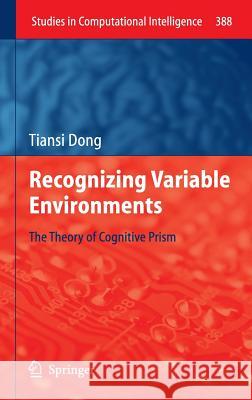
Recognizing Variable Environments: The Theory of Cognitive Prism Tiansi Dong 9783642240577 Springer-Verlag Berlin and Heidelberg GmbH &  - książkaWidoczna okładka, to zdjęcie poglądowe, a rzeczywista szata graficzna może różnić się od prezentowanej.

Recognizing Variable Environments: The Theory of Cognitive Prism

ISBN-13: 9783642240577 / Angielski / Twarda / 2011 / 124 str.

Tiansi Dong
cena 401,58
(netto: 382,46 VAT:  5%)

Najniższa cena z 30 dni: 385,52
Termin realizacji zamówienia:
ok. 22 dni roboczych
Dostawa w 2026 r.

Darmowa dostawa!
inne wydania

Normal adults do not have any difficulty in recognizing their homes. But can artificial systems do in the same way as humans? This book collects interdisciplinary evidences and presents an answer from the perspective of computing, namely, the theory of cognitive prism. To recognize an environment, an intelligent system only needs to classify objects, structures them based on the connection relation (not through measuring ), subjectively orders the objects, and compares with the target environment, whose knowledge is similarly structured. The intelligent system works, therefore, like a prism: when a beam of light (a scene) reaches (is perceived) to an optical prism (by an intelligent system), some light (objects) is reflected (are neglected), those passed through (the recognized objects) are distorted (are ordered differently). So comes the term 'cognitive prism' Two fundamental propositions used in the theory can be informally stated as follow: an orientation relation is a kind of distance comparison relation -- you being in front of me means you being nearer to my face than to my other sides; a pair of objects being connected means any object, precisely the space occupied by the object, can be moved to a place where it connects with the pair.


Normal adults do not have any difficulty in recognizing their homes. But can artificial systems do in the same way as humans? This book collects interdisciplinary evidences and presents an answer from the perspective of computing, namely, the theory of cognitive prism. To recognize an environment, an intelligent system only needs to classify objects, structures them based on the connection relation (not through measuring!), subjectively orders the objects, and compares with the target environment, whose knowledge is similarly structured. The intelligent system works, therefore, like a prism: when a beam of light (a scene) reaches (is perceived) to an optical prism (by an intelligent system), some light (objects) is reflected (are neglected), those passed through (the recognized objects) are distorted (are ordered differently). So comes the term 'cognitive prism'! Two fundamental propositions used in the theory can be informally stated as follow: an orientation relation is a kind of distance comparison relation -- you being in front of me means you being nearer to my face than to my other sides; a pair of objects being connected means any object, precisely the space occupied by the object, can be moved to a place where it connects with the pair.

Kategorie:
Informatyka, Bazy danych
Kategorie BISAC:
Technology & Engineering > Engineering (General)
Computers > Artificial Intelligence - General
Philosophy > Logic
Wydawca:
Springer-Verlag Berlin and Heidelberg GmbH &
Seria wydawnicza:
Studies in Computational Intelligence
Język:
Angielski
ISBN-13:
9783642240577
Rok wydania:
2011
Dostępne języki:
Angielski
Wydanie:
2012
Numer serii:
000318395
Ilość stron:
124
Waga:
0.41 kg
Wymiary:
23.523.5 x 15.5
Oprawa:
Twarda
Wolumenów:
01

An introduction.- The state of the art.- Research topics and research questions.- Recognizing spatial environments: A commonsense approach.- The formalism: A region-based representation and reasoning of spatial environments.- A List representation of recognizing Indoor Vista spatial Environments: The LIVE model.- Conclusions, evaluations, discussions, and future work.

Normal adults do not have any difficulty in recognizing their homes. But can artificial systems do in the same way as humans? This book collects interdisciplinary evidences and presents an answer from the perspective of computing, namely, the theory of cognitive prism. To recognize an environment, an intelligent system only needs to classify objects, structures them based on the connection relation (not through measuring!), subjectively orders the objects, and compares with the target environment, whose knowledge is similarly structured. The intelligent system works, therefore, like a prism: when a beam of light (a scene) reaches (is perceived) to an optical prism (by an intelligent system), some light (objects) is reflected (are neglected), those passed through (the recognized objects) are distorted (are ordered differently). So comes the term 'cognitive prism'! Two fundamental propositions used in the theory can be informally stated as follow: an orientation relation is a kind of distance comparison relation -- you being in front of me means you being nearer to my face than to my other sides; a pair of objects being connected means any object, precisely the space occupied by the object, can be moved to a place where it connects with the pair.




Udostępnij

Facebook - konto krainaksiazek.pl


Opinie o Krainaksiazek.pl na Opineo.pl

Partner Mybenefit

Krainaksiazek.pl w programie rzetelna firma Krainaksiaze.pl - płatności przez paypal

Czytaj nas na:

Facebook - krainaksiazek.pl
  • książki na zamówienie
  • granty
  • książka na prezent
  • kontakt
  • pomoc
  • opinie
  • regulamin
  • polityka prywatności

Zobacz:

  • Księgarnia czeska

  • Wydawnictwo Książkowe Klimaty

1997-2025 DolnySlask.com Agencja Internetowa

© 1997-2022 krainaksiazek.pl
     
KONTAKT | REGULAMIN | POLITYKA PRYWATNOŚCI | USTAWIENIA PRYWATNOŚCI
Zobacz: Księgarnia Czeska | Wydawnictwo Książkowe Klimaty | Mapa strony | Lista autorów
KrainaKsiazek.PL - Księgarnia Internetowa

Polityka prywatnosci - link
Krainaksiazek.pl - płatnośc Przelewy24
Przechowalnia Przechowalnia



