• Wyszukiwanie zaawansowane
  • Kategorie
  • Kategorie BISAC
  • Książki na zamówienie
  • Promocje
  • Granty
  • Książka na prezent
  • Opinie
  • Pomoc
  • Załóż konto
  • Zaloguj się

Reclaiming Contaminated Land » książka


zaloguj się | załóż konto
Logo Krainaksiazek.pl

koszyk

konto

szukaj
topmenu
Księgarnia internetowa
Szukaj
Książki na zamówienie
Promocje
Granty
Książka na prezent
Moje konto
Pomoc
 
 
Wyszukiwanie zaawansowane
Pusty koszyk
Bezpłatna dostawa dla zamówień powyżej 20 złBezpłatna dostawa dla zamówień powyżej 20 zł

Kategorie główne

• Nauka
 [2948695]
• Literatura piękna
 [1824038]

  więcej...
• Turystyka
 [70868]
• Informatyka
 [151073]
• Komiksy
 [35227]
• Encyklopedie
 [23181]
• Dziecięca
 [621575]
• Hobby
 [138961]
• AudioBooki
 [1642]
• Literatura faktu
 [228651]
• Muzyka CD
 [371]
• Słowniki
 [2933]
• Inne
 [445341]
• Kalendarze
 [1243]
• Podręczniki
 [164416]
• Poradniki
 [479493]
• Religia
 [510449]
• Czasopisma
 [502]
• Sport
 [61384]
• Sztuka
 [243086]
• CD, DVD, Video
 [3417]
• Technologie
 [219673]
• Zdrowie
 [100865]
• Książkowe Klimaty
 [124]
• Zabawki
 [2168]
• Puzzle, gry
 [3372]
• Literatura w języku ukraińskim
 [260]
• Art. papiernicze i szkolne
 [7838]
Kategorie szczegółowe BISAC

Reclaiming Contaminated Land

ISBN-13: 9789401165068 / Angielski / Miękka / 2012 / 260 str.
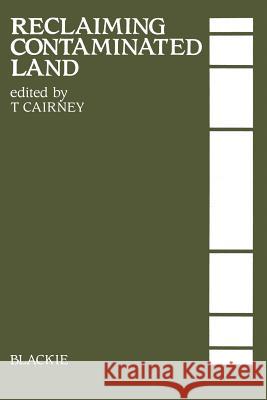
T. Cairney
Reclaiming Contaminated Land T. Cairney 9789401165068 Springer - książkaWidoczna okładka, to zdjęcie poglądowe, a rzeczywista szata graficzna może różnić się od prezentowanej.

Reclaiming Contaminated Land

ISBN-13: 9789401165068 / Angielski / Miękka / 2012 / 260 str.

T. Cairney
cena 200,77
(netto: 191,21 VAT:  5%)

Najniższa cena z 30 dni: 192,74
Termin realizacji zamówienia:
ok. 22 dni roboczych.

Darmowa dostawa!

Chemically contaminated land has only recently been recognized as an immediate or long-term potential hazard, and published guidance on how to tackle such land has been sparse. Indeed much of the available technical work emphasizes the risks and dangers, rather than indicating safe and economical strategies of reclamation. This book provides a comprehensive treatment of the important aspects of land reclamation. Its basic aim is to dispel the myths that have become associated with the subject and to indicate methods and strategies that can be used for safe and economical reclamation. The authors concentrate on the more important facets of reclamation and indicate where advice and information is more or less certain. As in any newly developed field there are still uncertainties and, for this reason, not all the chapters contain equivalent amounts of detail. All the authors have expertise in the field of land reclamation, and differences in emphasis between authors reflect the present state of the subject. Overall, the book emphasizes that contaminated land can be reclaimed safely provided that sufficient attention is paid to detail and that the proposed end use of the land is appropriate and based on a detailed knowledge of the site.


Kategorie:
Nauka
Kategorie BISAC:
Science > General
Technology & Engineering > Environmental - General
Non-Classifiable > Non-Classifiable
Wydawca:
Springer
Język:
Angielski
ISBN-13:
9789401165068
Rok wydania:
2012
Wydanie:
Softcover Repri
Ilość stron:
260
Waga:
0.37 kg
Wymiary:
22.86 x 15.24 x 1.47
Oprawa:
Miękka
Wolumenów:
01

1 Recognition of the problem.- 1.1 Introduction.- 1.1.1 What is contaminated land.- 1.1.2 Where does it occur.- 1.1.3 How common is it.- 1.1.4 How is it managed.- 1.2 National response to contaminated land in the UK.- 1.2.1 Central government respons.- 1.2.2 Local government response.- 1.3 National response to contaminated land in Europe and North America.- 1.3.1 Introduction.- 1.3.2 The Netherlands.- 1.3.3 Federal Republic of Germany.- 1.3.4 The United States of America.- References.- 2 Types of contaminated land.- 2.1 Introduction.- 2.2 Transportation of contamination.- 2.2.1 Atmospheric fallout.- 2.2.2 Contamination by liquids.- 2.2.3 Contamination by solid waste disposal.- 2.3 Main sources of land contamination.- 2.3.1 Non-ferrous metal mining and processing sites.- 2.3.2 Sewage works and farms.- 2.3.3 Scrapyards.- 2.3.4 Railway land.- 2.3.5 Iron and steelworks sites.- 2.3.6 Dyeworks.- 2.3.7 Coal carbonization on gasworks sites.- 2.3.8 Coal-fired power stations.- 2.3.9 Landfill sites.- 2.3.10 Pharmaceutical manufacturing sites.- 2.3.11 Tanning and fellmongering.- 2.4 Conclusions.- References.- 3 Main types of contaminants.- 3.1 Introduction.- 3.2 Metallic contaminants.- 3.2.1 Arsenic.- 3.2.2 Cadmium.- 3.2.3 Lead.- 3.2.4 Copper, nickel and zinc.- 3.3 Inorganic contaminants.- 3.3.1 Cyanides.- 3.3.2 Sulphates.- 3.4 Organic contaminants.- 3.4.1 Phenols.- 3.4.2 Coal tars.- 3.5 Asbestos.- 3.6 Combustible materials.- 3.7 Gases.- 3.8 Other contaminants.- References.- 4 Appropriate site investigations.- 4.1 Introduction.- 4.2 Recognition that an investigation is needed and establishment of the basis for that investigation.- 4.2.1 Recognition.- 4.2.2 Prospective surveys.- 4.2.3 Site specific prospective surveys.- 4.2.4 Site reconnaissance.- 4.3 Design of site sampling/analytical programme.- 4.3.1 The hazard associated with contaminants.- 4.3.2’ sensitivity’ of site use.- 4.3.3 Multi-disciplinary approach.- 4.3.4 The aim of sampling/analysis.- 4.3.5 Sampling patterns and sample numbers.- 4.3.6 Sampling depth.- 4.3.7 Sampling quality assurance.- 4.3.8 Sampling stages.- 4.4 On-site sampling, observation and testing.- 4.4.1 Safety.- 4.4.2 Excavation methods.- 4.4.3 Sampling methods.- 4.4.4 On-site testing.- 4.5 Analysis of material taken from the site.- 4.5.1 Sub-sampling in the laboratory.- 4.5.2 Selection of analytical methods.- 4.5.3 Analytical quality assurance.- 4.5.4 Recommended analytical methods.- 4.6 Interpretation of analytical data.- 4.6.1 General interpretation requirements.- 4.6.2 ‘Background’ and ‘typical’ levels.- 4.6.3 Guideline levels.- 4.6.4 Mathematical methods of assessing data.- References.- 5 Available reclamation methods.- 5.1 Introduction.- 5.2 The land use option.- 5.3 General considerations.- 5.3.1 The ‘typical’ site.- 5.3.2 Defining the objectives of a reclamation scheme.- 5.3.3 The Building Regulations: The ‘approved document’ on contaminants.- 5.3.4 Long-term effectiveness of remedial measures.- 5.4 The options.- 5.5 Excavation.- 5.6 Soil treatment after excavation.- 5.6.1 Introduction.- 5.6.2 Extraction and separation techniques.- 5.6.3 Thermal methods.- 5.6.4 Chemical treatment methods.- 5.6.5 Microbial treatment methods.- 5.6.6 Stabilization/solidification processes.- 5.7 In-situ treatment.- 5.8 Macro-encapsulation/isolation.- 5.8.1 Introduction.- 5.8.2 Vertical barrier systems.- 5.8.3 Horizontal in-ground barriers.- 5.8.4 Controlling infiltration.- 5.9 Covering systems.- 5.10 Execution of reclamation works.- 5.11 Monitoring and evaluation of performance.- 5.12 Guidance available.- References.- 6 Soil cover reclamations.- 6.1 Introduction.- 6.2 Performance requirements for soil cover reclamations.- 6.3 The contaminant problem.- 6.4 Pathways for contaminant migration.- 6.5 Groundwater and soil moisture movements.- 6.5.1 Introduction.- 6.5.2 Groundwater cyclic movements.- 6.5.3 The capillary rise of polluted soil moisture.- 6.6 Choice of soil cover materials.- 6.7 The design of soil cover reclamations.- 6.7.1 Introduction.- 6.7.2 Gasworks site, NE England.- 6.7.3 North London gasworks site.- 6.7.4 Tar works site, S.W. England.- 6.7.5 Waste disposal tip, N.E. England.- 6.8 Summary.- References.- 7 Long-term monitoring of reclaimed sites.- 7.1. Introduction.- 7.2 Established precedents for monitoring.- 7.2.1 A comparison of the reclamation and civil engineering industries.- 7.2.2 Monitoring, maintenance and ‘factor of safety’.- 7.3 Questions on the long-term effectiveness of reclamation options.- 7.4 Monitoring systems and methods.- 7.4.1 Periodic site inspections.- 7.4.2 Periodic water quality analyses.- 7.4.3 Periodic groundwater quality monitoring.- 7.4.4 Routine site temperature recording.- 7.4.5 Routine gas monitoring.- 7.4.6 Site drainage efficiency monitoring.- 7.4.7 Soil cover monitoring.- 7.4.8 Monitoring for specific contaminants.- 7.4.9 General points.- 7.5 Organization control of monitoring.- 7.6 Summary.- References.- 8 Safety in site reclamation.- 8.1 Introduction.- 8.2 Nature of hazards.- 8.2.1 Introduction.- 8.2.2 Solids.- 8.2.3 Liquids.- 8.2.4 Gases.- 8.2.5 Asbestos.- 8.3 Protection against hazards.- 8.3.1 Introduction.- 8.3.2 Clothing.- 8.3.3 Personal hygiene.- 8.3.4 Hazard monitoring.- 8.3.5 Safety equipment.- 8.3.6 First aid.- 8.3.7 Equipment storage and maintenance.- 8.4 Safety procedures.- 8.4.1 Introduction.- 8.4.2 Contract powers.- 8.4.3 Environmental safety officer.- 8.4.4 Site training.- 8.4.5 Safe working procedures.- 8.4.6 Excavation works in restricted areas.- 8.4.7 Abatement or removal of hazards.- 8.4.8 Emergency procedures.- 8.5 Conclusions.- 8.6 Appendix: environmental health and safety guide for construction site staff (an example).- 8.6.1 Introduction.- 8.6.2 Safe working procedures.- 8.6.3 Form of chemical hazards.- References.- 9 Policy, planning and financial issues.- 9.1 Introduction.- 9.2 Controlling the development of contaminated land.- 9.3 Land-use planning and control.- 9.3.1 Forward planning.- 9.3.2 Development control.- 9.3.3 Building regulations.- 9.4 Public health legislation and development control.- 9.5 Financial resources.- 9.5.1 Derelict land grant scheme.- 9.5.2 Works eligible for finance.- 9.5.3 Urban development grant.- References.- 10 Landscaping and vegetating reclaimed sites.- 10.1 Introduction.- 10.2 Requirements of plants.- 10.3 Physical support for plants.- 10.4 Compaction.- 10.5 Water supply and storage.- 10.6 Plant nutrients.- 10.7 Grassland establishment.- 10.8 Grass seed mixtures.- 10.9 Grass cutting.- 10.10 Wild species.- 10.11 Trees and shrubs.- 10.12 Timing.- 10.13 Plant and soil interactions.- 10.14 Conclusions.- References.- 11 Hazards from methane (and carbon dioxide).- 11.1 Introduction.- 11.2 Relevant gases and their principal characteristics.- 11.2.1 Introduction.- 11.2.2 Typical landfill gas composition.- 11.2.3 Landfill gas generation—principal factors.- 11.3 Gas flow in and from landfill sites.- 11.3.1 Introduction.- 11.3.2 Buoyancy effects.- 11.3.3 Gas concentrations.- 11.3.4 Effects of water table.- 11.4 Gas measurement.- 11.4.1 Introduction.- 11.4.2 Gases to be tested.- 11.4.3 Sampling and monitoring systems.- 11.4.4 Taking gas measurements.- 11.4.5 Interpreting gas measurements.- 11.5 Gas control measures.- 11.5.1 Introduction.- 11.5.2 Options for reducing hazards to buildings.- 11.5.3 Migration barriers.- 11.5.4 Vent trenches.- 11.5.5 Ground engineering factors.- 11.5.6 Pumping.- 11.6 Hazards in buildings.- 11.6.1 Introduction.- 11.6.2 Explosions.- 11.6.3 Gas mixing and layering.- 11.6.4 Acceptable size of gas accumulations.- 11.7 Effects on plants.- 11.7.1 Introduction.- 11.7.2 Potential toxic mechanisms.- Acknowledgement.- References.


Udostępnij

Facebook - konto krainaksiazek.pl


Opinie o Krainaksiazek.pl na Opineo.pl

Partner Mybenefit

Krainaksiazek.pl w programie rzetelna firma Krainaksiaze.pl - płatności przez paypal

Czytaj nas na:

Facebook - krainaksiazek.pl
  • książki na zamówienie
  • granty
  • książka na prezent
  • kontakt
  • pomoc
  • opinie
  • regulamin
  • polityka prywatności

Zobacz:

  • Księgarnia czeska

  • Wydawnictwo Książkowe Klimaty

1997-2026 DolnySlask.com Agencja Internetowa

© 1997-2022 krainaksiazek.pl
     
KONTAKT | REGULAMIN | POLITYKA PRYWATNOŚCI | USTAWIENIA PRYWATNOŚCI
Zobacz: Księgarnia Czeska | Wydawnictwo Książkowe Klimaty | Mapa strony | Lista autorów
KrainaKsiazek.PL - Księgarnia Internetowa

Polityka prywatnosci - link
Krainaksiazek.pl - płatnośc Przelewy24
Przechowalnia Przechowalnia






