• Wyszukiwanie zaawansowane
  • Kategorie
  • Kategorie BISAC
  • Książki na zamówienie
  • Promocje
  • Granty
  • Książka na prezent
  • Opinie
  • Pomoc
  • Załóż konto
  • Zaloguj się

Re-Inventing Organic Metaphors for the Social Sciences » książka


zaloguj się | załóż konto
Logo Krainaksiazek.pl

koszyk

konto

szukaj
topmenu
Księgarnia internetowa
Szukaj
Książki na zamówienie
Promocje
Granty
Książka na prezent
Moje konto
Pomoc
 
 
Wyszukiwanie zaawansowane
Pusty koszyk
Bezpłatna dostawa dla zamówień powyżej 20 złBezpłatna dostawa dla zamówień powyżej 20 zł

Kategorie główne

• Nauka
 [2946912]
• Literatura piękna
 [1852311]

  więcej...
• Turystyka
 [71421]
• Informatyka
 [150889]
• Komiksy
 [35717]
• Encyklopedie
 [23177]
• Dziecięca
 [617324]
• Hobby
 [138808]
• AudioBooki
 [1671]
• Literatura faktu
 [228371]
• Muzyka CD
 [400]
• Słowniki
 [2841]
• Inne
 [445428]
• Kalendarze
 [1545]
• Podręczniki
 [166819]
• Poradniki
 [480180]
• Religia
 [510412]
• Czasopisma
 [525]
• Sport
 [61271]
• Sztuka
 [242929]
• CD, DVD, Video
 [3371]
• Technologie
 [219258]
• Zdrowie
 [100961]
• Książkowe Klimaty
 [124]
• Zabawki
 [2341]
• Puzzle, gry
 [3766]
• Literatura w języku ukraińskim
 [255]
• Art. papiernicze i szkolne
 [7810]
Kategorie szczegółowe BISAC

Re-Inventing Organic Metaphors for the Social Sciences

ISBN-13: 9783031266768 / Angielski
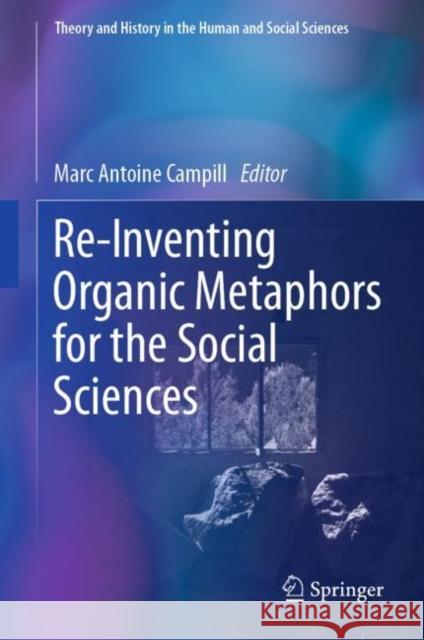
Marc Antoine Campill
Re-Inventing Organic Metaphors for the Social Sciences Marc Antoine Campill 9783031266768 Springer - książkaWidoczna okładka, to zdjęcie poglądowe, a rzeczywista szata graficzna może różnić się od prezentowanej.

Re-Inventing Organic Metaphors for the Social Sciences

ISBN-13: 9783031266768 / Angielski

Marc Antoine Campill
cena 644,07
(netto: 613,40 VAT:  5%)

Najniższa cena z 30 dni: 578,30
Termin realizacji zamówienia:
ok. 22 dni roboczych
Bez gwarancji dostawy przed świętami

Darmowa dostawa!
inne wydania

The “Re-Inventing Organic Metaphors for the Social Sciences” is a volume with the specific goal: to challenge psychological understandings by connecting psychological approaches with  multidimensional perspectives of various other scientific streams, meanwhile imbedding the generated knowledge in metaphors that allows researchers to follow  phenomena into a deeper and more (w)holistic understanding of its appearance. This is particularly important when the humankind faces challenges due to systemic biological changes, as the phenomenological dynamics bonded to those challenges can be conserved in appropriated context. For this purpose, theorganic metaphorsare introduced. A tool that has central advantage over mechanical metaphors as it can capture the complex and open-systemic nature of biological, psychological, and social phenomena.  For example—the widely used notion “mind as a computer” may be more productively replaced by “mind as a membrane”—with implications (e.g. focus on borders in-between, or in systems in themselves- exosystemic realities in our world). There are many other fertile opportunities not yet explored in the realms of psychology and other sciences.  Furthermore, the contributors  operated also as cross-reviewers for each other’s. In this occasion a new dimension, in chapter construction, will be introduced. Beside the traditional reviewing of another paper the reviewer has been asked to add a small list of extending questions toward the reviewed paper. These added questions have been introduced as potential questions that the authors were demanded to add into a final sub-chapter of their contribution. The subchapter has been titled as “Dialogue” (the author was free to select between the questions and ideas on those they believe could inhabit an especially worth for the future readers).


The “Re-Inventing Organic Metaphors for the Social Sciences” is a volume with the specific goal: to challenge psychological understandings by connecting psychological approaches with  multidimensional perspectives of various other scientific streams, meanwhile imbedding the generated knowledge in metaphors that allows researchers to follow  phenomena into a deeper and more (w)holistic understanding of its appearance. This is particularly important when the humankind faces challenges due to systemic biological changes, as the phenomenological dynamics bonded to those challenges can be conserved in appropriated context. For this purpose, the organic metaphors  are introduced. A tool that has central advantage over mechanical metaphors as it can capture the complex and open-systemic nature of biological, psychological, and social phenomena.  For example—the widely used notion “mind as a computer” may be more productively replaced by “mind as a membrane”—with implications (e.g. focus on borders in-between, or in systems in themselves- exosystemic realities in our world). There are many other fertile opportunities not yet explored in the realms of psychology and other sciences.  Furthermore, the contributors  operated also as cross-reviewers for each other’s. In this occasion a new dimension, in chapter construction, will be introduced. Beside the traditional reviewing of another paper the reviewer has been asked to add a small list of extending questions toward the reviewed paper. These added questions have been introduced as potential questions that the authors were demanded to add into a final sub-chapter of their contribution. The subchapter has been titled as “Dialogue” (the author was free to select between the questions and ideas on those they believe could inhabit an especially worth for the future readers).

Kategorie:
Nauka, Psychologia
Kategorie BISAC:
Psychology > Cognitive Psychology & Cognition
Psychology > Personality
Psychology > Social Psychology
Wydawca:
Springer
Seria wydawnicza:
Theory and History in the Human and Social Sciences
Język:
Angielski
ISBN-13:
9783031266768

Series Editor Preface:   The need for ecosystemic theoretical models (Jaan Valsiner)


General Introduction (Marc Antoine Campill)


 Prelude: Psychology in metamorphosis (Marc Antoine Campill)


Part 1   Lebensraum


Chapter 1.  Time as an organic metaphor (Nathalie Jancosek)

In this work the notion of time, with all its attributes and possibilities, as well as borders and mysteries, will be introduced as a central part of psychological literature and other scientific disciplines.By caging the open system into bracket borders, the author tries to capture a general idea the process where the conjecture will become conserved and is no longer able to be extended, in an endless loop of so-called stagnating processing and reprocessing. This nature of psychological thinking allows for popular psychology and abstract theoretical psychology or psychoanalysis to share the same label in bookstores, but unfortunately Psychology cannot escape time. In other words, time cannot be overlooked by psychology anymore.


Chapter 2.  Regeneration of Space: where experiencing is sustained (Masayoshi Morioka)

The study focuses on the transformation of the quality of our spatial experience during the Corona disaster, showing that it affects the way people form the basis of their experience, and exploring the pathways to recovery.

The aim of the author is to explore the ways in which space of landscape supports the grounding of our experience, by introducing a narrative perspective on the regeneration of spaces of active experience and explored the pathways to the recovery of preconscious systems of experience. Connecting "both...and", which is both - and -, leads to new discoveries. The author emphasize therefore that pre-conscious experiential system is related to the narrative mode and can be supports the ground of people's experience of events themselves by the elaboration of the space of landscapes.


Chapter 3.  Everything is Bound to Transform: On knowledge’ Flow (Sarah Campill)

In the following work to author dives into the construction of development. By suggesting a creation of a dynamic, transformative understanding of life-long learning, the author emphasise a potential that enables us to connect learning irrevocably to the development of our sense of identity. The process of introducing a new organic metaphor for the field of development is accompanied by the life story of Pat’s, a strong woman, a woman who had to fight most of her life. As central goal it the following question/statement is highlighted: “What if lifelong learning is not something that sets humans aside, but what approaches us to the animal kingdom? “


Chapter 4. The Guovssahas above my meadow: Introducing the Gestalts-explosion as core-factor of our meaning-generation (Marc Antoine Campill, Christian Bisgaard and Jaan Valsiner)

The authors lead the readers in the following work toward the roots of every meaning-making process: the Gestalts explosion. For this central purpose the context of the polar lights, has been connected to a physical-organic phenomenon that stands directly in relation with the environmental and individual fluctuation over times. The terminology: individual, gains through this understanding of the Gestalts explosion in organic setting, the clear awareness what our self is made out from – a polysemic-multivoiced-self. In the example gaming it will be shown why changes cannot be understood as simple mono-phenomenological constructions but as complex multifactorial context depending on construct, where every moment equals a new possibility to change -drastically or in nuances.


Part 2.  Lebensbaum


Chapter 5.  Allegory Analysis– A Methodological Framework For A Tool For Psychology  (Linus Günther)

The author introduces in unique manners, by connecting historical content with current global issues as the Covid pandemic why the need for metaphors and allegories is greater than ever. Therefore, he expanded his research in this area and subjected patients from psychotherapeutic practice to further investigation of allegories in case studies. Allegorically speaking, Allegory Analysis AA could be accused of being theoretically old wine in new bottles. Nevertheless, as the following work will prove, the introduced vine has a freshly turn through the new developed approach and positioning observable in his methodology. Inviting the reader to analyze or understand allegories as an expression of individual psychological crisis. AA is introduced as implicit and ambiguous meanings in metaphors and allegories that should not only be an everyday phenomenon but should also emerge in scientific context.


Chapter 6. The knot and the psyche. A study on the dynamism of the psyche by means of the knotting praxis  (Raffaele De Luca Picione)

This contribution aims to deepen the importance, transversality and diffusion of the knotting in human experience. The knot refers to the intuitive and common-sense idea of linking, whereby not simply the knot is used as metaphor but the précised action between knot maker and knot. In other words, this work is aiming to- overcoming a certain commonsensical archetypal symbolism of the knot - we can somehow imagine the activity of knotting as a semiotic praxis with a religious value. Underlining that human experience is capable of distinguishing separate elements and re-connecting them within a new emerging system


Chapter 7, Beauty, Other, Care: Autoethnography Using Inter-modal TEA Steps of the-                      Garden (Teppei Tsuchimoto)

The author starts from Campill’s (2021) theory of the meadow as an organic, dynamic and evolving system that inhabits potential to symbolize a multi-dimensional construct as the identity and introduces several new complex and promising insights into the field of cultural psychology. As central tool connecting cultural psychology with the organic field the complex and unique pattern of his understanding of introducing and using autoethnographically material. As he emphasizes are forr cultural psychology, visual or poetic modalities such as metaphors and paintings a significant way of the understanding hyper-generalized affective field while avoiding verbal overdetermination and can gain such potential also in their use in models of metaphors of the research field itself.


Part 2.   Lebewesen


Chapter 8. Ice cream: An exploration of outsiders by parasitological insights (Marc Antoine Campill)

The author focuses on the introduction of essential human phenomena in a new light. As general phenomenon it has been chosen the elaborated by the specific example of a human being in a Hikikomori state and their challenges in co-existing in today’s society. Whereby a crucial example of such naturalized truths is the parasite, a lifeform demonized by social understandings. The author introduces a new method and understanding to follow the parasitic co-existence, based on unique characteristics -conserving their understanding of ideal environmental homeostasis. In other words, what are parasites and are our prejudges dazzling our view in such manner that we miss a crucial potential for the human’s future co-existence?


 Chapter 9.   Biocenosis of the Self: The dynamic of relationships (Marc Antoine Campill & Enno Freiherr von Fircks)

The authors introduce the biological construct of how relationships between elements in a polycultural system catalyze interdependently each other’s growth. A process known biocenosis; the symbiotic interdependence of multiple, different agents/organisms. In this regard they show how this symbiotic interdependence gives rise to new structures in a garden and more generally in forests. Here, they shed light onto the resilience and potentiality of polyculture systems. Those insight they transfer onto the dialogical self-theory (DST) and develop the concept of the biocenosis of the self. Within that perspective, in the end, it is presented how the biocenosis of the self contributes to psychotherapy as well as to industrial psychology.


 Chapter 10. The Story of Isepal – A Case Study Allegory Analysis – (Linus Günther)

In the following chapter the author will introduce the previously elaborated theoretical frame of the AA, which was introduced as a therapeutic tool in chapter above (Guenther, in press) in the practical example of the case Isepal. In this work the author promises to show how the application of AA to Isepal's case will uncover new positions to central themes for therapy as: Life-script-ideologies, inner parts, ambivalences, psychodynamics, hyper generalizations. Meanwhile new insights into the cultural psyche of Isepal are emphasized as material to develop and derive a new treatment. Insights into the practical use of the new method as for example as for example in the case when “… jumping between different parts within a session...”.


General Conclusion:   

Following innovation into the wasteland: organic metaphors and how to find them (Marc Antoine Campill)


References

Following always after the particular chapters.


Marc Antoine Campill, accomplished his master’s degree (MSc.) in cultural psychology at the Sigmund Freud (Private) University Vienna and his bachelor’s degree in psychology (BSc.) from the University of Luxembourg. The current field interest is determinate toward the cultural psychological understanding of the individuum, in his identification process. As his current publications imply, his interests are set on generating a new psychological perspective by integrating the social construction of common knowledge and the scientifical meaning of other “Naturwissenschaften” into the psychological field.  His collaborative work with Japan dedicated to the hihkikomori phenomena serves as the basis for the theoretical efforts made collectively in this volume.  The creation of dynamic models, that can surpass the mechanical restrictions of current theoretical models in psychology, is a central aim of his current construct as a researcher.

The “Re-Inventing Organic Metaphors for the Social Sciences” is a volume with the specific goal: to challenge psychological understandings by connecting psychological approaches with  multidimensional perspectives of various other scientific streams, meanwhile imbedding the generated knowledge in metaphors that allows researchers to follow  phenomena into a deeper and more (w)holistic understanding of its appearance. This is particularly important when the humankind faces challenges due to systemic biological changes, as the phenomenological dynamics bonded to those challenges can be conserved in appropriated context. For this purpose, the organic metaphors  are introduced. A tool that has central advantage over mechanical metaphors as it can capture the complex and open-systemic nature of biological, psychological, and social phenomena.  For example—the widely used notion “mind as a computer” may be more productively replaced by “mind as a membrane”—with implications (e.g. focus on borders in-between, or in systems in themselves- exosystemic realities in our world). There are many other fertile opportunities not yet explored in the realms of psychology and other sciences.  Furthermore, the contributors  operated also as cross-reviewers for each other’s. In this occasion a new dimension, in chapter construction, will be introduced. Beside the traditional reviewing of another paper the reviewer has been asked to add a small list of extending questions toward the reviewed paper. These added questions have been introduced as potential questions that the authors were demanded to add into a final sub-chapter of their contribution. The subchapter has been titled as “Dialogue” (the author was free to select between the questions and ideas on those they believe could inhabit an especially worth for the future readers).




Udostępnij

Facebook - konto krainaksiazek.pl


Opinie o Krainaksiazek.pl na Opineo.pl

Partner Mybenefit

Krainaksiazek.pl w programie rzetelna firma Krainaksiaze.pl - płatności przez paypal

Czytaj nas na:

Facebook - krainaksiazek.pl
  • książki na zamówienie
  • granty
  • książka na prezent
  • kontakt
  • pomoc
  • opinie
  • regulamin
  • polityka prywatności

Zobacz:

  • Księgarnia czeska

  • Wydawnictwo Książkowe Klimaty

1997-2025 DolnySlask.com Agencja Internetowa

© 1997-2022 krainaksiazek.pl
     
KONTAKT | REGULAMIN | POLITYKA PRYWATNOŚCI | USTAWIENIA PRYWATNOŚCI
Zobacz: Księgarnia Czeska | Wydawnictwo Książkowe Klimaty | Mapa strony | Lista autorów
KrainaKsiazek.PL - Księgarnia Internetowa

Polityka prywatnosci - link
Krainaksiazek.pl - płatnośc Przelewy24
Przechowalnia Przechowalnia



