• Wyszukiwanie zaawansowane
  • Kategorie
  • Kategorie BISAC
  • Książki na zamówienie
  • Promocje
  • Granty
  • Książka na prezent
  • Opinie
  • Pomoc
  • Załóż konto
  • Zaloguj się

Rapid Instructional Design: Learning Id Fast and Right » książka


zaloguj się | załóż konto
Logo Krainaksiazek.pl

koszyk

konto

szukaj
topmenu
Księgarnia internetowa
Szukaj
Książki na zamówienie
Promocje
Granty
Książka na prezent
Moje konto
Pomoc
 
 
Wyszukiwanie zaawansowane
Pusty koszyk
Bezpłatna dostawa dla zamówień powyżej 20 złBezpłatna dostawa dla zamówień powyżej 20 zł

Kategorie główne

• Nauka
 [2948695]
• Literatura piękna
 [1824038]

  więcej...
• Turystyka
 [70868]
• Informatyka
 [151073]
• Komiksy
 [35227]
• Encyklopedie
 [23181]
• Dziecięca
 [621575]
• Hobby
 [138961]
• AudioBooki
 [1642]
• Literatura faktu
 [228651]
• Muzyka CD
 [371]
• Słowniki
 [2933]
• Inne
 [445341]
• Kalendarze
 [1243]
• Podręczniki
 [164416]
• Poradniki
 [479493]
• Religia
 [510449]
• Czasopisma
 [502]
• Sport
 [61384]
• Sztuka
 [243086]
• CD, DVD, Video
 [3417]
• Technologie
 [219673]
• Zdrowie
 [100865]
• Książkowe Klimaty
 [124]
• Zabawki
 [2168]
• Puzzle, gry
 [3372]
• Literatura w języku ukraińskim
 [260]
• Art. papiernicze i szkolne
 [7838]
Kategorie szczegółowe BISAC

Rapid Instructional Design: Learning Id Fast and Right

ISBN-13: 9781118973974 / Angielski / Miękka / 2015 / 560 str.
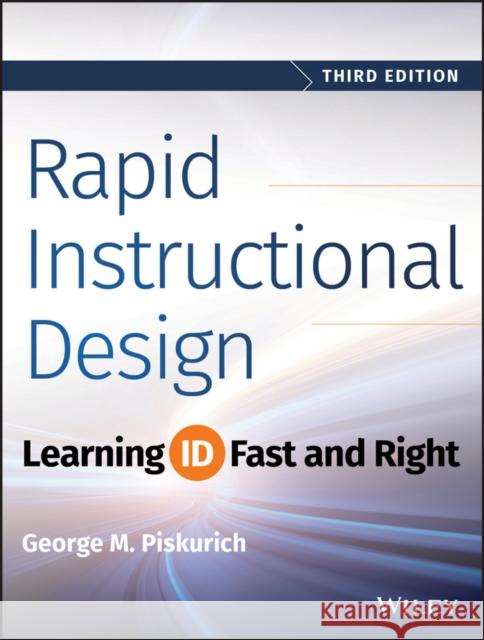
George M. Piskurich
Rapid Instructional Design: Learning Id Fast and Right Piskurich, George M. 9781118973974 John Wiley & Sons - książkaWidoczna okładka, to zdjęcie poglądowe, a rzeczywista szata graficzna może różnić się od prezentowanej.

Rapid Instructional Design: Learning Id Fast and Right

ISBN-13: 9781118973974 / Angielski / Miękka / 2015 / 560 str.

George M. Piskurich
cena 266,45
(netto: 253,76 VAT:  5%)

Najniższa cena z 30 dni: 264,26
Termin realizacji zamówienia:
ok. 30 dni roboczych.

Darmowa dostawa!

The classic guide to instructional design, fully updated for the new ways we learn Rapid Instructional Design is the industry standard guide to creating effective instructional materials, providing no-nonsense practicality rather than theory-driven text. Beginning with a look at what -instructional design- really means, readers are guided step-by-step through the ADDIE model to explore techniques for analysis, design, development, intervention, and evaluation. This new third edition has been updated to cover new applications, technologies, and concepts, and includes many new templates, real-life examples, and additional instructor materials. Instruction delivery has expanded rapidly in the nine years since the second edition's publication, and this update covers all the major advances in the field. The major instructional models are expanded to apply to e-learning, MOOCs, mobile learning, and social network-based learning. Informal learning and communities of practice are examined, as well. Instructional design is the systematic process by which instructional materials are designed, developed, and delivered. Designers must determine the learner's current state and needs, define the end goals of the instruction, and create an intervention to assist in the transition. This book is a complete guide to the process, helping readers design efficient, effective materials.

  • Learn the ins and outs of the ADDIE model
  • Discover shortcuts for rapid design
  • Design for e-learning, Millennials, and MOOCs
  • Investigate methods for emerging avenues of instruction
This book does exactly what a well-designed course should do, providing relevant guidance for anyone who wants to know how to apply good instructional design. Eminently practical and fully up-to-date, Rapid Instructional Design is the one-stop guide to more effective instruction.

Kategorie:
Nauka, Ekonomia i biznes
Kategorie BISAC:
Business & Economics > Zarządzenie zasobami ludzkimi
Computers > Educational Software
Wydawca:
John Wiley & Sons
Język:
Angielski
ISBN-13:
9781118973974
Rok wydania:
2015
Wydanie:
Revised
Ilość stron:
560
Waga:
0.85 kg
Wymiary:
23.11 x 17.53 x 2.79
Oprawa:
Miękka
Wolumenów:
01
Dodatkowe informacje:
Bibliografia
Glosariusz/słownik

Tool List vii

Preface for the Third Edition xiii

Introduction xv

Purpose xv

Audiences xvi

Special Elements xvii

Organization of the Book xix

Chapter 1 What Is This Instructional Design Stuff Anyway? 1

Why Instructional Design? 2

What Is Instructional Design? 3

A Few Definitions 5

Advantages of Instructional Design 9

Disadvantages of Instructional Design 13

Chapter 2 Before You Do Anything: Pre–Instructional Design Activities 17

Organizational Needs 18

Performance Assessment 23

Assessing Training Needs 33

Choosing Needs to Address 39

The Needs Assessment Report 42

Quick and Dirty Cost Benefit Analysis 47

Training Needs Analysis 54

Chapter 3 Do You Know What You Need to Do? Analysis 63

Data–Collection Methods 64

Why Analyze? 73

Types of Analysis 73

Computer–Aided Analysis 102

Chapter 4 How to Do It: Design 107

Make the Right Decision Now 107

Delivery Decision 108

Objectives 128

Design Documents 143

Course Descriptions 161

Gathering Content 162

Adding Structure: The Instructional Plan 168

Trainee Evaluation (Test Questions and Tests) 178

Hints for Designing in Various Formats 196

Chapter 5 Doing It Right: Development 203

End Products of Development 203

The Facilitator Guide as an End Product 205

Scripts and Storyboards 231

Participant Packages and Other Print Materials 235

Other Media 239

Hints for Developing Material 247

Chapter 6 Getting It Where It Does the Most Good: Implementation 263

Beta Tests and Pilots 263

Reviews Revisited 279

Common Implementation Issues 282

Other Instructor–Led Classroom Implementation Needs 287

Hints for Implementation 299

Field Trips 306

Chapter 7 Did It Do Any Good? Evaluation 311

Why Evaluation? 311

The Key to Good Evaluation 312

Types of Evaluation 315

Evaluation of Self–Instruction Programs 334

Revisions: What to Do with What You ve Learned 338

Hints for Evaluating 344

Chapter 8 Doing It Faster: More Rapid Design Shortcuts 353

Software for Instructional Design 354

Analysis Software 355

Test Development Software 355

Miscellaneous Software 356

Rapid Prototyping 356

Learning Objects Granular Training 357

Public Courses 358

Off–The–Shelf Programs 358

Technology Vendors 358

Performance Support Based Training 359

Problem–Based Learning (PBL) 361

Training Management SystemsLearning Management Systems (LMS)Learning Content Management Systems (LCMS) 361

Digital Cameras 362

What Does an ID Do? 362

Miscellaneous 364

Chapter 9 Asynchronous e–Learning Design 367

Definitions 367

Creating and Implementing an e–Learning System 369

Determining a Comprehensive e–Learning Strategy 371

Designing and Developing Good Programs 373

Learning Management Systems and Learning Content Management Systems 374

Preparing the Organization Globally for e–Learning 378

Self–Direction and e–Learning 380

Planning for a Smooth, Successful Implementation 384

Creating an Effective Monitoring and Evaluation Plan 385

Asynchronous e–Learning Design and Development 387

Analysis 387

Material Development 390

Learner Evaluation 397

Learner Interfaces 398

Beta Tests and Pilots 399

Software 400

Repurposing 401

Evaluating Asynchronous e–Learning Programs 403

Summary 403

Chapter 10 Synchronous e–Learning Design 409

Advantages 409

Disadvantages and Misconceptions 410

Design Considerations for Synchronous e–Learning 413

Mini–Interactions 414

Repurposing and Redesigning Synchronous e–Learning Programs 415

Other Synchronous Activities 416

More Detailed Facilitator Guides 419

Learner Guide 422

General Technology Considerations 423

Media 425

Designing Continuing Interactions 430

Audience Analysis 432

Implementation 434

Online Learning: A Special Type of e–Learning 446

What the Learners Say 451

Chapter 11 New Design Applications 453

Flipped Classrooms 453

Mobile Learning 457

Virtual Learning Environments 461

Social Network Based Learning 463

Massive Open Online Courses (MOOCs) 466

Communities of Practice 468

Informal Learning 469

The Cloud 471

Glossary 475

Suggested Readings 499

Other Resources 511

About the Author 517

Index 519

GEORGE M. PISKURICH is an organizational learning and performance consultant specializing in e–learning interventions, performance analysis, and telecommuting. He is an active member of both ISPI and ASTD, with over twenty–five years of experience in learning technology facilitation and design for both multi–national corporations and smaller organizations. George also teaches at John Carroll University, N.C. State, Georgia State, and Mercer University, and resides in El Paso, TX.

The Comprehensive Guide to Designing Quality Learning Materials

Rapid Instructional Design takes you step by step through the widely used ADDIE model to design, develop, and deliver high–quality instructional materials. This newly updated third edition includes coverage of the latest products and technologies that facilitate the process, as well as brand new information on mobile learning, social network–based learning, communities of practice, and informal learning. You′ll discover the best methods for determining the learner′s needs and current level of knowledge, defining a concrete end goal, and creating the most effective intervention to aid in the transition. New templates and examples clearly illustrate theory and application, allowing you to immediately begin using what you′ve learned.

Almost all instructional design models are based on ADDIE Analysis, Design, Development, Implementation, and Evaluation. This book walks you through the entire process in clear terms, giving you the practical understanding you need to apply good instructional design. It is your guide to:

  • Perform a pre–design assessment that informs design strategy
  • Identify objectives, and determine content, structure, and delivery
  • Overcome common implementation challenges with beta tests
  • Evaluate results to determine effectiveness and guide revisions
  • Discover the technologies and products that provide useful shortcuts

Instructional designers and technologists are in high demand as organizations increasingly turn toward instructional design to solve business performance problems and provide media–rich e–learning solutions. As the go–to alternative to traditional theory–based texts, Rapid Instructional Design is the informative, highly practical industry standard guide.

Piskurich, George M. George M. Piskurich is an organizational learning ... więcej >


Udostępnij

Facebook - konto krainaksiazek.pl


Opinie o Krainaksiazek.pl na Opineo.pl

Partner Mybenefit

Krainaksiazek.pl w programie rzetelna firma Krainaksiaze.pl - płatności przez paypal

Czytaj nas na:

Facebook - krainaksiazek.pl
  • książki na zamówienie
  • granty
  • książka na prezent
  • kontakt
  • pomoc
  • opinie
  • regulamin
  • polityka prywatności

Zobacz:

  • Księgarnia czeska

  • Wydawnictwo Książkowe Klimaty

1997-2026 DolnySlask.com Agencja Internetowa

© 1997-2022 krainaksiazek.pl
     
KONTAKT | REGULAMIN | POLITYKA PRYWATNOŚCI | USTAWIENIA PRYWATNOŚCI
Zobacz: Księgarnia Czeska | Wydawnictwo Książkowe Klimaty | Mapa strony | Lista autorów
KrainaKsiazek.PL - Księgarnia Internetowa

Polityka prywatnosci - link
Krainaksiazek.pl - płatnośc Przelewy24
Przechowalnia Przechowalnia






