• Wyszukiwanie zaawansowane
  • Kategorie
  • Kategorie BISAC
  • Książki na zamówienie
  • Promocje
  • Granty
  • Książka na prezent
  • Opinie
  • Pomoc
  • Załóż konto
  • Zaloguj się

Raman Spectroscopy in Cultural Heritage Preservation » książka


zaloguj się | załóż konto
Logo Krainaksiazek.pl

koszyk

konto

szukaj
topmenu
Księgarnia internetowa
Szukaj
Książki na zamówienie
Promocje
Granty
Książka na prezent
Moje konto
Pomoc
 
 
Wyszukiwanie zaawansowane
Pusty koszyk
Bezpłatna dostawa dla zamówień powyżej 20 złBezpłatna dostawa dla zamówień powyżej 20 zł

Kategorie główne

• Nauka
 [2946912]
• Literatura piękna
 [1852311]

  więcej...
• Turystyka
 [71421]
• Informatyka
 [150889]
• Komiksy
 [35717]
• Encyklopedie
 [23177]
• Dziecięca
 [617324]
• Hobby
 [138808]
• AudioBooki
 [1671]
• Literatura faktu
 [228371]
• Muzyka CD
 [400]
• Słowniki
 [2841]
• Inne
 [445428]
• Kalendarze
 [1545]
• Podręczniki
 [166819]
• Poradniki
 [480180]
• Religia
 [510412]
• Czasopisma
 [525]
• Sport
 [61271]
• Sztuka
 [242929]
• CD, DVD, Video
 [3371]
• Technologie
 [219258]
• Zdrowie
 [100961]
• Książkowe Klimaty
 [124]
• Zabawki
 [2341]
• Puzzle, gry
 [3766]
• Literatura w języku ukraińskim
 [255]
• Art. papiernicze i szkolne
 [7810]
Kategorie szczegółowe BISAC

Raman Spectroscopy in Cultural Heritage Preservation

ISBN-13: 9783031143786 / Angielski / Twarda / 2022 / 493 str.
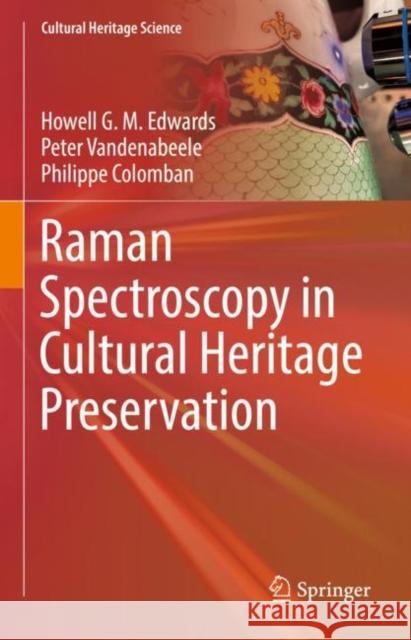
Howell G. M. Edwards; Peter Vandenabeele; Philippe Colomban
Raman Spectroscopy in Cultural Heritage Preservation Howell G. M. Edwards Peter Vandenabeele Philippe Colomban 9783031143786 Springer - książkaWidoczna okładka, to zdjęcie poglądowe, a rzeczywista szata graficzna może różnić się od prezentowanej.

Raman Spectroscopy in Cultural Heritage Preservation

ISBN-13: 9783031143786 / Angielski / Twarda / 2022 / 493 str.

Howell G. M. Edwards; Peter Vandenabeele; Philippe Colomban
cena 442,79
(netto: 421,70 VAT:  5%)

Najniższa cena z 30 dni: 385,52
Termin realizacji zamówienia:
ok. 22 dni roboczych
Bez gwarancji dostawy przed świętami

Darmowa dostawa!
inne wydania

This book addresses the application of Raman spectroscopic techniques to a range of diverse problems which arise in the study, conservation and restoration of artefacts and sites closely related to our cultural heritage as well as in authentication. These themes are naturally wider than what at first might be considered as artworks and archaeological artefacts and the topics include pigments, paintings, ceramics, glass, sculpture and patination / corrosion, textiles, industrial archaeology, the degradation and preservation of biomaterials, mummies and human skeletal remains. An interesting feature is the inclusion of modern case studies which describe specific problems and approaches to the Raman spectral analysis of items important to our cultural heritage. The text is prefaced with an introduction to the important parameters used in nondestructive Raman measurements and also highlights some future applications based upon novel miniaturised instrumentation for in-field studies and potential screening work which will identify specimens which would repay further studies in the laboratory. An attempt is made to give a snapshot of the state-of-the-art evolution since the beginning of the technique (1970s) and to point out potential further development. The book is co-edited by three international experts with many years' experience in the application of Raman spectroscopy to artworks, archaeological artefacts and in the investigation of materials and sites for cultural heritage preservation and each editor has undertaken to write individual chapters and different topics personally. The adopted approach is designed to convey the sort of information which has become available from the adoption of analytical Raman spectroscopy to different problems in the field of cultural heritage preservation through the spectral interrogation of artefacts and how the interpretation of the spectral data can assist museum curators, archaeologists and cultural heritage historians in the preservation and conservation of ancient materials and sites : a particular advantage in this respect is the ability of Raman spectroscopy to determine –generally in a strictly noninvasive procedure - at the laboratory or on-site with mobile instruments, the presence of both organic and inorganic components in a particular specimen together nondestructively without any chemical and mechanical pretreatment being undertaken, which is an essential requirement for rare and valuable samples . An important aside from this work is the means of spectral identification of ongoing biodeterioration and biological colonisation in specimens in storage and the effects of environmental deterioration such as humidity and temperature upon their integrity.


This book addresses the application of Raman spectroscopic techniques to a range of diverse problems which arise in the study, conservation and restoration of artefacts and sites closely related to our cultural heritage as well as in authentication. These themes are naturally wider than what at first might be considered as artworks and archaeological artefacts and the topics include pigments, paintings, ceramics, glass, sculpture and patination / corrosion, textiles, industrial archaeology, the degradation and preservation of biomaterials, mummies and human skeletal remains. An interesting feature is the inclusion of modern case studies which describe specific problems and approaches to the Raman spectral analysis of items important to our cultural heritage. The text is prefaced with an introduction to the important parameters used in nondestructive Raman measurements and also highlights some future applications based upon novel miniaturised instrumentation for in-field studies and potential screening work which will identify specimens which would repay further studies in the laboratory. An attempt is made to give a snapshot of the state-of-the-art evolution since the beginning of the technique (1970s) and to point out potential further development. The book is co-edited by three international experts with many years' experience in the application of Raman spectroscopy to artworks, archaeological artefacts and in the investigation of materials and sites for cultural heritage preservation and each editor has undertaken to write individual chapters and different topics personally. The adopted approach is designed to convey the sort of information which has become available from the adoption of analytical Raman spectroscopy to different problems in the field of cultural heritage preservation through the spectral interrogation of artefacts and how the interpretation of the spectral data can assist museum curators, archaeologists and cultural heritage historians in the preservation and conservation of ancient materials and sites : a particular advantage in this respect is the ability of Raman spectroscopy to determine –generally in a strictly noninvasive procedure - at the laboratory or on-site with mobile instruments, the presence of both organic and inorganic components in a particular specimen together nondestructively without any chemical and mechanical pretreatment being undertaken, which is an essential requirement for rare and valuable samples . An important aside from this work is the means of spectral identification of ongoing biodeterioration and biological colonisation in specimens in storage and the effects of environmental deterioration such as humidity and temperature upon their integrity.

Kategorie:
Nauka, Biologia i przyroda
Kategorie BISAC:
Science > Spectroscopy & Spectrum Analysis
Social Science > Archaeology
Science > Chemia - Fizyczna
Wydawca:
Springer
Seria wydawnicza:
Cultural Heritage Science
Język:
Angielski
ISBN-13:
9783031143786
Rok wydania:
2022
Dostępne języki:
Numer serii:
000794515
Ilość stron:
493
Waga:
0.95 kg
Wymiary:
23.6 x 15.8 x 3.2
Oprawa:
Twarda
Dodatkowe informacje:
Glosariusz/słownik

Chapter 1: Foreword

Chapter 2: Historical Overview

2.1. References

Chapter 3: Theory and Understanding

3.1. History

3.2. The Raman Effect

3.3. Instrumentation

3.4. Understanding and Assignment of Raman Spectral Signatures

3.4.1. Peak Wavenumbers and Assignment

3.4.2. Peak Intensity and Assignment

3.4.3. Molecular and Physical Description of Vibrational Modes

3.4.4. Implication for Spatial Resolution

3.4.5. Symmetry and Peak Numbers

3.4.6. Laser Choice and Resonance Effects

3.4.7. Raman Tensors and Polarization

3.4.8. Background subtraction

3.5. Databases; Advantages and drawbacks

3.6. References

Chapter 4: Combination of RS and Other Techniques

4.1. Optical Microscopy and the First RM

4.2. Scanning and Transmission EM

4.3. Castaing Microprobe

4.4. Other Couplings

4.5. References

Chapter 5: Pigments, Dyes and Coloured Agents

5.1. Arts and Colours

5.2. Raman Determination of Coloured Agents

5.3. Coloured Agents , Dyes and Pigments

5.4. From Alchemy to Chemical Industry

5.5. Advantages and Drawbacks of Raman Microscopy

5.5.1. Smalt or Lapis Lazuli ?

5.5.2. Natural or Synthetic Ultramarine

5.5.3. High Detectivity

5.5.4. Elimination of Wrong Conclusions from EA

5.5.5. Identification of Organic Dyes

5.6. Non-destructive and Non-invasive Procedures

5.7. SERS and Associated Techniques

5.8. Data treatment

5.9. Degradation and Conservation

5.10, Dating

5.11 References

Chapter 6: Cultural Heritage Meets Art Forensics

6.1. Introduction

6.2. Case Study 1 : Disappearing Amber

6.3. Case Study 2 : Cat with Enigmatic Smile

6.4. Case Study 3 : Ming Porcelain

6.5. Case Study 4 : Analysis Baffles Expert Opinion

6.6. Case Study 5 : Insect Trapped in Amber

6.7. Summary

6.8. References

Chapter 7: Jewellery and Gemstones

7.1. Introduction

7.2. Phase identification and Characterisation

7.3. Provenance Studies

7.4. Distinguishing gems from Glass and Fakes

7.5. Modern Synthetic gems

7.6. Case Studies

7.6.1. Jade

7.6.2. Corals, Pearls, Mother of Pearl

7.6.3. Ivory

7.6.4. Ambers and Natural Resins

7.7. On site Spectroscopy of Gems

7.8. References

Chapter 8: Cave Paintings and Rock Art

8.1. Introduction

8.2. Rock Art and Cave Sites Studied by Raman Spectroscopy

8.3. Information from Raman Spectral Data for Cultural Heritage Preservation

8.4. References

Chapter 9: From Frescoes to Paintings

9.1 Efficiency of Raman Microscopy

9.2. Procedures and Artefacts

9.3. Pigments and Dyes

9.4. Examples of Procedures: Measurements at the Laboratory and On-Site

9.5. Colour Fading and Degradation

9.6. Conclusions

9.7. References

Chapter 10 : Analytical Raman Spectroscopy of Manuscripts and Maps : The Role of Inks

10.1. Introduction

10.2. Origin and Composition of Carbon Black and Iron Gall Inks

10.3. Iron Gall Ink and Manuscript Deterioration

10.4. Coloured Inks

10.5. The Deterioration of Ancient Inks

10.6. Case Studies

10.6.1. The Vinland Map

10.6.2. The Beato de Valcavado Manuscript

10.6.3. The Cercelli Gospels and the Gospel of Judas

10.7. Conclusions

10.8 References

Chapter 11 : Patina , Corrosion and Conservation Treatment

11.1. Mechanisms of Corrosion and Patination

11.2. Patinas and Their Raman Signatures

11.3. Stability Towards Corrosion

11.3.1. Iron-Based Artefacts

11.3.2. Stones and Buildings

11.3.3. Glass

11.4. Conservation Treatment

11.5. Perspectives

11.6. References

Chapter 12 : Glass , Pottery , Enamelled Artefacts

12.1. Introduction

12.2. XO4 vibrations and the Raman Signatures Of Crystalline and glassy Silicates

12.2.1. Structure and Raman Signature Relationship

12.3. The Different Glass Compositions : A Brief Historical Survey

12.4. Glass Raman Fingerprint and Resonance Raman Effect

12.5. Glass Weathering , Dating and Conservation

12.6. Mobile Raman Spectroscopy

12.7. Multivariate Analysis

12.8. Recognising Technology Milestones : Tracing the Exchanges and Case Studies

12.8.1. Blue and Green Glass Coloured with Lapis Lazuli

12.8.2. Yellow and Green Colours

12.8.3. Trade Glass Beads

12.9 References

Chapter 13 : Archaeology of Biomaterials : Mummies , Ivories, Resins and Textiles

13.1. Introduction

13.2. Archaeological Specimens I : Mummies and Skeletal Remains

13.2.1. Mummified Tissues

13.2.1.1. Tomb of the Two Brothers

13.2.1.2. Otzi, the Alpine Ice-Man

13.2.1.3. The Qilakitsoq and Chiribaya Ice Mummies

13.2.1.4. The Beni Hassan Cat Mummy

13.2.1.5. The Antarctic Emperor Penguin Mummy

13.2.2. Human Skeletal Remains

13.2.2.1. The Anglesey Dark Ages Cist Burial

13.2.2.2. Gristhorpe Man

13.2.2.3. A Sambaqui Burial and Ochred Bones

13.2.2.4. A Change of Coffin : Analytical Spectral Information from Hair

13.3. Archaeological Specimens II : Functional or Decorative Items

13.3.1. Ivories

13.3.2. Resins, Gums, Waxes

13.3.2.1. Ambers and Copals

13.3.2.2. Dragon’s Blood

13.3.2.3. Frankincense , Myrrh and Pine Resins

13.3.2.4. Contents of Chests from Marine Excavations

13.4. Textiles

13.4.1. The HMS Victory Sail

13.4.2. Mummy Linens

13.5. Conclusions

13.6. References

Chapter 14 : Raman Spectroscopy and Industrial Archaeology

14.1. Introduction

14.2. The Role of Analytical Chemistry

14.3. Raman Spectroscopy and the Analysis of Industrial Archaeology

14.3.1. Abandoned Mine of a Previously Indeterminate Purpose

14.3.2. Unexpected Hazards in Mines (St Joachimstahl and St Austell )

14.3.3. Nantgarw China Works Waste Pit

14.4. The Use of Portable Raman Spectroscopic Instrumentation

14.5. References

Chapter 15 : Raman Spectroscopic Analysis of a Putative Century Oil Painting Depicting William Shakespeare

15.1. Introduction

15.2. Experimental

15.3. Results of the Raman Spectroscopic Analysis of the Pigments

15.4. Interpretation of the Raman Spectral Data

15.5. Conclusions

15.6. References

Chapter 16 : “Noli Me Tangere” : A renaissance Original ? A Holistic Analytical Spectroscopic Challenge.

16.1. Introduction

16.2. Compositional Study of the Works of Art on a “Noli Me Tangere” Theme

16.2.1. Historical Basis of the Artworks

16.2.2. The Nine Works of Art Comprising this Comparative Study

16.2.3. compositional Details Under Consideration

16.3. Results and Conclusions

16.4. References

Chapter 17 : A Case Study. Raman Spectroscopic Analysis Of Welsh Porcelains

17.1. Introduction

17.2. Experimental

17.2.1. Specimens

17.2.2. Spectroscopic Instrumentation

17.2.3. Previous Analytical Work

17.3 . Results and Discussion

17.3.1. Nantgarw and Swansea Porcelains : Statements for Verification

17.3.2. Porcelain Body Chemistry in the Kiln

17.3.3. Nantgarw 200 Porcelain

17.3.4. Raman Spectroscopic Results

17.3.4.1. Summary of Analytical Results on Nantgarw Porcelain Porcelains

17.4. References

Chapter 18 : Case Study : In-Field and On-Site Raman Spectroscopic Analysis

18.1. Why On-Site Analysis?

18.2. Instrumental Requirements and On-Site Procedures

18.3. The Role of Optics

18.4. Stand-Off Raman Spectroscopy

18.5. Protection from Ambient Light

18.6. Examples and Perspectives

18.7. References

Chapter 19: Case Study : Non-Invasively Documenting the Transfer of Enamelling Technology form Europe to China and Japan. The role of the Jesuits in the 17th Century

19.1. The Quest for Chinese Porcelain

19.2. The Response of European Potters

19.3. The European and Chinese Technologies of Enamelling

19.4. The Jesuit Missions in Japan and China

19.5. The Contribution of Raman Microscopy

19.6. Raman Identification of European Recipes /Ingredients In Chinese Cloisonees and Painted Enamel Wares

19.7. Application to Chinese Productions

19.8. Conclusions and Perspectives

19.9. References

Chapter 20: Case Study : The Shroud of Turin - Iconic Relic or Fake ? The Role of Raman spectroscopic Analysis in its Forensic Appraisal

20.1. Introduction

20.2. The Early Scientific Evidence Relating to the Turin Shroud

20.3. Recent Scientific Studies of the Turin Shroud Materials

20.4. Raman Spectroscopy and the Shroud of Turin

20.5. References

Chapter 21: Case Study : A Unique Rockingham English Porcelain Table . A Holistic Forensic Analysis.

21.1. The Rockingham Porcelain Manufactory

21.2. Analyses of Rockingham Porcelain

21.3. Raman Spectroscopic Analysis of the Porcelain Table Top

21.3.1. Background History of Wentworth Castle

21.4. Conclusions

21.5. References

Chapter 22: A Little Knowledge is Dangerous Thing. A Miscellany of Faux-Pas in the Cultural Heritage Of Literature

22.1. Preface

22.2. Introduction

22.3. Classical Literature in Cultural Heritage

22.3.1. Wilkie Collins – Armadale

22.3.1.1. Literary Background

22.3.2. Charles Dickens - A Tale of Two Cities

22.3.3. Ross King – Ex-Libris

22.3.4. Anthony Horowitz – The house of Silk . The New Sherlock Holmes Novel.

22.3.5. Agatha Christie – Various Novels

22.4. References

Chapter 23: Raman Analysis: What is Straightforward, What is Difficult and Future Perspectives.

Glossary

List of Acronyms

Index

Professor Howell G.M. Edwards M.A., B.Sc., D. Phil., C.Chem., FRSC. Howell Edwards is Professor Emeritus of Molecular Spectroscopy at the University of Bradford. He read Chemistry at Jesus College in the University of Oxford and after completing his B.A. and B.Sc. degrees he studied for his doctorate in Raman spectroscopy at Oxford with Dr Leonard Woodward and then became a

Research Fellow at Jesus College, University of Cambridge. He joined the University of Bradford as a Lecturer in Structural and Inorganic Chemistry, becoming Head of the Department of Chemical and Forensic Sciences, and was awarded a Personal Chair in Molecular Spectroscopy in 1996. He has received several international awards (Sir Harold Thompson Award; Charles Mann Award; Emanuel Boricky Medal; Norman Sheppard Award) in a spectroscopic career which has resulted in the publication of over 1350 research papers in Raman spectroscopy and the characterisation of materials, along with six books on the application of this analytical technique to art, archaeology and forensic science. He has had a lifelong interest in porcelains and the industrial archaeology , excavation and the preservation of early porcelain manufactory sites , many of which have now disappeared in urban expansion .He has authored six major books on porcelains and has also produced several monographs on the manufactories at Swansea and Nantgarw and the people associated with them. Howell Edwards is Honorary Scientific Adviser to the de Brecy Trust on the scientific evaluation of their artworks and paintings.


Professor Philippe Colomban, ENSCI engineer, M.Sc., Docteur es-Sciences Physiques. Philippe Colomban is CNRS Research Director Emeritus at Sorbonne Université. After an MSc in Ceramics, Glass & Cement Engineering (ENSCI-Sèvres) in 1975 and a MSc in Solid State Physics at Université Pierre-et-Marie Curie in 1976, Philippe Colomban obtained in 1979 the Ph.D. Hab. degree (Docteur es-Sciences Physiques) from the Université Pierre-et-Marie-Curie. He was one of the first in the world to develop Sol-Gel routes for advanced optoelectronic PLZT ceramics. He prepared single crystals, ceramics and studied their superionic conductors’ structure and ion and proton mobility. From 1989 to 1993 he was in charge of the new projects at the Materials Department of ONERA, the French Establishment for Aerospace Research and Development (materials for rockets and missiles, aircraft engines, Sol-Gel routes, ceramic- or polymer-matrix composites, fibres, nanoparticle-based microwave absorbing materials and Functionally Graded composites…) and worked as Consultant at the ONERA for 10 further years. From 1994 to the present, as CNRS Research Professor his research interests include Materials Science and Raman, IR and neutron spectroscopy (in situ analysis, fuel cells, electrolysis, fibres/composites…). Attention is paid to the correlation between Raman parameters and mechanical and electrical (ionic, electronic) properties…as well to the identification of the technology used in ancient ceramics, glasses, paintings and buildings. Ph. Colomban has published two books, more than 500 peer-reviewed papers, many book chapters and has applied for 10 patents; he has presented more than 100 invited talks and was visiting professor in Japan, Korea, South Africa, and Tunisia. He is Associated Editor of the Journal of Raman Spectroscopy and member of several Editorial Boards of journals devoted to Spectroscopy, Materials Science or Archaeometry.


Professor Peter Vandenabeele, is a professor at Ghent University and head of the Raman spectroscopy research group. He is a doctor in analytical chemistry and has performed research on applications of Raman spectroscopy in several research fields, including cultural heritage artefacts. He is member of the department of Archaeology at Ghent University and an associated member of the department of Chemistry at the same institution. His main research topics involve novel applications of Raman spectroscopy, especially involving the development and application of mobile instrumentation. Until the present time, Peter Vandenabeele has co-authored 170+ research papers and several books on this research topic and often gives invited presentations at international conferences.

This book addresses the application of Raman spectroscopic techniques to a range of diverse problems which arise in the study, conservation and restoration of artefacts and sites closely related to our cultural heritage as well as in authentication. These themes are naturally wider than what at first might be considered as artworks and archaeological artefacts and the topics include pigments, paintings, ceramics, glass, sculpture and patination / corrosion, textiles, industrial archaeology, the degradation and preservation of biomaterials, mummies and human skeletal remains. An interesting feature is the inclusion of modern case studies which describe specific problems and approaches to the Raman spectral analysis of items important to our cultural heritage. The text is prefaced with an introduction to the important parameters used in nondestructive Raman measurements and also highlights some future applications based upon novel miniaturised instrumentation for in-field studies and potential screening work which will identify specimens which would repay further studies in the laboratory. An attempt is made to give a snapshot of the state-of-the-art evolution since the beginning of the technique (1970s) and to point out potential further development. The book is co-edited by three international experts with many years' experience in the application of Raman spectroscopy to artworks, archaeological artefacts and in the investigation of materials and sites for cultural heritage preservation and each editor has undertaken to write individual chapters and different topics personally. The adopted approach is designed to convey the sort of information which has become available from the adoption of analytical Raman spectroscopy to different problems in the field of cultural heritage preservation through the spectral interrogation of artefacts and how the interpretation of the spectral data can assist museum curators, archaeologists and cultural heritage historians in the preservation and conservation of ancient materials and sites : a particular advantage in this respect is the ability of Raman spectroscopy to determine –generally in a strictly noninvasive procedure - at the laboratory or on-site with mobile instruments, the presence of both organic and inorganic components in a particular specimen together nondestructively without any chemical and mechanical pretreatment being undertaken, which is an essential requirement for rare and valuable samples . An important aside from this work is the means of spectral identification of ongoing biodeterioration and biological colonisation in specimens in storage and the effects of environmental deterioration such as humidity and temperature upon their integrity.




Udostępnij

Facebook - konto krainaksiazek.pl


Opinie o Krainaksiazek.pl na Opineo.pl

Partner Mybenefit

Krainaksiazek.pl w programie rzetelna firma Krainaksiaze.pl - płatności przez paypal

Czytaj nas na:

Facebook - krainaksiazek.pl
  • książki na zamówienie
  • granty
  • książka na prezent
  • kontakt
  • pomoc
  • opinie
  • regulamin
  • polityka prywatności

Zobacz:

  • Księgarnia czeska

  • Wydawnictwo Książkowe Klimaty

1997-2025 DolnySlask.com Agencja Internetowa

© 1997-2022 krainaksiazek.pl
     
KONTAKT | REGULAMIN | POLITYKA PRYWATNOŚCI | USTAWIENIA PRYWATNOŚCI
Zobacz: Księgarnia Czeska | Wydawnictwo Książkowe Klimaty | Mapa strony | Lista autorów
KrainaKsiazek.PL - Księgarnia Internetowa

Polityka prywatnosci - link
Krainaksiazek.pl - płatnośc Przelewy24
Przechowalnia Przechowalnia



