• Wyszukiwanie zaawansowane
  • Kategorie
  • Kategorie BISAC
  • Książki na zamówienie
  • Promocje
  • Granty
  • Książka na prezent
  • Opinie
  • Pomoc
  • Załóż konto
  • Zaloguj się

RF Circuit Design » książka


zaloguj się | załóż konto
Logo Krainaksiazek.pl

koszyk

konto

szukaj
topmenu
Księgarnia internetowa
Szukaj
Książki na zamówienie
Promocje
Granty
Książka na prezent
Moje konto
Pomoc
 
 
Wyszukiwanie zaawansowane
Pusty koszyk
Bezpłatna dostawa dla zamówień powyżej 40 złBezpłatna dostawa dla zamówień powyżej 40 zł

Kategorie główne

• Nauka
 [2952531]
• Literatura piękna
 [1815254]

  więcej...
• Turystyka
 [52246]
• Informatyka
 [151406]
• Komiksy
 [36554]
• Encyklopedie
 [23115]
• Dziecięca
 [612095]
• Hobby
 [104900]
• AudioBooki
 [1784]
• Literatura faktu
 [191556]
• Muzyka CD
 [380]
• Słowniki
 [2946]
• Inne
 [442645]
• Kalendarze
 [1505]
• Podręczniki
 [166084]
• Poradniki
 [422936]
• Religia
 [506774]
• Czasopisma
 [518]
• Sport
 [60387]
• Sztuka
 [242639]
• CD, DVD, Video
 [3428]
• Technologie
 [219359]
• Zdrowie
 [98539]
• Książkowe Klimaty
 [124]
• Zabawki
 [2509]
• Puzzle, gry
 [3809]
• Literatura w języku ukraińskim
 [261]
• Art. papiernicze i szkolne
 [8058]
Kategorie szczegółowe BISAC

RF Circuit Design

ISBN-13: 9780470167588 / Angielski / Twarda / 2008 / 842 str.
Richard C. Li
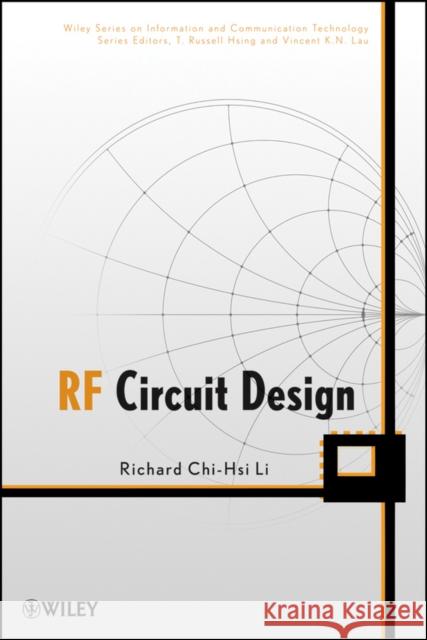
RF Circuit Design Richard C. Li 9780470167588 John Wiley & Sons - książkaWidoczna okładka, to zdjęcie poglądowe, a rzeczywista szata graficzna może różnić się od prezentowanej.

RF Circuit Design

ISBN-13: 9780470167588 / Angielski / Twarda / 2008 / 842 str.

Richard C. Li
cena 883,44
(netto: 841,37 VAT:  5%)

Najniższa cena z 30 dni: 862,16
Termin realizacji zamówienia:
ok. 30 dni roboczych.

Darmowa dostawa!

A Must-Read for all RF/RFIC Circuit Designers

This book targets the four most difficult skills facing RF/RFIC designers today: impedance matching, RF/AC grounding, Six Sigma design, and RFIC technology. Unlike most books on the market, it presents readers with practical engineering design examples to explore how they're used to solve ever more complex problems. The content is divided into three key parts:

Individual RF block circuit design

Basic RF circuit design skills

RF system engineering

The author assumes a fundamental background in RF circuit design theory, and the goal of the book is to enable readers to master the correct methodology. The book includes treatment of special circuit topologies and introduces some useful schemes for simulation and layout.

This is a must-read for RF/RFIC circuit design engineers, system designers working with communication systems, and graduates and researchers in related fields.


Kategorie:
Technologie
Kategorie BISAC:
Technology & Engineering > Radio
Technology & Engineering > Electrical
Wydawca:
John Wiley & Sons
Seria wydawnicza:
Information and Communication Technology Series,
Język:
Angielski
ISBN-13:
9780470167588
Rok wydania:
2008
Numer serii:
000343903
Ilość stron:
842
Waga:
1.53 kg
Wymiary:
25.4 x 18.03 x 4.32
Oprawa:
Twarda
Wolumenów:
01
Dodatkowe informacje:
Wydanie ilustrowane

PREFACE.

PART I INDIVIDUAL RF BLOCKS.

1. LNA (LOW NOISE AMPLIFIER).

1.1 Introduction.

1.2 Single–Ended Single Device LNA.

1.3 Single–Ended Cascode LNA.

1.4 LNA with AGC (Automatic Gain Control).

2. MIXERS.

2.1 Introduction.

2.2 Passive Mixers.

2.3 Active Mixers.

2.4 Design Schemes.

3. DIFFERENTIAL PAIRS.

3.1 Why Differential Pairs?

3.2 Can DC Offset be Blocked by a Capacitor?

3.3 Fundamentals of Differential Pairs.

3.4 CMRR (Common Mode Rejection Ratio).

4. RF BALUN.

4.1 Introduction.

4.2 Transformer Baluns.

4.3 LC Baluns.

4.4 Micro Strip Line Baluns.

4.5 Mixed Types of Baluns.

5. TUNABLE FILTERS.

5.1 Tunable Filters in Communication Systems.

5.2 Coupling Between Two Tank Circuits.

5.3 Circuit Description.

5.4 Effect of Second Coupling.

5.5 Performance.

6. VCO (VOLTAGE–CONTROLLED OSCILLATOR)

6.1 Three–Point Type Oscillators.

6.2 Other Single–Ended Oscillators.

6.3 VCO and PLL.

6.4 Design Example of a Single–Ended VCO.

6.5 Differential VCO and Quad Phases VCO.

7. POWER AMPLIFIERS (PA).

7.1 Classifications of Power Amplifiers.

7.2 Single–Ended PA Design.

7.3 Single–Ended PA–IC Design.

7.4 Push–Pull PA Design.

7.5 PA with Temperature Compensation.

7.6 PA with Output Power Control.

7.7 Linear PA.

PART II DESIGN TECHNOLOGIES AND SCHEMES.

8. DIFFERENT METHODOLOGY BETWEEN RF AND DIGITAL CIRCUIT DESIGN.

8.1 Controversy.

8.2 Differences between RF and Digital Blocks in a Communication System.

8.3 Conclusion.

8.4 Notes for High–Speed Digital Circuit Design.

9. VOLTAGE AND POWER TRANSPORTATION.

9.1 Voltage Delivered from a Source to a Load.

9.2 Power Delivered from a Source to a Load.

9.3 Impedance Conjugate Matching.

9.4 Additional Effects of Impedance Matching.

10. IMPEDANCE MATCHING IN NARROW–BAND CASE.

10.1 Introduction.

10.2 Impedance Matching by Means of Return Loss Adjustment.

10.3 Impedance Matching Network Built of One Part.

10.4 Impedance Matching Network Built of Two Parts.

10.5 Impedance Matching Network Built of Three Parts.

10.6 Impedance Matching When ZS or ZL Is Not 50 .

10.7 Parts in an Impedance Matching Network.

11. IMPEDANCE MATCHING IN A WIDE–BAND CASE.

11.1 Appearance of Narrow– and Wide–Band Return Loss on a Smith Chart.

11.2 Impedance Variation Due to Insertion of One Part per Arm or per Branch.

11.3 Impedance Variation Due to the Insertion of Two Parts per Arm or per Branch.

11.4 Impedance Matching in IQ Modulator Design for a UWB System.

11.5 Discussion of Wide–band Impedance Matching Networks.

12. IMPEDANCE AND GAIN OF A RAW DEVICE.

12.1 Introduction.

12.2 Miller Effect.

12.3 Small Signal Model of a Bipolar Transistor.

12.4 Bipolar Transistor with CE (Common Emitter) Configuration.

12.5 Bipolar Transistor with CB (Common Base) Configuration.

12.6 Bipolar Transistor with CC (Common Collector) Configuration..

12.7 Small Signal Model of a MOSFET Transistor

12.8 Similarity between Bipolar and MOSFET Transistors.

12.9 MOSFET Transistor with CS (Common Source) Configuration.

12.10 MOSFET Transistor with CG (Common Gate) Configuration.

12.11 MOSFET Transistor with CD (Common Drain) Configuration.

12.12 Comparison of Bipolar and MOSFET Transistors in Various Configurations.

13. IMPEDANCE MEASUREMENT.

13.1 Introduction.

13.2 Scale and Vector Voltage Measurement.

13.3 Direct Impedance Measurement by Network Analyzer.

13.4 Alternative Impedance Measurement by Network Analyzer.

13.5 Impedance Measurement with the Assistance of a Circulator.

Appendices.

References.

14. GROUNDING.

14.1 Implications of Grounding.

14.2 Possible Grounding Problems Hidden in a Schematic.

14.3 Imperfect or Inappropriate Grounding Examples.

14.4 Zero Capacitor.

14.5 Quarter Wavelength of Micro Strip Line.

15. EQUIPOTENTIALITY AND CURRENT COUPLING ON THE GROUND SURFACE.

15.1 Equipotentiality on the Ground Surface.

15.2 Forward and Return Current Coupling.

15.3 PCB or IC Chip with Multi–metallic Layers.

16. RFIC (RADIO FREQUENCY INTEGRATED CIRCUIT) AND SOC  (SYSTEM ON CHIP).

16.1 Interference and Isolation.

16.2 Shielding for an RF Module by a Metallic Shielding Box.

16.3 Strong Desirability to Develop RFIC.

16.4 Interference Going Along an IC Substrate Path.

16.5 Solution for Interference Coming from the Sky.

16.6 Common Grounding Rules for an RF Module and RFIC Design.

16.7 Bottlenecks in RFIC Design.

16.8 Prospect of SOC.

16.9 What Is Next?

17. MANUFACTURABILITY OF PRODUCT DESIGN.

17.1 Introduction.

17.2 Implication of 6 Design.

17.3 Approaching 6 Design.

17.4 Monte Carlo Analysis.

PART III RF SYSTEM ANALYSIS.

18. MAIN PARAMETERS AND SYSTEM ANALYSIS IN RF CIRCUIT DESIGN.

18.1 Introduction.

18.2 Power Gain.

18.3 Noise.

18.4 Non–Linearity.

18.5 Other Parameters.

18.6 Example of RF System Analysis.

Appendices.

References.

INDEX.

Richard Chi–Hsi Li has designed RF/RFIC circuits at Motorola and other companies for more than twenty years. He has also taught a training course entitled "RF/RFIC Circuit Design."

A Must–Read for all RF/RFIC Circuit Designers

This book targets the four most difficult skills facing RF/RFIC designers today: impedance matching, RF/AC grounding, Six Sigma design, and RFIC technology. Unlike most books on the market, it presents readers with practical engineering design examples to explore how they′re used to solve ever more complex problems. The content is divided into three key parts:

  • Individual RF block circuit design

  • Basic RF circuit design skills

  • RF system engineering

The author assumes a fundamental background in RF circuit design theory, and the goal of the book is to enable readers to master the correct methodology. The book includes treatment of special circuit topologies and introduces some useful schemes for simulation and layout.

This is a must–read for RF/RFIC circuit design engineers, system designers working with communication systems, and graduates and researchers in related fields.




Udostępnij

Facebook - konto krainaksiazek.pl


Opinie o Krainaksiazek.pl na Opineo.pl

Partner Mybenefit

Krainaksiazek.pl w programie rzetelna firma Krainaksiaze.pl - płatności przez paypal

Czytaj nas na:

Facebook - krainaksiazek.pl
  • książki na zamówienie
  • granty
  • książka na prezent
  • kontakt
  • pomoc
  • opinie
  • regulamin
  • polityka prywatności

Zobacz:

  • Księgarnia czeska

  • Wydawnictwo Książkowe Klimaty

1997-2026 DolnySlask.com Agencja Internetowa

© 1997-2022 krainaksiazek.pl
     
KONTAKT | REGULAMIN | POLITYKA PRYWATNOŚCI | USTAWIENIA PRYWATNOŚCI
Zobacz: Księgarnia Czeska | Wydawnictwo Książkowe Klimaty | Mapa strony | Lista autorów
KrainaKsiazek.PL - Księgarnia Internetowa

Polityka prywatnosci - link
Krainaksiazek.pl - płatnośc Przelewy24
Przechowalnia Przechowalnia



