• Wyszukiwanie zaawansowane
  • Kategorie
  • Kategorie BISAC
  • Książki na zamówienie
  • Promocje
  • Granty
  • Książka na prezent
  • Opinie
  • Pomoc
  • Załóż konto
  • Zaloguj się

Questions in Daily Urologic Practice: Updates for Urologists and Diagnostic Pathologists » książka


zaloguj się | załóż konto
Logo Krainaksiazek.pl

koszyk

konto

szukaj
topmenu
Księgarnia internetowa
Szukaj
Książki na zamówienie
Promocje
Granty
Książka na prezent
Moje konto
Pomoc
 
 
Wyszukiwanie zaawansowane
Pusty koszyk
Bezpłatna dostawa dla zamówień powyżej 20 złBezpłatna dostawa dla zamówień powyżej 20 zł

Kategorie główne

• Nauka
 [2946912]
• Literatura piękna
 [1852311]

  więcej...
• Turystyka
 [71421]
• Informatyka
 [150889]
• Komiksy
 [35717]
• Encyklopedie
 [23177]
• Dziecięca
 [617324]
• Hobby
 [138808]
• AudioBooki
 [1671]
• Literatura faktu
 [228371]
• Muzyka CD
 [400]
• Słowniki
 [2841]
• Inne
 [445428]
• Kalendarze
 [1545]
• Podręczniki
 [166819]
• Poradniki
 [480180]
• Religia
 [510412]
• Czasopisma
 [525]
• Sport
 [61271]
• Sztuka
 [242929]
• CD, DVD, Video
 [3371]
• Technologie
 [219258]
• Zdrowie
 [100961]
• Książkowe Klimaty
 [124]
• Zabawki
 [2341]
• Puzzle, gry
 [3766]
• Literatura w języku ukraińskim
 [255]
• Art. papiernicze i szkolne
 [7810]
Kategorie szczegółowe BISAC

Questions in Daily Urologic Practice: Updates for Urologists and Diagnostic Pathologists

ISBN-13: 9784431728184 / Angielski / Twarda / 2008 / 287 str.
Ryoichi Oyasu
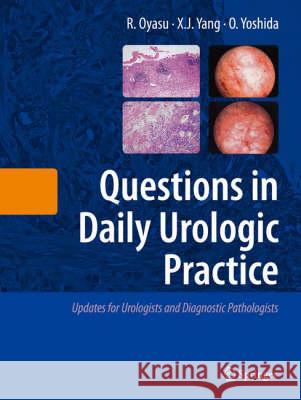
Questions in Daily Urologic Practice: Updates for Urologists and Diagnostic Pathologists Oyasu, Ryoichi 9784431728184 Not Avail - książkaWidoczna okładka, to zdjęcie poglądowe, a rzeczywista szata graficzna może różnić się od prezentowanej.

Questions in Daily Urologic Practice: Updates for Urologists and Diagnostic Pathologists

ISBN-13: 9784431728184 / Angielski / Twarda / 2008 / 287 str.

Ryoichi Oyasu
cena 603,81
(netto: 575,06 VAT:  5%)

Najniższa cena z 30 dni: 578,30
Termin realizacji zamówienia:
ok. 22 dni roboczych
Bez gwarancji dostawy przed świętami

Darmowa dostawa!

The book provides practicing urologists and diagnostic surgical pathologists (and physicians in training) with immediately useful information in their patients' care. This intends to bridge the gap between pathologists and urologists by providing mutually important updated information. In the format of Question/Answer (Q/A), Professor Oyasu answers a number of questions from practicing and academic urologists, while reviewing the leading pathology and urology journals worldwide and extracted the updated information. This book covers many issues of which the clinician needs to be aware in regard to the pathology of tumors of the adrenal, kidney, urothelium, prostate and testes. This book is designed to be easy to review and to find the key answer. Each question is followed by a succinct answer and comments supported by references with generous use of full color photographs/illustrations. This series of Q/As is useful to a diagnostic surgical pathologist as well, in providing what urologists want to hear from him in his report.


Kategorie:
Nauka, Medycyna
Kategorie BISAC:
Medical > Urologia i medycyna układu moczowo-płciowego
Medical > Patologia medyczna
Wydawca:
Not Avail
Język:
Angielski
ISBN-13:
9784431728184
Rok wydania:
2008
Wydanie:
2008
Ilość stron:
287
Waga:
1.16 kg
Wymiary:
27.97 x 21.54 x 1.91
Oprawa:
Twarda
Wolumenów:
01
Dodatkowe informacje:
Bibliografia
Wydanie ilustrowane

From the reviews:

"The book is authored by 2 pathologists and 1 urologist and contains 5 parts spanning 287 pages. ... the book is user-friendly and an easy read. It contains detailed and high-quality photographs. This book will prove useful to resident physicians in pathology and urology, as well as have pragmatic value to general pathologists." (Navin C. Shah and Isabell Sesterhenn, Journal of the American Medical Association, December, 2008)

"This book focuses on important questions about malignant diseases of the prostate, kidney, bladder, testes, and adrenal glands faced by urologists. ... The book is written for the benefit of both clinical urologists and diagnostic surgical pathologists. Residents also will benefit from the broad array of relevant questions ... . By focusing on the questions asked by practicing urologists, this book offers a source of easily referenced, valuable information for physicians managing patients with urologic malignancies." (Nicholas T Leone, Doody's Review Service, May, 2009)

"This book attempts to answer various questions in the practice of Uro-Oncology. ... The questions and answers format is very interesting, with detailed comments and references. ... I conclude by saying that this book is a must read for all exam preparing post graduates. Lot of information they get by wide search are concentrated in single hand book. This is a good reference book for practicing urologists ... . Well updated book for all pathologists, practicing Uro-Pathology." (Urology, Vol. 74 (3), September, 2009)

Prostate.- Does a prostatic capsule exist? Pathologists and urologists use the word “capsule” when evaluating the extent of prostatic cancer in prostatectomy specimens.- What is the anatomic structure of the prostate? Where is the transition zone? Where does carcinoma develop? Where does benign prostatic hyperplasia occur?.- What is the clinical significance of perineural invasion reported on prostate needle core biopsy?.- What is the difference between a positive surgical margin and extraprostatic extension in pathology reports of radical prostatectomy? What is the clinical relevance of these findings?.- What is the clinical significance of prostate cancer incidentally discovered in tissue removed to relieve urinary tract obstruction mostly by transurethral resection (stage T1a and T1b cancers)?.- What are the characteristics of transition zone cancer? Is it less aggressive than the non-transition-zone cancer?.- Is there a significant difference in prognosis between Gleason score 3 + 4 and 4 + 3 prostate cancers in radical prostatectomy specimens? What is the prognostic implication of Gleason score 3 + 4 versus 4 + 3 prostate cancer assigned to prostate needle core biopsy specimens?.- A positive surgical margin associated with an extraprostatic extension of prostate carcinoma is a significant risk for disease progression. What, then, is the risk of a positive margin created by an inadvertent surgical incision into cancerous prostate parenchyma?.- What are the neuroendocrine cells in prostate cancer? From where are these cells derived? What is the clinical implication of neuroendocrine differentiation in prostate cancer?.- What is prostatic ductal adenocarcinoma? How is it clinically and pathologically different from the conventional (acinar) adenocarcinoma?.- What immunohistochemical markers are useful for the diagnosis of prostate cancer?.- When a basal cell-specific marker (34?E12 or p63) is negative in an atypical focus, can the diagnosis of adenocarcinoma be rendered? By the same token, if 34?E12- or p63-positive cells are present, can carcinoma be ruled out?.- How often is cancer detected when serum PSA is elevated? What factors affect the prostate cancer detection rate?.- What is the clinical significance of isolated high-grade prostatic intraepithelial neoplasia discovered on a prostate needle core biopsy? How often does it occur? Does its presence predict cancer on a subsequent biopsy? Are there any specific clinical or pathologic findings that favorably predict cancer on a subsequent biopsy?.- What is the clinical significance of a Gleason pattern 4 or 5 tumor found on a prostate needle core biopsy? What impact does a Gleason pattern 4 or 5 tumor have on the prognosis after radical prostatectomy?.- What clinically useful information should be included in the pathology report on a prostate needle core biopsy? Are there specific microscopic findings useful when assessing cancer staging?.- What is the meaning of “atypical glands suspicious but not diagnostic of adenocarcinoma” in a pathology diagnosis? Is “atypical small acinar proliferation” a pathologic entity?.- Kidney.- What are the essential features of renal neoplasms based on the current (2004) WHO classification system? What is the clinical implication of the new classification? How does the Fuhrman grading system work? What are the factors affecting survival of renal cell carcinoma patients?.- Does granular cell type renal cell carcinoma exist? What are the features of clear cell renal cell carcinoma? What are the pathologic characteristics and the clinical implication of multilocular cystic renal cell carcinoma?.- What is the definition of papillary adenoma? What is the relationship of papillary adenoma to papillary renal cell carcinoma? Do we need to divide papillary renal cell carcinoma into two subtypes?.- How is chromophobe renal cell carcinoma diagnosed? How does one distinguish chromophobe renal cell carcinoma from oncocytoma?.- What are the features of collecting duct carcinoma? What is mucinous tubular spindle cell carcinoma?.- Why is sarcomatoid renal cell carcinoma not an independent subtype? What is the clinical significance of unclassified renal cell carcinoma?.- What molecular and genetic changes are characteristic of renal tumors? Based on the new knowledge, is molecular targeting feasible?.- Are there immunohistochemical markers for the differential diagnosis of renal cell neoplasms, especially when tumor cells have an eosinophilic/granular cytoplasm?.- How does adrenal gland involvement by renal cell carcinoma affect the prognosis, if any? Should a tumor directly infiltrating the ipsilateral adrenal gland be kept as a pT3a tumor?.- How does the tumor thrombus in the renal vein or inferior vena cava and its level of extension affect the prognosis of renal cancer?.- How does the renal sinus involvement in renal cell carcinoma affect the prognosis?.- What is the significance of microvascular tumor invasion observed in a renal cell carcinoma?.- How does one distinguish benign from malignant renal cysts clinically? Which renal neoplasms are characterized by cyst formation?.- Is angiomyolipoma a neoplasm or a hamartoma? Does cytologic atypia seen in angiomyolipomas denote aggressive behavior? Does an angiomyolipoma need treatment if it is benign? What is the indication for surgical intervention if it is required?.- Urinary Bladder.- What are the advantages and disadvantages, if any, of the revised (2004) WHO classification of urinary bladder neoplasms?.- What are the features of inverted papilloma of the urinary tract? How does it differ from papillary urothelial carcinoma? Is there a malignant counterpart of inverted papilloma? What are the differential diagnoses?.- What is small cell carcinoma of the urinary bladder? What are the biologic behaviors of this tumor and its relationship to the conventional urothelial carcinoma?.- What is nephrogenic adenoma? What is the histogenesis of nephrogenic adenoma? What is the immunohistochemical profile of the lesion? Is there any relation between the development of a nephrogenic adenoma and kidney transplant?.- What are the clinical and pathologic features needed for the diagnosis of interstitial cystitis? What are the most important entities that should be considered in the differential diagnosis?.- What are the possible etiology and pathogenesis of interstitial cystitis?.- What are the treatment options for patients with interstitial cystitis?.- Is there a difference in clinical behavior between urothelial carcinoma of the upper urinary tract and that of the lower urinary tract? What is the risk of developing tumors in the contralateral and lower urinary tracts in patients presenting initially with an upper urinary tract cancer? Conversely, what is the risk of developing an upper urinary tract tumor in patients who initially present with a lower urinary tract tumor?.- Do multifocal or recurrent urothelial carcinomas originate from a single transformed cell or from multiple transformed cells? What is the clinical significance of this argument?.- Testis.- What is the latest classification of male germ cell tumors? How do the pathology subtypes relate to their biologic behavior and malignant potential?.- What is the pathogenesis of testicular germ cell tumors? Are there specific changes that characterize the development of germ cell tumors?.- How do germ cell tumors in infants and children differ from those in postpubertal males and females?.- What is the malignant transformation (or somatic malignancy) of germ cell tumors? What is the clinical significance of this transformation?.- When a man presents with a germ cell tumor localized in the mediastinum or retroperitoneum, how can one decide whether it is a primary extragonadal tumor or a metastasis?.- How does the late recurrence of testicular germ cell tumors occur? What are the prognostic factors to predict the late recurrence?.- Adrenals.- What are the pathologic criteria for distinguishing benign from malignant adrenal cortical neoplasms? What diseases should be considered for the differential diagnosis? Are there significant differences in clinical behavior between adult and pediatric adrenal cortical neoplasms?.- When a patient presents with a clinical picture of adrenal cortical hyperfunction, what would be the anatomic changes in the adrenal cortex?.- What is the difference between pheochromocytoma and paraganglioma? What are the familial syndromes that have pheochromocytoma as a component? What are the pathologic features of pheochromocytoma indicating malignancy?.


Udostępnij

Facebook - konto krainaksiazek.pl


Opinie o Krainaksiazek.pl na Opineo.pl

Partner Mybenefit

Krainaksiazek.pl w programie rzetelna firma Krainaksiaze.pl - płatności przez paypal

Czytaj nas na:

Facebook - krainaksiazek.pl
  • książki na zamówienie
  • granty
  • książka na prezent
  • kontakt
  • pomoc
  • opinie
  • regulamin
  • polityka prywatności

Zobacz:

  • Księgarnia czeska

  • Wydawnictwo Książkowe Klimaty

1997-2025 DolnySlask.com Agencja Internetowa

© 1997-2022 krainaksiazek.pl
     
KONTAKT | REGULAMIN | POLITYKA PRYWATNOŚCI | USTAWIENIA PRYWATNOŚCI
Zobacz: Księgarnia Czeska | Wydawnictwo Książkowe Klimaty | Mapa strony | Lista autorów
KrainaKsiazek.PL - Księgarnia Internetowa

Polityka prywatnosci - link
Krainaksiazek.pl - płatnośc Przelewy24
Przechowalnia Przechowalnia






