• Wyszukiwanie zaawansowane
  • Kategorie
  • Kategorie BISAC
  • Książki na zamówienie
  • Promocje
  • Granty
  • Książka na prezent
  • Opinie
  • Pomoc
  • Załóż konto
  • Zaloguj się

Quantum Software Engineering » książka


zaloguj się | załóż konto
Logo Krainaksiazek.pl

koszyk

konto

szukaj
topmenu
Księgarnia internetowa
Szukaj
Książki na zamówienie
Promocje
Granty
Książka na prezent
Moje konto
Pomoc
 
 
Wyszukiwanie zaawansowane
Pusty koszyk
Bezpłatna dostawa dla zamówień powyżej 20 złBezpłatna dostawa dla zamówień powyżej 20 zł

Kategorie główne

• Nauka
 [2946600]
• Literatura piękna
 [1856966]

  więcej...
• Turystyka
 [72221]
• Informatyka
 [151456]
• Komiksy
 [35826]
• Encyklopedie
 [23190]
• Dziecięca
 [619653]
• Hobby
 [140543]
• AudioBooki
 [1577]
• Literatura faktu
 [228355]
• Muzyka CD
 [410]
• Słowniki
 [2874]
• Inne
 [445822]
• Kalendarze
 [1744]
• Podręczniki
 [167141]
• Poradniki
 [482898]
• Religia
 [510455]
• Czasopisma
 [526]
• Sport
 [61590]
• Sztuka
 [243598]
• CD, DVD, Video
 [3423]
• Technologie
 [219201]
• Zdrowie
 [101638]
• Książkowe Klimaty
 [124]
• Zabawki
 [2473]
• Puzzle, gry
 [3898]
• Literatura w języku ukraińskim
 [254]
• Art. papiernicze i szkolne
 [8170]
Kategorie szczegółowe BISAC

Quantum Software Engineering

ISBN-13: 9783031053238 / Angielski / Twarda / 2022 / 302 str.
Manuel A. Serrano; Ricardo Pérez-Castillo; Mario Piattini
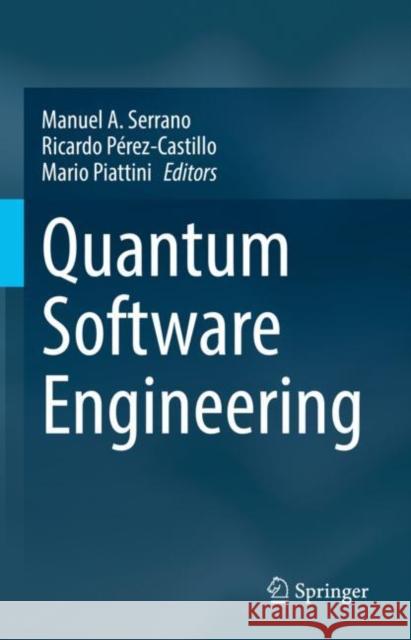
Quantum Software Engineering Manuel A. Serrano Ricardo P?rez-Castillo Mario Piattini 9783031053238 Springer - książkaWidoczna okładka, to zdjęcie poglądowe, a rzeczywista szata graficzna może różnić się od prezentowanej.

Quantum Software Engineering

ISBN-13: 9783031053238 / Angielski / Twarda / 2022 / 302 str.

Manuel A. Serrano; Ricardo Pérez-Castillo; Mario Piattini
cena 443,82 zł
(netto: 422,69 VAT:  5%)

Najniższa cena z 30 dni: 385,52 zł
Termin realizacji zamówienia:
ok. 22 dni roboczych
Bez gwarancji dostawy przed świętami

Darmowa dostawa!
inne wydania

This book presents a set of software engineering techniques and tools to improve the productivity and assure the quality in quantum software development. Through the collaboration of the software engineering community with the quantum computing community new architectural paradigms for quantum-enabled computing systems will be anticipated and developed.The book starts with a chapter that introduces the main concepts and general foundations related to quantum computing. This is followed by a number of chapters dealing with the quantum software engineering methods and techniques. Topics like the Talavera Manifesto for quantum software engineering, frameworks for hybrid systems, formal methods for quantum software engineering, quantum software modelling languages, and reengineering for quantum software are covered in this part. A second set of chapters then deals with quantum software environments and tools, detailing platforms like QuantumPath®, Classiq as well as quantum software frameworks for deep learning.Overall, the book aims at academic researchers and practitioners involved in the creation of quantum information systems and software platforms. It is assumed that readers have a background in traditional software engineering and information systems.


This book presents a set of software engineering techniques and tools to improve the productivity and assure the quality in quantum software development. Through the collaboration of the software engineering community with the quantum computing community new architectural paradigms for quantum-enabled computing systems will be anticipated and developed.The book starts with a chapter that introduces the main concepts and general foundations related to quantum computing. This is followed by a number of chapters dealing with the quantum software engineering methods and techniques. Topics like the Talavera Manifesto for quantum software engineering, frameworks for hybrid systems, formal methods for quantum software engineering, quantum software modelling languages, and reengineering for quantum software are covered in this part. A second set of chapters then deals with quantum software environments and tools, detailing platforms like QuantumPath®, Classiq as well as quantum software frameworks for deep learning. Overall, the book aims at academic researchers and practitioners involved in the creation of quantum information systems and software platforms. It is assumed that readers have a background in traditional software engineering and information systems.

Kategorie:
Informatyka, Bazy danych
Kategorie BISAC:
Computers > Software Development & Engineering - General
Science > Fizyka kwantowa
Computers > Quantum Computing
Wydawca:
Springer
Język:
Angielski
ISBN-13:
9783031053238
Rok wydania:
2022
Dostępne języki:
Ilość stron:
302
Waga:
0.63 kg
Wymiary:
23.39 x 15.6 x 1.91
Oprawa:
Twarda
Dodatkowe informacje:
Wydanie ilustrowane

1 Elías F. Combarro, Quantum Computing Foundations.- 2 Mario Piattini and Juan Manuel Murillo, Quantum software engineering landscape and challenges.- 3 Miguel Ángel Blanco and Manuel Serrano, Quantum Information Technology Governance System.- 4 Benjamin Weder et al., Quantum Software Development Lifecycle.- 5 Carmelo Cartiere, Formal Methods for Quantum Software Engineering.- 6 Carlos A. Pérez-Delgado, A Quantum Software Modeling Language.- 7 Iaakov Exman and Alon Tsalik Shmilovich, Quantum Software Models: Density Matrix for Universal Software Design.- 8 David Valencia et al., Quantum Service Oriented Architectures: from hybrid classical approaches to future standalone solutions.- 9 Antonio García de la Barrera at al., Quantum Software Testing – Current trends & Emerging proposals.- 10 Miguel-Angel Sicilia at al., Quantum software measurement.- 11 Luis Jiménez-Navajas at al., Quantum Software Modernization.- 12 José A. Cruz-Lemus and Manuel Serrano, Quantum software tools overview.- 13 Guido Peterssen at al., Quantum software development with QuantumPath®.- 14 Nir Minerbi, Quantum Software Development with Classiq.- 15 Filipa Ramos Ferreir et al., Quantum Software Frameworks for Deep Learning.

Manuel A. Serrano is Associate Professor at the University of Castilla – La Mancha (Spain) since 2000. Currently, he is Vice-Dean of the Department of Technologies and Information Systems. He has participated in more than 20 research projects, has conducted several invited speeches and transfer project with companies. Manuel is a member of the aQuantum team working on quantum algorithms, quantum testing and quantum software engineering. He is also part of the Microsoft Quantum Network imparting several quantum computing seminars and workshops.

Ricardo Pérez-Castillo works at the IT & Social Sciences School of Talavera at University of Castilla-La Mancha and belongs to Alarcos Research Group. His research includes works on architecture-driven modernization, model-driven development, and business process archaeology. Ricardo is member of the aQuantum scientific research team where he works on the migration of classical and quantum systems toward hybrid information systems. He is the research director of some public-funding research projects about quantum software engineering, and he has also co-organized several workshops on Quantum Software Engineering.

Mario Piattini is Director of the Alarcos Research Group at UCLM. He is among the 15 “Top scholars in the field of systems and software engineering (2004-2008)” and the 15 “Most active experienced Software Engineering researchers in top-quality journals (2010-2017)”. He is the co-creator of the “aQuantum” unit, which was founded to learn about the specific problems quantum developers and scientists have to face, and which puts together industry and research. He has also co-organized several workshops on Quantum Software Engineering.

This book presents a set of software engineering techniques and tools to improve the productivity and assure the quality in quantum software development. Through the collaboration of the software engineering community with the quantum computing community new architectural paradigms for quantum-enabled computing systems will be anticipated and developed.

The book starts with a chapter that introduces the main concepts and general foundations related to quantum computing. This is followed by a number of chapters dealing with the quantum software engineering methods and techniques. Topics like the Talavera Manifesto for quantum software engineering, frameworks for hybrid systems, formal methods for quantum software engineering, quantum software modelling languages, and reengineering for quantum software are covered in this part. A second set of chapters then deals with quantum software environments and tools, detailing platforms like QuantumPath®, Classiq as well as quantum software frameworks for deep learning.

Overall, the book aims at academic researchers and practitioners involved in the creation of quantum information systems and software platforms. It is assumed that readers have a background in traditional software engineering and information systems.




Udostępnij

Facebook - konto krainaksiazek.pl


Opinie o Krainaksiazek.pl na Opineo.pl

Partner Mybenefit

Krainaksiazek.pl w programie rzetelna firma Krainaksiaze.pl - płatności przez paypal

Czytaj nas na:

Facebook - krainaksiazek.pl
  • książki na zamówienie
  • granty
  • książka na prezent
  • kontakt
  • pomoc
  • opinie
  • regulamin
  • polityka prywatności

Zobacz:

  • Księgarnia czeska

  • Wydawnictwo Książkowe Klimaty

1997-2025 DolnySlask.com Agencja Internetowa

© 1997-2022 krainaksiazek.pl
     
KONTAKT | REGULAMIN | POLITYKA PRYWATNOŚCI | USTAWIENIA PRYWATNOŚCI
Zobacz: Księgarnia Czeska | Wydawnictwo Książkowe Klimaty | Mapa strony | Lista autorów
KrainaKsiazek.PL - Księgarnia Internetowa

Polityka prywatnosci - link
Krainaksiazek.pl - płatnośc Przelewy24
Przechowalnia Przechowalnia



