Psychosocial Adaptation to Pregnancy: Seven Dimensions of Maternal Development » książka





Psychosocial Adaptation to Pregnancy: Seven Dimensions of Maternal Development
ISBN-13: 9783030457372 / Angielski / Twarda / 2020 / 354 str.
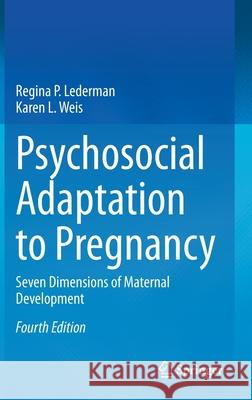
Psychosocial Adaptation to Pregnancy: Seven Dimensions of Maternal Development
ISBN-13: 9783030457372 / Angielski / Twarda / 2020 / 354 str.
(netto: 504,23 VAT: 5%)
Najniższa cena z 30 dni: 501,19
ok. 16-18 dni roboczych.
Darmowa dostawa!
Chapter 1. Psychosocial Anxiety, Stress, and Adaptation in Pregnancy: Assessment of Seven Dimensions of Maternal Development
1.1 Introduction
1.2 Foundation Research Projects for Theory Development of the Seven Dimensions of Maternal Prenatal Adaption
1.2.1 Maternal Psychological and Physiological Correlates of Progress in Labor and Fetal/Newborn Health
1.2.1.1 Theory and Design
1.2.1.2 Methods
1.2.1.3 Results
1.2.2 Relationship of Maternal Prenatal Psychosocial Adaptation and Family Functioning to Pregnancy Outcomes
1.2.2.1 Background and Theory
1.2.2.2 Design and Methods
1.2.2.3 Results
1.2.3 Maternal Prenatal Psychosocial Adaptation Predictors of Infant Birth
1.2.3.1 Theory and Background
1.2.3.2. Research Summary
1.3 The Far-Reaching Effects of Prenatal Anxiety, Birth Outcomes, Demographic Variables, and Health of the Mother and the Fetus/Newborn/Child
1.3.1 Maternal Anxiety and Stress in Pregnancy, and Demographic Factors and Traumatic Life Events
1.3.2 Maternal Prenatal Anxiety and Stress, and Adverse Child and Adult Health Outcomes
1.4 Theoretical Foundations of the Seven Dimensions of Adaption to Pregnancy
Chapter 2. Acceptance of Pregnancy
2.1 Planning and Wanting the Pregnancy
2.2 Happiness Versus Depression During Pregnancy
2.3 Discomfort During Pregnancy
2.4 Body Change During Pregnancy
2.5 Ambivalence Toward Pregnancy
2.6 Summary
Chapter 3. Identification with a Motherhood Role
3.1 Motivation for Motherhood
3.2 Preparations for Motherhood
3.2.1 Fantasizing
3.2.1.1 Envisioning Oneself as a Mother
3.2.1.2 Characteristics Desired as a Mother3.2.1.3 Anticipating Future Life Changes as a Mother
3.2.2 Dreams About Pregnancy and Motherhood
3.2.2.1 Reliving Childhood
3.2.2.2 School Dreams
3.2.2.3 Motherhood-Career Conflict
3.2.2.4 Confidence in Maternal Skills
3.2.2.5 Food Dreams and Infant Intactness
3.2.2.6 Life Experience
3.3 Conflict Resolution
3.4 Maternal-Fetal Attachment Representation and Maternal Role Evolution
3.5 Summary
Chapter 4. Relationship with Mother
4.1 Availability of the Mother
4.1.1 Infancy and Childhood
4.1.2 Availability During Pregnancy
4.2 Reactions to Pregnancy
4.3 Respect for Autonomy
4.4 Willingness to Reminisce4.5 Empathy with the Mother
4.6 Summary
Chapter 5. Relationship with Husband or Partner
5.1 The Husband’s Concern for His Expectant’s Wife’s Needs
5.1.1. Empathy
5.1.1.1 Empathic Partners
5.1.1.2 Unempathic Partners
5.1.2 Increased Cooperativeness and Flexibility
5.1.3 Availability
5.1.4 Trustworthiness and Reliability
5.2 The Wife’s Concern for Her Husband’s Needs as an Expectant Father
5.3 Effects of the Pregnancy on the Marital Bond
5.3.1 Closeness and Intimacy
5.3.2 Increased or Decreased Conflict in the Marital Bond
5.4 Identification of a Fatherhood Role
5.5 The Transition to Fatherhood
5.5.1 Readiness for Fatherhood
5.5.2 Stress Associated with Fatherhood5.5.3 Paternal-Infant Attachment
5.5.4 Paternal Involvement in Child Care
5.5.5 Marital and Partner Relationship Support and Education During Pregnancy5.6 Summary
Chapter 6. Preparation for Labor
6.1 Planning for Labor: Practical Steps to Gather Information
6.1.1 Prenatal Classes
6.1.2 Conversing with Other Women
6.1.3 Books, Films, and Media
6.1.4 Other Practical Steps
6.2 Planning for Labor: Maternal Thought Processes6.2.1 Thinking Versus Avoidance of Thinking About Labor
6.3 Congruence Between Fantasy and Reality
6.3.1 Labor Contractions
6.3.2 Work and Pain
6.3.3 Risks and the Unknown
6.3.4 Doubts and Fears About Labor
6.4 Level of Confidence Regarding Labor
6.5 Envisioning the Challenges of Labor for Oneself and the Fetus6.5.1 Dreams About Labor
6.6 Summary
Chapter 7. Prenatal Fears of Pain, Helplessness, and Loss of Control in Labor
7.1 Loss of Control Over the Body
7.2 Loss of Control Over the Emotions7.3 Ability to Trust the Medical/Nursing Staff
7.4 Attitudes Toward Being “Awake and Aware” and the Use of Medication
7.5 Summary
Chapter 8. Prenatal Fears of Loss of Self-Esteem and Well-Being in Labor
8.1 Overview
8.2 Measures of Self-Image
8.3 Evaluation of Self-Worth
8.4 Behaviors that Reflect Self-Esteem
8.4.1 Tolerance of Self
8.4.2 Value of Self
8.4.3 Body Image and Appearance
8.5 Summary
Chapter 9. Prenatal Adaptation in Military Women
9.1 Military Demands and the Effect on the Family
9.2 Dimensions of Maternal Psychosocial Adaptation and Anxiety in Military Women
9.2.1 Acceptance of Pregnancy, Deployment, and Support
9.2.2 Prenatal Maternal Anxiety and Community Support
9.2.3 Prenatal Material Anxiety and Birth Outcomes
9.3 Intervention for Prenatal Maternal Anxiety
9.2.1 Mentors Offering Maternal Support (M-O-M-S™) Development and Piloting
Chapter 10. Prenatal Adaptation Among Multigravidas
10.1 Quantitative Results: Statistical Analysis of Psychosocial Adaptation to Pregnancy Based on Parity
10.2 Qualitative Analysis of Psychosocial Adaptation to Pregnancy Based on Parity
10.2.1 Acceptance of Pregnancy
10.2.1.1 Body Image and Career Transitions during Pregnancy
10.2.1.2 The Impact of Experience and Family Planning on Acceptance of Pregnancy
10.2.1.3 Other Factors Bearing an Acceptance of Pregnancy
10.2.1.4 Financial Considerations of a Larger Family
10.2.1.5 Summary: Acceptance of Pregnancy
10.2.2 Identification with a Motherhood Role
10.2.2.1 Anxiety About Anticipated Life Changes and the Unknown Child
10.2.2.2 Preparing Children for a Sibling
10.2.2.3 The Impact of Past Experience with Motherhood
10.2.2.4 Anticipation of Life Changes
10.2.2.5 Summary: Identification with a Motherhood Role
10.2.3 Relationship with Mother
10.2.3.1 Motherhood as a Maturational and Developmental Milestone
10.2.3.2 The Impact of a Current Negative or Nonexistent Relationship with the Mother
10.2.3.3. Summary: Relationship with Mother
10.2.4 Relationship with Husband or Partner
10.2.4.1 Changes in the Sexual Relationship During Pregnancy
10.2.4.2 Family and Social Support10.2.4.3 Summary: Relationship with Husband or Partner
10.2.5 Preparation for Labor
10.2.5.1 Childbirth Preparation Classes and Books
10.2.5.2 Summary: Preparation for Labor
10.2.6 Fear of Pain, Helplessness, and Loss of Control in Labor
10.2.6.1 Summary: Fear of Pain, Helplessness, and Loss of Control in Labor
10.2.7 Concerns for Loss of Self-Esteem and Well-Being in Labor
10.2.8 Summary: Fear of Loss of Self-Esteem and Well-Being in Labor
10.3 Summary
Chapter 11. Methods of Assessment: Psychosocial Adaptation to Pregnancy Questionnaire Scales and Interview Schedules, and Review of Interventions to Enhance Adaptation
11.1 Prenatal Self-Evaluation Questionnaire (PSEQ) and Psychometric Data
11.1.1 Description of the Seven Scales of the Prenatal Self-Evaluation Questionnaire and Sample Items
11.1.1.1 Acceptance of Pregnancy
11.1.1.2 Identification of a Motherhood Role
11.1.1.3 Relationship with Mother
11.1.1.4 Relationship with Husband/Partner
11.1.1.5 Preparation for Labor
11.1.1.6 Fear of Pain, Helplessness, and Loss of Control in Labor
11.1.1.7 Concern for Loss of Self-Esteem and Well-Being of Self and Baby in Labor
11.1.2 Psychometric Data
11.1.2.1 Descriptive Data and Reliability Coefficients
11.1.2.2 Intercorrelations Among the Scales11.2 Prenatal Clinical Interview Schedules and Rating Scales
11.2.1 Clinical Practice Recommendations for Conducting Interviews
11.2.2 Summary Ratings11.3 Recommendations for Clinical Care and Research
11.3.1 Clinical Assessment: Continuity of Care and Assessment of Maternal Development Adaptation
11.3.2 Suggestions for Clinical Research Studies
11.3.2.1 Assessment of Prenatal Adaptation and Determination of Labor and Delivery Outcomes
11.4 Research Intervention Trials for General and Pregnancy-Specific Anxiety Reduction
11.4.1 Assessment of the Seven PSEQ Dimensions as a Basis for Intervention
11.4.1.1 Characteristics of Effective Interventions
11.5 The Panoply of Therapeutic Prenatal Interventions to Promote Maternal Psychosocial Adaptation to Pregnancy
11.5.1 Assessment and Intervention Research Demonstrating Effectiveness in High-Risk Prenatal Populations
11.5.2 Intervention Research Demonstrating Effectiveness in Low-Risk Prenatal Populations
11.5.3 Marital/Partner Relationships as Factors Influencing Maternal Stress/Anxiety Responses, with Implications for Therapeutic Intervention11.5.4 Maternal and Paternal Coping Strategies and Birth Outcomes
11.5.5 Complementary and Alternative Medical (CAM) Therapies
11.6 The Significance of Assessment and Screening for Pregnancy-Specific Anxiety and Prenatal Other Life Events
Regina Lederman, Ph.D. is Professor Emeritus at the University of Texas-Galveston School of Nursing and an adjunct professor in the University of Texas-Health Science Center, School of Public Health. Her research focuses on reproductive psychophysiology, perinatal health outcomes, and maternal prenatal and postnatal psychosocial adaptation. Her Prenatal Self-Evaluation Questionnaire (PSEQ) and Postnatal Self-Evaluation Questionnaire (PPSEQ) on maternal adaptation are widely used in several health science disciplines. She has published in both nursing and medical journals, and has received NIH grants and several honors for her research.
Karen Weis, Ph.D., MSN, FAAN, is a professor and the Dunlap Endowed Chair of Research at University of the Incarnate Word, San Antonio, Texas. From 2008 through 2015 she was a professor, dean, and director of research at the United States Air Force School of Aerospace Medicine and the Military Education and Training Campus. Her research has focused on maternal adaptation to pregnancy and birth outcomes within a military population. In 2009 she co-authored Psychosocial Adaptations to Pregnancy, Third Edition with Regina Lederman.
The fourth edition of this book updates and elaborates on the seven dimensions of maternal emotional health that have significant impact on delivery, postpartum adaptation, infant health, and early childhood development. Supported by the authors’ original research and interviews, the book provides readers with an analysis of the role of these core functions throughout pregnancy, as well as practical materials for use with pregnant clients in the form of assessment instruments and evidence-based interventions for promoting positive development. The book provides a theoretical framework with rationales for the seven psychosocial dimensions, therapeutic and counseling intervention strategies to improve adaptive development in each of the seven psychosocial dimensions, findings specific to women in diverse cultural groups, a chapter devoted to women in the military and military spouses, and discussion of salient issues of pregnancy, including physical changes, body image, intimacy, trust, and ambivalence.
The book focuses on the seven dimensions of maternal prenatal emotional health:
- Acceptance of the pregnancy.
- Motivation and preparation for motherhood.
- Relationship with husband/partner.
- Relationship with her own mother.
- Preparation for labor.
- Sense of control in labor
- Self-Esteem and Well-Being in labor.
Psychosocial Adaptation to Pregnancy is a significant addition to the psychosocial assessment literature, a needed resource for clinical and health psychologists, clinical social workers, marriage and family therapists, professional counselors, midwives, and obstetrical nurses. It is also adaptable to undergraduate and graduate courses in maternal reproductive health and obstetrical nursing.




Czytaj nas na:
1997-2026 DolnySlask.com Agencja Internetowa
KrainaKsiazek.PL - Księgarnia Internetowa


