• Wyszukiwanie zaawansowane
  • Kategorie
  • Kategorie BISAC
  • Książki na zamówienie
  • Promocje
  • Granty
  • Książka na prezent
  • Opinie
  • Pomoc
  • Załóż konto
  • Zaloguj się

Protocols in Lichenology: Culturing, Biochemistry, Ecophysiology and Use in Biomonitoring » książka


zaloguj się | załóż konto
Logo Krainaksiazek.pl

koszyk

konto

szukaj
topmenu
Księgarnia internetowa
Szukaj
Książki na zamówienie
Promocje
Granty
Książka na prezent
Moje konto
Pomoc
 
 
Wyszukiwanie zaawansowane
Pusty koszyk
Bezpłatna dostawa dla zamówień powyżej 20 złBezpłatna dostawa dla zamówień powyżej 20 zł

Kategorie główne

• Nauka
 [2944077]
• Literatura piękna
 [1814251]

  więcej...
• Turystyka
 [70679]
• Informatyka
 [151074]
• Komiksy
 [35590]
• Encyklopedie
 [23169]
• Dziecięca
 [611005]
• Hobby
 [136031]
• AudioBooki
 [1718]
• Literatura faktu
 [225599]
• Muzyka CD
 [379]
• Słowniki
 [2916]
• Inne
 [443741]
• Kalendarze
 [1187]
• Podręczniki
 [166463]
• Poradniki
 [469211]
• Religia
 [506887]
• Czasopisma
 [481]
• Sport
 [61343]
• Sztuka
 [242115]
• CD, DVD, Video
 [3348]
• Technologie
 [219293]
• Zdrowie
 [98602]
• Książkowe Klimaty
 [124]
• Zabawki
 [2385]
• Puzzle, gry
 [3504]
• Literatura w języku ukraińskim
 [260]
• Art. papiernicze i szkolne
 [7151]
Kategorie szczegółowe BISAC

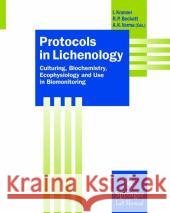
Protocols in Lichenology: Culturing, Biochemistry, Ecophysiology and Use in Biomonitoring

ISBN-13: 9783540411390 / Angielski / Miękka / 2001 / 580 str.
Kranner, Ilse
Protocols in Lichenology: Culturing, Biochemistry, Ecophysiology and Use in Biomonitoring Kranner, Ilse 9783540411390 SPRINGER-VERLAG BERLIN AND HEIDELBERG GMBH &  - książkaWidoczna okładka, to zdjęcie poglądowe, a rzeczywista szata graficzna może różnić się od prezentowanej.

Protocols in Lichenology: Culturing, Biochemistry, Ecophysiology and Use in Biomonitoring

ISBN-13: 9783540411390 / Angielski / Miękka / 2001 / 580 str.

Kranner, Ilse
cena 1006,38
(netto: 958,46 VAT:  5%)

Najniższa cena z 30 dni: 963,86
Termin realizacji zamówienia:
ok. 22 dni roboczych.

Darmowa dostawa!

As an intricate association between a fungus and one or more green algae or cyanobacteria, lichens are one of the most successful examples of symbiosis. These fascinating organisms survive extreme desiccation and temperatures. They are adapted to a great variety of habitats, from deserts to intertidal zones, from tropical rain forests to the peaks of the Himalayas and to circumpolar ecosystems. Lichens are extremely efficient accumulators of atmospherically deposited pollutants, and are therefore widely used to monitor environmental pollution. Their wide range of secondary products show pharmaceutically interesting fungicidal, antibacterial and antiviral properties. Lichens are extremely difficult to culture. This manual provides well-tested tissue culture protocols, protocols for studying lichen ultrastructure, (eco)physiology, primary and secondary compounds, and for using lichens as bioindicators.


Kategorie:
Nauka, Biologia i przyroda
Kategorie BISAC:
Science > Biologia i przyroda
Science > Botanika
Science > Biotechnology
Wydawca:
SPRINGER-VERLAG BERLIN AND HEIDELBERG GMBH &
Seria wydawnicza:
Springer Lab Manuals
Język:
Angielski
ISBN-13:
9783540411390
Rok wydania:
2001
Wydanie:
Softcover Repri
Numer serii:
000013117
Ilość stron:
580
Waga:
1.24 kg
Wymiary:
24.2 x 19.3
Oprawa:
Miękka
Wolumenów:
01
Dodatkowe informacje:
Glosariusz/słownik
Wydanie ilustrowane

From the reviews:

"The aim of the reviewed book is to facilitate the experimental study of lichens by providing detail protocols of analytical methods well-tested in specialised laboratories. ... Each chapter of the book is accompanied by a list of important references. An attached glossary of morphological terms and subject index are also helpful for a potential user. The reviewed book represents an invaluable and unique collection of the most recent methodical approaches to the experimental study of lichens ... ." (J. Gloser, Photosynthetica, Vol. 40 (3), 2002)

"This compendium of techniques for handling lichens experimentally is a useful reference for both research and teaching. ... this volume also includes many helpful little tricks that do not usually appear in published research papers, as well as designs for practical devices ... . The book ends with an interesting collection of contributions related to the handling of specimens and data, along with a chapter by V. Wirth on lichen photography. This volume is really a functional working manual." (Dianne Fahselt, The Lichenologist, Vol. 34 (3), 2002)

"This practical guide pulls together a corpus of useful methodological material from a wide variety of sources. Thirty-two chapters, contributed by specialists in their fields, provide detailed descriptions of or more protocols necessary for the experimental lichenologist. ... the volume under review contains a wealth of practical advice (in terms of materials, procedures and trouble-shooting, often supported by extensive lists of references), some of which will have wider relevance beyond the lichenologist's requirements." (The Naturalist, 2002)

"This is a welcome addition to the series because lichenological methods are seldom documented in texts on mycology, phycology or plant science. Methods described are wide ranging, most are lab procedures, but some are field-based ... . Instructions are more explicit than is usually in a research paper, and include useful tips, warnings of potential pitfalls, and sections on troubleshooting. ... this pleasingly produced volume is a creditable starting point. It is essential buying for lichenologists and deserves a place in institutional libraries ... ." (Peter Crittenden, Microbiology Today, Vol. 29, August, 2002)

Culture and Cultivation.- 1 Isolation and Culture of Lichen Photobionts and Mycobionts.- 2 Culture of Thallus Fragments and Redifferentiation of Lichens.- 3 Resynthesis of Photosymbiodemes.- 4 Protoplast Isolation from Lichen Mycobionts.- 5 Differentiation Processes in Lichens—in Vivo Cultivation and Transplantation Methods.- 6 Isolation and Culture of Lichenicolous Fungi.- Ultrastructure.- 7 Preparative Techniques for Transmission Electron Microscopy and Confocal Laser Scanning Microscopy of Lichens.- 8 Preparative Techniques for Low Temperature Scanning Electron Microscopy of Lichens.- Physiology and Ecophysiology.- 9 Measurement of Chlorophyll Fluorescence in Lichens.- 10 Characterising Photosynthesis and Respiration in Freshly Isolated or Cultured Lichen Photobionts.- 11 Analysis of Ethylene and ACC in Lichens.- 12 Measuring Activities of the Enzymes Superoxide Dismutase and Glutathione Reductase in Lichens.- 13 Studying the Effects of Elevated Concentrations of Carbon Dioxide on Lichens Using Open Top Chambers.- 14 In situ Measurements of the Water Content of Lichens.- 15 Determination of the Parameters of Liehen Water Relations.- 16 Measurement of Lichen Growth.- Lichen Compounds.- 17 Analysis of Phenolic Products in Lichens for Identification and Taxonomy.- 18 Investigating the Production of Secondary Compounds in Cultured Lichen Mycobionts.- 19 Analysing Lichen Enzymes by Isoelectricfocussing.- 20 Analysis of Lipids in Lichens.- 21 Measuring Ergosterol and Chitin in Lichens.- 22 Analysis of Chlorophylls, Carotenoids, and Tocopherols in Lichens.- Nucleic acids.- 23 Isolation of Nucleic Acids from Lichens.- 24 PCR Techniques and Automated Sequencing in Lichens.- 25 RAPD-PCR of Lichens.- Bioindication and Biomonitoring.- 26 Biomonitoring Radionuclide Deposition with Lichens.- 27 Biomonitoring Heavy Metal Pollution with Lichens.- 28 Bioindication of Sulphur Dioxide Pollution with Lichens.- Biodiversity and Information Systems.- 29 Management of a Lichen Herbarium.- 30 Documentation of Lichens by Macrophotography.- 31 Computer-Aided Identification Systems for Biology, with Particular Reference to Lichens.- 32 On-line Documentation of Lichen Biodiversity.

As an intricate association between a fungus and one or more green algae or cyanobacteria, lichens are one of the most successful examples of symbiosis. These fascinating organisms survive extreme desiccation and temperatures. They are adapted to a great variety of habitats, from coastal fog zones of deserts to intertidal zones, from plant leaves in tropical rain forests to the glacial moraines of the Himalayas, and they are dominant components of communities in circumpolar ecosystems. Possibly, because of their tendency to grow in nutrient-poor habitats, lichens are extremely efficient accumulators of atmospherically deposited pollutants, and are therefore widely used to monitor environmental pollution. The wide range of secondary products only found in lichens show pharmaceutically interesting fungicidal, antibacterial and antiviral properties. Lichens are extremely difficult to culture, grow very slowly, and their secondary metabolites very often complicate the analyses of other compounds. As a result, they require special techniques. This manual provides well-tested protocols, including tissue culture protocols and methods for studying lichen ultrastructure, (eco)physiology, primary and secondary compounds, and nucleic acids. Protocols for using lichens to monitor environmental pollution and to document lichen biodiversity are also provided. Special terms used in lichenology are explained in a glossary.


Udostępnij

Facebook - konto krainaksiazek.pl


Opinie o Krainaksiazek.pl na Opineo.pl

Partner Mybenefit

Krainaksiazek.pl w programie rzetelna firma Krainaksiaze.pl - płatności przez paypal

Czytaj nas na:

Facebook - krainaksiazek.pl
  • książki na zamówienie
  • granty
  • książka na prezent
  • kontakt
  • pomoc
  • opinie
  • regulamin
  • polityka prywatności

Zobacz:

  • Księgarnia czeska

  • Wydawnictwo Książkowe Klimaty

1997-2026 DolnySlask.com Agencja Internetowa

© 1997-2022 krainaksiazek.pl
     
KONTAKT | REGULAMIN | POLITYKA PRYWATNOŚCI | USTAWIENIA PRYWATNOŚCI
Zobacz: Księgarnia Czeska | Wydawnictwo Książkowe Klimaty | Mapa strony | Lista autorów
KrainaKsiazek.PL - Księgarnia Internetowa

Polityka prywatnosci - link
Krainaksiazek.pl - płatnośc Przelewy24
Przechowalnia Przechowalnia






