• Wyszukiwanie zaawansowane
  • Kategorie
  • Kategorie BISAC
  • Książki na zamówienie
  • Promocje
  • Granty
  • Książka na prezent
  • Opinie
  • Pomoc
  • Załóż konto
  • Zaloguj się

Protist Diversity and Geographical Distribution » książka


zaloguj się | załóż konto
Logo Krainaksiazek.pl

koszyk

konto

szukaj
topmenu
Księgarnia internetowa
Szukaj
Książki na zamówienie
Promocje
Granty
Książka na prezent
Moje konto
Pomoc
 
 
Wyszukiwanie zaawansowane
Pusty koszyk
Bezpłatna dostawa dla zamówień powyżej 20 złBezpłatna dostawa dla zamówień powyżej 20 zł

Kategorie główne

• Nauka
 [2946600]
• Literatura piękna
 [1856966]

  więcej...
• Turystyka
 [72221]
• Informatyka
 [151456]
• Komiksy
 [35826]
• Encyklopedie
 [23190]
• Dziecięca
 [619653]
• Hobby
 [140543]
• AudioBooki
 [1577]
• Literatura faktu
 [228355]
• Muzyka CD
 [410]
• Słowniki
 [2874]
• Inne
 [445822]
• Kalendarze
 [1744]
• Podręczniki
 [167141]
• Poradniki
 [482898]
• Religia
 [510455]
• Czasopisma
 [526]
• Sport
 [61590]
• Sztuka
 [243598]
• CD, DVD, Video
 [3423]
• Technologie
 [219201]
• Zdrowie
 [101638]
• Książkowe Klimaty
 [124]
• Zabawki
 [2473]
• Puzzle, gry
 [3898]
• Literatura w języku ukraińskim
 [254]
• Art. papiernicze i szkolne
 [8170]
Kategorie szczegółowe BISAC

Protist Diversity and Geographical Distribution

ISBN-13: 9789400736849 / Angielski / Miękka / 2012 / 211 str.
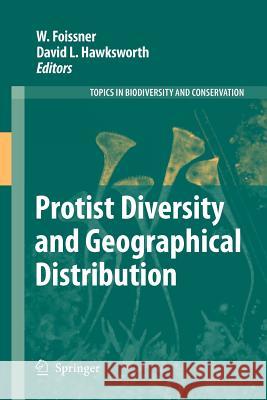
Protist Diversity and Geographical Distribution  9789400736849 Springer - książkaWidoczna okładka, to zdjęcie poglądowe, a rzeczywista szata graficzna może różnić się od prezentowanej.

Protist Diversity and Geographical Distribution

ISBN-13: 9789400736849 / Angielski / Miękka / 2012 / 211 str.

cena 928,04 zł
(netto: 883,85 VAT:  5%)

Najniższa cena z 30 dni: 886,75 zł
Termin realizacji zamówienia:
ok. 22 dni roboczych
Bez gwarancji dostawy przed świętami

Darmowa dostawa!
inne wydania

There is still a widespread belief that microscopic organisms, such as bacteria, fungi, protists, and small multicellulars, have a cosmopolitan distribution due to a presumed easy dispersal by wind and water. However, the contributions collected in this book ranging from protists to rotifers and mosses show that microorganisms have community structures and biogeographies similar to those found in animals and vascular plants, although the ranges of many can be wider and local endemism is rarer. Accordingly, the cosmopolitan distribution model of Finlay and Fenchel is to be replaced by the moderate endemicity model of Foissner, which assumes that one third of microscopic organisms are morphological and/or genetic endemics. This has far-reaching consequences for estimates of the number of species and their conservation. There is convincing evidence that we know only about 20% of the actual diversity in many protist groups, especially saprotrophs and heterotrophs such as amoebae, flagellates, and ciliates. It is probable that this great diversity of microscopic organisms is caused by low extinction rates over geological time, and short generation times which foster dispersal of genetic variants. That the great diversity of microorganisms has remained unrecognized for such a long time has several reasons, of which the most serious is a shortage of taxonomists. Considering the dramatic losses of habitats occurring, especially in the tropics, a large portion of the Earth s protist biodiversity will disappear before it has been discovered. Reprinted from Biodiversity and Conservation, volume 17:2 (2008). "


Kategorie:
Nauka, Biologia i przyroda
Kategorie BISAC:
Science > Life Sciences - Biological Diversity
Science > Biologia i przyroda
Science > Life Sciences - Ecology
Wydawca:
Springer
Język:
Angielski
ISBN-13:
9789400736849
Rok wydania:
2012
Wydanie:
2009
Ilość stron:
211
Waga:
0.31 kg
Wymiary:
23.39 x 15.6 x 1.17
Oprawa:
Miękka
Wolumenów:
01

Protist diversity and distribution: some basic considerations; Foissner.- Distribution and diversity of aquatic protists: an evolutionary and ecological perspective; Weisse.- 'Missing' protists: a molecular perspective; Epstein.- Diversity, dispersal and biogeography of bryophytes (mosses); Frahm.- Myxomycete diversity and distribution from the fossil record to the present; Stephenson.- Diversity and endemism in Rotifera: a review, and Keratella Bory de St Vincent; Segers.- Diversity and geographic distribution of benthic foraminifera: a molecular perspective; Pawlowski.- Diversity and biogeography of testate amoebae; Smith.- Diversity and geographic distribution of ciliates (Protista: Ciliophora); Foissner.- The 'Tetrahymena pyriformis' complex of cryptic species; Simon.- Diversity and geographic distribution of desmids and other coccoid green algae; Coesel.- The diversity and distribution of diatoms: from cosmopolitanism to narrow endemism; Vanormelingen.- Dinoflagellate diversity and distribution; Taylor.- Dispersal and biogeography of silica-scaled chrysophytes; Kristiansen.- Conservation of protists: is it needed at all?; Cotterill.

There is still a widespread belief that microscopic organisms, such as bacteria, fungi, protists, and small multicellulars, have a cosmopolitan distribution due to a presumed easy dispersal by wind and water. However, the contributions collected in this book – ranging from protists to rotifers and mosses – show that microorganisms have community structures and biogeographies similar to those found in animals and vascular plants, although the ranges of many can be wider and local endemism is rarer. Accordingly, the cosmopolitan distribution model of Finlay & Fenchel is to be replaced by the moderate endemicity model of Foissner, which assumes that one third of microscopic organisms are morphological and/or genetic endemics. This has far-reaching consequences for estimates of the number of species and their conservation. There is convincing evidence that we know only about 20% of the actual diversity in many protist groups, especially saprotrophs and heterotrophs such as amoebae, flagellates, and ciliates. It is probable that this great diversity of microscopic organisms is caused by low extinction rates over geological time, and short generation times which foster dispersal of genetic variants. That the great diversity of microorganisms has remained unrecognized for such a long time has several reasons, of which the most serious is a shortage of taxonomists. Considering the dramatic losses of habitats occurring, especially in the tropics, a large portion of the Earth’s protist biodiversity will disappear before it has been discovered.

Reprinted from Biodiversity and Conservation, volume 17:2 (2008)


Udostępnij

Facebook - konto krainaksiazek.pl


Opinie o Krainaksiazek.pl na Opineo.pl

Partner Mybenefit

Krainaksiazek.pl w programie rzetelna firma Krainaksiaze.pl - płatności przez paypal

Czytaj nas na:

Facebook - krainaksiazek.pl
  • książki na zamówienie
  • granty
  • książka na prezent
  • kontakt
  • pomoc
  • opinie
  • regulamin
  • polityka prywatności

Zobacz:

  • Księgarnia czeska

  • Wydawnictwo Książkowe Klimaty

1997-2025 DolnySlask.com Agencja Internetowa

© 1997-2022 krainaksiazek.pl
     
KONTAKT | REGULAMIN | POLITYKA PRYWATNOŚCI | USTAWIENIA PRYWATNOŚCI
Zobacz: Księgarnia Czeska | Wydawnictwo Książkowe Klimaty | Mapa strony | Lista autorów
KrainaKsiazek.PL - Księgarnia Internetowa

Polityka prywatnosci - link
Krainaksiazek.pl - płatnośc Przelewy24
Przechowalnia Przechowalnia






