• Wyszukiwanie zaawansowane
  • Kategorie
  • Kategorie BISAC
  • Książki na zamówienie
  • Promocje
  • Granty
  • Książka na prezent
  • Opinie
  • Pomoc
  • Załóż konto
  • Zaloguj się

Project Recovery: Case Studies and Techniques for Overcoming Project Failure » książka


zaloguj się | załóż konto
Logo Krainaksiazek.pl

koszyk

konto

szukaj
topmenu
Księgarnia internetowa
Szukaj
Książki na zamówienie
Promocje
Granty
Książka na prezent
Moje konto
Pomoc
 
 
Wyszukiwanie zaawansowane
Pusty koszyk
Bezpłatna dostawa dla zamówień powyżej 20 złBezpłatna dostawa dla zamówień powyżej 20 zł

Kategorie główne

• Nauka
 [2946600]
• Literatura piękna
 [1856966]

  więcej...
• Turystyka
 [72221]
• Informatyka
 [151456]
• Komiksy
 [35826]
• Encyklopedie
 [23190]
• Dziecięca
 [619653]
• Hobby
 [140543]
• AudioBooki
 [1577]
• Literatura faktu
 [228355]
• Muzyka CD
 [410]
• Słowniki
 [2874]
• Inne
 [445822]
• Kalendarze
 [1744]
• Podręczniki
 [167141]
• Poradniki
 [482898]
• Religia
 [510455]
• Czasopisma
 [526]
• Sport
 [61590]
• Sztuka
 [243598]
• CD, DVD, Video
 [3423]
• Technologie
 [219201]
• Zdrowie
 [101638]
• Książkowe Klimaty
 [124]
• Zabawki
 [2473]
• Puzzle, gry
 [3898]
• Literatura w języku ukraińskim
 [254]
• Art. papiernicze i szkolne
 [8170]
Kategorie szczegółowe BISAC

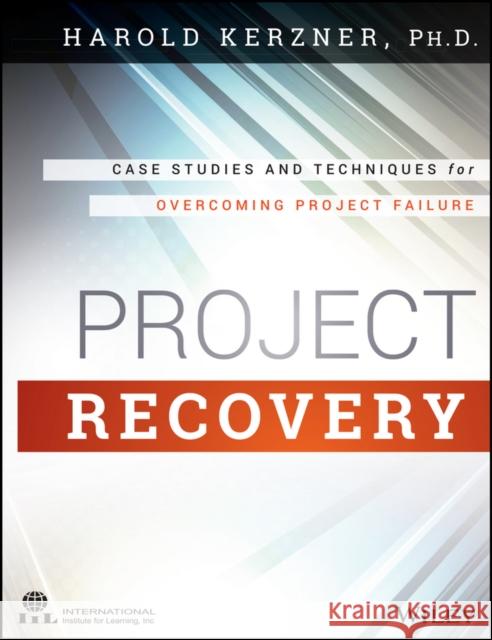
Project Recovery: Case Studies and Techniques for Overcoming Project Failure

ISBN-13: 9781118809198 / Angielski / Twarda / 2014 / 336 str.
Harold R. Kerzner
Project Recovery: Case Studies and Techniques for Overcoming Project Failure Kerzner, Harold 9781118809198 John Wiley & Sons - książkaWidoczna okładka, to zdjęcie poglądowe, a rzeczywista szata graficzna może różnić się od prezentowanej.

Project Recovery: Case Studies and Techniques for Overcoming Project Failure

ISBN-13: 9781118809198 / Angielski / Twarda / 2014 / 336 str.

Harold R. Kerzner
cena 327,68 zł
(netto: 312,08 VAT:  5%)

Najniższa cena z 30 dni: 325,00 zł
Termin realizacji zamówienia:
ok. 30 dni roboczych
Bez gwarancji dostawy przed świętami

Darmowa dostawa!

Best practices for picking up the pieces when projects fail There are plenty of books available offering best practices that help you keep your projects on track, but offer guidance on what to do when the worst has already happened. Some studies show that more than half of all large-scale project fail either fail completely, or at least miss targeted budget and scheduling goals. These failures cost organizations time, money, and labor. Project Recovery offers wise guidance and real-world best practices for saving failed projects and recovering as much value as possible from the wreckage. Since failing project cannot be managed using the same lifecycle phases employed with succeeding projects, most project management professionals are unprepared to tackle the challenge of project recovery. This book presents valuable case studies and a recovery project lifecycle to help project managers identify and respond effectively to a troubled project.

  • Includes case studies and best practices for saving failing projects or recovering projects that have already failed
  • Written by experience project manager Howard Kerzner, the author of Project Management Best Practices, Third Edition
  • Features proven techniques for performing project health checks and determining the degree of failure and the recovery options available
  • Includes a new recovery lifecycle that includes phases and checklists for turning around failing projects
With comprehensive case studies, checklists, worksheets, and cross listings to the appropriate project management body of knowledge, Project Recovery offers a much needed lifeline for managers facing the specter of failure.

Kategorie:
Technologie
Kategorie BISAC:
Business & Economics > Zarządzanie projektami
Wydawca:
John Wiley & Sons
Język:
Angielski
ISBN-13:
9781118809198
Rok wydania:
2014
Ilość stron:
336
Waga:
0.72 kg
Wymiary:
23.62 x 19.05 x 2.29
Oprawa:
Twarda
Wolumenów:
01
Dodatkowe informacje:
Bibliografia
Wydanie ilustrowane

1 Understanding Success and Failure 1

1.0 Introduction 1

1.1 Success: Historical Perspective 2

1.2 Early Modifications to Triple Constraints 3

1.3 Primary and Secondary CONSTRAINTS 4

1.4 Prioritization of Constraints 6

1.5 From Triple Constraints to Competing Constraints 6

1.6 Future Definitions of Project Success 8

1.7 Different Definitions of Project Success 11

1.8 Understanding Project Failure 12

1.9 Degrees of Project Failure 13

1.10 Other Categories of Project Failure 16

1.11 Summary of Lessons Learned 17

2 Causes of Project Failure 19

2.0 Introduction 19

2.1 Facts about Project Failure 19

2.2 Causes of Project Failure 20

2.3 Schedule Failure 22

2.4 Failures due to Unknown Technology 23

2.5 Project Size and Success/Failure Risk 24

2.6 Failure due to Improper Critical Failure Factors 25

2.7 Failure to Establish Tracking Metrics 26

2.8 Failing to Recognize Early Warning Signs 26

2.9 Improper Selection of Critical Team Members 27

2.10 Uncertain Rewards 29

2.11 Estimating Failures 31

2.12 Staffing Failures 32

2.13 Planning Failures 34

2.14 Risk Management Failures 36

2.15 Management Mistakes 37

2.16 Lacking Sufficient Tools 38

2.17 Failure of Success 39

2.18 Motivation to Fail 41

2.19 Tradeoff Failures 42

2.20 Summary of Lessons Learned 43

3 Business Case Failure 45

3.0 Introduction 45

3.1 Changing Stakeholders 45

3.2 Revalidation of Assumptions 46

3.3 Managing Innovation 47

3.4 Examples of Changing Business Cases 48

3.5 PROLOGUE TO THE Iridium Case Study 52

3.6 Rise, Fall and Resurrection of Iridium 52

Naming the Project Iridium 55

Obtaining Executive Support 55

Launching the Venture 56

Iridium System 58

Terrestial and Space–Based Network 58

Project Initiation: Developing Business Case 59

Hidden Business Case 61

Risk Management 61

Collective Belief 63

Iridium s Infancy Years 64

Debt Financing 67

M–Star Project 68

A New CEO 69

Project Management at Motorola (Iridium) 69

Satellite Launches 70

Initial Public Offering (IPO) 71

Signing Up Customers 71

Iridium s Rapid Ascent 72

Iridium s Rapid Descent 74

Iridium Flu 78

Definition of Failure (October 1999) 79

3.7 Summary of Lessons Learned 84

4 Sponsorship/Governance Failures 87

4.0 Introduction 87

4.1 Defining Project Governance 88

4.2 Project versus Corporate Governance 88

4.3 Roles, Responsibilities and Decision–Making Authority 90

4.4 Governance Frameworks 91

4.5 Governance Failures 93

4.6 Why Projects Are Hard to Kill 94

4.7 Collective Belief 96

4.8 Exit Champion 97

4.9 When to Give Up 98

4.10 Prologue to the Denver International Airport Case Study 101

4.11 Denver International Airport 101

Background 101

Airports and Airline Deregulation 102

Does Denver Need a New Airport? 103

Enplaned Passenger Market 108

Land Selection 109

Front Range Airport 109

Airport Design 110

Project Management 112

Baggage–Handling System 114

Early Risk Analysis 115

March 1991 115

April 1991 116

May 1991 116

August 1991 117

November 1991 117

December 1991 118

January 1992 118

June 1992 118

September 1992 119

October 1992 119

March 1993 119

August 1993 120

September 1993 120

October 1993 121

January 1994 121

February 1994 121

March 1994 121

April 1994 122

May 1994 122

June 1994 123

July 1994 124

August 1994 124

September 1994 127

October 1994 128

November 1994 128

December 1994 130

Airline Costs per Enplaned Passenger 131

February 28, 1995 132

Appendix A 133

Introduction 133

Agreement between United and the City 134

Appendix B Jokes about the Abbreviation DIA 138

4.12 Denver International Airport Baggage– Handling System: Illustration of Ineffective Decision Making 142

Synopsis 142

Background 142

System at a Glance 142

Chronology of Events 143

Basic Mode of Failure 145

Key Decisions That Led to Disaster 145

Other Failure Points 151

Conclusion 152

4.13 Summary of Lessons Learned 153

5 Project Politics and Failure 155

5.0 Introduction 155

5.1 Political Risks 156

5.2 R easons for Playing Politics 156

5.3 Situations Where Political Games Will Occur 157

5.4 Governance Committee 158

5.5 Friends and Foes 159

5.6 A ttack or Retreat 159

5.7 N eed for Effective Communications 161

5.8 Power and Influence 162

5.9 Managing Project Politics 163

5.10 Prologue to the Space Shuttle Challenger Disaster Case Study 163

5.11 Space Shuttle Challenger Disaster 164

Background to Space Transportation System 166

NASA Succumbs to Politics and Pressure 167

Solid Rocket Boosters 169

Blowholes 171

O–Ring Erosion 173

Joint Rotation 173

O–Ring Resilience 174

External Tank 175

Spare Parts Problem 175

Risk Identification Procedures 175

Teleconferencing 176

Paperwork Constraints 176

Politics and O–Rings 178

Issuing Waivers 178

Launch Liftoff Sequence Profile: Possible Aborts 180

O–Ring Problem 184

Pressure, Paperwork and Waivers 189

Mission 51–L 191

Second Teleconference 194

Ice Problem 199

The Accident 202

NASA and Media 205

Findings of Commission 205

Chain–of–Command Communication Failure 209

Epilogue 210

Potential Cover–Up 211

Senate Hearing 213

5.12 Summary of Lessons Learned 214

6 Software Failures 217

6.0 Introduction 217

6.1 IT s Biggest Failures 217

IBM s Stretch Project 217

Knight–Ridder s Viewtron Service 218

DMV Projects California and Washington 218

Apple s Copland Operating System 219

Sainsbury s Warehouse Automation 220

Canada s Gun Registration System 220

Three Current Projects in Danger 221

6.2 Software Bugs 222

6.3 Causes of Failure in Software Projects 224

6.4 Large–Scale IT Failure 225

Reader ROI 225

Out with the Old 227

Seeds of Failure 228

Early Warnings 230

Call for Help 232

6.5 W orst Possible Failure: FoxMeyer Drugs 234

Case Study: FoxMeyer Drugs Bankruptcy: Was It a Failure of ERP? 235

6.6 L ondon Heathrow Terminal 239

History 240

Construction 240

Main Terminal Building 241

Satellite Terminal Buildings 241

New Heathrow Control Tower 242

Opening Day 242

6.7 Summary of Lessons Learned 243

7 Safety Considerations 245

7.0 Importance of Safety 245

7.1 Boeing 787 Dreamliner Battery Problems 245

7.2 Airbus A380 Problems 250

Configurations 251

Brief History 251

7.3 Summary of Lessons Learned 255

8 Scope Creep 257

8.0 Understanding Scope Creep 257

8.1 Creeping Failure 258

8.2 Defining Scope 259

8.3 Scope Creep Dependencies 261

8.4 C auses of Scope Creep 261

8.5 N eed for Business Knowledge 263

8.6 W ays to Minimize Scope Creep 263

8.7 Sydney Opera House 265

Performance Venues and Facilities 266

Construction History 267

8.8 Summary of Lessons Learned 273

9 Project Health Checks 275

9.0 Need for Project Health Checks 275

9.1 Understanding Project Health Checks 276

9.2 Who Performs Health Checks? 278

9.3 Health Check Life–Cycle Phases 278

9.4 Project Management Failure Warning Signs 279

Instant Amnesia and Da Nial Ain t In Egypt 280

Project Cost 280

The Lone Ranger Rides Again! 281

No Sale! 281

Arrogance Rules! 282

2 + 2 = 17! 282

Mao Didn t Have the Only Long March 283

What Risk? There s No Risk Here! 283

Where s Your Project Plan? 284

I ll Take a Booth without a Cell Phone! 284

Don t Bother Me with Details! 284

What Layoffs? 285

The Out–of–Towner Speaks: Distance Means Credibility 285

Disclaimer 286

9.5 Summary of Lessons Learned 286

10 Techniques for Recovering Failing Projects 289

10.0 Understanding Troubled Projects 289

10.1 Root Causes of Failure 290

10.2 Definition Phase 292

10.3 Early Warning Signs of Trouble 292

10.4 Selecting Recovery Project Manager (RPM) 294

10.5 Recovery Life–Cycle Phases 295

10.6 Understanding Phase 295

10.7 Audit Phase 296

10.8 Tradeoff Phase 298

10.9 Negotiation Phase 300

10.10 Restart Phase 300

10.11 E xecution Phase 301

10.12 Project Recovery versus Project Rescue 302

10.13 R ecovery Decision 302

10.14 Summary of Lessons Learned 304

Index 309

HAROLD KERZNER, Ph.D., is a global leader in project management and Senior Executive Director at International Institute for Learning, Inc. Dr. Kerzner has instructed over 200,000 professionals in his successful "Kerzner Approach" to project management excellence. The Kerzner Scholarship Endowment Fund and the Kerzner Project Management Award are managed by the PMI Educational Foundation.

Turn failed projects around

Learn from high–profile case studies and get on the road to Project Recovery

In the real world, not all projects succeed. When a project has gone wrong, traditional project management techniques go out the window. But what constitutes failure in the first place? And what can be done about it? With nearly 50 years in project management, Dr. Harold Kerzner has the answers to these questions.

Drawing from the combined experience of the global business community, he has written this book in order to demystify the recovery process. Project Recovery uses high–profile case studies from the real world of business to illustrate the best and worst of crisis management. From the Space Shuttle Challenger tragedy to problems with Boeing s 787 Dreamliner, Project Recovery takes a microscope to well–known cases, detailing important takeaways for businesses large and small.

In this book, you ll learn how to identify troubled and failing projects by performing Project Health Checks and identifying the early warning signs of failure. Next comes identifying the root causes of the problem and selecting a Project Recovery Manager who can implement the phases of the Recovery Life Cycle. These state–of–the–art techniques are crucial for any business leader or consultant who is serious about knowing what to do when things go wrong.

Each chapter of Project Recovery includes a convenient summary of lessons learned, cross–referenced according to knowledge areas from the PMBOK® Guide Fifth Edition. Worksheets and checklists make this easy–to–follow roadmap to recover from any kind of project struggle. It isn t always possible to avoid disaster. In fact, failures are extremely common in the business world, which is why a resource like Project Recovery is so important learn to turn project failures into opportunities for success.


Udostępnij

Facebook - konto krainaksiazek.pl


Opinie o Krainaksiazek.pl na Opineo.pl

Partner Mybenefit

Krainaksiazek.pl w programie rzetelna firma Krainaksiaze.pl - płatności przez paypal

Czytaj nas na:

Facebook - krainaksiazek.pl
  • książki na zamówienie
  • granty
  • książka na prezent
  • kontakt
  • pomoc
  • opinie
  • regulamin
  • polityka prywatności

Zobacz:

  • Księgarnia czeska

  • Wydawnictwo Książkowe Klimaty

1997-2025 DolnySlask.com Agencja Internetowa

© 1997-2022 krainaksiazek.pl
     
KONTAKT | REGULAMIN | POLITYKA PRYWATNOŚCI | USTAWIENIA PRYWATNOŚCI
Zobacz: Księgarnia Czeska | Wydawnictwo Książkowe Klimaty | Mapa strony | Lista autorów
KrainaKsiazek.PL - Księgarnia Internetowa

Polityka prywatnosci - link
Krainaksiazek.pl - płatnośc Przelewy24
Przechowalnia Przechowalnia







