• Wyszukiwanie zaawansowane
  • Kategorie
  • Kategorie BISAC
  • Książki na zamówienie
  • Promocje
  • Granty
  • Książka na prezent
  • Opinie
  • Pomoc
  • Załóż konto
  • Zaloguj się

Progress in Heritable Soft Connective Tissue Diseases » książka


zaloguj się | załóż konto
Logo Krainaksiazek.pl

koszyk

konto

szukaj
topmenu
Księgarnia internetowa
Szukaj
Książki na zamówienie
Promocje
Granty
Książka na prezent
Moje konto
Pomoc
 
 
Wyszukiwanie zaawansowane
Pusty koszyk
Bezpłatna dostawa dla zamówień powyżej 20 złBezpłatna dostawa dla zamówień powyżej 20 zł

Kategorie główne

• Nauka
 [2952079]
• Literatura piękna
 [1850969]

  więcej...
• Turystyka
 [71058]
• Informatyka
 [151066]
• Komiksy
 [35579]
• Encyklopedie
 [23181]
• Dziecięca
 [620496]
• Hobby
 [139036]
• AudioBooki
 [1646]
• Literatura faktu
 [228729]
• Muzyka CD
 [379]
• Słowniki
 [2932]
• Inne
 [445708]
• Kalendarze
 [1409]
• Podręczniki
 [164793]
• Poradniki
 [480107]
• Religia
 [510956]
• Czasopisma
 [511]
• Sport
 [61267]
• Sztuka
 [243299]
• CD, DVD, Video
 [3411]
• Technologie
 [219640]
• Zdrowie
 [100984]
• Książkowe Klimaty
 [124]
• Zabawki
 [2281]
• Puzzle, gry
 [3363]
• Literatura w języku ukraińskim
 [258]
• Art. papiernicze i szkolne
 [8020]
Kategorie szczegółowe BISAC

Progress in Heritable Soft Connective Tissue Diseases

ISBN-13: 9783030806163 / Angielski / Miękka / 2022 / 343 str.
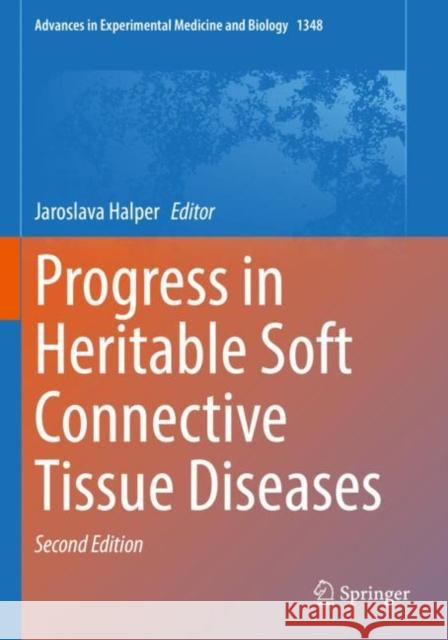
Jaroslava Halper
Progress in Heritable Soft Connective Tissue Diseases Jaroslava Halper 9783030806163 Springer - książkaWidoczna okładka, to zdjęcie poglądowe, a rzeczywista szata graficzna może różnić się od prezentowanej.

Progress in Heritable Soft Connective Tissue Diseases

ISBN-13: 9783030806163 / Angielski / Miękka / 2022 / 343 str.

Jaroslava Halper
cena 483,04
(netto: 460,04 VAT:  5%)

Najniższa cena z 30 dni: 462,63
Termin realizacji zamówienia:
ok. 22 dni roboczych
Dostawa w 2026 r.

Darmowa dostawa!
inne wydania

This volume represents a substantially revised and updated 2nd edition of a reference handbook on major structural components of soft connective tissues and a whole slew of heritable diseases of soft connective tissues. The number of clearly identifiable and distinct disorders has grown somewhat since the 1st edition in 2014, e.g., Ehlers-Danlos syndrome has now 13 entities. A brand new syndrome, Meester Loeys syndrome carrying the name of Bart Loeys was added as a companion to Loeys-Dietz syndrome. Numerous variations of cutis laxa and joint mobility disorders have been discovered taking advantage of recent advancements in genetic analysis. We have acquired better understanding of pathogenesis and biochemical changes in some other, more established entities, such as Marfan and collagen VI myopathies where better management and possible treatment are on the horizon. Even in the case of connective tissue diseases in domestic animals some progress has been made. All these updates were contributed by a group of distinguished and preeminent physicians and scientists, all of them not just working in the field but making new discoveries described by them.Readers will notice that seemingly there is an overlap among many of these disorders. And indeed, many of them, if not most are interconnected because of the prominent roles of TGFβ, of fibrillin microfibrils and collagen fibril assembly (and other molecules) playing in connective tissues physiology, and by extension in pathogenesis of many disorders described in the book. What I found particularly helpful that author(s) of each chapter bring their own perspective even when described closely related mechanism of the disease. These observations should help with diagnosis and management of such cases.The first chapters are more general, concentrating more on the physiology, structure and biochemistry of normal soft tissues. That should help in better understanding of the pathophysiology.Last but not least, the chapters are very readable, more like detective stories than dry description of genetic/biochemical defects. I do hope that basic scientists and clinicians with similar and diverse interests alike will appreciate this volume and will be inspired by it to develop their research in the field.


This volume represents a substantially revised and updated 2nd edition of a reference handbook on major structural components of soft connective tissues and a whole slew of heritable diseases of soft connective tissues. The number of clearly identifiable and distinct disorders has grown somewhat since the 1st edition in 2014, e.g., Ehlers-Danlos syndrome has now 13 entities. A brand new syndrome, Meester Loeys syndrome carrying the name of Bart Loeys was added as a companion to Loeys-Dietz syndrome. Numerous variations of cutis laxa and joint mobility disorders have been discovered taking advantage of recent advancements in genetic analysis. We have acquired better understanding of pathogenesis and biochemical changes in some other, more established entities, such as Marfan and collagen VI myopathies where better management and possible treatment are on the horizon. Even in the case of connective tissue diseases in domestic animals some progress has been made. All these updates were contributed by a group of distinguished and preeminent physicians and scientists, all of them not just working in the field but making new discoveries described by them.Readers will notice that seemingly there is an overlap among many of these disorders. And indeed, many of them, if not most are interconnected because of the prominent roles of TGFβ, of fibrillin microfibrils and collagen fibril assembly (and other molecules) playing in connective tissues physiology, and by extension in pathogenesis of many disorders described in the book. What I found particularly helpful that author(s) of each chapter bring their own perspective even when described closely related mechanism of the disease. These observations should help with diagnosis and management of such cases.The first chapters are more general, concentrating more on the physiology, structure and biochemistry of normal soft tissues. That should help in better understanding of the pathophysiology. Last but not least, the chapters are very readable, more like detective stories than dry description of genetic/biochemical defects. I do hope that basic scientists and clinicians with similar and diverse interests alike will appreciate this volume and will be inspired by it to develop their research in the field.

Kategorie:
Nauka, Medycyna
Kategorie BISAC:
Science > Biologia molekularna
Medical > Genetyka kliniczna
Medical > Internal Medicine
Wydawca:
Springer
Seria wydawnicza:
Advances in Experimental Medicine and Biology
Język:
Angielski
ISBN-13:
9783030806163
Rok wydania:
2022
Dostępne języki:
Numer serii:
000253056
Ilość stron:
343
Waga:
0.61 kg
Wymiary:
25.4 x 17.78 x 1.88
Oprawa:
Miękka
Dodatkowe informacje:
Wydanie ilustrowane

Contents

Preface, Jaroslava Halper

1. Basic Structure, Physiology, and Biochemistry of Connective Tissues and Extracellular Matrix Collagens, Michael J. Mienaltowski, Nicole L. Gonzales, Jessica M. Beall and Monica Y. Pechanec

2. Tendon Extracellular Matrix Assembly, Maintenance and Dysregulation Throughout Life, Seyed Mohammad Siadat, Danae E. Zamboulis, Chavaunne T. Thorpe, Jeffrey W. Ruberti and Brianne K. Connizzo 

3. Basic Components of Connective Tissues and Extracellular Matrix: Fibronectin, Fibrinogen, Laminin, Elastin, Fibrillins, Fibulins, Matrilins, Tenascins and Thrombospondins, Jaroslava Halper

4. Proteoglycans and Diseases of Soft Tissues, Chloe Taejoo Hwang and Jaroslava Halper

5. Growth Factor Roles in Soft Tissue Physiology and Pathophysiology, Jennifer H. Roberts and Jaroslava Halper

6. Connective Tissue Disorders and Cardiovascular Complications: The Indomitable Role of Transforming Growth Factor-β Signaling, Jason B. Wheeler, John S. Ikonomidis and Jeffrey A. Jones 

7. The Pathophysiology and Pathogenesis of Marfan Syndrome, Sanford M. Zeigler, Brandon Sloan and Jeffrey A. Jones

8. Ehlers-Danlos syndromes, joint hypermobility and hypermobility spectrum disorders, Lucia Micale, Carmela Fusco and Marco Castori

9. Ehlers–Danlos Syndrome Associated with Glycosaminoglycan Abnormalities, Noriko Miyake, Tomoki Kosho and Naomichi Matsumoto

10. Loeys-Dietz Syndrome, Joe D. Velchev, Lut Van Laer, Ilse Luyckx, Harry Dietz and Bart Loeys

11. Meester-Loeys syndrome, Josephina A.N. Meester, Pauline De Kinderen, Aline Verstraeten and Bart Loeys

12. Clinical and Molecular Delineation of Cutis Laxa Syndromes: Paradigms for Elastic Fiber Homeostasis, Aude Beyens, Lore Pottie, Patrick Sips, Bert Callewaert

13. Collagen VI Muscle Disorders: Mutation Types, Pathogenic Mechanisms and Approaches to Therapy, Shireen R Lamandé 

14. Connective Tissue Disorders in Domestic Animals, Jennifer H. Roberts and Jaroslava Halper

Jaroslava Halper, M.D., Ph.D.  is a Professor of Pathology at The University of Georgia where she is affiliated with the Department of Pathology, College of Veterinary Medicine, and with the Department of Basic Sciences in the Medical Partnership.  She is a Board certified Anatomic Pathologist who received M.D. degree from Faculty of Medicine, University of Toronto. She trained in Pathology at Albert Einstein of Medicine (in the Bronx, New York) and at Mayo Clinic in Rochester, Minnesota. She obtained Ph.D. in Experimental Pathology from the University of Minnesota at Mayo Clinic where she worked on the identification of transforming growth factor e (known better as granulin) with Harold Moses as her major professor. She continued her work on granulins, growth factors and tissue repair when she first arrived at The University of Georgia.  With time her research interests have evolved into probing basic problems in tendons. More recently she has conducted ground-breaking research on equine degenerative suspensory ligament desmitis (DSLD). Her group has established that DSLD, a chronic progressive disorder, is a systemic condition characterized by inappropriate accumulation of proteoglycans in connective tissues, in particular in tendons and ligaments.

This volume represents a substantially revised and updated 2nd edition of a reference handbook on major structural components of soft connective tissues and a whole slew of heritable diseases of soft connective tissues. The number of clearly identifiable and distinct disorders has grown somewhat since the 1st edition in 2014, e.g., Ehlers-Danlos syndrome has now 13 entities. A brand new syndrome, Meester Loeys syndrome carrying the name of Bart Loeys was added as a companion to Loeys-Dietz syndrome. Numerous variations of cutis laxa and joint mobility disorders have been discovered taking advantage of recent advancements in genetic analysis. We have acquired better understanding of pathogenesis and biochemical changes in some other, more established entities, such as Marfan and collagen VI myopathies where better management and possible treatment are on the horizon. Even in the case of connective tissue diseases in domestic animals some progress has been made. All these updates were contributed by a group of distinguished and preeminent physicians and scientists, all of them not just working in the field but making new discoveries described by them.

Readers will notice that seemingly there is an overlap among many of these disorders. And indeed, many of them, if not most are interconnected because of the prominent roles of TGFβ, of fibrillin microfibrils and collagen fibril assembly (and other molecules) playing in connective tissues physiology, and by extension in pathogenesis of many disorders described in the book. What I found particularly helpful that author(s) of each chapter bring their own perspective even when described closely related mechanism of the disease. These observations should help with diagnosis and management of such cases.

The first chapters are more general, concentrating more on the physiology, structure and biochemistry of normal soft tissues. That should help in better understanding of the pathophysiology.

Last but not least, the chapters are very readable, more like detective stories than dry description of genetic/biochemical defects. I do hope that basic scientists and clinicians with similar and diverse interests alike will appreciate this volume and will be inspired by it to develop their research in the field.




Udostępnij

Facebook - konto krainaksiazek.pl


Opinie o Krainaksiazek.pl na Opineo.pl

Partner Mybenefit

Krainaksiazek.pl w programie rzetelna firma Krainaksiaze.pl - płatności przez paypal

Czytaj nas na:

Facebook - krainaksiazek.pl
  • książki na zamówienie
  • granty
  • książka na prezent
  • kontakt
  • pomoc
  • opinie
  • regulamin
  • polityka prywatności

Zobacz:

  • Księgarnia czeska

  • Wydawnictwo Książkowe Klimaty

1997-2025 DolnySlask.com Agencja Internetowa

© 1997-2022 krainaksiazek.pl
     
KONTAKT | REGULAMIN | POLITYKA PRYWATNOŚCI | USTAWIENIA PRYWATNOŚCI
Zobacz: Księgarnia Czeska | Wydawnictwo Książkowe Klimaty | Mapa strony | Lista autorów
KrainaKsiazek.PL - Księgarnia Internetowa

Polityka prywatnosci - link
Krainaksiazek.pl - płatnośc Przelewy24
Przechowalnia Przechowalnia




