• Wyszukiwanie zaawansowane
  • Kategorie
  • Kategorie BISAC
  • Książki na zamówienie
  • Promocje
  • Granty
  • Książka na prezent
  • Opinie
  • Pomoc
  • Załóż konto
  • Zaloguj się

Programming Persistent Memory: A Comprehensive Guide for Developers » książka


zaloguj się | załóż konto
Logo Krainaksiazek.pl

koszyk

konto

szukaj
topmenu
Księgarnia internetowa
Szukaj
Książki na zamówienie
Promocje
Granty
Książka na prezent
Moje konto
Pomoc
 
 
Wyszukiwanie zaawansowane
Pusty koszyk
Bezpłatna dostawa dla zamówień powyżej 20 złBezpłatna dostawa dla zamówień powyżej 20 zł

Kategorie główne

• Nauka
 [2949524]
• Literatura piękna
 [1817948]

  więcej...
• Turystyka
 [70715]
• Informatyka
 [151291]
• Komiksy
 [35671]
• Encyklopedie
 [23176]
• Dziecięca
 [612440]
• Hobby
 [136066]
• AudioBooki
 [1740]
• Literatura faktu
 [226030]
• Muzyka CD
 [378]
• Słowniki
 [2918]
• Inne
 [445441]
• Kalendarze
 [1181]
• Podręczniki
 [166545]
• Poradniki
 [469898]
• Religia
 [508035]
• Czasopisma
 [502]
• Sport
 [61392]
• Sztuka
 [242759]
• CD, DVD, Video
 [3348]
• Technologie
 [219537]
• Zdrowie
 [98738]
• Książkowe Klimaty
 [124]
• Zabawki
 [2382]
• Puzzle, gry
 [3543]
• Literatura w języku ukraińskim
 [259]
• Art. papiernicze i szkolne
 [7107]
Kategorie szczegółowe BISAC

Programming Persistent Memory: A Comprehensive Guide for Developers

ISBN-13: 9781484249314 / Angielski / Miękka / 2020 / 438 str.
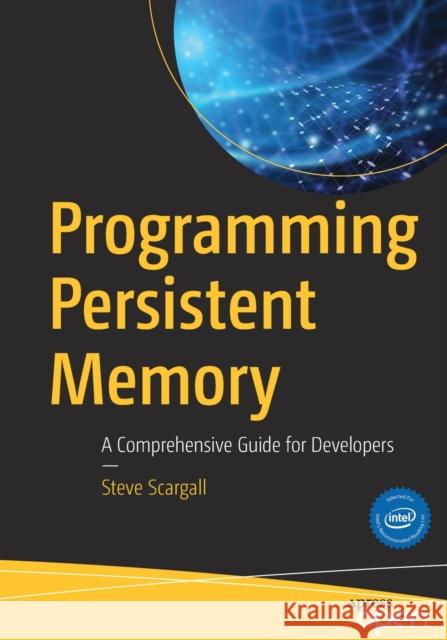
Steve Scargall
Programming Persistent Memory: A Comprehensive Guide for Developers Scargall, Steve 9781484249314 Springer, Berlin - książkaWidoczna okładka, to zdjęcie poglądowe, a rzeczywista szata graficzna może różnić się od prezentowanej.

Programming Persistent Memory: A Comprehensive Guide for Developers

ISBN-13: 9781484249314 / Angielski / Miękka / 2020 / 438 str.

Steve Scargall
cena 201,24
(netto: 191,66 VAT:  5%)

Najniższa cena z 30 dni: 192,74
Termin realizacji zamówienia:
ok. 16-18 dni roboczych.

Darmowa dostawa!

Intermediate-Advanced user level

Beginning and experienced programmers will use this comprehensive guide to persistent memory programming. You will understand how persistent memory brings together several new software/hardware requirements, and offers great promise for better performance and faster application startup times-a huge leap forward in byte-addressable capacity compared with current DRAM offerings.This revolutionary new technology gives applications significant performance and capacity improvements over existing technologies. It requires a new way of thinking and developing, which makes this highly disruptive to the IT/computing industry. The full spectrum of industry sectors that will benefit from this technology include, but are not limited to, in-memory and traditional databases, AI, analytics, HPC, virtualization, and big data. Programming Persistent Memory describes the technology and why it is exciting the industry. It covers the operating system and hardware requirements as well as how to create development environments using emulated or real persistent memory hardware. The book explains fundamental concepts; provides an introduction to persistent memory programming APIs for C, C++, JavaScript, and other languages; discusses RMDA with persistent memory; reviews security features; and presents many examples. Source code and examples that you can run on your own systems are included.What You'll LearnUnderstand what persistent memory is, what it does, and the value it brings to the industryBecome familiar with the operating system and hardware requirements to use persistent memoryKnow the fundamentals of persistent memory programming: why it is different from current programming methods, and what developers need to keep in mind when programming for persistenceLook at persistent memory application development by example using the Persistent Memory Development Kit (PMDK)Design and optimize data structures for persistent memoryStudy how real-world applications are modified to leverage persistent memoryUtilize the tools available for persistent memory programming, application performance profiling, and debuggingWho This Book Is ForC, C++, Java, and Python developers, but will also be useful to software, cloud, and hardware architects across a broad spectrum of sectors, including cloud service providers, independent software vendors, high performance compute, artificial intelligence, data analytics, big data, etc.


Kategorie:
Informatyka, Internet
Kategorie BISAC:
Computers > Networking - Hardware
Computers > Database Administration & Management
Mathematics > Prawdopodobieństwo i statystyka
Wydawca:
Springer, Berlin
Język:
Angielski
ISBN-13:
9781484249314
Rok wydania:
2020
Ilość stron:
438
Waga:
0.81 kg
Wymiary:
25.4 x 17.78 x 2.41
Oprawa:
Miękka
Wolumenów:
01

Chapter 1: Introduction to Persistent Memory

This introduces the reader to the Persistent Memory technology.  What is it, What does it do, and Why the industry needs it.

1.       Introduction

2.       Describe current dominant architecture designs using DRAM and Storage

3.       Definition of Persistent Memory

a.       Type N NV-DIMM as first instantiation of Persistent Memory (PM)

b.      3DXP as first NVDIMM-P technology

4.       Brief introduction of new capability enabled with Persistent Memory

5.       Describe why persistent memory is required and what benefits it brings


Chapter 2: Operating System Support for Persistent Memory

This chapter describes the requirements to use Persistent Memory hardware. 

1.       Recap of traditional File-based programming model for I/O-based storage

2.       ACPI extensions – how OS recognizes PM

3.       Using as fast storage via driver

4.       DAX and the Programming Model.  Mmap today with buffer cache vs. DAX

5.       Windows vs. Linux considerations.

6.       Emulating Persistent Memory


Chapter 3:  Fundamental Concepts of Persistent Memory Programming

This chapter introduces the fundamentals of persistent memory programming.  Why it’s different to current programming methods, and what developers need to keep in mind when programming for persistence.

1.       Cover variety of basic concepts:  Relative pointers, consistency/atomicity across power fails, re-do logs

2.       Cache hierarchy and need for flushing

3.       Powerfail safe domain and different architectures


Chapter 4: Persistent Memory Programming APIs

Walk through the PMDK (Persistent Memory Developer Kit) and describe the intent behind each one.  Examples will use C and C++ (low-level programming).

Chapter 5: Java, Python and other high level languages

This chapter will describe how to use the high level language bindings delivered by PMDK using Java and Python examples.

Chapter 6: Creating an in-memory database storage engine

This chapter describes how to write an in-memory database storage engine from scratch using the PMDK.  It will describe the new thinking model required for application developers and describe how the new programming paradigm should be used.  By the end of the chapter, the reader will have implemented a working storage engine for a popular open source in-memory database.

Chapter 7: Tools for Profiling and Debug

Walk through the tools available for persistent memory programming, application performance profiling, and debugging issues.

Steve Scargall is a persistent memory software/cloud architect within Intel’s Data Center Group (DCG). He contributes to the SNIA NVM Programming Technical Work Group, PMDK, NDCTL, and other open sources projects. With more than 18 years of enterprise application and filesystem IO performance analysis, Steve now works on the exciting and disruptive bleeding edge of persistent memory application design solutions. He works with ISVs and CSPs to enable and deliver persistent memory solutions.  


Beginning and experienced programmers will use this comprehensive guide to persistent memory programming. You will understand how persistent memory brings together several new software/hardware requirements, and offers great promise for better performance and faster application startup times—a huge leap forward in byte-addressable capacity compared with current DRAM offerings.

This revolutionary new technology gives applications significant performance and capacity improvements over existing technologies. It requires a new way of thinking and developing, which makes this highly disruptive to the IT/computing industry. The full spectrum of industry sectors that will benefit from this technology include, but are not limited to, in-memory and traditional databases, AI, analytics, HPC, virtualization, and big data.   

Programming Persistent Memory describes the technology and why it is exciting the industry. It covers the operating system and hardware requirements as well as how to create development environments using emulated or real persistent memory hardware. The book explains fundamental concepts; provides an introduction to persistent memory programming APIs for C, C++, JavaScript, and other languages; discusses RMDA with persistent memory; reviews security features; and presents many examples. Source code and examples that you can run on your own systems are included.

You will:

  • Understand what persistent memory is, what it does, and the value it brings to the industry
  • Become familiar with the operating system and hardware requirements to use persistent memory
  • Know the fundamentals of persistent memory programming: why it is different from current programming methods, and what developers need to keep in mind when programming for persistence
  • Look at persistent memory application development by example using the Persistent Memory Development Kit (PMDK)
  • Design and optimize data structures for persistent memory
  • Study how real-world applications are modified to leverage persistent memory
  • Utilize the tools available for persistent memory programming, application performance profiling, and debugging


Udostępnij

Facebook - konto krainaksiazek.pl


Opinie o Krainaksiazek.pl na Opineo.pl

Partner Mybenefit

Krainaksiazek.pl w programie rzetelna firma Krainaksiaze.pl - płatności przez paypal

Czytaj nas na:

Facebook - krainaksiazek.pl
  • książki na zamówienie
  • granty
  • książka na prezent
  • kontakt
  • pomoc
  • opinie
  • regulamin
  • polityka prywatności

Zobacz:

  • Księgarnia czeska

  • Wydawnictwo Książkowe Klimaty

1997-2026 DolnySlask.com Agencja Internetowa

© 1997-2022 krainaksiazek.pl
     
KONTAKT | REGULAMIN | POLITYKA PRYWATNOŚCI | USTAWIENIA PRYWATNOŚCI
Zobacz: Księgarnia Czeska | Wydawnictwo Książkowe Klimaty | Mapa strony | Lista autorów
KrainaKsiazek.PL - Księgarnia Internetowa

Polityka prywatnosci - link
Krainaksiazek.pl - płatnośc Przelewy24
Przechowalnia Przechowalnia






