• Wyszukiwanie zaawansowane
  • Kategorie
  • Kategorie BISAC
  • Książki na zamówienie
  • Promocje
  • Granty
  • Książka na prezent
  • Opinie
  • Pomoc
  • Załóż konto
  • Zaloguj się

Process Control for Pumps and Compressors » książka


zaloguj się | załóż konto
Logo Krainaksiazek.pl

koszyk

konto

szukaj
topmenu
Księgarnia internetowa
Szukaj
Książki na zamówienie
Promocje
Granty
Książka na prezent
Moje konto
Pomoc
 
 
Wyszukiwanie zaawansowane
Pusty koszyk
Bezpłatna dostawa dla zamówień powyżej 20 złBezpłatna dostawa dla zamówień powyżej 20 zł

Kategorie główne

• Nauka
 [2949965]
• Literatura piękna
 [1857847]

  więcej...
• Turystyka
 [70818]
• Informatyka
 [151303]
• Komiksy
 [35733]
• Encyklopedie
 [23180]
• Dziecięca
 [617748]
• Hobby
 [139972]
• AudioBooki
 [1650]
• Literatura faktu
 [228361]
• Muzyka CD
 [398]
• Słowniki
 [2862]
• Inne
 [444732]
• Kalendarze
 [1620]
• Podręczniki
 [167233]
• Poradniki
 [482388]
• Religia
 [509867]
• Czasopisma
 [533]
• Sport
 [61361]
• Sztuka
 [243125]
• CD, DVD, Video
 [3451]
• Technologie
 [219309]
• Zdrowie
 [101347]
• Książkowe Klimaty
 [123]
• Zabawki
 [2362]
• Puzzle, gry
 [3791]
• Literatura w języku ukraińskim
 [253]
• Art. papiernicze i szkolne
 [7933]
Kategorie szczegółowe BISAC

Process Control for Pumps and Compressors

ISBN-13: 9783031431210 / Angielski

Steve S. Niu
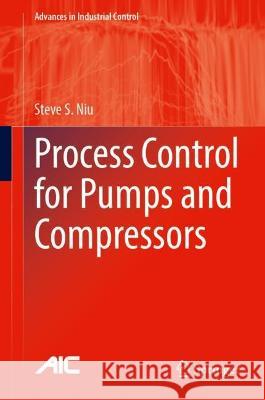
Process Control for Pumps and Compressors Steve S. Niu 9783031431210 Springer - książkaWidoczna okładka, to zdjęcie poglądowe, a rzeczywista szata graficzna może różnić się od prezentowanej.

Process Control for Pumps and Compressors

ISBN-13: 9783031431210 / Angielski

Steve S. Niu
cena 564,88 zł
(netto: 537,98 VAT:  5%)

Najniższa cena z 30 dni: 501,19 zł
Termin realizacji zamówienia:
ok. 22 dni roboczych
Bez gwarancji dostawy przed świętami

Darmowa dostawa!
Kategorie:
Technologie
Kategorie BISAC:
Technology & Engineering > Automation
Science > Chemistry - Industrial & Technical
Technology & Engineering > Industrial Engineering
Wydawca:
Springer
Seria wydawnicza:
Advances in Industrial Control
Język:
Angielski
ISBN-13:
9783031431210

1 Introduction to Pumps and Compressors

1.1 Type of Pumps and Compressors 
1.1.1 Rotating Equipment 
1.1.2 Pumps and Compressors 
1.1.3 Centrifugal and Reciprocating Machines 
1.1.4 Fans and Blowers 
1.2 Applications of Pumps and Compressors 
1.2.1 Liquid Pumping 
1.2.2 Gas Compression 
1.3 Operation and Control of Pumps and Compressors 
1.3.1 Operating Requirements and Control Objectives 
1.3.2 Overall Control Strategy 
1.3.3 Process Control Technologies 
1.3.4 Monitoring and Safeguarding 
1.4 Practical Considerations 
1.4.1 Process-Centric vs. Equipment-Centric Solutions 
1.4.2 In-House vs. 3rd Party Solutions 
1.5 Summary 
References 

2 Characteristics of Pumps and Compressors 
2.1 Basic Properties of Fluids 
2.1.1 Basic Principles of Fluid Dynamics
2.1.2 Basic Principles of Thermodynamics
2.1.3 Gas Compression Process
2.1.4 Liquid Transport Process 
2.2 Description of Pumps and Compressors 
2.2.1 Three Variables: Speed, Head, and Flow 
2.2.2 Two Curves: Performance and Resistance Curves 
2.2.3 One Point: Operating Point 
2.2.4 † Other Variables and Curves 
2.3 Behaviors of Dynamic Machines
2.3.1 Relationship Among Head, Flow, and Speed 
2.3.2 † Suction and Discharge Relationship 
2.3.3 ‡ Euler’s Equation and Slope of Performance Curve 
2.3.4 ‡ System Resistance and Slope of Resistance Curve 
2.4 Surge and Choke Phenomena 
2.4.1 Surge and Choke Points 
2.4.2 Surge Line and Choke Line 
2.5 Summary 
References 

3 Operating Requirements and Control Objectives
3.1 Operating Objectives and Requirements 
3.2 Maintaining the Operating Point 
3.2.1 Operating with Single Control Handle 
3.2.2 Operation with Multiple Control Handles 
3.2.3 † Capacity Turndown 
3.3 Protecting the Operating Envelope 
3.3.1 Operation Under Abnormal Operating Conditions 
3.3.2 ‡ Flow in System Resistance Components 
3.4 Transitioning Between Operating Modes 
3.4.1 Startup of Centrifugal Machines 
3.4.2 Shutdown of Centrifugal Machines 
3.4.3 † Crippled Operation 
3.5 Summary 
References 

4 Overall Control Strategy 
4.1 Overall Control Strategy 
4.1.1 General Control Philosophy 
4.1.2 Overall Control Objectives 
4.1.3 Layered and Integrated Design 
4.1.4 Migration from Proprietary to Open-platform Solutions 
4.2 Regulatory Control: Capacity Control 
4.2.1 Capacity Control Objectives 
4.2.2 Process Dynamics and Cause-and-Effect Relationships 
4.2.3 Process Measurements and Controlled Variables
4.2.4 Final Control Elements and Manipulated Variables 
4.2.5 Capacity Control Algorithms 
4.3 Protective Control: Anti-Surge Control 
4.3.1 Protective Control Objectives 
4.3.2 Process Dynamics for Operating Envelope 
4.3.3 Measurements and Controlled Variables
4.3.4 Recycle Valve and Manipulated Variables 
4.3.5 Protective Control Algorithms 
4.4 Control Integration and Optimization 
4.4.1 Sequential Control: Mode Transition 
4.4.2 Instrumented Safeguarding Against Failures 
4.4.3 Online Performance Monitoring 
4.4.4 † Integration of Capacity and Anti-Surge Control 
4.4.5 ‡ Load Balancing and Optimization 
4.5 Summary 
References 

5 Invariant Coordinates and Surge Indicators 
5.1 Inlet Conditions and Invariant Coordinate Systems 
5.1.1 API Datasheet for Compressor 
5.1.2 † Impact of Inlet Conditions
5.1.3 Invariant Coordinate 
5.2 Equivalent Coordinates 
5.2.1 † Alternative Variables for Polytropic Head 
5.2.2 † Alternative Variables for Volumetric Flow 
5.2.3 † Equivalent Coordinate Systems 
5.3 Surge Reference Line and Surge Indicators 
5.3.1 Surge Reference Line 
5.3.2 Surge Indicators 
5.4 Calculation of Anti-surge Parameters 
5.5 Summary 
References 

6 Basic Control Schemes 
6.1 Centrifugal Pumps 
6.1.1 Capacity Control 
6.1.2 Minimum and Maximum Flow Control 
6.1.3 A Complete Control Design 
6.2 Centrifugal Compressors 
6.2.1 Capacity Control 
6.2.2 Anti-Surge Control 
6.2.3 Anti-surge Parameter Calculation 
6.2.4 † Flowmeter Design
6.2.5 Instrumented Safeguarding 
6.2.6 A Complete Control Design 
6.3 Reciprocating Pumps and Compressors 
6.3.1 Capacity Control for Reciprocating Machines
6.3.2 Protective Control for Reciprocating Machines 
6.4 Practical Considerations 
6.4.1 Speed of Response 
6.4.2 † Sensitivity Analysis 
6.5 Summary
References 

7 Advanced Control Solutions 
7.1 Integration Between Capacity and Anti-Surge Control
7.1.1 Capacity Control Revisited 
7.1.2 An Unintegrated Design 
7.1.3 Integrated Design of Capacity and Anti-Surge Control 
7.1.4 † Integrated Design with Feedforward Compensation 
7.2 Load Balancing Control 
7.2.1 † Load Balancing among Compressor Trains 
7.2.2 ‡ Load Balancing Among Stages 
7.3 A Fully Integrated Control Design 
7.3.1 A Complete Solution for Compressor Control
7.3.2 † Integration Between Control and Safeguarding 
7.3.3 A Real-World Example 
7.4 Multi-Machine Optimization 
7.4.1 † Pumps and Compressors in Parallel 
7.4.2 † Pumps and Compressors in Series 
7.5 Implementation Considerations 
7.5.1 Naming Convention 
7.5.2 Manual vs. Automatic Operation 
7.5.3 † Controller Configurations 
7.6 Summary 
References 

8 Commissioning, Startup, and Monitoring 
8.1 Application Life Cycle 
8.2 Commissioning 
8.2.1 Factory Acceptance Test (FAT) 
8.2.2 Site Acceptance Test (SAT) 
8.3 Plant Startup 
8.3.1 Incipient Surge Test 
8.3.2 Pre-Startup 
8.3.3 During Startup 
8.3.4 Post-Startup 
8.4 Performance Monitoring 
8.4.1 Performance Indicators 
8.4.2 Performance Visualization 
8.5 Troubleshooting and Problem Solving 
8.5.1 † Surge Detection 
8.5.2 † Troubleshooting of Surge Control Scheme 
8.6 Summary 
References 

A Performance Analysis and Control Design with Software Tool 
A.1 Introduction 
A.1.1 Data Requirements 
A.1.2 The Work Process 
A.1.3 The CPACSSoftware Tool 
A.2 Data Preparation and Management 
A.2.1 Data format 
A.2.2 Source of Design Data 
A.2.3 Engineering Units 
A.3 Data Visualization and Validation 
A.3.1 Automatic Error Detection 
A.3.2 Visual Inspection 
A.4 Surge Parameter Calculation 
A.4.1 Anti-Surge Parameters Calculation 
A.4.2 Data Selection 
A.4.3 ASP Formula 
A.4.4 Real-time Data 
A.5 Summary 
References 

Glossary 

Index 

Steve Niu received his B.Sc. from Tsinghua University of China and his Ph.D. from the University of Alberta in Canada, both in Process Control. His 10-year academic research and 25+ years of industrial experience cover almost all aspects of process control, from research, and development, to applications; from project management and product management, to project execution; throughout his career, Steve has designed and implemented hundreds of control solutions in base-layer control, integrated compressor control, and advanced process control in many industries, for projects ranging from minor control improvements to multi-billion-dollar mega-projects. Steve's main research interests are in model identification and advanced control.


This book provides a summary of the essential knowledge and working processes involved with control of rotating equipment including:

  • machine characteristics;
  • overall control strategies;
  • detailed design; and
  • best practices.

Emphasis is placed on the role of pumps and compressors as part of the overall process flow rather than treating them in isolation as this tends to optimize energy efficiency.

Readers are made aware of the critical roles of rotating equipment and are given a good understanding of their dynamic behaviors, including surge/choke. The author imparts the practical know-how and skills involved in the design and implementation of capacity and anti-surge control and safe-guarding logic. Furthermore, the book discusses real-time monitoring of solutions based on operational requirements, dynamic models for control of supply and demand, cause-and-effect relationships, the use of online and offline data, and collaboration with other engineering disciplines. The text facilitates support for the day-to-day operation of in-house open-platform compressor control applications, encouraging the growth of analytic skills in troubleshooting and fixing common problems; it also inculcates a basic understanding of the principles of third-party proprietary technologies and supports decision-making between in-house and third-party solutions.

Process engineers working in the oil-and-gas, refining, petrochemical, and chemical industries who bear responsibility for designing control solutions involving pumps and compressors will find this book an invaluable source of practical advice. This book also helps engineers working on design and maintenance of rotating equipment to understand the perspectives and requirements of process control.


Advances in Industrial Control reports and encourages the transfer of technology in control engineering. The rapid development of control technology has an impact on all areas of the control discipline. The series offers an opportunity for researchers to present an extended exposition of new work in all aspects of industrial control.




Udostępnij

Facebook - konto krainaksiazek.pl


Opinie o Krainaksiazek.pl na Opineo.pl

Partner Mybenefit

Krainaksiazek.pl w programie rzetelna firma Krainaksiaze.pl - płatności przez paypal

Czytaj nas na:

Facebook - krainaksiazek.pl
  • książki na zamówienie
  • granty
  • książka na prezent
  • kontakt
  • pomoc
  • opinie
  • regulamin
  • polityka prywatności

Zobacz:

  • Księgarnia czeska

  • Wydawnictwo Książkowe Klimaty

1997-2025 DolnySlask.com Agencja Internetowa

© 1997-2022 krainaksiazek.pl
     
KONTAKT | REGULAMIN | POLITYKA PRYWATNOŚCI | USTAWIENIA PRYWATNOŚCI
Zobacz: Księgarnia Czeska | Wydawnictwo Książkowe Klimaty | Mapa strony | Lista autorów
KrainaKsiazek.PL - Księgarnia Internetowa

Polityka prywatnosci - link
Krainaksiazek.pl - płatnośc Przelewy24
Przechowalnia Przechowalnia