• Wyszukiwanie zaawansowane
  • Kategorie
  • Kategorie BISAC
  • Książki na zamówienie
  • Promocje
  • Granty
  • Książka na prezent
  • Opinie
  • Pomoc
  • Załóż konto
  • Zaloguj się

Proceedings of the International Conference on Earthquake Engineering and Structural Dynamics » książka


zaloguj się | załóż konto
Logo Krainaksiazek.pl

koszyk

konto

szukaj
topmenu
Księgarnia internetowa
Szukaj
Książki na zamówienie
Promocje
Granty
Książka na prezent
Moje konto
Pomoc
 
 
Wyszukiwanie zaawansowane
Pusty koszyk
Bezpłatna dostawa dla zamówień powyżej 20 złBezpłatna dostawa dla zamówień powyżej 20 zł

Kategorie główne

• Nauka
 [2946600]
• Literatura piękna
 [1856966]

  więcej...
• Turystyka
 [72221]
• Informatyka
 [151456]
• Komiksy
 [35826]
• Encyklopedie
 [23190]
• Dziecięca
 [619653]
• Hobby
 [140543]
• AudioBooki
 [1577]
• Literatura faktu
 [228355]
• Muzyka CD
 [410]
• Słowniki
 [2874]
• Inne
 [445822]
• Kalendarze
 [1744]
• Podręczniki
 [167141]
• Poradniki
 [482898]
• Religia
 [510455]
• Czasopisma
 [526]
• Sport
 [61590]
• Sztuka
 [243598]
• CD, DVD, Video
 [3423]
• Technologie
 [219201]
• Zdrowie
 [101638]
• Książkowe Klimaty
 [124]
• Zabawki
 [2473]
• Puzzle, gry
 [3898]
• Literatura w języku ukraińskim
 [254]
• Art. papiernicze i szkolne
 [8170]
Kategorie szczegółowe BISAC

Proceedings of the International Conference on Earthquake Engineering and Structural Dynamics

ISBN-13: 9783319781860 / Angielski / Twarda / 2018 / 510 str.
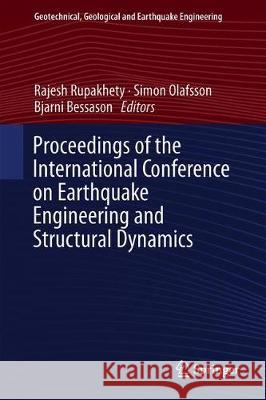
Rajesh Rupakhety; Simon Olafsson; Bjarni Bessason
Proceedings of the International Conference on Earthquake Engineering and Structural Dynamics Rajesh Rupakhety Simon Olafsson Bjarni Bessason 9783319781860 Springer - książkaWidoczna okładka, to zdjęcie poglądowe, a rzeczywista szata graficzna może różnić się od prezentowanej.

Proceedings of the International Conference on Earthquake Engineering and Structural Dynamics

ISBN-13: 9783319781860 / Angielski / Twarda / 2018 / 510 str.

Rajesh Rupakhety; Simon Olafsson; Bjarni Bessason
cena 806,99 zł
(netto: 768,56 VAT:  5%)

Najniższa cena z 30 dni: 771,08 zł
Termin realizacji zamówienia:
ok. 22 dni roboczych
Bez gwarancji dostawy przed świętami

Darmowa dostawa!

This book includes a collection of chapters that were presented at the international conference on earthquake engineering and structural dynamics (ICESD), held between 12-14 June 2017 in Reykjavik, Iceland.

Kategorie:
Technologie
Kategorie BISAC:
Technology & Engineering > Mechanical
Science > Earth Sciences - Geology
Science > Mechanics - Solids
Wydawca:
Springer
Seria wydawnicza:
Geotechnical, Geological and Earthquake Engineering
Język:
Angielski
ISBN-13:
9783319781860
Rok wydania:
2018
Wydanie:
2019
Numer serii:
000289424
Ilość stron:
510
Waga:
8.69 kg
Wymiary:
23.5 x 15.5
Oprawa:
Twarda
Wolumenów:
01

1. Seismic Capacity Reduction Factors for a RC Beam and two RC Columns
2. Characterization of the wave field around an existing end-supported pontoon bridge from simulated data
3. Prediction the Seismic Demands of Tall Buildings Using An Adaptive Force-based Multi-mode Pushover Analysis4. Ambient vibration testing of a 3-storey substandard RC building at different levels of structural seismic damage5. Identification of Rational Functions with a forced vibration technique using random motion histories.6. Seismic Design Procedure for Staggered Steel Plate Shear Wall7. Single-Degree-of-Freedom Analytical Predictive Models for Lead-Core Bearing Devices8. Floor spectra for analysis of acceleration-sensitive equipment in buildings9. Finite element model updating of a long span suspension bridge10. Cyclic capacity of dowel connections11. Experimental Study of New Angle Steel Buckling Restrained Braced Restrained12. The Ranges of Uncertainty among the Use of NGA-West1 and NGA-West 2 Ground Motion Prediction Equations13. Ductile Knee-Braced Frames for Seismic Applications14. Awareness on Seismic Risk: How can Augmented Reality help?15. Seismic Rehabilitation of Masonry Heritage Structures with Base-Isolation and FRP Laminates – A Case Study Comparison16. The Evaluation of Nonlinear Seismic Demands of RC Shear Wall Buildings using a Modified Response Spectrum Analysis Procedure17. Application of MASW in the South Iceland Seismic Zone18. Seismic Fragility Assessment of Reinforced Concrete High-rise Buildings using the Uncoupled Modal Response History Analysis (UMRHA)19. Seismic Response Control of Isolated Bridges Including Soil-Structure Interaction20. Damage observations following the Mw 7.8 2016 Kaikoura earthquake21. Performance of base isolated bridges in recent South Iceland earthquakes22. How to survive earthquakes: the example of Norcia23. System Identification of a Residential Building in Kathmandu Using Aftershocks of 2015 Gorkha Earthquake and Triggered Noise Data24. From seismic input to damage scenario: an example for the pilot area of Mt. Etna volcano (Italy) in KnowRISK Project25. Shaping favorable beliefs to seismic protection through risk communication: A pilot-experience in two Lisbon (Portugal) schools26. Between Perception and Knowledge: the construction of the Italian questionnaire to assess the KnowRISK Project actions27. New Design Spectral Acceleration of Soft and Deep Deposits in Bangkok28. The participatory risk communication action of the KnowRISK project: Italy29. Systematic methodology for planning and evaluation of a multi-source geohazard monitoring system. Application of a reusable template.30. Development of a common (European) tool to assess earthquake risk communication31. KnowRISK on Seismic Risk Communication: the set-up of a participatory strategy32. The dynamic intelligent bridge: A new concept in bridge dynamics33. Seismic risk communication: how to assess it? The case of Lisbon pilot-area. 34. On the manifestation of ground motion model differences on seismic hazard in North Iceland35. Bayesian Heirarchial model of peak ground acceleration for the Icelandic strong-motion arrarys36. Towards an automated Kappa measurement procedure37. Monitoring and Damage Detection of a 70-year-old Suspension Bridge -Ölfusá Bridge in Selfoss, Case Study38. Seismic performance of non-structural elements assessed through shake table tests: The KnowRISK room set-up39. KnowRISK Practical Guide for mitigation of seismic risk due to non-structural components40. A study of rigid blocks rocking against rigid walls

Rajesh Rupakhety is a professor at the Civil and Environmental Engineering Faculty at the University of Iceland, and Director of Research at the Earthquake Engineering Research Centre of the University of Iceland. He obtained his BS in Civil Engineering from Tribhuwan University, Nepal, his MSc in Earthquake Engineering and Engineering Seismology from the University of Pavia, Italy and the University of Patras, Greece, and a PhD in Earthquake Engineering from the University of Iceland. Areas of his academic interest are solid and fluid mechanics, structural analysis and design, engineering seismology, and earthquake engineering. Within the fields of solid and fluid mechanics, he has hands on experience in design and construction of hydropower systems. He has professional and research experience in analysis and design of structures for seismic action. In engineering seismology, his research activities include processing of strong motion data, modelling of inelastic response spectra, theoretical and empirical ground motion modelling and prediction, modelling of ground motion random field, quantification of near-fault ground motion, local site effects, and soil amplification. He is also active in use of historical and macroseismic data, probabilistic and deterministic seismic hazard assessment, and seismic hazard assessment for facilities storing hazardous mining waste, and seismic design provisions for hydropower and wind power plants in Iceland. His primary teaching activities are in continuum mechanics, computational mechanics, finite element analysis, structural dynamics, stochastic processes and random vibration, and earthquake engineering.

Símon Ólafsson is a research professor and the Director of the Earthquake Engineering Research Centre of the University of Iceland, Selfoss. He received his undergraduate degree in electrical engineering from the same university in 1981 and his MSc degree in electrical engineering from the University of Southern California in 1990. In 1999, he earned his PhD on the dynamics of structures and response to earthquake loading from the Norwegian University of Science and Technology, Trondheim, Norway. During the 1980s, he worked with Professor Ragnar Sigbjörnsson on various instrumentation projects and, most notably, the establishment of the Icelandic Strong Motion Network. His main research interests are engineering seismology and earthquake engineering. His ongoing research projects deal with strong-motion monitoring and signal processing, source mechanics, ground motion modelling using stochastic, discrete time models, earthquake hazard, and system identification.

Bjarni Bessason (born 1957), finished a PhD in Earthquake Engineering at the Norwegian Institute of Technology in Trondheim in 1992. He worked from 1991 to 1995 at the Norwegian Geotechnical Institute (NGI) in Oslo and then moved to Iceland where he currently is a Professor in Civil Engineering at University of Iceland. Bjarni has a wide background in structural and earthquake engineering in both research and consulting projects. Main fields of work have been related to: seismic vulnerability analysis; seismic hazard analysis; seismic base isolation; earthquake response analysis; system identification; geophysical characterisation of sites by seismic investigations (SASW, MASW); vibrations from railway, car traffic, pedistrians and blasts; detection analysis of snow avalanches with wave measurements. He is an author/co-author of over 150 scientific papers and technical reports. 

This book includes a collection of chapters that were presented at the International Conference on Earthquake Engineering and Structural Dynamics (ICESD), held in Reykjavik, Iceland between 12-14 June 2017. The contributions address a wide spectrum of subjects related to wind engineering, earthquake engineering, and structural dynamics. Dynamic behavior of ultra long span bridges that are discussed in this volume represent one of the most challenging and ambitious contemporary engineering projects. Concepts, principles, and applications of earthquake engineering are presented in chapters addressing various aspects such as ground motion modelling, hazard analysis, structural analysis and identification, design and detailing of structures, risk due to non-structural components, and risk communication and mitigation. 

The presented chapters represent the state-of-the-art in these fields as well as the most recent developments.


Udostępnij

Facebook - konto krainaksiazek.pl


Opinie o Krainaksiazek.pl na Opineo.pl

Partner Mybenefit

Krainaksiazek.pl w programie rzetelna firma Krainaksiaze.pl - płatności przez paypal

Czytaj nas na:

Facebook - krainaksiazek.pl
  • książki na zamówienie
  • granty
  • książka na prezent
  • kontakt
  • pomoc
  • opinie
  • regulamin
  • polityka prywatności

Zobacz:

  • Księgarnia czeska

  • Wydawnictwo Książkowe Klimaty

1997-2025 DolnySlask.com Agencja Internetowa

© 1997-2022 krainaksiazek.pl
     
KONTAKT | REGULAMIN | POLITYKA PRYWATNOŚCI | USTAWIENIA PRYWATNOŚCI
Zobacz: Księgarnia Czeska | Wydawnictwo Książkowe Klimaty | Mapa strony | Lista autorów
KrainaKsiazek.PL - Księgarnia Internetowa

Polityka prywatnosci - link
Krainaksiazek.pl - płatnośc Przelewy24
Przechowalnia Przechowalnia






