• Wyszukiwanie zaawansowane
  • Kategorie
  • Kategorie BISAC
  • Książki na zamówienie
  • Promocje
  • Granty
  • Książka na prezent
  • Opinie
  • Pomoc
  • Załóż konto
  • Zaloguj się

Principles of Veterinary Parasitology » książka


zaloguj się | załóż konto
Logo Krainaksiazek.pl

koszyk

konto

szukaj
topmenu
Księgarnia internetowa
Szukaj
Książki na zamówienie
Promocje
Granty
Książka na prezent
Moje konto
Pomoc
 
 
Wyszukiwanie zaawansowane
Pusty koszyk
Bezpłatna dostawa dla zamówień powyżej 20 złBezpłatna dostawa dla zamówień powyżej 20 zł

Kategorie główne

• Nauka
 [2949965]
• Literatura piękna
 [1857847]

  więcej...
• Turystyka
 [70818]
• Informatyka
 [151303]
• Komiksy
 [35733]
• Encyklopedie
 [23180]
• Dziecięca
 [617748]
• Hobby
 [139972]
• AudioBooki
 [1650]
• Literatura faktu
 [228361]
• Muzyka CD
 [398]
• Słowniki
 [2862]
• Inne
 [444732]
• Kalendarze
 [1620]
• Podręczniki
 [167233]
• Poradniki
 [482388]
• Religia
 [509867]
• Czasopisma
 [533]
• Sport
 [61361]
• Sztuka
 [243125]
• CD, DVD, Video
 [3451]
• Technologie
 [219309]
• Zdrowie
 [101347]
• Książkowe Klimaty
 [123]
• Zabawki
 [2362]
• Puzzle, gry
 [3791]
• Literatura w języku ukraińskim
 [253]
• Art. papiernicze i szkolne
 [7933]
Kategorie szczegółowe BISAC

Principles of Veterinary Parasitology

ISBN-13: 9780470670422 / Angielski / Miękka / 2015 / 312 str.
Germany) Hermosill Carlos (Justus-Liebig-Universitat Gießen
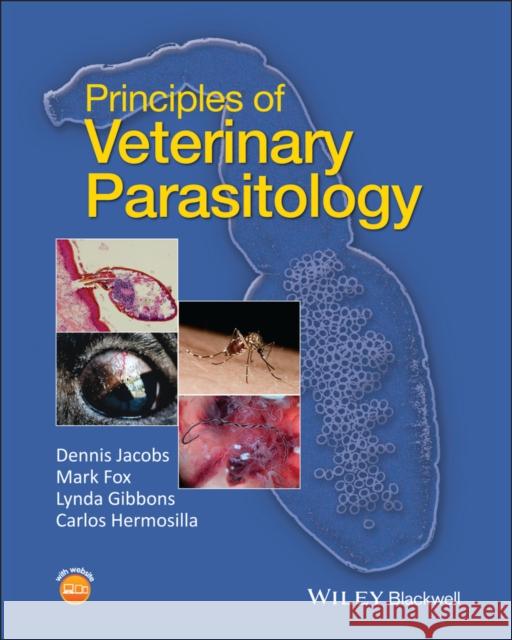
Principles of Veterinary Parasitology Carlos (Justus-Liebig-Universitat Gießen, Germany) Hermosilla 9780470670422 John Wiley and Sons Ltd - książkaWidoczna okładka, to zdjęcie poglądowe, a rzeczywista szata graficzna może różnić się od prezentowanej.

Principles of Veterinary Parasitology

ISBN-13: 9780470670422 / Angielski / Miękka / 2015 / 312 str.

Germany) Hermosill Carlos (Justus-Liebig-Universitat Gießen
cena 230,33
(netto: 219,36 VAT:  5%)

Najniższa cena z 30 dni: 228,44
Termin realizacji zamówienia:
ok. 30 dni roboczych
Bez gwarancji dostawy przed świętami

Darmowa dostawa!

Principles of Veterinary Parasitology is a student-friendly introduction to veterinary parasitology. Written primarily to meet the immediate needs of veterinary students, this textbook outlines the essential parasitological knowledge needed to underpin clinical practice. Conceptual relationships between parasitic organisms, their biology and the diseases they cause are clearly illustrated. Help boxes and practical tips are included throughout alongside a wealth of colour photographs, drawings and life-cycle diagrams. Organised taxonomically with additional host-orientated chapters and focussing on parasites that commonly cause animal or zoonotic disease, welfare problems or economic losses, students worldwide will benefit from this straightforward and easy to comprehend introduction to veterinary parasitology. Key features include:

  • An easy to navigate textbook, providing information essential for clinical studies
  • Full colour throughout, with photographs, diagrams, life-cycles and help boxes for visual learners
  • A companion website including a pronunciation guide, self-assessment questions and further reading lists


Kategorie:
Nauka, Medycyna
Kategorie BISAC:
Medical > Weterynaria
Wydawca:
John Wiley and Sons Ltd
Język:
Angielski
ISBN-13:
9780470670422
Rok wydania:
2015
Ilość stron:
312
Waga:
0.68 kg
Wymiary:
24.38 x 18.8 x 1.52
Oprawa:
Miękka
Wolumenów:
01
Dodatkowe informacje:
Bibliografia
Glosariusz/słownik

This is one of the most complete and easy to read books on veterinary parasitology that I have reviewed. The authors have captured and distilled the important information that is available about parasites. They have succeeded in providing current information without succumbing to irrelevant detail. Their goal of stimulating readers to further investigate and challenge themselves has been met. (Dennis French, © Doody s Review Service)

Principles of Veterinary Parasitology is an excellent textbook for parasitology courses in veterinary and  veterinary technology curricula because it emphasizes common elements of parasite groups, followed by  descriptions of the most common and important group members. The authors have done an outstanding job of discussing characteristics to unite aspects of parasite infection that students can use to create a framework for understanding the individual species they will encounter in clinical training and practice. The book has a student–friendly layout with attractive and useful illustrations. Color–coded boxes provide additional  information and tips for learning material. (JAVMA, March 2016)

The text is well supported by an excellent andextensive image library that has had numerous contributors fromall over the world, and a large number of equally excellent handdrawn illustrations. (Veterinary Parasitology, April 2016)

The four authors bring their substantial experience in parasitology but also in teaching which makes this book much less off–putting than the usual parasitology directories. Numerous pictures and drawings help one to understand the anatomy and the cycles of the parasites. The accompanying website contains the glossary but also guidance on the pronunciation of the exotic names of those creatures and also ways to identify them. (Vet Nurses Today, January 2016)


About the authors ix

Foreword x

Preface xi

Acknowledgements xii

List of abbreviations xiv

About the companion website xv

1 Veterinary Parasitology: basic concepts 1

1.1 Introduction 1

1.1.1 What is Veterinary Parasitology? 2

1.2 Parasitism and parasites 2

1.2.1 Parasitism 2

1.2.2 Classification 3

1.2.3 Host parasite relationships 4

1.3 Host parasite interactions 6

1.3.1 Host defences 6

1.3.2 Parasite evasion of immunity 9

1.4 Parasitic disease 10

1.4.1 The host parasite balance 10

1.4.2 Why parasites are important 10

1.4.3 Pathogenic mechanisms 11

1.5 Diagnostic techniques 12

1.5.1 Direct detection methods 12

1.5.2 Indirect detection methods 13

1.5.3 Limitations 16

1.6 Treatment and control 16

1.6.1 Key concepts 16

1.6.2 Chemotherapy 17

1.6.3 Resistance to parasiticides 18

1.6.4 Integrated parasite management 19

1.6.5 Vaccination 19

1.6.6 Alternative technologies 21

1.6.7 Concluding remarks 23

2 Arthropods part 1: introduction and insects 25

2.1 Introduction 25

2.2 Insects 26

2.2.1 Key concepts 26

2.2.2 Fleas (Siphonaptera) 32

2.2.3 Lice (Phthiraptera) 36

2.2.4 Bugs (Hemiptera) 39

2.2.5 Biting and nuisance flies (Diptera) 40

2.2.6 Myiasis–producing dipterans 48

3 Arthropods part 2: ticks, mites and ectoparasiticides 57

3.1 Introduction 57

3.2 Ticks 57

3.2.1 Key concepts 57

3.2.2 Hard ticks (Ixodidae) 62

3.2.3 Soft ticks (Argasidae) 65

3.3 Mange mites 65

3.3.1 Key concepts 66

3.3.2 Subsurface mites 66

3.3.3 Surface mites 69

3.4 Other arthropods 74

3.5 Ectoparasiticides 75

3.5.1 Key concepts 75

3.5.2 Some important ectoparasiticides 77

3.5.3 Insect growth regulators 79

3.5.4 Problems with ectoparasiticides 79

4 Protozoa (single–celled parasites) 81

4.1 Introduction 81

4.2 Key concepts 82

4.2.1 Classification 82

4.2.2 Locomotion 82

4.2.3 Nutrition 84

4.2.4 Transmission 84

4.2.5 Reproduction 84

4.3 Ciliates 84

4.4 Amoebae 85

4.5 Flagellates 86

4.5.1 Haemoflagellates 86

4.5.2 Other flagellates 90

4.6 Coccidia 94

4.6.1 General characteristics 94

4.6.2 Eimeria 95

4.6.3 Coccidiosis 98

4.7 Tissue cyst–forming coccidia 99

4.7.1 Sarcocystis 100

4.7.2 Besnoitia 102

4.7.3 Toxoplasma 103

4.7.4 Neospora 106

4.8 Blood–borne apicomplexans 107

4.8.1 Babesia 108

4.8.2 Theileria 112

4.9 Cryptosporidia 113

4.9.1 Cryptosporidium parvum 113

4.9.2 Avian cryptosporidiosis 114

4.10 Antiprotozoal drugs 115

4.10.1 Key concepts 115

4.10.2 Anticoccidial drugs 115

5 Platyhelminthes ( flatworms ) 117

5.1 Introduction 117

5.2 Cestodes 118

5.2.1 Key concepts 118

5.3 Cyclophyllidean tapeworms 119

5.3.1 Cyclophyllidean life–cycle 119

5.3.2 Metacestodes 121

5.3.3 Taenia 122

5.3.4 Echinococcus 126

5.3.5 Other cyclophyllidean tapeworms 130

5.4 Pseudophyllidean tapeworms 133

5.4.1 Pseudophyllidean life–cycle 133

5.4.2 Important pseudophyllideans 133

5.5 Cestocidal drugs 135

5.5.1 Praziquantel 135

5.6 Trematodes 135

5.6.1 Digenean trematodes 136

5.6.2 Fasciola 138

5.6.3 Other digenean trematodes 142

5.7 Flukicidal drugs 145

5.7.1 Benzimidazoles 146

5.7.2 Salicylanilides 146

6 Nematoda ( roundworms ) part 1: concepts and bursate nematodes 147

6.1 Introduction 147

6.2 Key concepts 147

6.2.1 Recognition features 148

6.2.2 General biology 152

6.3 Bursate nematodes 153

6.3.1 Bursate superfamilies 153

6.3.2 Trichostrongyloidea 159

6.3.3 Strongyloidea 164

6.3.4 Ancylostomatoidea (hookworms) 171

6.3.5 Metastrongyloidea (lungworms) 173

7 Nematoda ( roundworms ) part 2: nonbursate nematodes and anthelmintics 181

7.1 Nonbursate nematodes 181

7.1.1 Nonbursate superfamilies 182

7.1.2 Rhabditoidea 182

7.1.3 Ascaridoidea (ascarids) 184

7.1.4 Oxyuroidea (pinworms) 192

7.1.5 Spiruroidea and Filarioidea 193

7.1.6 Trichinelloidea 200

7.2 Other parasitic worms 205

7.2.1 Acanthocephala 205

7.2.2 Leeches 206

7.3 Anthelmintics 207

7.3.1 Levamisole group 207

7.3.2 Macrocyclic lactones 208

7.3.3 Benzimidazoles 209

7.3.4 Newer chemical groups 211

8 Clinical parasitology: farm animals 213

8.1 Introduction 213

8.2 Ruminants 213

8.2.1 Digestive system 214

8.2.2 Respiratory system 225

8.2.3 Cardiovascular system 228

8.2.4 Integument 230

8.2.5 Other body systems 235

8.3 Pigs (swine) 237

8.3.1 Internal organs 238

8.3.2 Integument 240

8.4 Poultry 241

8.4.1 Internal organs 242

8.4.2 Integument 246

9 Clinical parasitology: companion animals and veterinary public health 249

9.1 Equine parasitology 249

9.1.1 Digestive system 249

9.1.2 Respiratory and circulatory systems 254

9.1.3 Integument 255

9.1.4 Other body systems 260

9.2 Small animal parasitology 261

9.2.1 Digestive system 261

9.2.2 Respiratory and circulatory systems 264

9.2.3 Integument 268

9.2.4 Other body systems 273

9.3 Veterinary public health 274

9.3.1 Food–borne zoonoses 274

9.3.2 Environmental zoonoses 278

References 285

Index 287

Dennis Jacobs, BVMS, PhD, FHEA, DipEVPC, FRCPath, FRVCS, Emeritus Professor, The Royal Veterinary College, London

After graduating from the Glasgow Veterinary School and a short period in the pharmaceutical industry, he devoted his professional career to teaching and research. He has served as Vice–President of the World Association for the Advancement of Veterinary Parasitology and Secretary of the European Veterinary Parasitology College.

Mark Fox, BVetMed, PhD, FHEA, DipEVPC, MRCVS, Professor of Veterinary Parasitology, The Royal Veterinary College, London

He has over thirty years experience of teaching and research in the veterinary parasitology field, having graduated from The Royal Veterinary College and spent a period in small animal practice.  His current research interests focus on the epidemiology of parasite infections in both domestic and wild animals.  He was awarded the William Hunting medal in recognition of avian coccidiosis research. 

Lynda Gibbons, BSc, PhD, CBiol, FRSB, Attached Senior Scientist, The Royal Veterinary College, London

Having studied at Leicester University and the London School of Hygiene and Tropical Medicine, she became Head of Animal Helminthology Biosystematics at the CABI Institute of Parasitology. She is a recipient of the Elsdon–Dew medal (Parasitological Society of Southern Africa) and the Betts Prize (The Royal Veterinary College).

Carlos Hermosilla, DrMedVet, DipEVPC, DrHabil, DVM, Professor, Justus–Liebig–Universität Gießen

Having gained a veterinary degree from the University Austral of Chile, and doctorates from Justus–Liebig–Universität in Germany, he worked as Senior Lecturer in Veterinary Parasitology at The Royal Veterinary College, London, before returning to the Institute of Parasitology in Gießen as Professor to continue his enthusiasm for teaching and research. He is also visiting professor at the University Austral of Chile.

Principles of Veterinary Parasitology is a student–friendly introduction to veterinary parasitology. Written primarily to meet the immediate needs of veterinary students, this textbook outlines the essential parasitological knowledge needed to underpin clinical practice. Conceptual relationships between parasitic organisms, their biology and the diseases they cause are clearly illustrated. Help boxes and practical tips are included throughout alongside a wealth of colour photographs, drawings and life–cycle diagrams. Organised taxonomically with additional host–orientated chapters and focussing on parasites that commonly cause animal or zoonotic disease, welfare problems or economic losses, students worldwide will benefit from this straightforward and easy to comprehend introduction to veterinary parasitology.

Key Features

  • An easy to navigate textbook, providing information essential for clinical studies
  • Full colour throughout, with photographs, diagrams, life–cycles and help boxes for visual learners
  • A companion website including a pronunciation guide, self–assessment questions and further reading lists



Udostępnij

Facebook - konto krainaksiazek.pl


Opinie o Krainaksiazek.pl na Opineo.pl

Partner Mybenefit

Krainaksiazek.pl w programie rzetelna firma Krainaksiaze.pl - płatności przez paypal

Czytaj nas na:

Facebook - krainaksiazek.pl
  • książki na zamówienie
  • granty
  • książka na prezent
  • kontakt
  • pomoc
  • opinie
  • regulamin
  • polityka prywatności

Zobacz:

  • Księgarnia czeska

  • Wydawnictwo Książkowe Klimaty

1997-2025 DolnySlask.com Agencja Internetowa

© 1997-2022 krainaksiazek.pl
     
KONTAKT | REGULAMIN | POLITYKA PRYWATNOŚCI | USTAWIENIA PRYWATNOŚCI
Zobacz: Księgarnia Czeska | Wydawnictwo Książkowe Klimaty | Mapa strony | Lista autorów
KrainaKsiazek.PL - Księgarnia Internetowa

Polityka prywatnosci - link
Krainaksiazek.pl - płatnośc Przelewy24
Przechowalnia Przechowalnia




