• Wyszukiwanie zaawansowane
  • Kategorie
  • Kategorie BISAC
  • Książki na zamówienie
  • Promocje
  • Granty
  • Książka na prezent
  • Opinie
  • Pomoc
  • Załóż konto
  • Zaloguj się

Principles of Plant-Microbe Interactions: Microbes for Sustainable Agriculture » książka


zaloguj się | załóż konto
Logo Krainaksiazek.pl

koszyk

konto

szukaj
topmenu
Księgarnia internetowa
Szukaj
Książki na zamówienie
Promocje
Granty
Książka na prezent
Moje konto
Pomoc
 
 
Wyszukiwanie zaawansowane
Pusty koszyk
Bezpłatna dostawa dla zamówień powyżej 20 złBezpłatna dostawa dla zamówień powyżej 20 zł

Kategorie główne

• Nauka
 [2946912]
• Literatura piękna
 [1852311]

  więcej...
• Turystyka
 [71421]
• Informatyka
 [150889]
• Komiksy
 [35717]
• Encyklopedie
 [23177]
• Dziecięca
 [617324]
• Hobby
 [138808]
• AudioBooki
 [1671]
• Literatura faktu
 [228371]
• Muzyka CD
 [400]
• Słowniki
 [2841]
• Inne
 [445428]
• Kalendarze
 [1545]
• Podręczniki
 [166819]
• Poradniki
 [480180]
• Religia
 [510412]
• Czasopisma
 [525]
• Sport
 [61271]
• Sztuka
 [242929]
• CD, DVD, Video
 [3371]
• Technologie
 [219258]
• Zdrowie
 [100961]
• Książkowe Klimaty
 [124]
• Zabawki
 [2341]
• Puzzle, gry
 [3766]
• Literatura w języku ukraińskim
 [255]
• Art. papiernicze i szkolne
 [7810]
Kategorie szczegółowe BISAC

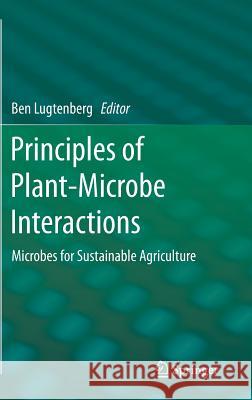
Principles of Plant-Microbe Interactions: Microbes for Sustainable Agriculture

ISBN-13: 9783319085746 / Angielski / Twarda / 2014 / 448 str.
Ben Lugtenberg
Principles of Plant-Microbe Interactions: Microbes for Sustainable Agriculture Lugtenberg, Ben 9783319085746 Springer - książkaWidoczna okładka, to zdjęcie poglądowe, a rzeczywista szata graficzna może różnić się od prezentowanej.

Principles of Plant-Microbe Interactions: Microbes for Sustainable Agriculture

ISBN-13: 9783319085746 / Angielski / Twarda / 2014 / 448 str.

Ben Lugtenberg
cena 605,23
(netto: 576,41 VAT:  5%)

Najniższa cena z 30 dni: 578,30
Termin realizacji zamówienia:
ok. 22 dni roboczych
Bez gwarancji dostawy przed świętami

Darmowa dostawa!

The use of microbial plant protection products is growing and their importance will strongly increase due to political and public pressure. World population is growing and the amount of food needed by 2050 will be double of what is produced now whereas the area of agricultural land is decreasing. We must increase crop yield in a sustainable way. Chemical plant growth promoters must be replaced by microbiological products. Also here, the use of microbial products is growing and their importance will strongly increase. A growing area of agricultural land is salinated. Global warming will increase this process. Plants growth is inhibited by salt or even made impossible and farmers tend to disuse the most salinated lands. Microbes have been very successfully used to alleviate salt stress of plants. Chemical pollution of land can make plant growth difficult and crops grown are often polluted and not suitable for consumption. Microbes have been used to degrade these chemical pollutants.


Kategorie:
Nauka, Biologia i przyroda
Kategorie BISAC:
Science > Life Sciences - Ecology
Science > Mikrobiologia
Science > Botanika
Wydawca:
Springer
Język:
Angielski
ISBN-13:
9783319085746
Rok wydania:
2014
Wydanie:
2015
Ilość stron:
448
Waga:
0.80 kg
Wymiary:
16.6 x 24.5 x 2.3
Oprawa:
Twarda
Wolumenów:
01

"The book helps in exploring the diverse microbial partners, its importance's and mechanisms of the actions for proper understanding of the topic. ... we enjoyed reading this book as the editor tried to cover almost all fundamental and applied aspects of the plant-microbe interactions. As a final word, the book can be described as a book for all." (Rama K. Dubey, Vishal Tripathi and P. C. Abhilash, Frontiers in Plant Science, Vol. 6, 2015)

1. Introduction to Plant-Microbe Interactions; Ben Lugtenberg
Part I. Introductory Chapters
2. The Importance of Microbiology in Sustainable Agriculture; Thomas Schäfer and Tom Adams
3. Life of Microbes in the Rhizosphere;  Ben Lugtenberg
4. Life of Microbes on Aerial Plant Parts; Johan H.J. Leveau
5. Life of Microbes Inside the Plant; Jesús Mercado-Blanco
6. Microbial Cell Surfaces and Secretion Systems; Jan Tommassen and Han A.B. Wösten
7. Microbial Biofilms and Quorum Sensing; Aurelien Carlier, Gabriella Pessi, and Leo Eberl
8. Bacterial Volatiles as Airborne Signals for Plants and Bacteria; Choong-Min Ryu
Part II. Phytopathogens and Pest Insects
9. Phytopathogenic Bacteria; Jan van der Wolf and Solke H. De Boer
10. Plant Pathogenic Fungi and Oomycetes; Pierre J.G.M. de Wit
11. Phytopathogenic Nematodes; Johannes Helder, Mariëtte Vervoort, Hanny van Megen, Katarzyna Rybarczyk Mydłowska, Casper Quist, Geert Smant, and Jaap Bakker
12. Herbivorous Insects - a Threat for Crop Production; Eddy van der Meijden
13. Phytopathogenic Viruses; Carmen Büttner, Susanne von Bargen, and Martina Bandte
14. Induced Disease Resistance; Corné M.J. Pieterse and Saskia C.M. Van Wees
15. Apologies to the Planet – Can we Restore the Damage?; Dulce Eleonora de Oliveira and Marc Van Montagu
16. Will the Public ever Accept Genetically Engineered Plants?; Inge Broer
Part III. Control of Plant Diseases and Pests using Beneficial Microbes
17. Microbial Control of Phytopathogenic Nematodes; Xiaowei Huang, Keqin Zhang, Zefen Yu, and Guohong Li
18. Microbial Control of Root-Pathogenic Fungi and Oomycetes; Linda Thomashow and Peter A.H.M. Bakker
19. Control of Insect Pests by Entomopathogenic Nematodes; Vladimír Půža
20. Bacillus thuringiensis-based Products for Insect Pest Control; Ruud A. de Maagd
21. Post Harvest Control; Emilio Montesinos, Jesús Francés, Esther Badosa,  and Anna Bonaterra
Part IV. Plant Growth Promotion by Microbes
22. The Nitrogen Cycle; Martine A.R. Kox and Mike S.M. Jetten
23. Biological Nitrogen Fixation; Frans J. de Bruijn
24. Phosphate Mobilisation by Soil Microorganisms; José-Miguel Barea and, Alan E Richardson
25. Arbuscular Mycorrhizas: the Lives of Beneficial Fungi and their Plant Host; Paola Bonfante and Alessandro Desirò
26. Plant Hormones Produced by Microbes; Stijn Spaepen
27. Stress Control and ACC Deaminase; Bernard R. Glick
28. Plant-Microbe Interactions and Water Management in Arid and Saline Soils; Daniele Daffonchio, Heribert Hirt, and Gabriele Berg
29. Rhizoremediation;  Sofie Thijs and Jaco Vangronsveld
Part V. Important Technologies
30. Microbial Communities in the Rhizosphere Analyzed by Cultivation-independent; DNA-based Methods; Susanne Schreiter, Namis Eltlbany, and Kornelia Smalla
31. Visualization of Plant-Microbe Interactions; Massimiliano Cardinale and Gabriele Berg
Part VI. Products for Plant Growth-promotion and Disease Suppression
32. Commercialisation of Microbes: Present Situation and Future Prospects; Willem J. Ravensberg
33. Commercialization of Microbes: Manufacturing, Inoculation, Best Practice for Objective Field Testing, and Registration; Faina Kamilova, Yaacov Okon , Sandra de Weert, and Katja Hora
34. Towards a New Generation of Commercial Microbial Disease Control and Plant -Growth Promotion Products; Rainer Borriss
35. Important Organizations and Companies; Ben Lugtenberg
Part VII. Paradigms in Plant-Microbe Interactions
36. Trichoderma: a Multi-Purpose Tool for Integrated Pest Management; Matteo Lorito and Sheridan L. Woo
37. Agrobacterium, the Genetic Engineer; Paul J.J. Hooykaas
38. Take-All Decline and Beneficial Pseudomonads; David M. Weller
39. The Oomycete Phytophthora infestans, the Irish Potato Famine Pathogenl; Charikleia Schoina and Francine Govers
40. , a Plant-Beneficial Bacterium; Rainer Borriss
41. Soybean Production in the Americas; Woo-Suk Chang, Hae-In Lee, and Mariangela Hungria
Part VIII. Future Prospects and Dreams
42. Exploring the Feasibility of Transferring Nitrogen Fixation to Cereal Crops; Muthusubramanian Venkateshwaran
43. The Minimal Rhizosphere Microbiome; Jos M. Raaijmakers
44. The Edible Plant Microbiome: Importance and Health Issues; Gabriele Berg, Armin Erlacher, Martin Grube
45. From Nodulation to Antibiotics; Eva Kondorosi

Prof. Lugtenberg is well-known expert in his field (beneficial bacteria which kill plant-pathogenic fungi or promote plant growth), appreciated for publication record and editing job, with a significant network. Used to play several important roles within the community, e.g. President of the International Society of Molecular Plant-Microbe Interactions.

Plants interact with small organisms in their environment, such as bacteria, fungi, oomycetes, nematodes and insects.  Some of these can cause diseases and pests whereas others can have a plant-beneficial action, such as (i) protecting plants against diseases, (ii) enhancing plant growth and productivity, (iii) reducing plant stresses caused by attackers, draught and salts, and (iv) cleaning soils from pollutants.
Our understanding of plant-microbe interactions advances rapidly and the application of beneficial microbes in agriculture and horticulture - presently USD 1.7 billion annually - is increasing fast. Therefore, there is a strong need to present the principles of these interactions to a broad public. In this book, the basics of all interactions mentioned above are explained in an easily understandable way. Modern state-of-the-art technology on visualization of these interactions and on DNA techniques will be highlighted. Successful examples of progress are presented in the section “Paradigms of Plant-Microbe Interactions”. Finally, a number of innovative ongoing research projects will be presented.
Presently, plants are mainly protected from diseases and pests by using agrochemicals. However, many of these chemicals pollute the environment and can be a health threat for animals and humans. This book show that microbes can help to reduce chemical input and can also be used in combination with chemicals, or even replace agrochemicals. It is generally accepted that the use of microbes will cause a breakthrough in agriculture and horticulture, making it more sustainable in a cost-effective way. Major chemical companies are buying microbial biotech companies.
This book is aimed at everybody working in or interested in one of the many fields of plant-microbe interactions and who wants to become quickly familiar with (other) aspects of this broad field.


Udostępnij

Facebook - konto krainaksiazek.pl


Opinie o Krainaksiazek.pl na Opineo.pl

Partner Mybenefit

Krainaksiazek.pl w programie rzetelna firma Krainaksiaze.pl - płatności przez paypal

Czytaj nas na:

Facebook - krainaksiazek.pl
  • książki na zamówienie
  • granty
  • książka na prezent
  • kontakt
  • pomoc
  • opinie
  • regulamin
  • polityka prywatności

Zobacz:

  • Księgarnia czeska

  • Wydawnictwo Książkowe Klimaty

1997-2025 DolnySlask.com Agencja Internetowa

© 1997-2022 krainaksiazek.pl
     
KONTAKT | REGULAMIN | POLITYKA PRYWATNOŚCI | USTAWIENIA PRYWATNOŚCI
Zobacz: Księgarnia Czeska | Wydawnictwo Książkowe Klimaty | Mapa strony | Lista autorów
KrainaKsiazek.PL - Księgarnia Internetowa

Polityka prywatnosci - link
Krainaksiazek.pl - płatnośc Przelewy24
Przechowalnia Przechowalnia






