• Wyszukiwanie zaawansowane
  • Kategorie
  • Kategorie BISAC
  • Książki na zamówienie
  • Promocje
  • Granty
  • Książka na prezent
  • Opinie
  • Pomoc
  • Załóż konto
  • Zaloguj się

Principles of Physical Sedimentology » książka


zaloguj się | załóż konto
Logo Krainaksiazek.pl

koszyk

konto

szukaj
topmenu
Księgarnia internetowa
Szukaj
Książki na zamówienie
Promocje
Granty
Książka na prezent
Moje konto
Pomoc
 
 
Wyszukiwanie zaawansowane
Pusty koszyk
Bezpłatna dostawa dla zamówień powyżej 20 złBezpłatna dostawa dla zamówień powyżej 20 zł

Kategorie główne

• Nauka
 [2949965]
• Literatura piękna
 [1857847]

  więcej...
• Turystyka
 [70818]
• Informatyka
 [151303]
• Komiksy
 [35733]
• Encyklopedie
 [23180]
• Dziecięca
 [617748]
• Hobby
 [139972]
• AudioBooki
 [1650]
• Literatura faktu
 [228361]
• Muzyka CD
 [398]
• Słowniki
 [2862]
• Inne
 [444732]
• Kalendarze
 [1620]
• Podręczniki
 [167233]
• Poradniki
 [482388]
• Religia
 [509867]
• Czasopisma
 [533]
• Sport
 [61361]
• Sztuka
 [243125]
• CD, DVD, Video
 [3451]
• Technologie
 [219309]
• Zdrowie
 [101347]
• Książkowe Klimaty
 [123]
• Zabawki
 [2362]
• Puzzle, gry
 [3791]
• Literatura w języku ukraińskim
 [253]
• Art. papiernicze i szkolne
 [7933]
Kategorie szczegółowe BISAC

Principles of Physical Sedimentology

ISBN-13: 9789401096850 / Angielski / Miękka / 2012 / 272 str.
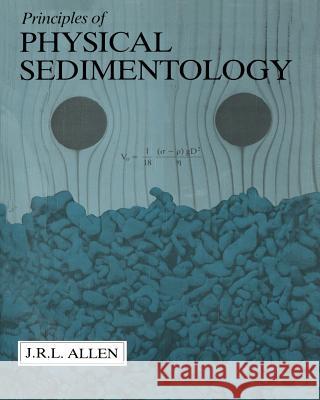
John Allen
Principles of Physical Sedimentology John Allen 9789401096850 Springer - książkaWidoczna okładka, to zdjęcie poglądowe, a rzeczywista szata graficzna może różnić się od prezentowanej.

Principles of Physical Sedimentology

ISBN-13: 9789401096850 / Angielski / Miękka / 2012 / 272 str.

John Allen
cena 443,82 zł
(netto: 422,69 VAT:  5%)

Najniższa cena z 30 dni: 424,07 zł
Termin realizacji zamówienia:
ok. 22 dni roboczych
Bez gwarancji dostawy przed świętami

Darmowa dostawa!

apparatus is generally not required for the making of My aim in this book is simple. It is to set out in a logical useful sedimentological experiments. Most of the equip- way what I believe is the minimum that the senior ment needed for those I describe can be found in the kit- undergraduate and beginning postgraduate student in the Earth sciences should nowadays know of general chen, bathroom or general laboratory, and the materials most often required - sand, clay and flow-marking physics, in order to be able to understand (rather than substances - are cheaply and widely available. As form merely a descriptive knowledge of) the smaller- described, the experiments are for the most part purely scale mechanically formed features of detrital sedi- ments. In a sense, this new book is a second edition of qualitative, but many can with only little modification my earlier Physical processes oj sedimentation (1970), be made the subject of a rewarding quantitative exer- which continues to attract readers and purchasers, inas- cise. The reader is urged to tryout these experiments much as time has not caused me to change significantly and to think up additional ones. Experimentation the essence of my philosophy about the subject. Time should be as natural an activity and mode of enquiry for has, however, brought many welcome new practitioners a physical sedimentologist as the wielding of spade and to the discipline of sedimentology, thrown up a hammer.


Kategorie:
Nauka, Biologia i przyroda
Kategorie BISAC:
Science > Earth Sciences - Sedimentology & Stratigraphy
Reference > General
Non-Classifiable > Non-Classifiable
Wydawca:
Springer
Język:
Angielski
ISBN-13:
9789401096850
Rok wydania:
2012
Wydanie:
Softcover Repri
Ilość stron:
272
Waga:
0.58 kg
Wymiary:
25.4 x 20.32 x 1.55
Oprawa:
Miękka
Wolumenów:
01
Dodatkowe informacje:
Wydanie ilustrowane

1 Concepts and rules of the game.- 1.1 Matter and influences.- 1.2 Flow rate.- 1.3 Law of continuity (conservation of mass).- 1.4 Law of conservation of momentum.- 1.5 Law of conservation of energy.- 1.6 Energy losses during fluid flow.- 1.7 Newton’s laws of motion.- 1.8 Fluid viscosity.- 1.9 Boundary layers.- 1.10 Flow separation.- 1.11 Applying the concepts and rules.- Readings.- 2 Pressed down and running over.- 2.1 Introduction.- 2.2 Particle composition and density.- 2.3 How big is a particle?.- 2.4 What form has a particle?.- 2.5 How close is a packing?.- 2.6 Kinds of packing.- 2.7 Voids.- 2.8 Controls on packing.- 2.9 How steep is a heap?.- 2.10 Building houses on sand.- Readings.- 3 Sink or swim?.- 3.1 Two introductory experiments.- 3.2 Settling of spherical particles arrayed in a stagnant fluid.- 3.3 Settling and fluidization.- 3.4 Flow in porous media.- 3.5 Controls on permeability.- 3.6 Settling of a solitary spherical particle in a stagnant fluid.- 3.7 Settling of a solitary non-spherical particle in a stagnant fluid.- Readings.- 4 Sliding, rolling, leaping and making sand waves.- 4.1 Some field observations.- 4.2 Setting particles in motion.- 4.3 Defining the rate of sediment transport.- 4.4 Physical implications of sediment transport.- 4.5 Sediment transport modes.- 4.6 Appearance and internal structure of bedforms.- 4.7 How do bedforms move?.- 4.8 Bedforms and flow conditions.- 4.9 Making wavy beds.- 4.10 A wave theory of bedforms.- Readings.- 5 Winding down to the sea.- 5.1 Introduction.- 5.2 Drag force and mean velocity of a river.- 5.3 Energy and power of channelized currents.- 5.4 Why flow in a channel?.- 5.5 Width: depth ratio of river channels.- 5.6 Long profiles of rivers.- 5.7 An experimental interlude.- 5.8 Flow in channel bends.- 5.9 Sediment particles in channel bends.- 5.10 Migration of channel bends.- 5.11 A model for river point-bar deposits.- Readings.- 6 Order in chaos.- 6.1 Introduction.- 6.2 Assessing turbulent flows — how to see and what to measure.- 6.3 Character of an ideal eddy.- 6.4 Streaks in the viscous sublayer.- 6.5 Streak bursting.- 6.6 Large eddies (macroturbulence).- 6.7 Relation of small to large coherent structures.- Readings.- 7 A matter of turbidity.- 7.1 Introduction.- 7.2 A diffusion model for transport in suspension.- 7.3 Transport in suspension across river floodplains.- 7.4 Limitations of diffusion models.- 7.5 A dynamical theory of suspension.- 7.6 A criterion for suspension.- Readings.- 8 The banks of the Limpopo River.- 8.1 Introduction.- 8.2 Clay minerals.- 8.3 Deposition of muddy sediments.- 8.4 Packing of muddy sediments.- 8.5 Coming unstuck.- 8.6 Erosion of muddy sediments.- 8.7 Drying out.- Readings.- 9 Creeping, sliding and flowing.- 9.1 Introduction.- 9.2 Mass movements in general.- 9.3 Soil creep.- 9.4 Effective stress and losses of strength.- 9.5 Sub-aerial and sub-aquatic slides.- 9.6 Debris flows.- 9.7 Mass-movement associations.- Readings.- 10 Changes of state.- 10.1 Introduction.- 10.2 An experiment.- 10.3 What causes changes of states?.- 10.4 What forces cause deformation?.- 10.5 For how long can deformation proceed?.- 10.6 Complex deformations in cross-bedded sandstones.- 10.7 Load casts.- 10.8 Convolute lamination.- 10.9 Wrinkle marks.- 10.10 Overturned cross-bedding.- Readings.- 11 Twisting and turning.- 11.1 Introduction.- 11.2 Mixing layers.- 11.3 Jets.- 11.4 Corkscrew vortices.- 11.5 Horseshoe vortices due to bluff bodies.- 11.6 Horseshoe vortices at flute marks, current ripples and dunes.- Readings.- 12 Sudden, strong and deep.- 12.1 Some experiments.- 12.2 Kinds of gravity current.- 12.3 Difficulties with gravity currents.- 12.4 Drag force and mean velocity of a uniform steady gravity current.- 12.5 Shape and speed of a gravity-current head.- 12.6 Why does the nose overhang?.- 12.7 Lobes, clefts and sole marks.- 12.8 Billows on the head.- 12.9 Gravity-current heads on slopes.- 12.10 Dissipation of sediment-driven gravity currents.- 12.11 Sloshing gravity currents.- 12.12 Turbidity-current deposits.- Readings.- 13 To and fro.- 13.1 Some introductory experiments.- 13.2 Making wind waves.- 13.3 Making the tide.- 13.4 Waves in shallow water.- 13.5 Waves in deep water.- 13.6 Wave equations.- 13.7 Mass transport in progressive and standing waves.- 13.8 Sediment transport due to wind waves and tides.- 13.9 Wave ripples and plane beds.- 13.10 Sand waves in tidal currents.- 13.11 Longshore bars and troughs.- 13.12 Waves and storm surges — back to the beginning.- Readings.

Allen, John Allen is of The Open University.... więcej >


Udostępnij

Facebook - konto krainaksiazek.pl


Opinie o Krainaksiazek.pl na Opineo.pl

Partner Mybenefit

Krainaksiazek.pl w programie rzetelna firma Krainaksiaze.pl - płatności przez paypal

Czytaj nas na:

Facebook - krainaksiazek.pl
  • książki na zamówienie
  • granty
  • książka na prezent
  • kontakt
  • pomoc
  • opinie
  • regulamin
  • polityka prywatności

Zobacz:

  • Księgarnia czeska

  • Wydawnictwo Książkowe Klimaty

1997-2025 DolnySlask.com Agencja Internetowa

© 1997-2022 krainaksiazek.pl
     
KONTAKT | REGULAMIN | POLITYKA PRYWATNOŚCI | USTAWIENIA PRYWATNOŚCI
Zobacz: Księgarnia Czeska | Wydawnictwo Książkowe Klimaty | Mapa strony | Lista autorów
KrainaKsiazek.PL - Księgarnia Internetowa

Polityka prywatnosci - link
Krainaksiazek.pl - płatnośc Przelewy24
Przechowalnia Przechowalnia





