• Wyszukiwanie zaawansowane
  • Kategorie
  • Kategorie BISAC
  • Książki na zamówienie
  • Promocje
  • Granty
  • Książka na prezent
  • Opinie
  • Pomoc
  • Załóż konto
  • Zaloguj się

Principles of Forensic Engineering Applied to Industrial Accidents » książka


zaloguj się | załóż konto
Logo Krainaksiazek.pl

koszyk

konto

szukaj
topmenu
Księgarnia internetowa
Szukaj
Książki na zamówienie
Promocje
Granty
Książka na prezent
Moje konto
Pomoc
 
 
Wyszukiwanie zaawansowane
Pusty koszyk
Bezpłatna dostawa dla zamówień powyżej 20 złBezpłatna dostawa dla zamówień powyżej 20 zł

Kategorie główne

• Nauka
 [2952079]
• Literatura piękna
 [1850969]

  więcej...
• Turystyka
 [71058]
• Informatyka
 [151066]
• Komiksy
 [35579]
• Encyklopedie
 [23181]
• Dziecięca
 [620496]
• Hobby
 [139036]
• AudioBooki
 [1646]
• Literatura faktu
 [228729]
• Muzyka CD
 [379]
• Słowniki
 [2932]
• Inne
 [445708]
• Kalendarze
 [1409]
• Podręczniki
 [164793]
• Poradniki
 [480107]
• Religia
 [510956]
• Czasopisma
 [511]
• Sport
 [61267]
• Sztuka
 [243299]
• CD, DVD, Video
 [3411]
• Technologie
 [219640]
• Zdrowie
 [100984]
• Książkowe Klimaty
 [124]
• Zabawki
 [2281]
• Puzzle, gry
 [3363]
• Literatura w języku ukraińskim
 [258]
• Art. papiernicze i szkolne
 [8020]
Kategorie szczegółowe BISAC

Principles of Forensic Engineering Applied to Industrial Accidents

ISBN-13: 9781118962817 / Angielski / Twarda / 2019 / 520 str.
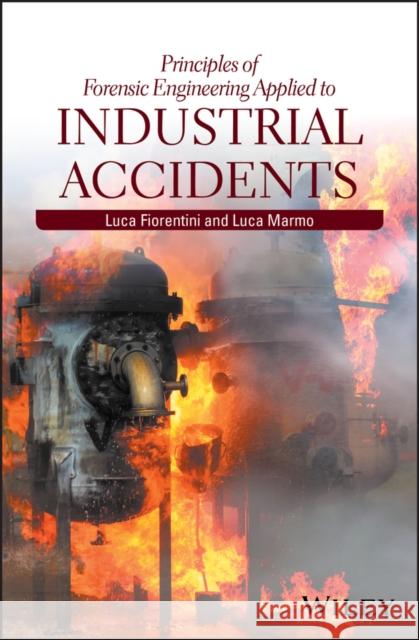
Luca Fiorentini; Luca Marmo
Principles of Forensic Engineering Applied to Industrial Accidents Fiorentini, Luca; Marmo, Luca 9781118962817 John Wiley & Sons - książkaWidoczna okładka, to zdjęcie poglądowe, a rzeczywista szata graficzna może różnić się od prezentowanej.

Principles of Forensic Engineering Applied to Industrial Accidents

ISBN-13: 9781118962817 / Angielski / Twarda / 2019 / 520 str.

Luca Fiorentini; Luca Marmo
cena 527,52
(netto: 502,40 VAT:  5%)

Najniższa cena z 30 dni: 523,19
Termin realizacji zamówienia:
ok. 30 dni roboczych.

Darmowa dostawa!

An introductory text on the investigation of industrial accidents Forensic engineering should be seen as a rigorous approach to the discovery of root causes that lead to an accident or near–miss. The approach should be suitable to identify both the immediate causes as well as the underlying factors that affected, amplified, or modified the events in terms of consequences, evolution, dynamics, etc., as well as the contribution of an eventual human error . This book is a concise and introductory volume to the forensic engineering discipline which helps the reader to recognize the link among those important, very specialized aspects of the same problem in the global strategy of learning from accidents (or near–misses). The reader will benefit from a single point of access to this very large, technical literature that can be only correctly understood with the right terms, definitions, and links in mind. Keywords:

  • Presents simple (real) cases, as well as giving an overview of more complex ones, each of them investigated within the same framework;
  • Gives the readers the bibliography to access more in–depth specific aspects;
  • Offers an overview of the most commonly used methodologies and techniques to investigate accidents, including the evidence that should be collected to define the cause, dynamics and responsibilities of an industrial accident, as well as the most appropriate methods to collect and preserve the evidence through an appropriate chain of security.
Principles of Forensic Engineering Applied to Industrial Accidents is essential reading for researchers and practitioners in forensic engineering, as well as graduate students in forensic engineering departments and other professionals.

Kategorie:
Technologie
Kategorie BISAC:
Technology & Engineering > Civil - General
Technology & Engineering > Industrial Health & Safety
Wydawca:
John Wiley & Sons
Język:
Angielski
ISBN-13:
9781118962817
Rok wydania:
2019
Ilość stron:
520
Waga:
0.92 kg
Wymiary:
24.38 x 17.27 x 3.05
Oprawa:
Twarda
Wolumenów:
01
Dodatkowe informacje:
Bibliografia
Wydanie ilustrowane

Foreword by Giomi xiiiForeword by Chiaia xvForeword by Tee xviiPreface xixAcknowledgement xxiList of Acronyms xxiii1 Introduction 11.1 Who Should ReadThis Book? 11.2 Going Beyond theWidget! 21.3 Forensic Engineering as a Discipline 5References 7Further Reading 72 Industrial Accidents 92.1 Accidents 92.1.1 Principles of Combustion 142.1.1.1 Flammable Gases and Vapors 172.1.1.2 Flammable Liquids 212.1.1.3 The Ignition 222.1.2 Fires 232.1.3 Explosions 272.1.4 Incidental Scenarios 332.2 Near Misses 392.3 Process Safety 402.3.1 Management of Safety 412.4 The Importance of Accidents 472.4.1 Seveso disaster 482.4.2 Bhopal Disaster 512.4.3 Flixborough Disaster 552.4.4 Deepwater Horizon Drilling Rig Explosion 582.4.5 San Juanico Disaster 602.4.6 Buncefield Disaster 642.5 Performance Indicators 682.6 The Role of 'Uncertainty' and 'Risk' 72References 75Further reading 783 What is Accident Investigation?What is Forensic Engineering?What is Risk Assessment?Who is the Forensic Engineer and what is his Role? 793.1 Investigation 793.2 Forensic Engineering 873.3 Legal Aspects 913.4 Ethic Issues 953.5 Insurance Aspects 963.6 Accident Prevention and Risk Assessment 983.6.1 "What-if " Analysis 1003.6.2 Hazard and Operability Analysis (HAZOP) & Hazard Identification (HAZID) 1013.6.3 Failure Modes and Effects Analysis (FMEA) 1053.7 Technical Standards 105References 112Further Reading 1134 The Forensic EngineeringWorkflow 1154.1 TheWorkflow 1154.2 Team and Planning 1184.3 Preliminary and Onsite Investigation (Collecting the Evidence) 1244.3.1 Sampling 1274.3.1.1 Selection of the Sample 1274.3.1.2 Collection of the Sample 1284.3.1.3 Packaging of the Sample 1294.3.1.4 Sealing the Packaging 1304.4 Sources and Type of Evidence to be Considered 1304.4.1 People 1334.4.1.1 Conducting the Interview 1364.4.2 Paper Documentation 1384.4.3 Digital Documentation and Electronic Data 1404.4.3.1 An Example about the Value of Digital Evidence 1414.4.4 Physical Evidence 1454.4.5 Position Data 1464.4.6 Photographs 1474.4.6.1 The Collection of the Photographs 1484.4.6.2 Photograph Cataloguing 1504.5 Recognise the Evidence 1524.5.1 Short Case Studies 1554.5.1.1 Explosion of Flour at the Mill of Cordero in Fossano 1564.5.1.2 Explosion at the Pettinatura Italiana Plant 1574.5.1.3 Explosion of the Boiler of the SISAS Plant of Pioltello 1604.5.1.4 Explosion of the Steam Generator of the Plant Enichem Synthesis at Villadossola 1634.5.1.5 Aluminium Dust Explosion at Nicomax in Verbania 1634.6 Organize the Evidence 1664.7 Conducting the Investigation and the Analysis 1684.7.1 Method of the Conic Spiral 1724.7.2 Evidence Analysis 1734.8 Reporting and Communication 175References 180Further Reading 1825 Investigation Methods 1835.1 Causes and Causal Mechanism Analysis 1835.2 Time and Events Sequence 1925.2.1 STEP Method 1965.3 Human Factor 1995.3.1 Human Error 2045.3.2 Analysis of Operative Instructions andWorking Procedures 2085.4 Methods 2125.4.1 Expert Judgment and Brainstorming 2135.4.2 Structured Methods and Approaches 2145.4.2.1 Pre-structured Methods 2185.4.2.2 Barrier-based Systematic Cause Analysis Technique (BSCATTM) 2225.4.2.3 Tripod Beta 2285.4.2.4 Barrier Failure Analysis (BFA) 2325.4.2.5 Root Cause Analysis (RCA) 2385.4.2.6 QRA derived tools 253References 263Further Reading 2666 Derive Lessons 2676.1 Pre and Post Accident Management 2676.2 Develop Recommendations 2746.2.1 An Application of Risk Analysis to Choose the Best Corrective Measure 2846.3 Communication 2906.4 Safety (and Risk) Management and Training 2966.5 Organization Systems and Safety Culture 2986.6 Behavior-based Safety (BBS) 3036.7 Understanding Near-misses and Treat Them 304References 307Further Reading 3087 CaseStudies 3097.1 Jet Fire at a Steel Plant 3097.1.1 Introduction 3097.1.2 How it Happened (Incident Dynamics) 3107.1.3 Why it Happened 3147.1.4 Findings 3217.1.5 Lessons Learned and Recommendations 3227.1.6 Forensic Engineering Highlights 3267.1.7 References and Further Readings 3287.2 Fire on Board a Ferryboat 3297.2.1 Introduction 3297.2.2 How it Happened (Incident Dynamics) 3307.2.3 Why it Happened 3307.2.4 Findings 3387.2.5 Lessons Learned and Recommendations 3427.2.6 Forensic Engineering Highlights 3427.2.6.1 The Discharge Activity and the Evidence Collection 3427.2.6.2 Use of and Issues Regarding Digital Evidences 3457.2.6.3 Expected Performances of the Installed DigitalMemories 3487.2.6.4 The VDR (Voyage Data Recorder) System 3487.2.6.5 Data Extraction from the "Black Box" (i.e.: FRM Module) 3507.2.6.6 Analysis and Use of Extracted Data 3517.2.6.7 Documentation Analysis of the Fire Detection System 3527.2.7 References and Further Readings 3547.3 LOPC of Toxic Substance at a Chemical Plant 3547.3.1 Introduction 3547.3.2 How it Happened (Incident Dynamics) 3547.3.3 Why it Happened 3557.3.4 Findings 3587.3.5 Lessons Learned and Recommendations 3637.3.6 Forensic Engineering Highlights 3647.4 Refinery's Pipeway Fire 3667.4.1 Introduction 3667.4.2 How it Happened (Incident Dynamics) 3677.4.3 Why it Happened 3717.4.4 Findings 3737.4.5 Lessons Learned and Recommendations 3757.4.6 Forensic Engineering Highlights 3787.4.7 References and Further Readings 3797.5 Flash Fire at a Lime Furnace Fuel Storage Silo 3817.5.1 Introduction 3817.5.2 How it Happened (Incident Dynamics) 3827.5.3 Why it Happened 3857.5.4 Findings 3887.5.5 Lessons Learned and Recommendations 3887.5.6 Forensic Engineering Highlights 3887.5.7 Further Readings 3887.6 Explosion of a Rotisserie Van Oven Fueled by an LPG System 3897.6.1 Introduction 3897.6.2 How it Happened (Incident Dynamics) 3907.6.3 Why it Happened 3947.6.4 Findings 3987.6.5 Lessons Learned and Recommendations 3997.6.6 Forensic Engineering Highlights 3997.6.7 Further Readings 4067.7 Fragment Projection inside a Congested Process Area 4077.7.1 Introduction 4077.7.2 How it Happened (Incident Dynamics) 4087.7.3 Why it Happened 4087.7.4 Findings 4097.7.4.1 Collection of Evidences and Data 4107.7.4.2 Initial Plate Velocity and Box Deformation 4107.7.4.3 Development of a Piping Damage Criteria 4157.7.4.4 Evaluation of Damages 4217.7.4.5 Results for Impacts for Some Pipes 4217.7.4.6 FI-BLAST(c) Adaptation to Perform a Parametric Study 4227.7.4.7 Results of the Parametric Study 4267.7.5 Lessons Learned and Recommendations 4277.7.6 Forensic Engineering Highlights 4287.7.7 References and Further Readings 4297.8 Refinery Process Unit Fire 4297.8.1 Introduction 4297.8.2 How it Happened (Incident Dynamics) 4297.8.3 Why it Happened 4337.8.4 Findings 4357.8.4.1 Examination of the Effects of the Fire 4377.8.4.2 Water and Foam Consumption 4387.8.4.3 Damages 4387.8.5 Lessons Learned and Recommendations 4387.8.6 Forensic Engineering Highlights 4397.8.7 References and Further Readings 4487.9 Crack in an Oil Pipeline 4497.9.1 Introduction 4497.9.2 How it Happened (Accident Dynamics) 4507.9.3 Why it Happened 4537.9.4 Experimental Campaign on the Pipeline Segment 4537.9.5 Findings 4577.9.6 Lessons Learned and Recommendations 4607.9.7 Forensic Engineering Highlights 4627.9.8 References and Further Readings 4637.10 Storage Building on Fire 4637.10.1 Introduction 4637.10.2 How it Happened (Accident Dynamics) 4647.10.3 Why it Happened 4647.10.4 Findings 4657.10.5 Lessons Learned and Recommendations 4667.10.6 Forensic Engineering Highlights 4677.10.7 Further Readings 4678 Conclusions and Recommendations 469References 4719 A Look Into the Future 473References 476A Principles on Probability 477A.1 Basic Notions on Probability 477Index 479

Professor Luca Fiorentini is an internationally recognized expert in the field of industrial, process safety and fire engineering. He is owner and CEO of TECSA S.r.l. international consulting company working in the field of loss prevention and industrial safety, fire engineering and environmental protection. He is senior process safety, HSE, fire engineering and reliability consultant. Professor Fiorentini has experience in QRA (Hazop, LOPA, FTA, ETA, Consequence analysis), CFD and FEM methods, RAM analysis and industrial risk assessment for  a number of industries: major hazard industries, refineries, chemical and petrochemical plants, liquid hydrocarbons and LPG storage farms, oil and gas onshore installations and offshore platforms, steelworks plants, food processing facilities, pharmaceutical and fine chemicals production plants, hospitals and health care facilities, ports and piers. He is an expert of fire engineering and fire risk assessment. Fiorentini is a recognized forensic engineer and investigator for fires, explosions and industrial and marine accidents. He is the author of several books, articles and conference papers as well as a reviewer for a number of scientific magazines.  He is also a professional member of the Chartered Society of Forensic Sciences (UK) and an editorial board member of  "Intl. Journal of Forensic Engineering" and "Fire Protection Magazine" (SFPE).

Professor Luca Marmo is a researcher at Politecnico di Torino technical university, holder of the chair of Safety of industrial Processes on the Chemical Engineering course, and director of the Experimental Centre for Explosive Atmosphere Safety at the Politecnico di Torino Scientific Activity. Consultant to the Public prosecutor and to the Court as aforensic engineer, he has investigated more than one hundred industrial and civil accidents, mainly fires and explosions. The skills of his research group are mainly focused on industrial safety and risk analysis, production of microorganisms and biomolecules of industrial interest, valorisation processes of wastes and industrial by–products, and production of microorganisms and enzymes applied in toxic compounds biodegradation processes. Other research fields concern experimental activity on fluidised bed reactors, CFD modelling of gas–solid multiphase reactors, and experimental activity on the valorisation of wastes. Author of more than 60 papers on international journals or presented at conferences, he is also a consultant to many companies and public bodies in the field of industrial safety and accident prevention, including government agencies at national and European level.

An introductory text on the investigation of industrial accidents

Forensic engineering should be seen as a rigorous approach to the discovery of root causes that lead to an accident or near–miss. The approach should be suitable to identify both the immediate causes as well as the underlying factors that affected, amplified, or modified the events in terms of consequences, evolution, dynamics, etc., as well as the contribution of an eventual human error .

This book is a concise and introductory volume to the forensic engineering discipline which helps the reader to recognize the link among those important, very specialized aspects of the same problem in the global strategy of learning from accidents (or near–misses). The reader will benefit from a single point of access to this very large, technical literature that can be only correctly understood with the right terms, definitions, and links in mind.

Keywords:

  • Presents simple (real) cases, as well as giving an overview of more complex ones, each of them investigated within the same framework;
  • Gives the readers the bibliography to access more in–depth specific aspects;
  • Offers an overview of the most commonly used methodologies and techniques to investigate accidents, including the evidence that should be collected to define the cause, dynamics and responsibilities of an industrial accident, as well as the most appropriate methods to collect and preserve the evidence through an appropriate chain of security.


Principles of Forensic Engineering Applied to Industrial Accidents is essential reading for researchers and practitioners in forensic engineering, as well as graduate students in forensic engineering departments and other professionals.


Udostępnij

Facebook - konto krainaksiazek.pl


Opinie o Krainaksiazek.pl na Opineo.pl

Partner Mybenefit

Krainaksiazek.pl w programie rzetelna firma Krainaksiaze.pl - płatności przez paypal

Czytaj nas na:

Facebook - krainaksiazek.pl
  • książki na zamówienie
  • granty
  • książka na prezent
  • kontakt
  • pomoc
  • opinie
  • regulamin
  • polityka prywatności

Zobacz:

  • Księgarnia czeska

  • Wydawnictwo Książkowe Klimaty

1997-2026 DolnySlask.com Agencja Internetowa

© 1997-2022 krainaksiazek.pl
     
KONTAKT | REGULAMIN | POLITYKA PRYWATNOŚCI | USTAWIENIA PRYWATNOŚCI
Zobacz: Księgarnia Czeska | Wydawnictwo Książkowe Klimaty | Mapa strony | Lista autorów
KrainaKsiazek.PL - Księgarnia Internetowa

Polityka prywatnosci - link
Krainaksiazek.pl - płatnośc Przelewy24
Przechowalnia Przechowalnia





