• Wyszukiwanie zaawansowane
  • Kategorie
  • Kategorie BISAC
  • Książki na zamówienie
  • Promocje
  • Granty
  • Książka na prezent
  • Opinie
  • Pomoc
  • Załóż konto
  • Zaloguj się

Principles and Practice of Gynecologic Laser Surgery » książka


zaloguj się | załóż konto
Logo Krainaksiazek.pl

koszyk

konto

szukaj
topmenu
Księgarnia internetowa
Szukaj
Książki na zamówienie
Promocje
Granty
Książka na prezent
Moje konto
Pomoc
 
 
Wyszukiwanie zaawansowane
Pusty koszyk
Bezpłatna dostawa dla zamówień powyżej 20 złBezpłatna dostawa dla zamówień powyżej 20 zł

Kategorie główne

• Nauka
 [2950560]
• Literatura piękna
 [1849509]

  więcej...
• Turystyka
 [71097]
• Informatyka
 [151150]
• Komiksy
 [35848]
• Encyklopedie
 [23178]
• Dziecięca
 [617388]
• Hobby
 [139064]
• AudioBooki
 [1657]
• Literatura faktu
 [228597]
• Muzyka CD
 [383]
• Słowniki
 [2855]
• Inne
 [445295]
• Kalendarze
 [1464]
• Podręczniki
 [167547]
• Poradniki
 [480102]
• Religia
 [510749]
• Czasopisma
 [516]
• Sport
 [61293]
• Sztuka
 [243352]
• CD, DVD, Video
 [3414]
• Technologie
 [219456]
• Zdrowie
 [101002]
• Książkowe Klimaty
 [124]
• Zabawki
 [2311]
• Puzzle, gry
 [3459]
• Literatura w języku ukraińskim
 [254]
• Art. papiernicze i szkolne
 [8079]
Kategorie szczegółowe BISAC

Principles and Practice of Gynecologic Laser Surgery

ISBN-13: 9781461296843 / Angielski / Miękka / 2011 / 308 str.
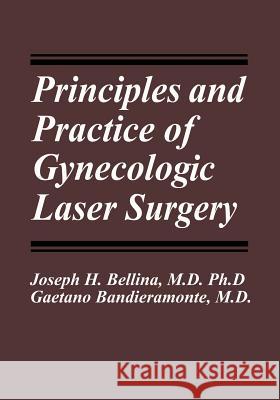
Joseph H. Bellina; Gaetano Bandieramonte; Joseph H. Bellina
Principles and Practice of Gynecologic Laser Surgery Joseph H Gaetano Bandieramonte Joseph H. Bellina 9781461296843 Springer - książkaWidoczna okładka, to zdjęcie poglądowe, a rzeczywista szata graficzna może różnić się od prezentowanej.

Principles and Practice of Gynecologic Laser Surgery

ISBN-13: 9781461296843 / Angielski / Miękka / 2011 / 308 str.

Joseph H. Bellina; Gaetano Bandieramonte; Joseph H. Bellina
cena 200,77
(netto: 191,21 VAT:  5%)

Najniższa cena z 30 dni: 192,74
Termin realizacji zamówienia:
ok. 22 dni roboczych
Dostawa w 2026 r.

Darmowa dostawa!

One of the first applications of lasers was for surgery on the retina of the eye. That, and the evident analogy to the old dreams of powerful heat rays, led many to predict that lasers would quickly be used for all kinds of cutting and welding, including surgical applications. It was soon apparent that laser sur gery could be performed in ways that caused little bleeding. Nevertheless, other surgical applications have been slower to arrive. One difficulty has been the enormous range of possibilities provided by the many different kinds of lasers. Infrared, visible, and ultraviolet light beams each interact very differently with human tissues. Light pulses of enor mously great peak powers became available from lasers, but their effects dif fered in surprising ways from those obtained with continuous beams. That provided both opportunities (i.e., treating or removing a very thin surface layer without affecting the underlying tissue) and problems with undesired side effects. Moreover, techniques were needed to deliver a precisely con trolled amount of energy just where it was desired. Lasers also had to be engineered and manufactured with the desired power levels and a high reliability."


Kategorie:
Nauka, Medycyna
Kategorie BISAC:
Medical > Surgery - General
Medical > Ginekologia i położnictwo
Wydawca:
Springer
Język:
Angielski
ISBN-13:
9781461296843
Rok wydania:
2011
Wydanie:
Softcover Repri
Ilość stron:
308
Waga:
0.60 kg
Wymiary:
25.4 x 17.8
Oprawa:
Miękka
Wolumenów:
01
Dodatkowe informacje:
Glosariusz/słownik
Wydanie ilustrowane

1 An Introduction to Lasers.- 1.1 General Information.- 1.2 Theoretical Background.- 1.3 Historical Data.- 1.4 Basic Physics of Generating Laser Energy.- 1.4.1 Energy Levels in Atoms.- 1.4.2 Generation of Light.- 1.4.3 Emission and Absorption.- 1.4.3.a. Spontaneous Emission.- 1.4.3.b. Absorption.- 1.4.3.c. Stimulated Emission.- 1.4.3.d. Additional Characteristics.- 1.4.4 The Laser.- 1.4.4.a. Active Medium, Pumping.- 1.4.4.b. Optical Cavity.- 1.4.4.c. Loss and Gain Phenomenon.- 1.4.4.d. Steady State.- 1.4.4.e. Standing Waves.- 1.5 The Molecular Gas Laser (Carbon Dioxide Laser): Energy Levels in Molecules.- 1.5.1. Ground Level at Zero Energy Level.- 1.5.2. Excited Level (V1) or Symmetrical Stretch Mode.- 1.5.3. Excited Level (V2) or Bend Mode.- 1.5.4. Excited Level (V3) or Asymmetrical Stretch Mode.- 1.5.5. Energy Transfer.- 1.6 The Liquid Laser.- 1.7 The Solid-State Laser.- 1.8 The Semiconductor Laser.- 1.9 General Characteristics of Lasers in Medicine.- 1.9.1. The Ruby Laser.- 1.9.2. The Argon Laser.- 1.9.3. The Neodymium-YAG Laser.- 1.9.4. The Carbon Dioxide Laser.- References.- 2 Carbon Dioxide Laser Instrumentation.- 2.1 General Description.- 2.2. Biophysical Data.- 2.2.1. Terminology of Laser Irradiation.- 2.2.2. Absorption and Reflection.- 2.2.3. Significance of Coefficients.- 2.2.4. Power Density.- 2.2.5. Transverse Electromagnetic Mode and Its Significance.- 2.2.6. Laser Modes and Effects of Temperature on Mode Stability.- 2.2.7. Biophysical Parameters of C02 Surgical Lasers and Dosimetry.- 2.2.8. Clinical Conclusions.- 2.3. Current C02 Laser Models.- 2.3.1. Introduction.- 2.3.2. Troubleshooting the System.- 2.3.3. Basic Office System.- 2.3.4. Office Suite Operating Room Supplies.- 2.3.5. Operating Suite System.- 2.3.6. Recording System.- 2.3.7. Ancillary Equipment.- 2.3.7.a. Evacuation System.- 2.3.7.b. Waveguides.- 2.4. Laser Safety.- 2.4.1. General Information.- 2.4.2. Hazards of Medical Lasers.- 2.4.2.a. Injury by Primary Action of the Laser Beam.- 2.4.2.b. Injury by Secondary Effects of the Laser Beam.- 2.4.2.C. Protecting the Patient’s Eyes from Laser Radiation.- 2.4.2.d. Damage to Skin and Underlying Tissues.- 2.4.2.e. Protecting Skin and Underlying Tissues.- 2.4.2.f. Toxic or Pathogenic Effect of Smoke or Vapor from the Intended Target.- 2.4.3. Government Regulations for Laser Safety.- 2.4.3.a. Federal Regulations.- 2.4.3.b. Local Regulations.- References.- 3 Bioeffects.- 3.1 Introduction.- 3.1.1. Experimental Studies.- 3.1.2. Clinical Studies.- 3.1.2.a. Cytologic Analysis.- 3.1.2.b. Histologic Analysis.- 3.1.2.C. Scanning Electron Microscope Analysis.- 3.1.2.d. Clinical Findings.- 3.1.3. Theoretical Analysis and Experimental Verification….- 3.1.3.a. Theoretical Analysis of Heat Transfer— General.- 3.1.3.b. Theoretical Analysis—Closed-Form Solution.- 3.1.3.c. Experimental Verification.- 3.1.3.d. Summary of Theoretical Findings.- 3.1.3.e. Conclusion.- 3.2. Plume Emission Analysis.- 3.3. Photoacoustic Properties.- 3.4. Photon-Tissue Interaction.- 3.4.1. Experimental Design.- 3.4.2. Results.- 3.4.3. Discussion.- References.- 4 Applications in Gynecology with Emphasis on the Cervix.- 4.1. Introduction to Laser Surgery.- 4.2. Clinical Applications in Gynecology.- 4.3. General Considerations of Applications in Cervical Intraepithelial Neoplasia.- 4.4. Cervical Applications.- 4.4.1. Epidemiology.- 4.4.2. Pathology.- 4.4.3. Preoperative Analyses.- 4.4.4. Patient Selection.- 4.5. Technical Approach to CIN Lesions.- 4.5.1. Microsurgical Procedures.- 4.5.2. Instruments, Equipment, and Patient Preparation for Cervical Microsurgery.- 4.5.3. Anesthesia.- 4.6. Vaporization Procedure.- 4.7. Excisional Conization.- 4.7.1. Technical Approach.- 4.7.2. Pathologic Examination.- 4.7.3. Combined Procedures.- 4.8. Postsurgical Care.- 4.9. Evaluation of Healing.- 4.10. Follow-up Examinations.- 4.11. Current Research on CIN.- 4.12. Complications.- 4.13. Laser Technique versus Conventional Methods.- 4.13.1. Laser Vaporization versus Cryosurgery and Diathermy.- 4.13.2. Laser Conization versus Cold Knife Conization and Hysterectomy.- 4.14. Other Indications for Laser Surgery.- 4.14.1. Stenosis.- 4.14.2. Lacerations.- 4.12.3. Bicollis Configuration.- 4.12.4. Adenosis and Cervical Changes Associated with Diethylstilbestrol Exposure in Utero.- 4.12.5. Polyps.- 4.12.6. Leiomyoma.- 4.12.7. Cervicitis.- References.- 5 Laser Surgery of the Vagina, Vulva, and Extragenital Areas.- 5.1. Introduction.- 5.2. Vaginal Applications.- 5.2.1 Adenosis.- 5.2.2. Dystrophy and Neoplasia.- 5.2.3. Postoperative Care and Follow-up.- 5.2.4. Reconstruction.- 5.2.4.a. Longitudinal Vaginal Septum.- 5.2.4.b. Transverse Vaginal Septum.- 5.2.4.c. Gartner’s Duct Cyst and Other Vaginal Inclusion Cysts.- 5.3. Vulvar Applications.- 5.3.1. Introduction.- 5.3.2. Preoperative Analysis.- 5.3.3. Dystrophic and Neoplastic Lesions.- 5.3.4. Premalignant Disease and Degenerative Dystrophia.- 5.3.5. Carcinoma in Situ.- 5.3.6. Primary or Secondary Invasive Neoplastic Lesions.- 5.3.7. Procedure.- 5.3.8. Tissue Reaction.- 5.3.9. Postoperative Management.- 5.3.10. Complications, Results, and Follow-up.- 5.4. Lower Genital Tract Multicentric Viral Lesions.- 5.4.1. Condyloma Acuminatum Lesions.- 5.4.2. Preoperative Analysis.- 5.4.3. Sequence of Therapy.- 5.4.4. Technique of Management.- 5.4.5. Postoperative Management.- 5.4.6. Complications and Results.- 5.4.7. Herpes Simplex Virus Type 2.- 5.5. Other Sites.- 5.5.1. Peritoneal Labial Fusion.- 5.5.2. Hymenotomy.- 5.5.3. Anal Lesions.- 5.5.4. Periurethral Lesions and Skene’s Ducts.- 5.5.5. Bartholin’s Gland Abscess and Cyst Management.- 5.5.6. Other Cutaneous Lesions.- References.- 6 Intra-abdominal Applications.- 6.1. Introduction.- 6.2. Instrumentation.- 6.2.1. Current Laser System for Microsurgery.- 6.2.2. Laser Micromanipulator.- 6.2.3. Omega Modification of Laser Micromanipulator.- 6.2.4. Laser Scalpel.- 6.2.5. Laser Accessory Instruments.- 6.2.6. Laser Laparoscopy.- 6.2.7. Operating Room Modification.- 6.2.8. Recording System: General.- 6.2.9. Recording System: Specialized Video-Cine Modification.- 6.3. Microsurgical Procedures.- 6.3.1. Adhesiolysis.- 6.3.2. Fimbrioplasty and Salpingostomy.- 6.3.3. Tubal Reanastomosis.- 6.3.4. Cornual Reimplantation.- 6.3.5. Ectopic Pregnancy: Linear Salpingostomy.- 6.3.6. Endometriosis.- 6.3.6.a. Endometrial Implants.- 6.3.6.b. Endometrioma: Ovarian Type.- 6.3.6.C. Bowel Endometrioma.- 6.3.7. Uterine Anomalies.- 6.3.7.a. Septal Defects.- 6.3.7.b. Bicornuate Uterus.- 6.3.7.C. Uterine Leiomyomata.- 6.3.8. Tubal Anomalies.- 6.3.8.a. Intraluminal Polyps.- 6.3.8.b. Bifid Fallopian Tubes.- 6.3.8.c. Defective Fimbria Ovarica.- 6.3.9. Ovarian Procedures.- 6.3.9.a. Cystectomy.- 6.3.9.b. Incisional and Excisional Approach.- 6.3.9.c. Wedge Resection.- 6.3.10. Rectovaginal Repair.- 6.4. Conclusion.- References.- Appendixes.- Appendix A. Zeiss Operating Microscope.- I. Optical Principles, Illumination Systems, and Support Systems.- II. Individual Parts, Handling, Assembling, Focusing, and Balancing.- III. Accessories.- IV. Documentation.- V. Maintenance and Cleaning.- Appendix B. Patient Information: Laser Surgery.- Appendix C. Discharge Instructions.- Appendix D. Informed Consent.- Appendix E. Laser Certification.- Appendix F. Societies.- Appendix G. Publications.- Appendix H. Glossary of Laser Terminology.


Udostępnij

Facebook - konto krainaksiazek.pl


Opinie o Krainaksiazek.pl na Opineo.pl

Partner Mybenefit

Krainaksiazek.pl w programie rzetelna firma Krainaksiaze.pl - płatności przez paypal

Czytaj nas na:

Facebook - krainaksiazek.pl
  • książki na zamówienie
  • granty
  • książka na prezent
  • kontakt
  • pomoc
  • opinie
  • regulamin
  • polityka prywatności

Zobacz:

  • Księgarnia czeska

  • Wydawnictwo Książkowe Klimaty

1997-2025 DolnySlask.com Agencja Internetowa

© 1997-2022 krainaksiazek.pl
     
KONTAKT | REGULAMIN | POLITYKA PRYWATNOŚCI | USTAWIENIA PRYWATNOŚCI
Zobacz: Księgarnia Czeska | Wydawnictwo Książkowe Klimaty | Mapa strony | Lista autorów
KrainaKsiazek.PL - Księgarnia Internetowa

Polityka prywatnosci - link
Krainaksiazek.pl - płatnośc Przelewy24
Przechowalnia Przechowalnia






