• Wyszukiwanie zaawansowane
  • Kategorie
  • Kategorie BISAC
  • Książki na zamówienie
  • Promocje
  • Granty
  • Książka na prezent
  • Opinie
  • Pomoc
  • Załóż konto
  • Zaloguj się

Practical Assessment and Treatment of the Patient with Headaches in the Emergency Department and Urgent Care Clinic » książka


zaloguj się | załóż konto
Logo Krainaksiazek.pl

koszyk

konto

szukaj
topmenu
Księgarnia internetowa
Szukaj
Książki na zamówienie
Promocje
Granty
Książka na prezent
Moje konto
Pomoc
 
 
Wyszukiwanie zaawansowane
Pusty koszyk
Bezpłatna dostawa dla zamówień powyżej 20 złBezpłatna dostawa dla zamówień powyżej 20 zł

Kategorie główne

• Nauka
 [2946912]
• Literatura piękna
 [1852311]

  więcej...
• Turystyka
 [71421]
• Informatyka
 [150889]
• Komiksy
 [35717]
• Encyklopedie
 [23177]
• Dziecięca
 [617324]
• Hobby
 [138808]
• AudioBooki
 [1671]
• Literatura faktu
 [228371]
• Muzyka CD
 [400]
• Słowniki
 [2841]
• Inne
 [445428]
• Kalendarze
 [1545]
• Podręczniki
 [166819]
• Poradniki
 [480180]
• Religia
 [510412]
• Czasopisma
 [525]
• Sport
 [61271]
• Sztuka
 [242929]
• CD, DVD, Video
 [3371]
• Technologie
 [219258]
• Zdrowie
 [100961]
• Książkowe Klimaty
 [124]
• Zabawki
 [2341]
• Puzzle, gry
 [3766]
• Literatura w języku ukraińskim
 [255]
• Art. papiernicze i szkolne
 [7810]
Kategorie szczegółowe BISAC

Practical Assessment and Treatment of the Patient with Headaches in the Emergency Department and Urgent Care Clinic

ISBN-13: 9781461400011 / Angielski / Miękka / 2011 / 212 str.
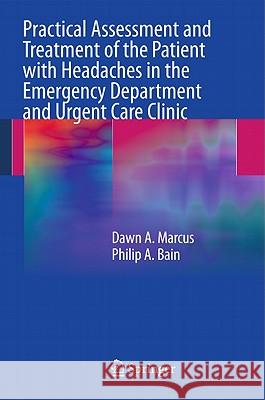
MD Dawn A. Marcus; Philip A. Bain
Practical Assessment and Treatment of the Patient with Headaches in the Emergency Department and Urgent Care Clinic Dawn A. Marcus Philip A. Bain 9781461400011 Not Avail - książkaWidoczna okładka, to zdjęcie poglądowe, a rzeczywista szata graficzna może różnić się od prezentowanej.

Practical Assessment and Treatment of the Patient with Headaches in the Emergency Department and Urgent Care Clinic

ISBN-13: 9781461400011 / Angielski / Miękka / 2011 / 212 str.

MD Dawn A. Marcus; Philip A. Bain
cena 201,72
(netto: 192,11 VAT:  5%)

Najniższa cena z 30 dni: 192,74
Termin realizacji zamówienia:
ok. 22 dni roboczych
Bez gwarancji dostawy przed świętami

Darmowa dostawa!

Migraine is an extremely common condition affecting 28 million Americans. Fully 1 in every 6 adult women suffers from this malady. Patients with migraine are frequently seen in the Emergency Room and Urgent Care Clinic for acute treatment of their headaches. Headache generally accounts for nearly 3 % of all ER visits, resulting in almost 3.5 million visits annually. There currently are no widely used guidelines for the treatment of patients with headache in the ER or UCC, and reducing the number of CT scans remains a key goal for administrators in many ER or urgent care settings. In one study, 35 drugs, alone or in combination, were used to treat migraine. The most common medication class used was narcotics, which were used in 25% of the visits. The next two most commonly used classes were antiemetics and NSAIDs. Only 5% of patients seen for headache received headache-specific medications during their visit. ER and Urgent Care physicians generally have little or no formal training in treating these patients. Consequently, they often feel less comfortable ruling out secondary causes of headaches and using appropriate headache treatment medications and procedures. Since many patients have received narcotics in previous visits, providers may view them as drug seekers. Patients seen in ERs and UCCs for acute treatment of their headaches often report high levels of dissatisfaction. They often end up in the ER or UCC because they don't have a formal treatment strategy for their severe headaches. Health plans and insurance agencies are often frustrated by the high cost of fragmented care for patients with headaches. Because of the environment that most ER and UCC providers operate in, many unnecessary scans and tests are done because of uncertainty of the diagnosis and unfamiliarity of the patient. Primary care physicians are also frustrated by patients with headaches presenting to them after being seen in the ER or UCC, wanting a refill of their narcotics that they were given. Many patients don't follow up with their PCPs and simply keep returning to the ER/UCC for their treatment. In short, all involved in the care for patients with headache are frustrated by the current system. The care for these patients is clearly not optimal. It doesn't have to be that way. There are a wide variety of effective treatment options available, but are underutilized in the acute setting. With these treatment options, patients no longer have to be treated only with parenteral narcotics, only to perpetuate the cycle of suboptimal care described above. This concise handbook covers all aspects of acute headache care, including care of the child and adolescent with acute headaches, treatment of pregnant and breastfeeding women with acute headaches and appropriate evaluation of secondary headaches. In addition, two other novel chapters are included: one on caring for older patients with acute headaches as well as a chapter describing how to ensure a seamless transition of the patient back to a headache interested provider. Representing an important milestone in the care of patients with headache, this is the first concise handbook available to exclusively address the issue of headache treatment in the acute care setting. Including protocols and strategies that can be used right away, Management of Headaches in Emergency Room and Urgent Care Settings: Diagnosis and Management provides information about lesser known, but effective strategies such as greater occipital nerve blocks that can be easily learned and incorporated in the acute care setting. It emphasizes the continuity of care that is so vital to keep headache patients from returning to the ER and UCC for acute treatment.


Kategorie:
Nauka, Medycyna
Kategorie BISAC:
Medical > Medycyna ratunkowa
Medical > Neurologia i neurofizjologia kliniczna
Wydawca:
Not Avail
Język:
Angielski
ISBN-13:
9781461400011
Rok wydania:
2011
Wydanie:
2011
Ilość stron:
212
Waga:
0.35 kg
Wymiary:
23.4 x 15.8 x 1.3
Oprawa:
Miękka
Wolumenów:
01
Dodatkowe informacje:
Bibliografia
Wydanie ilustrowane

TABLE OF CONTENTS
 
Acknowledgements
 
Preface
 
Chapters
1. Overview of headache in the emergency department
·         Most non-traumatic headaches in the ED are primary headaches
·         Why do headache patients come to the ED?
·         ED headache treatment is often unsatisfactory for both patients and the ED staff
·         Common traps leading to assessment errors in headache care in the ED
-   Trap 1: Trying to determine a specific headache diagnosis
-   Trap 2: Making diagnoses contingent on treatment response
-   Trap 3: Failing to recognize secondary headache
-   Trap 4: Failing to identify traumatic headache
-   Trap 5: Failing to address hypertension appropriately·         ED visits for headache can lead to unnecessary admissions·         Streamlining the ED for efficient and effective care of headache patients·         Summary2. Getting started
·         Why focus on primary vs. secondary headaches?
·         Important questions to ask in the ED
-   Patients with a new headache
-   Patients with a chronic headache
-   Patients with a headache PLUS other symptoms or signs
-   Headache in patients with known and likely contributory medical illnesses
·         5-minute screening neuro exam
·         Deciding when to order additional testing
-   To scan or not to scan?
-   Spinal fluid examination
-   Other tests
-   Putting it all together
·         Online resources for patient assessment
·         Summary
2. Getting started
·         Why focus on primary vs. secondary headaches?
·         Important questions to ask in the ED
-   Patients with a new headache
-   Patients with a chronic headache
-   Patients with a headache PLUS other symptoms or signs
-   Headache in patients with known and likely contributory medical illnesses
·         5-minute screening neuro exam
·         Deciding when to order additional testing
-   To scan or not to scan?
-   Spinal fluid examination
-   Other tests
-   Putting it all together
·         Online resources for patient assessment
·         Summary
3. Secondary headaches
·         Traumatic headache
-   Post-concussion activity restrictions
-   Cervicocranial artery dissection
·         Non-traumatic headache
-   Sudden onset, severe, non-traumatic headache
-   Fever and headache
-   Vascular disease
-   Increased intracranial pressure
-   Giant cell or temporal arteritis
-   Other secondary headaches
·         Summary
4. General treatment strategies
·         Treating dehydration
·         Treating nausea aggressively
-   Anti-emetics are more effective for ED headache than analgesics
-   Anti-emetics are at least as effective as triptans for ED migraine
·         Include non-drug treatments
·         Selecting medications for headache in the ED
-   Choosing medications for primary headache
·         Anesthetic therapy
-   Trigger point injections
-   Occipital nerve blocks
-   Other injections
·         Deciding if treatment is helpful
-   Reducing headache recurrence
·         Summary
5. Treating the child and adolescent with acute headache
·         Assessment
-   Secondary headaches
-   Migraine
·         Treatment
-   Pediatric migraine in the ED
-   Additional resources for treating pediatric headache·         Summary
6. Treatment of pregnant and breastfeeding patients with acute headache in the ED
·         Expected changes in primary headaches during pregnancy and delivery
·         Testing women during pregnancy pr while breastfeeding
-   Spinal fluid assessment
-   Radiographic studies
·         Treatment during pregnancy and lactation
-   Safety rating systems
-   Rehydration
-   Treating migraine during pregnancy
-   Treating migraine during lactation
-   Treating cluster headache during pregnancy and lactation
-   Additional resources for treating women during pregnancy and when breastfeeding
·         Summary
7. Treatment of the older adult patient (>50 years old) with acute headache in the ED
·         Assessment for co-morbid cognitive dysfunction
·         Traumatic headache
·         Non-traumatic headache
-   Giant cell arteritis
-   Rare hypnic headache
·         Summary
8. Managing risk in the ED
·         The "difficult patient" encounter
·         Recognizing drug-seeking behavior
·         Approaching the patient who insists on inappropriate treatment
-   Boundaries
-   Options
-   Scripting responses
-   Sincerity
·         Reducing the risk of litigation
-   Communicating to reduce litigation risk
-   Recognizing common diagnostic and judgment errors
-   Strategies for reducing common errors
-   Understanding local malpractice laws
·         Additional resources
·         Summary
9. After the ED: arranging post-ED follow-up care
·         Provide interim care
-   Provide written instructions for effective interim headache treatment
·         Offer a limited supply of appropriate interim medications
·         Indentify important psychological co-morbidity and refer patients for appropriate services
·         Arrange for headache follow-up with an outpatient provider
·         Summary

Migraine is an extremely common condition affecting approximately 28 million Americans. Fully 1 in every 6 adult women suffers from this malady. Patients with migraine are frequently seen in the Emergency Room and Urgent Care Clinic for acute treatment of their headaches.

ER and Urgent Care physicians generally have little or no formal training in treating these patients. Consequently, they often feel less comfortable ruling out secondary causes of headaches and using appropriate headache treatment medications and procedures.  

Practical Assessment and Treatment of the Patient with Headaches in the Emergency Department and Urgent Care Clinic covers all aspects of acute headache care, including care of the child and adolescent with acute headaches, treatment of pregnant and breastfeeding women with acute headaches and appropriate evaluation of secondary headaches. 

Representing an important milestone in the care of patients with headache, this is the first resource available to exclusively address the issue of headache treatment in the acute  care setting. Including protocols and strategies that can be used right away, Practical Assessment and Treatment of the Patient with Headaches in the Emergency Department and Urgent Care Clinic provides information about lesser known, but effective strategies such as greater occipital nerve blocks that can be easily learned and incorporated in the acute care setting. Emphasizing the continuity of care that is so vital to keep headache patients from returning to the ER and UCC for acute treatment, Practical Assessment and Treatment of the Patient with Headaches in the Emergency Department and Urgent Care Clinic is an invaluable addition to the literature.


Udostępnij

Facebook - konto krainaksiazek.pl


Opinie o Krainaksiazek.pl na Opineo.pl

Partner Mybenefit

Krainaksiazek.pl w programie rzetelna firma Krainaksiaze.pl - płatności przez paypal

Czytaj nas na:

Facebook - krainaksiazek.pl
  • książki na zamówienie
  • granty
  • książka na prezent
  • kontakt
  • pomoc
  • opinie
  • regulamin
  • polityka prywatności

Zobacz:

  • Księgarnia czeska

  • Wydawnictwo Książkowe Klimaty

1997-2025 DolnySlask.com Agencja Internetowa

© 1997-2022 krainaksiazek.pl
     
KONTAKT | REGULAMIN | POLITYKA PRYWATNOŚCI | USTAWIENIA PRYWATNOŚCI
Zobacz: Księgarnia Czeska | Wydawnictwo Książkowe Klimaty | Mapa strony | Lista autorów
KrainaKsiazek.PL - Księgarnia Internetowa

Polityka prywatnosci - link
Krainaksiazek.pl - płatnośc Przelewy24
Przechowalnia Przechowalnia






