• Wyszukiwanie zaawansowane
  • Kategorie
  • Kategorie BISAC
  • Książki na zamówienie
  • Promocje
  • Granty
  • Książka na prezent
  • Opinie
  • Pomoc
  • Załóż konto
  • Zaloguj się

Power Definitions and the Physical Mechanism of Power Flow » książka

zaloguj się | załóż konto
Logo Krainaksiazek.pl

koszyk

konto

szukaj
topmenu
Księgarnia internetowa
Szukaj
Książki na zamówienie
Promocje
Granty
Książka na prezent
Moje konto
Pomoc
 
 
Wyszukiwanie zaawansowane
Pusty koszyk
Bezpłatna dostawa dla zamówień powyżej 20 złBezpłatna dostawa dla zamówień powyżej 20 zł

Kategorie główne

• Nauka
 [2949965]
• Literatura piękna
 [1857847]

  więcej...
• Turystyka
 [70818]
• Informatyka
 [151303]
• Komiksy
 [35733]
• Encyklopedie
 [23180]
• Dziecięca
 [617748]
• Hobby
 [139972]
• AudioBooki
 [1650]
• Literatura faktu
 [228361]
• Muzyka CD
 [398]
• Słowniki
 [2862]
• Inne
 [444732]
• Kalendarze
 [1620]
• Podręczniki
 [167233]
• Poradniki
 [482388]
• Religia
 [509867]
• Czasopisma
 [533]
• Sport
 [61361]
• Sztuka
 [243125]
• CD, DVD, Video
 [3451]
• Technologie
 [219309]
• Zdrowie
 [101347]
• Książkowe Klimaty
 [123]
• Zabawki
 [2362]
• Puzzle, gry
 [3791]
• Literatura w języku ukraińskim
 [253]
• Art. papiernicze i szkolne
 [7933]
Kategorie szczegółowe BISAC

Power Definitions and the Physical Mechanism of Power Flow

ISBN-13: 9780470660744 / Angielski / Twarda / 2010 / 280 str.
¬Abar;¬Abar
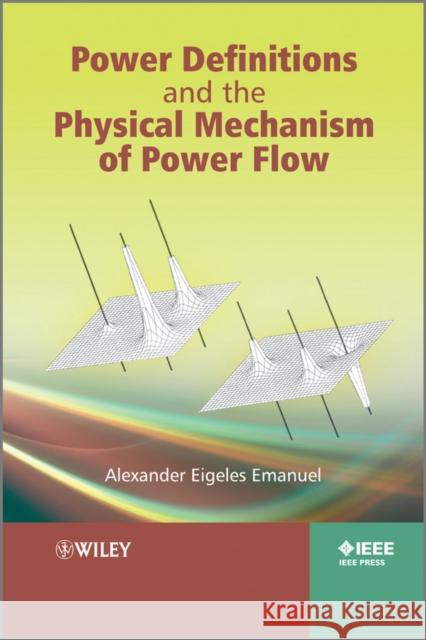
Power Definitions and the Physical Mechanism of Power Flow  9780470660744 JOHN WILEY AND SONS LTD - książkaWidoczna okładka, to zdjęcie poglądowe, a rzeczywista szata graficzna może różnić się od prezentowanej.

Power Definitions and the Physical Mechanism of Power Flow

ISBN-13: 9780470660744 / Angielski / Twarda / 2010 / 280 str.

¬Abar;¬Abar
cena 441,32
(netto: 420,30 VAT:  5%)

Najniższa cena z 30 dni: 436,80
Termin realizacji zamówienia:
ok. 30 dni roboczych
Bez gwarancji dostawy przed świętami

Darmowa dostawa!

Professor Emanuel uses clear presentation to compare and facilitate understanding of two seminal standards, The IEEE Std. 1459 and The DIN 40110-2:2002-11. Through critical analysis of the most important and recent theories and review of basic concepts, a highly accessible guide to the essence of the standards is presented.

Key features:

  • Explains the physical mechanism of energy flow under different conditions: single- and three-phase, sinusoidal and nonsinusoidal, balanced and unbalanced systems
  • Starts at an elementary level and becomes more complex, with six core chapters and six appendices to clarify the mathematical aspects
  • Discusses and recommends power definitions that played a significant historical role in paving the road for the two standards
  • Provides a number of original unsolved problems at the end of each chapter
  • Introduces a new nonactive power; the Randomness power.
Power Definitions and the Physical Mechanism of Power Flow is useful for electrical engineers and consultants involved in energy and power quality. It is also helpful to engineers dealing with energy flow quantification, design and manufacturing of metering instrumentation; consultants working with regulations related to renewable energy courses and the smart grid; and electric utility planning and operation engineers dealing with energy bill structure. The text is also relevant to university researchers, professors, and advanced students in power systems, power quality and energy related courses.

Kategorie:
Technologie
Kategorie BISAC:
Technology & Engineering > Quality Control
Technology & Engineering > Electrical
Wydawca:
JOHN WILEY AND SONS LTD
Seria wydawnicza:
Wiley-Iee
Język:
Angielski
ISBN-13:
9780470660744
Rok wydania:
2010
Ilość stron:
280
Waga:
0.63 kg
Wymiary:
24.89 x 17.27 x 2.03
Oprawa:
Twarda
Wolumenów:
01
Dodatkowe informacje:
Bibliografia
Wydanie ilustrowane


Foreword xi

Preface xiii

1 Electric Energy Flow: Physical Mechanisms 1

1.1 Problems 16

1.2 References 18

2 Single–Phase Systems With Sinusoidal Waveforms 21

2.1 The Resistance 21

2.2 The Inductance 25

2.3 The Capacitance 27

2.4 The R – L – C Loads 29

2.5 The Apparent Power 30

2.6 The Concept of Power Factor and Power Factor Correction 34

2.7 Comments on Power Factor 38

2.8 Other Means of Reactive Power Control and Compensation 41

2.9 Series Compensation 44

2.10 Reactive Power Caused by Mechanical Components that Store Energy 45

2.11 Physical Interpretation of Instantaneous Powers by Means of Poynting Vector 48

2.12 Problems 57

2.13 References 60

3 Single–Phase Systems with Nonsinusoidal Waveforms 63

3.1 The Linear Resistance 63

3.2 The Linear Inductance 68

3.3 The Linear Capacitance 71

3.4 The Linear Series R . L . C Circuit 71

3.5 The Nonlinear Resistance 74

3.6 The Nonlinear Inductance 80

3.7 Nonlinear Load: The General Case 83

3.8 Problems 90

3.9 References 92

4 Apparent Power Resolution for Nonsinusoidal Single–Phase Systems 93

4.1 Constantin I. Budeanu s Method 95

4.2 Stanislaw Fryze s Method 99

4.3 Manfred Depenbrock s Method 102

4.4 Leszek Czarnecki s Method 106

4.5 The Author s Method 110

4.6 Comparison Among the Methods 115

4.7 Power Factor Compensation 120

4.8 Comments on Skin Effect, Apparent Power, and Power Factor 128

4.9 The Additiveness Problem 131

4.10 Problems 135

4.11 References 137

5 Three–Phase Systems with Sinusoidal Waveforms 139

5.1 Background: The Balanced and Symmetrical System 140

5.2 The Three–Phase Unbalanced System 142

5.3 The Power Factor Dilemma 145

5.4 Powers and Symmetrical Components 149

5.4.1 How Symmetrical Components are Generated 149

5.4.2 Expressing the Powers by Means of Symmetrical Components 154

5.5 Effective Apparent Power Resolutions 158

5.5.1 FBD–Method 158

5.5.2 L. S. Czarnecki′s Method 165

5.5.3 IEEE Std. 1459 2010 Method 167

5.5.4 Comparison Between The Two Major Engineering Schools of Thought 169

5.6 Problems 182

5.7 References 184

6 Three–Phase Nonsinusoidal and Unbalanced Conditions 185

6.1 The Vector Apparent Power Approach 185

6.2 The IEEE Std. 1459–2010′s Approach 187

6.3 The DIN 40110 s Approach 192

6.3.1 The IEEE Std. 1459–2010 Approach 195

6.3.2 The DIN 40110 Approach 196

6.4 Observations and Suggestions 198

6.5 Problems 201

6.6 References 202

7 Power Definitions for Time–Varying Loads 205

7.1 Background: Basic Example 206

7.2 Single–Phase Sinusoidal Case 210

7.2.1 Analytical Expressions of Powers: Single–Phase Sinusoidal 213

7.3 Single–Phase Nonsinusoidal Case 214

7.4 Three–Phase Sinusoidal and Unbalanced Condition 216

7.5 Three–Phase Systems with Nonsinusoidal and Unbalanced Condition 220

7.6 Problems 225

7.7 References 227

8 Appendices 229

8.1 Appendix I: The Electrostatic Field Distribution in a Coaxial Cable 229

8.2 Appendix II: Poynting Vector due to Displacement Current 231

8.3 Appendix III: Electric Field Caused by a Time–Varying Magnetic Field 232

8.4 Appendix IV: The Electromagnetic Wave Along the Three–Phase Line 235

8.5 Appendix V: Equation (5.99) 242

8.6 Appendix VI: Maximum Active Power (Three–Phase, Four–Wire System) 243

8.7 Appendix VII: About the Ratio p = Rs/Rn 247

8.8 Appendix VIII: The Use of Varmeters in the Presence of Nonsinusoidal

and Asymmetrical Voltages and Currents 249

8.9 References 258

Index 259

Professor Alexander Eigeles Emanuel, Electrical and Computer Engineering, Worcester Polytechnic Institute, USA
Professor Emanuel has been working in the power field for around 45 years and he is currently Chairman of the Working Group that is responsible for the IEEE Std. 1459–2000. Founder of the International Conference on Harmonics and Power Quality, much of his groundbreaking work focuses on the effects of voltage and current waveform distortions on electrical systems.
After holding engineering posts in Israel and Romania, Professor Emanuel joined Worcester Polytechnic Institute in 1974. In 2008 he received the Chairman′s Exemplary Faculty Prize from the institute, awarded for outstanding teaching and research. Besides this, he has also won the Board of Trustee′s award, the 1998 R.H. Lee award from the IEEE Industry Applicationns Society, and many others including the Power Systems Instrumentation and Measurement Award. An IEEE Life Fellow, Professor Emanuel has been published in over 200 journal articals and recently contributed to Paulo Ribeiro′s book Time–Varying Waveform Distortions in Power Systems, published by Wiley in 2009.

Professor Emanuel uses clear presentation to compare and facilitate understanding of two seminal standards, The IEEE Std. 1459 and The DIN 40110–2:2002–11. Through critical analysis of the most important and recent theories and review of basic concepts, a highly accessible guide to the essence of the standards is presented.

Key features:

  • Explains the physical mechanism of energy flow under different conditions: single– and three–phase, sinusoidal and nonsinusoidal, balanced and unbalanced systems
  • Starts at an elementary level and becomes more complex, with six core chapters and six appendices to clarify the mathematical aspects
  • Discusses and recommends power definitions that played a significant historical role in paving the road for the two standards
  • Provides a number of original unsolved problems at the end of each chapter
  • Introduces a new nonactive power; the Randomness power.

Power Definitions and the Physical Mechanism of Power Flow is useful for electrical engineers and consultants involved in energy and power quality. It is also helpful to engineers dealing with energy flow quantification, design and manufacturing of metering instrumentation; consultants working with regulations related to renewable energy courses and the smart grid; and electric utility planning and operation engineers dealing with energy bill structure. The text is also relevant to university researchers, professors, and advanced students in power systems, power quality and energy related courses.


Udostępnij

Facebook - konto krainaksiazek.pl


Opinie o Krainaksiazek.pl na Opineo.pl

Partner Mybenefit

Krainaksiazek.pl w programie rzetelna firma Krainaksiaze.pl - płatności przez paypal

Czytaj nas na:

Facebook - krainaksiazek.pl
  • książki na zamówienie
  • granty
  • książka na prezent
  • kontakt
  • pomoc
  • opinie
  • regulamin
  • polityka prywatności

Zobacz:

  • Księgarnia czeska

  • Wydawnictwo Książkowe Klimaty

1997-2025 DolnySlask.com Agencja Internetowa

© 1997-2022 krainaksiazek.pl
     
KONTAKT | REGULAMIN | POLITYKA PRYWATNOŚCI | USTAWIENIA PRYWATNOŚCI
Zobacz: Księgarnia Czeska | Wydawnictwo Książkowe Klimaty | Mapa strony | Lista autorów
KrainaKsiazek.PL - Księgarnia Internetowa

Polityka prywatnosci - link
Krainaksiazek.pl - płatnośc Przelewy24
Przechowalnia Przechowalnia






