• Wyszukiwanie zaawansowane
  • Kategorie
  • Kategorie BISAC
  • Książki na zamówienie
  • Promocje
  • Granty
  • Książka na prezent
  • Opinie
  • Pomoc
  • Załóż konto
  • Zaloguj się

Post-trauma and the Recovery Governance of Cultural Heritage » książka


zaloguj się | załóż konto
Logo Krainaksiazek.pl

koszyk

konto

szukaj
topmenu
Księgarnia internetowa
Szukaj
Książki na zamówienie
Promocje
Granty
Książka na prezent
Moje konto
Pomoc
 
 
Wyszukiwanie zaawansowane
Pusty koszyk
Bezpłatna dostawa dla zamówień powyżej 20 złBezpłatna dostawa dla zamówień powyżej 20 zł

Kategorie główne

• Nauka
 [2949524]
• Literatura piękna
 [1817948]

  więcej...
• Turystyka
 [70715]
• Informatyka
 [151291]
• Komiksy
 [35671]
• Encyklopedie
 [23176]
• Dziecięca
 [612440]
• Hobby
 [136066]
• AudioBooki
 [1740]
• Literatura faktu
 [226030]
• Muzyka CD
 [378]
• Słowniki
 [2918]
• Inne
 [445441]
• Kalendarze
 [1181]
• Podręczniki
 [166545]
• Poradniki
 [469898]
• Religia
 [508035]
• Czasopisma
 [502]
• Sport
 [61392]
• Sztuka
 [242759]
• CD, DVD, Video
 [3348]
• Technologie
 [219537]
• Zdrowie
 [98738]
• Książkowe Klimaty
 [124]
• Zabawki
 [2382]
• Puzzle, gry
 [3543]
• Literatura w języku ukraińskim
 [259]
• Art. papiernicze i szkolne
 [7107]
Kategorie szczegółowe BISAC

Post-trauma and the Recovery Governance of Cultural Heritage

ISBN-13: 9789811960406 / Angielski / Twarda / 2022 / 281 str.
Toshiyuki Kono; Junko Okahashi
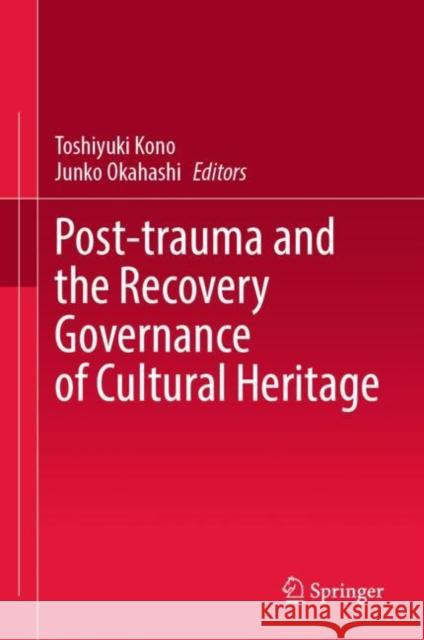
Post-trauma and the Recovery Governance of Cultural Heritage Toshiyuki Kono Junko Okahashi 9789811960406 Springer - książkaWidoczna okładka, to zdjęcie poglądowe, a rzeczywista szata graficzna może różnić się od prezentowanej.

Post-trauma and the Recovery Governance of Cultural Heritage

ISBN-13: 9789811960406 / Angielski / Twarda / 2022 / 281 str.

Toshiyuki Kono; Junko Okahashi
cena 563,56
(netto: 536,72 VAT:  5%)

Najniższa cena z 30 dni: 501,19
Termin realizacji zamówienia:
ok. 16-18 dni roboczych.

Darmowa dostawa!
inne wydania

This book successfully represents the indispensable interdisciplinarity of viewpoints by its authors combining legal perspectives with architectural and anthropological approaches. With the observation and analysis presented here, this book is the first to demonstrate research-based governance solutions for cultural heritage within the process of recovering from traumatic events. Its opening statement is that universal international standards are not effective enough for the specific situations of disaster-struck places.A major objective of this monograph is to allow its readers to go through a learning experience, from plural cases where reconstruction of cultural heritage became central to rebuilding a post-disaster society. This book introduces Japan as the most disaster-prone country, with a long history of confronting and overcoming the power of nature, resulting in its unique solutions for cultural heritage resilience and sustainability. But how do leadership and decision making become efficient in times of recovery? Bearing in mind what may be lacking in Japanese practices, this work also presents comparable governance models from other countries which indicate alternative solutions.While a traumatic event may occur within one night, the process of recovery could last for decades. Such disasters also tend to recur. In order that directly affected communities can sustain resilience throughout the long recovery period, and that equally severe social trauma will not be repeated, a continuous, well-maintained governance response is required, whether grounded in local knowledge or national policy frameworks. At the heart of this book is the matter of the reconstruction process involving networks of small and large communities. Each of those has a role that becomes operational through linkages of contacts, the interchange of knowledge and skills, and above all through the sharing of common goals.


This book successfully represents the indispensable interdisciplinarity of viewpoints by its authors combining legal perspectives with architectural and anthropological approaches. With the observation and analysis presented here, this book is the first to demonstrate research-based governance solutions for cultural heritage within the process of recovering from traumatic events. Its opening statement is that universal international standards are not effective enough for the specific situations of disaster-struck places.A major objective of this monograph is to allow its readers to go through a learning experience, from plural cases where reconstruction of cultural heritage became central to rebuilding a post-disaster society. This book introduces Japan as the most disaster-prone country, with a long history of confronting and overcoming the power of nature, resulting in its unique solutions for cultural heritage resilience and sustainability. But how do leadership and decision making become efficient in times of recovery? Bearing in mind what may be lacking in Japanese practices, this work also presents comparable governance models from other countries which indicate alternative solutions.While a traumatic event may occur within one night, the process of recovery could last for decades. Such disasters also tend to recur. In order that directly affected communities can sustain resilience throughout the long recovery period, and that equally severe social trauma will not be repeated, a continuous, well-maintained governance response is required, whether grounded in local knowledge or national policy frameworks. At the heart of this book is the matter of the reconstruction process involving networks of small and large communities. Each of those has a role that becomes operational through linkages of contacts, the interchange of knowledge and skills, and above all through the sharing of common goals.

Kategorie:
Nauka, Historia
Kategorie BISAC:
Social Science > Antropologia - Kultury
Political Science > Public Policy - Cultural Policy
Philosophy > Social
Wydawca:
Springer
Język:
Angielski
ISBN-13:
9789811960406
Rok wydania:
2022
Dostępne języki:
Ilość stron:
281
Waga:
0.58 kg
Wymiary:
23.39 x 15.6 x 1.75
Oprawa:
Twarda
Dodatkowe informacje:
Wydanie ilustrowane

Part 1. Limits of International Framework for the Post-Trauma Recovery of Cultural Heritage

Chapter 1. Introduction 

Chapter 2. Questioning the Adaptability of Global Governance in the Safeguarding of Cultural Heritage in Post-Trauma Situations 

Chapter 3. Governance Challenges in Nepal After the Kathmandu Earthquake, in Light of the World Heritage Convention 

 Part 2. Legal Governance Models for Cultural Heritage in Post-Trauma Situations

Chapter 4. Introduction 

Chapter 5. Japanese Approach and Practice for Cultural Heritage in Post-Disaster Situations 

Chapter 6. Cultural Heritage Protection Challenges seen from the Kumamoto Earthquake 

Chapter 7. Lessons from the Earthquakes in Christchurch and Legislative Responses 

Chapter 8. The Significance of Special Laws in Post-Disaster Restoration and Recovery of Cultural Heritage: The Case of the Special Law for the Conservation and Restoration of Notre-Dame de Paris

Part 3. Governance through the Building of Local Systems in Post-Trauma Situations

Chapter 9. Introduction 

Chapter 10. The ICOMOS-ICCROM Studies Project on Post-Disaster Recovery and Reconstruction Situations 

Chapter 11. Community and the Reconstruction Process after the Kumamoto Earthquake 

Chapter 12. Impacts to Society around Cultural Heritage in Post-Trauma Situations: Reactions of Different Stakeholders in the Reconstruction Process in the cases of Shuri-jô Castle and Wangduephodrang Dzong

Chapter 13. Social Aspects of the Cultural Heritage and the Process of Recovery-Notre-Dame de Paris Cathedral and Shuri-jô Castle 


Toshiyuki Kono, distinguished professor of Kyushu University, Japan. Toshiyuki Kono was born in Osaka, Japan, in 1958. After graduating from the Faculty of Law, Kyoto University, he went on to obtain his LL.M. from the Graduate School of Law, Kyoto University. He is a specialist in private international law, international civil procedure law, and international cultural heritage law. He was a member of UNESCO’s Expert Groups for the drafting of the Convention for the Safeguarding of the Intangible Cultural Heritage (2003) and the Convention on the Protection and Promotion of the Diversity of Cultural Expressions (2005). He was appointed as a member of the Executive Committee of the International Council on Monuments and Sites (ICOMOS) in 2011. After working as vice president, he was elected as the 8th president of ICOMOS in 2017. As the former president, he continues as an honorary president of ICOMOS. He is the series editor of Springer’s book series Perspectives in Law, Business and Innovation.


Junko Okahashi is currently an associate professor in international cultural cooperation at the University of the Sacred Heart, Tokyo, Japan. She holds a Ph.D. in Arts and Sciences (Area Studies) from the University of Tokyo. As a staff member and programme specialist of UNESCO from 2002 to 2011, she assisted states parties to the Convention concerning the Protection of the World Cultural and Natural Heritage. She continued to advocate for the implementation of their cultural heritage policies, in particular through formulating World Heritage site management plans in Asia and activating the process of World Heritage periodic reporting in Africa. Her research quest in cultural heritage policies and the theory/philosophy of conservation is sought through a combination of document-based work and fieldwork. She investigates the correlation and compatibility between multilateral governance of international norms related to cultural heritage (World Heritage, import and export of cultural properties, intangible cultural heritage, cultural diversity, historic urban landscapes) and case-specific on-site conditions, in an attempt to harmonize local needs and international orientations.

This book successfully represents the indispensable interdisciplinarity of viewpoints by its authors combining legal perspectives with architectural and anthropological approaches. With the observation and analysis presented here, this book is the first to demonstrate research-based governance solutions for cultural heritage within the process of recovering from traumatic events. Its opening statement is that universal international standards are not effective enough for the specific situations of disaster-struck places.

A major objective of this monograph is to allow its readers to go through a learning experience, from plural cases where reconstruction of cultural heritage became central to rebuilding a post-disaster society. This book introduces Japan as the most disaster-prone country, with a long history of confronting and overcoming the power of nature, resulting in its unique solutions for cultural heritage resilience and sustainability. But how do leadership and decision making become efficient in times of recovery? Bearing in mind what may be lacking in Japanese practices, this work also presents comparable governance models from other countries which indicate alternative solutions.

While a traumatic event may occur within one night, the process of recovery could last for decades. Such disasters also tend to recur. In order that directly affected communities can sustain resilience throughout the long recovery period, and that equally severe social trauma will not be repeated, a continuous, well-maintained governance response is required, whether grounded in local knowledge or national policy frameworks. At the heart of this book is the matter of the reconstruction process involving networks of small and large communities. Each of those has a role that becomes operational through linkages of contacts, the interchange of knowledge and skills, and above all through the sharing of common goals.




Udostępnij

Facebook - konto krainaksiazek.pl


Opinie o Krainaksiazek.pl na Opineo.pl

Partner Mybenefit

Krainaksiazek.pl w programie rzetelna firma Krainaksiaze.pl - płatności przez paypal

Czytaj nas na:

Facebook - krainaksiazek.pl
  • książki na zamówienie
  • granty
  • książka na prezent
  • kontakt
  • pomoc
  • opinie
  • regulamin
  • polityka prywatności

Zobacz:

  • Księgarnia czeska

  • Wydawnictwo Książkowe Klimaty

1997-2026 DolnySlask.com Agencja Internetowa

© 1997-2022 krainaksiazek.pl
     
KONTAKT | REGULAMIN | POLITYKA PRYWATNOŚCI | USTAWIENIA PRYWATNOŚCI
Zobacz: Księgarnia Czeska | Wydawnictwo Książkowe Klimaty | Mapa strony | Lista autorów
KrainaKsiazek.PL - Księgarnia Internetowa

Polityka prywatnosci - link
Krainaksiazek.pl - płatnośc Przelewy24
Przechowalnia Przechowalnia




