Post-Imperial Cames » książka





Post-Imperial Cames
ISBN-13: 9781933227061 / Angielski / Miękka / 2002 / 256 str.
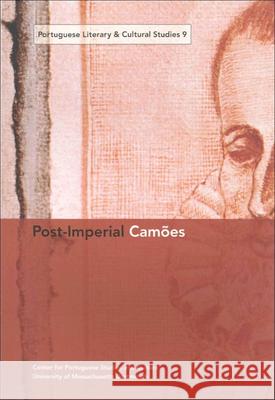
It has been more difficult to steal Camoes from this critic Faria e Sousa] than to steal him from the Portuguese. The former is not necessarily a goal in itself (though, again fortunately, it is not up to me to read the minds of all Camoes scholars). The latter is most desirable. Hence the importance of a colloquium on post-imperial Camoes, in English and in America. It is fitting to recall that, ironically, Faria e Sousa's commentaries were written in Spanish and published in Spain, when Portugal was under Spanish rule. It is not a question of now showing Portugal (or its surrogate, the Portuguese language at its most sublime) to the world, as politicians would say, no matter the ideology they profess, but of allowing Camoes to be stolen from the Portuguese. In the title, "post-imperial" is to be read broadly, in the sense that the persons who contributed papers to the colloquium engage in a reflection about the role of Camoes's poetry after the demise of the empire, that they do not care about the burden of the empire in Camoes scholarship, or simply that the poet belongs to whoever wants to make him his or her own property. This issue of Portuguese Literary & Cultural Studies gathers a selection of those papers, read and discussed at the University of Massachusetts Dartmouth on October 11-12, 2002.




Czytaj nas na:
KrainaKsiazek.PL - Księgarnia Internetowa


