• Wyszukiwanie zaawansowane
  • Kategorie
  • Kategorie BISAC
  • Książki na zamówienie
  • Promocje
  • Granty
  • Książka na prezent
  • Opinie
  • Pomoc
  • Załóż konto
  • Zaloguj się

Post-Disaster Reconstruction of the Built Environment: Rebuilding for Resilience » książka


zaloguj się | załóż konto
Logo Krainaksiazek.pl

koszyk

konto

szukaj
topmenu
Księgarnia internetowa
Szukaj
Książki na zamówienie
Promocje
Granty
Książka na prezent
Moje konto
Pomoc
 
 
Wyszukiwanie zaawansowane
Pusty koszyk
Bezpłatna dostawa dla zamówień powyżej 20 złBezpłatna dostawa dla zamówień powyżej 20 zł

Kategorie główne

• Nauka
 [2946912]
• Literatura piękna
 [1852311]

  więcej...
• Turystyka
 [71421]
• Informatyka
 [150889]
• Komiksy
 [35717]
• Encyklopedie
 [23177]
• Dziecięca
 [617324]
• Hobby
 [138808]
• AudioBooki
 [1671]
• Literatura faktu
 [228371]
• Muzyka CD
 [400]
• Słowniki
 [2841]
• Inne
 [445428]
• Kalendarze
 [1545]
• Podręczniki
 [166819]
• Poradniki
 [480180]
• Religia
 [510412]
• Czasopisma
 [525]
• Sport
 [61271]
• Sztuka
 [242929]
• CD, DVD, Video
 [3371]
• Technologie
 [219258]
• Zdrowie
 [100961]
• Książkowe Klimaty
 [124]
• Zabawki
 [2341]
• Puzzle, gry
 [3766]
• Literatura w języku ukraińskim
 [255]
• Art. papiernicze i szkolne
 [7810]
Kategorie szczegółowe BISAC

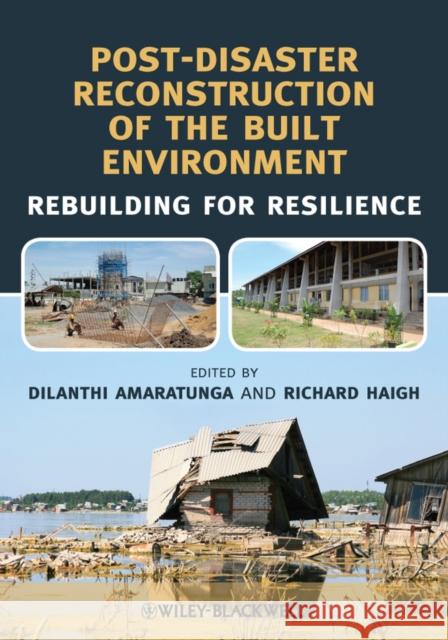
Post-Disaster Reconstruction of the Built Environment: Rebuilding for Resilience

ISBN-13: 9781444333565 / Angielski / Twarda / 2011 / 336 str.
Dilanthi Amaratunga;¬Abar;¬Abar
Post-Disaster Reconstruction of the Built Environment: Rebuilding for Resilience Amaratunga, Dilanthi 9781444333565  - książkaWidoczna okładka, to zdjęcie poglądowe, a rzeczywista szata graficzna może różnić się od prezentowanej.

Post-Disaster Reconstruction of the Built Environment: Rebuilding for Resilience

ISBN-13: 9781444333565 / Angielski / Twarda / 2011 / 336 str.

Dilanthi Amaratunga;¬Abar;¬Abar
cena 510,05
(netto: 485,76 VAT:  5%)

Najniższa cena z 30 dni: 507,95
Termin realizacji zamówienia:
ok. 30 dni roboczych
Bez gwarancji dostawy przed świętami

Darmowa dostawa!

Disasters threaten all parts of the world and they appear to be increasing in frequency, scale and intensity. Despite huge improvements in the emergency response, permanent reconstruction is often uncoordinated, inefficiently managed and slow to begin. International agencies are geared to an efficient response in terms of humanitarian relief, but they are not well versed in the requirements of long-term reconstruction, which is often constrained by lack of planning and poorly coordinated management. The construction industry is typically engaged in a range of critical activities after a disaster, including provision of temporary shelter in the immediate aftermath and restoration of permanent shelter and public infrastructure once the immediate humanitarian needs have been attended to. Post-Disaster Reconstruction of the Built Environment identifies the challenges that face the industry and highlights best practice to enable the construction industry to address those problems which make an effective response to these unexpected events difficult. Written by an international team of experts, this book will help researchers and advanced students of construction understand the problems faced by communities and the construction industry when faced with a natural or man-made disaster, and identify the planning and management processes required by the industry to mount an effective response.


Kategorie:
Technologie
Kategorie BISAC:
Technology & Engineering > Construction - General
Język:
Angielski
ISBN-13:
9781444333565
Rok wydania:
2011
Ilość stron:
336
Waga:
0.90 kg
Wymiary:
24.64 x 17.53 x 2.29
Oprawa:
Twarda
Wolumenów:
01
Dodatkowe informacje:
Bibliografia
Wydanie ilustrowane

"Written by an international team of experts, this book will help researchers and advanced students of construction understand the problems faced by communities and the construction industry when faced with a natural or man–made disaster, and identify the planning and management processes required by the industry to mount an effective response." (MCEER Information Service, 2011)


About the Editors.

List of Contributors.

Foreword.

Acknowledgements.

1 Introduction (Richard Haigh and Dilanthi Amaratunga).

1.1 A global challenge.

1.2 Why focus upon the built environment?

1.3 Resilience in the built environment.

1.4 Disasters as a window of opportunity.

1.5 Structure of the book.

2 Capacity Development for Post–Disaster Reconstruction of the Built Environment (Kanchana Ginige and Dilanthi Amaratunga).

2.1 Introduction.

2.2 Capacity needs for post–disaster reconstruction.

2.3 Capacity gaps in post–disaster reconstruction.

2.4 Capacity development framework.

2.5 Summary.

3 Capacity of the Construction Industry for Post–Disaster Reconstruction: Post–Tsunami Sri Lanka (Krisanthi Seneviratne).

3.1 Introduction.

3.2 Impact of tsunami.

3.3 Disaster risk management.

3.4 Role of the construction sector in post–disaster recovery.

3.5 Post–tsunami Sri Lanka: the role of the Sri Lankan construction industry.

3.6 Capacity of the construction industry in post–tsunami reconstruction.

3.7 Summary.

4 Resourcing for Post–Disaster Reconstruction: A Longitudinal Case Study Following the 2008 Earthquake in China (Yan Chang, SuzanneWilkinson, Regan Potangaroa and Erica Seville).

4.1 Introduction.

4.2 The impact of the 2008Wenchuan earthquake.

4.3 Wenchuan earthquake reconstruction process.

4.4 Resourcing forWenchuan earthquake reconstruction.

4.5 Key resourcing problems and solutions adopted by the Chinese reconstruction teams.

4.6 Summary.

5 Empowerment in Disaster Response and Reconstruction: Role ofWomen (Nirooja Thurairajah).

5.1 Introduction.

5.2 The concept of empowerment.

5.3 Women′s empowerment.

5.4 Women in a post–disaster setting.

5.5 Women′s empowerment in post–disaster reconstruction.

5.6 Summary.

6 Community–Based Post–Disaster Housing Reconstruction: Examples from Indonesia (Taufika Ophiyandri).

6.1 Introduction.

6.2 Disaster vulnerability.

6.3 National policy.

6.4 Community participation in reconstruction.

6.5 Community–based reconstruction practices.

6.6 Summary.

7 Stakeholder Consultation in the Reconstruction Process (Nuwani Siriwardena and Richard Haigh).

7.1 Introduction.

7.2 Defining stakeholders.

7.3 Stakeholders and post–disaster reconstruction.

7.4 Classifying stakeholders.

7.5 Expectation gaps in post–disaster housing reconstruction.

7.6 Developing a stakeholder engagement strategy.

7.7 Summary.

8 ProjectManagement of Disaster Reconstruction (Udayangani Kulatunga).

8.1 Introduction.

8.2 Procurement and contract management.

8.3 Sourcing of labour, material and equipment.

8.4 Resource management.

8.5 Quality control.

8.6 Financing.

8.7 Governance.

8.8 Disaster risk reduction.

8.9 Summary.

9 Legislation for Effective Post–Disaster Reconstruction: Cases fromNew Zealand (James Olabode Rotimi, SuzanneWilkinson and Dean Myburgh).

9.1 Introduction.

9.2 Recovery and reconstruction.

9.3 Legislative and regulatory considerations post disaster.

9.4 Improving recovery through legislation.

9.5 Impediments to post–disaster reconstruction: the New Zealand Building Act (BA) 2004.

9.6 New Zealand Case Study 1: Manawatu–Wanganui Floods, 2004.

9.7 New Zealand Case Study 2: Matata (Bay of Plenty) Floods, 2005.

9.8 Lessons for post–disaster legislation changes.

9.9 Summary.

10 Conflict, Post Conflict and Post–Conflict Reconstruction: Exploring the Associated Challenges (Krisanthi Seneviratne and Dilanthi Amaratunga).

10.1 Introduction.

10.2 Conflicts.

10.3 Conflict circle.

10.4 Post conflict.

10.5 Post–conflict reconstruction.

10.6 Summary.

11 Private Construction Sector Engagement in Post–Disaster Reconstruction (Richard Sutton and Richard Haigh).

11.1 Introduction.

11.2 Challenges in post–disaster reconstruction.

11.3 What is the role of the private sector?

11.4 Business and humanitarian collaborations.

11.5 Corporate social responsibility.

11.6 Encouraging private sector participation.

11.7 Integrating private construction sector support for post–disaster reconstruction.

11.8 Summary.

12 KnowledgeManagement Practices and Systems Integration (Chaminda Pathirage).

12.1 Introduction.

12.2 Disaster management cycle.

12.3 Knowledge management in disaster management context.

12.4 Sharing and transferring disaster management knowledge.

12.5 Case studies of good practices and lessons learned.

12.6 Capacity enhancing and knowledge strategies: the ISLAND project.

12.7 Summary.

13 Restoration ofMajor Infrastructure and Rehabilitation of Communities (Kaushal Keraminiyage).

13.1 Introduction.

13.2 Impact of disasters on infrastructure.

13.3 Impact of the failure of infrastructure in disaster–affected communities and infrastructure interdependencies.

13.4 Post–disaster infrastructure reconstruction and restoring major infrastructure.

13.5 Post–disaster infrastructure reconstruction for improved quality of life.

13.6 Summary.

14 Sustainable Post–DisasterWasteManagement: Construction and Demolition Debris (Gayani Karunasena).

14.1 Introduction.

14.2 Construction and demolition debris management in post–disaster situations.

14.3 C&D debris management.

14.4 C&D debris management and sustainability.

14.5 Summary.

15 Linking Reconstruction to Sustainable Socio–Economic Development (Roshani Palliyaguru and Dilanthi Amaratunga).

15.1 Introduction.

15.2 Post–disaster reconstruction as a window of opportunity for development.

15.3 Millennium development goals as a framework of action for sustainable socio–economic development and infrastructure reconstruction.

15.4 Post–disaster infrastructure reconstruction as a sustainable socio–economic development strategy.

15.5 Summary.

16 Disaster Risk Reduction and its Relationship with Sustainable Development (Kanchana Ginige).

16.1 Introduction.

16.2 Disasters: a result of poor development.

16.3 Disasters: a barrier for development.

16.4 Disaster risk reduction for sustainable development and vice versa.

16.5 Summary.

17 Conclusion (Richard Haigh and Dilanthi Amaratunga).

Reference.

Index.

Dilanthi Amaratunga is the Professor of Disaster Management at the University of Salford, UK where she leads the University′s Centre for Disaster Resilience.

Richard Haigh is a Senior Lecturer at the Centre for Disaster Resilience, the School of the Built Environment, University of Salford, UK.

Disasters threaten all parts of the world and they appear to be increasing in frequency, scale and intensity. Despite huge improvements in the emergency response, permanent reconstruction is often uncoordinated, inefficiently managed and slow to begin. International agencies are geared to an efficient response in terms of humanitarian relief, but they are not well versed in the requirements of long]term reconstruction, which is often constrained by lack of planning and poorly coordinated management.

The construction industry is typically engaged in a range of critical activities after a disaster, including provision of temporary shelter in the immediate aftermath and restoration of permanent shelter and public infrastructure once the immediate humanitarian needs have been attended to. Post–Disaster Reconstruction of the Built Environment identifies the challenges that face the industry and highlights best practice to enable the construction industry to address those problems which make an effective response to these unexpected events difficult. Written by an international team of experts, this book will help researchers and advanced students of construction understand the problems faced by communities and the construction industry when faced with a natural or man–made disaster, and identify the planning and management processes required by the industry to mount an effective response.




Udostępnij

Facebook - konto krainaksiazek.pl


Opinie o Krainaksiazek.pl na Opineo.pl

Partner Mybenefit

Krainaksiazek.pl w programie rzetelna firma Krainaksiaze.pl - płatności przez paypal

Czytaj nas na:

Facebook - krainaksiazek.pl
  • książki na zamówienie
  • granty
  • książka na prezent
  • kontakt
  • pomoc
  • opinie
  • regulamin
  • polityka prywatności

Zobacz:

  • Księgarnia czeska

  • Wydawnictwo Książkowe Klimaty

1997-2025 DolnySlask.com Agencja Internetowa

© 1997-2022 krainaksiazek.pl
     
KONTAKT | REGULAMIN | POLITYKA PRYWATNOŚCI | USTAWIENIA PRYWATNOŚCI
Zobacz: Księgarnia Czeska | Wydawnictwo Książkowe Klimaty | Mapa strony | Lista autorów
KrainaKsiazek.PL - Księgarnia Internetowa

Polityka prywatnosci - link
Krainaksiazek.pl - płatnośc Przelewy24
Przechowalnia Przechowalnia



