• Wyszukiwanie zaawansowane
  • Kategorie
  • Kategorie BISAC
  • Książki na zamówienie
  • Promocje
  • Granty
  • Książka na prezent
  • Opinie
  • Pomoc
  • Załóż konto
  • Zaloguj się

Positive Neuropsychology » książka


zaloguj się | załóż konto
Logo Krainaksiazek.pl

koszyk

konto

szukaj
topmenu
Księgarnia internetowa
Szukaj
Książki na zamówienie
Promocje
Granty
Książka na prezent
Moje konto
Pomoc
 
 
Wyszukiwanie zaawansowane
Pusty koszyk
Bezpłatna dostawa dla zamówień powyżej 20 złBezpłatna dostawa dla zamówień powyżej 20 zł

Kategorie główne

• Nauka
 [2952079]
• Literatura piękna
 [1850969]

  więcej...
• Turystyka
 [71058]
• Informatyka
 [151066]
• Komiksy
 [35579]
• Encyklopedie
 [23181]
• Dziecięca
 [620496]
• Hobby
 [139036]
• AudioBooki
 [1646]
• Literatura faktu
 [228729]
• Muzyka CD
 [379]
• Słowniki
 [2932]
• Inne
 [445708]
• Kalendarze
 [1409]
• Podręczniki
 [164793]
• Poradniki
 [480107]
• Religia
 [510956]
• Czasopisma
 [511]
• Sport
 [61267]
• Sztuka
 [243299]
• CD, DVD, Video
 [3411]
• Technologie
 [219640]
• Zdrowie
 [100984]
• Książkowe Klimaty
 [124]
• Zabawki
 [2281]
• Puzzle, gry
 [3363]
• Literatura w języku ukraińskim
 [258]
• Art. papiernicze i szkolne
 [8020]
Kategorie szczegółowe BISAC

Positive Neuropsychology

ISBN-13: 9783031113918 / Angielski / Miękka / 2023
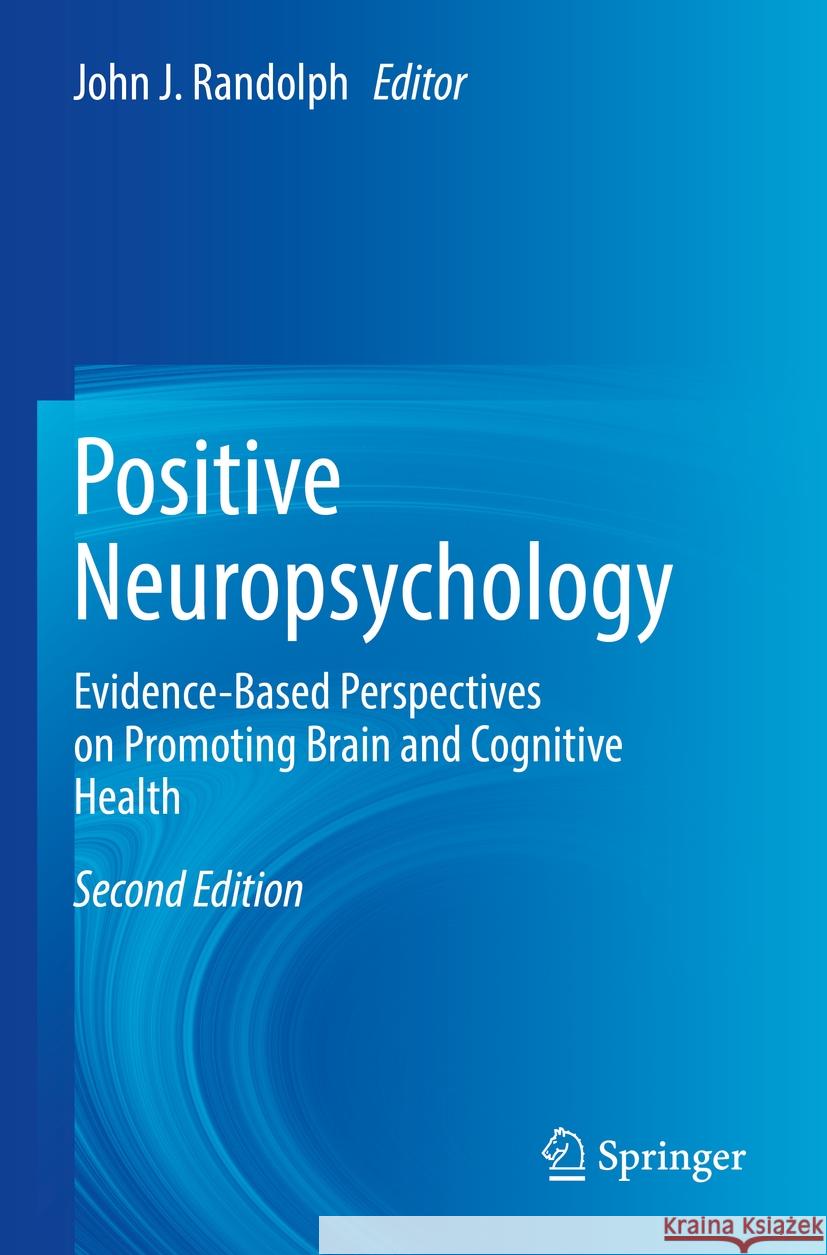
Positive Neuropsychology  9783031113918 Springer International Publishing - książkaWidoczna okładka, to zdjęcie poglądowe, a rzeczywista szata graficzna może różnić się od prezentowanej.

Positive Neuropsychology

ISBN-13: 9783031113918 / Angielski / Miękka / 2023

cena 342,14
(netto: 325,85 VAT:  5%)

Najniższa cena z 30 dni: 308,41
Termin realizacji zamówienia:
ok. 22 dni roboczych
Dostawa w 2026 r.

Darmowa dostawa!
inne wydania

Positive psychology--the study and promotion of character strengths, positive emotion, and optimism--has gained considerable momentum and support in recent years. Yet despite its application to various specialty areas within the broader field of psychology, neuropsychology has been slow to adopt and adapt its ideas. The contributors to Positive Neuropsychology assert that neuropsychology as a discipline should concern itself with promoting cognitive health as well as addressing pathology. In these pages, positive neuropsychology is conceived of as broadening and enhancing the field, focusing on key areas such as studying and developing cognitive strengths, considering the importance of lifestyle factors on cognition, preventing cognitive dysfunction, compensating for deficits, and promoting cognitive health through education and technology. Chapters reveal not only the benefits of understanding cognitive health and optimal outcomes across the lifespan, but also emerging avenues for practitioners to expand their work into non-traditional settings. Among the topics featured: 

  • Modifiable lifestyle factors that impact cognition through midlife.
  • Effects of coping strategies on outcomes in neurological disorders.
  • Promoting cognitive health through effective sports concussion management.
  • Use of innovative assessment and compensatory strategies to promote the executive functions.
  • Promoting psychosocial and cognitive wellness in the workplace.
  • Lifestyle factors and successful cognitive aging in older adults.
  • Gerontechnology applications focused on promoting cognitive and general health.
Bringing new dimensions to the neuroscience, wellness, and positive psychology literatures, Positive Neuropsychology will interest a wide range of academics and clinicians, including neuropsychologists, geriatricians, health psychologists, cognitive neuroscientists, and other mental health and public health professionals.

Kategorie:
Nauka, Psychologia
Kategorie BISAC:
Psychology > Neuropsychology
Psychology > Psychotherapy - General
Medical > Psychiatria
Wydawca:
Springer International Publishing
Język:
Angielski
ISBN-13:
9783031113918
Rok wydania:
2023
Waga:
0.58 kg
Wymiary:
23.5 x 15.5
Oprawa:
Miękka
Dodatkowe informacje:
Wydanie ilustrowane

1)      What is Positive Neuropsychology? Author: John J. Randolph, Ph.D.


·         Update of chapter from 1st edition; topics to include a general introduction to Positive Neuropsychology, its roots in Positive Psychology, and emerging literature trends suggesting that neuropsychology has begun to embrace brain health principles; updated neuropsychological journal review indicating increased focus on cognitive health in neuropsychological research since 1st edition; and inclusion of the C.A.P.E. Model of Brain Health as a conceptualization of four key brain health strategies; references to be updated since 2013.


2)      Coping in neurological disorders.  Authors: Amanda Rabinowitz, Ph.D., and Peter Arnett, Ph.D.


·         Update of chapter from 1st edition; topics to include a review and synthesis of research examining coping strategies and cognition in multiple sclerosis (MS) and traumatic brain injury (TBI); quality of life and social support in neurological populations; recent compensatory strategy research in MS and TBI; and cognitive benefits of treating secondary factors in neurological illness; references to be updated since 2013.


3)      Modifiable lifestyle factors and cognition through midlife.  Authors: John J. Randolph, Ph.D., and Jennifer S. Randolph, M.Sc.


·         Update of chapter from 1st edition; topics to include a review of the impact of aerobic exercise, intellectual stimulation, and nutritional factors on cognition from childhood through middle age; and negative effects of smoking and iron depletion on cognition; references to be updated since 2013.


4)      Lifestyle factors and successful cognitive aging in older adults.  Authors: Maureen O’Connor, Ph.D., Malissa Kraft, Psy.D., and John J. Randolph, Ph.D.


·         Update of chapter from 1st edition; topics to include effects of exercise on cognitive aging; aging and sleep; diet and brain health; cognitive reserve and cognitive aging; stereotypes/aging beliefs and cognitive aging; and interventions to improve cognition in older adults; references to be updated since 2013.


5)      Assessment of lifestyle factors associated with brain health.  Authors: Lauren Strober, Ph.D., and John J. Randolph, Ph.D.


·         NEW CHAPTER for this edition; topics to include a discussion of strategies and measures to assess physical activity, social activity, mental/intellectual activity, diet, and other lifestyle factors, and how these assessments relate to brain health and subjective functioning in daily life.


6)      Promoting the executive functions: Core foundations, assessment considerations, and practical applications.  Authors: John J. Randolph, Ph.D., and Naomi Chaytor, Ph.D.


·         Update of chapter from 1st edition; topics to include executive functioning models and frameworks; assessment considerations; ecological validity of executive functioning assessment; digital assessment of executive functions in the context of medical illness; and promotion of executive functioning; references to be updated since 2013.


7)      Promotion of cognitive health through prevention: The case of sports concussion.  Author: Ruben Echemendia, Ph.D.


·         Update of chapter from 1st edition; topics to include definition and pathophysiology of concussion; assessment and cumulative effects of concussion; concussion prevention and management strategies; and legislation related to concussion; references to be updated since 2013.


8)      Promoting psychosocial and cognitive wellness in the workplace: the emerging neuroscience of leadership development.  Author: John J. Randolph, Ph.D.


·         Update of chapter from 1st edition; topics to include workplace stress and the brain; neuroscience of social interaction and emotional intelligence; neuroscience of organization and decision making; managerial roles and reduced risk of dementia; and the role of executive coaching; references to be updated since 2013.


9)      Technologies for health assessment, promotion, and assistance: Focus on gerontology.  Authors: Maureen Schmitter-Edgecombe, Ph.D. and co-author TBD


·         Update of chapter from 1st edition; topics to include wearable and environmental monitoring technologies for promoting brain health and managing cognitive deficits; prompting technologies for health promotion and assistance; applications of smart environments to clinical practice; and challenges of adopting new technologies; references to be updated since 2013.


10)   Positive effort, motivation, and engagement.  Authors: Ben Hill, Ph.D., and Stephen Aita, Ph.D.


·         NEW CHAPTER for this edition; topics to include constructs associated with positive aspects of effort/motivation including grit, need for cognition, conation, resiliency, core personality factors, and neurobiological factors.


11)   Positive cognitive outcomes.  Authors: John J. Randolph, Ph.D. and Heather Wishart, Ph.D.


·         NEW CHAPTER for this edition; topics to include a discussion of research examining multiple sclerosis patients, stroke patients, and older adults who have experienced positive cognitive and general outcomes; the factors associated with these outcomes; and discussion of possible future models for the study of positive outcomes in neuropsychology.


12)   The importance of neuropsychological feedback in promoting brain health.  Author: Karen Postal, Ph.D.

·         NEW CHAPTER for this edition; topics to include content areas to review during feedback sessions; effective strategies to communicate neuropsychological evaluation results; opportunities to promote healthy lifestyle behaviors during the feedback session; and coaching techniques to prompt initial behavior changes post-evaluation.


13)   Future directions and remaining questions.  Author: John J. Randolph, Ph.D.


·         Update of chapter from 1st edition; topics to include summary of topics covered throughout the volume, additional clinical considerations related to promoting cognitive health, remaining questions related to brain health promotion, and concluding comments; references to be updated since 2013.


Dr. John J. Randolph is a board-certified clinical neuropsychologist in independent practice and Adjunct Assistant Professor of Psychiatry at the Geisel School of Medicine at Dartmouth.  Dr. Randolph earned his Ph.D. in clinical psychology (neuropsychology specialization) from Washington State University and completed clinical and research fellowships in neuropsychology and neuroimaging at the Geisel School of Medicine at Dartmouth.  He is a Past President of the New Hampshire Psychological Association and a National Academy of Neuropsychology Fellow.  His research has focused on contributors to cognitive health and resilience, metacognition, executive functioning, and cognitive and neuroimaging aspects of multiple sclerosis.  He received the Margaret M. Riggs Award for Distinguished Contribution to Psychology in the State of New Hampshire and was awarded the Karl F. Heiser American Psychological Association Presidential Award for Advocacy on Behalf of Professional Psychology.  In addition to editing the first edition of Positive Neuropsychology, he is author of the recently released general audience book, The Brain Health Book: Using the Power of Neuroscience to Improve Your Life. 

Positive psychology—the study and promotion of character strengths, positive emotion, optimism, and resilience—has gained considerable momentum and support over the last 20 years. More recently, neuropsychology has begun to embrace related perspectives. In the first edition of Positive Neuropsychology, an extensive collection of perspectives from national leaders in neuropsychology clarified the importance of promoting cognitive health through various means. The present edition expands on the first edition, with four new chapters and updates of all previous chapters. Topics  include the importance of physical, social, and intellectual engagement across the lifespan; nutrition and brain health; novel technologies used to maintain brain health and functional independence; compensating for and preventing cognitive limitations; and strategies to promote brain health in clinical and other settings. Chapters reveal not only the benefits of understanding cognitive health and optimal outcomes across the lifespan, but also emerging avenues for practitioners to expand their work into non-traditional settings. Bringing new dimensions to the neuroscience, wellness, and positive psychology literatures, Positive Neuropsychology will interest a wide range of academics and clinicians, including neuropsychologists, clinical and health psychologists, geriatricians, primary care physicians, cognitive neuroscientists, and other healthcare professionals.


Udostępnij

Facebook - konto krainaksiazek.pl


Opinie o Krainaksiazek.pl na Opineo.pl

Partner Mybenefit

Krainaksiazek.pl w programie rzetelna firma Krainaksiaze.pl - płatności przez paypal

Czytaj nas na:

Facebook - krainaksiazek.pl
  • książki na zamówienie
  • granty
  • książka na prezent
  • kontakt
  • pomoc
  • opinie
  • regulamin
  • polityka prywatności

Zobacz:

  • Księgarnia czeska

  • Wydawnictwo Książkowe Klimaty

1997-2025 DolnySlask.com Agencja Internetowa

© 1997-2022 krainaksiazek.pl
     
KONTAKT | REGULAMIN | POLITYKA PRYWATNOŚCI | USTAWIENIA PRYWATNOŚCI
Zobacz: Księgarnia Czeska | Wydawnictwo Książkowe Klimaty | Mapa strony | Lista autorów
KrainaKsiazek.PL - Księgarnia Internetowa

Polityka prywatnosci - link
Krainaksiazek.pl - płatnośc Przelewy24
Przechowalnia Przechowalnia







