• Wyszukiwanie zaawansowane
  • Kategorie
  • Kategorie BISAC
  • Książki na zamówienie
  • Promocje
  • Granty
  • Książka na prezent
  • Opinie
  • Pomoc
  • Załóż konto
  • Zaloguj się

Portuguese Colonial Military in India: Apparition of Control, 1750--1850 » książka


zaloguj się | załóż konto
Logo Krainaksiazek.pl

koszyk

konto

szukaj
topmenu
Księgarnia internetowa
Szukaj
Książki na zamówienie
Promocje
Granty
Książka na prezent
Moje konto
Pomoc
 
 
Wyszukiwanie zaawansowane
Pusty koszyk
Bezpłatna dostawa dla zamówień powyżej 20 złBezpłatna dostawa dla zamówień powyżej 20 zł

Kategorie główne

• Nauka
 [2950560]
• Literatura piękna
 [1849509]

  więcej...
• Turystyka
 [71097]
• Informatyka
 [151150]
• Komiksy
 [35848]
• Encyklopedie
 [23178]
• Dziecięca
 [617388]
• Hobby
 [139064]
• AudioBooki
 [1657]
• Literatura faktu
 [228597]
• Muzyka CD
 [383]
• Słowniki
 [2855]
• Inne
 [445295]
• Kalendarze
 [1464]
• Podręczniki
 [167547]
• Poradniki
 [480102]
• Religia
 [510749]
• Czasopisma
 [516]
• Sport
 [61293]
• Sztuka
 [243352]
• CD, DVD, Video
 [3414]
• Technologie
 [219456]
• Zdrowie
 [101002]
• Książkowe Klimaty
 [124]
• Zabawki
 [2311]
• Puzzle, gry
 [3459]
• Literatura w języku ukraińskim
 [254]
• Art. papiernicze i szkolne
 [8079]
Kategorie szczegółowe BISAC

Portuguese Colonial Military in India: Apparition of Control, 1750--1850

ISBN-13: 9789811962936 / Angielski / Twarda / 2022 / 200 str.
Teddy Y. H. Sim
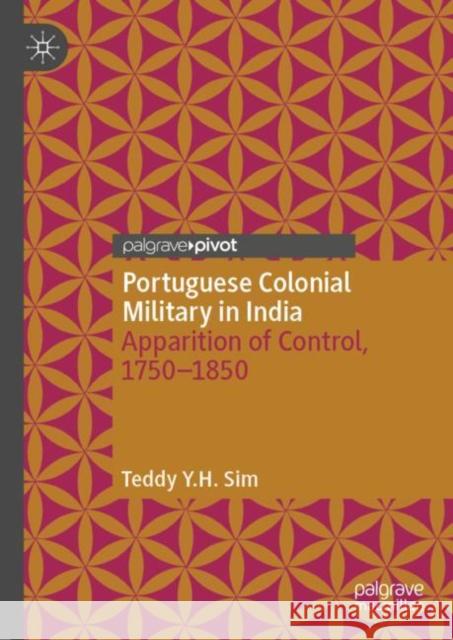
Portuguese Colonial Military in India: Apparition of Control, 1750--1850 Teddy Y 9789811962936 Palgrave MacMillan - książkaWidoczna okładka, to zdjęcie poglądowe, a rzeczywista szata graficzna może różnić się od prezentowanej.

Portuguese Colonial Military in India: Apparition of Control, 1750--1850

ISBN-13: 9789811962936 / Angielski / Twarda / 2022 / 200 str.

Teddy Y. H. Sim
cena 181,11
(netto: 172,49 VAT:  5%)

Najniższa cena z 30 dni: 173,46
Termin realizacji zamówienia:
ok. 22 dni roboczych
Dostawa w 2026 r.

Darmowa dostawa!

This book explores and analyzes developments in the military institution, military engagements as well as the larger security environment of (including non-war violence and maritime regions linking to) the Portuguese Empire in India. These developments occurred under the onslaught of the early modern globalization. The research shows that far from being dilapidated or archaic, the Portuguese colonial military there kept up with some developments in technology and organization in a competitive environment. Although the colonial military was not the most important reason in accounting for the survival of the Portuguese Estado da Índia, nor was the military profession the most lucrative occupation, the Portuguese experience gave indication of how a colonial state and society was able to survive against coalescing threats from the position of weakness. Located in the period and geographical region of the wax and waning of the Mughal and Maratha empires, Portuguese India was not necessarily a more violent place than the surrounding territories although resistance to and uprising against the Portuguese was usually underestimated. Beginning from the attempt at political and military centralization (and standardization) in the eighteenth century, the abolition of the army of the Estado da Índia in the nineteenth marked nominally the end of an era that may have a reverberation on the pacifist perception of Goa today.


This book explores and analyzes developments in the military institution, military engagements as well as the larger security environment of (including non-war violence and maritime regions linking to) the Portuguese Empire in India. These developments occurred under the onslaught of the early modern globalization. The research shows that far from being dilapidated or archaic, the Portuguese colonial military there kept up with some developments in technology and organization in a competitive environment. Although the colonial military was not the most important reason in accounting for the survival of the Portuguese Estado da Índia, nor was the military profession the most lucrative occupation, the Portuguese experience gave indication of how a colonial state and society was able to survive against coalescing threats from the position of weakness. Located in the period and geographical region of the wax and waning of the Mughal and Maratha empires, Portuguese India was not necessarily a more violent place than the surrounding territories although resistance to and uprising against the Portuguese was usually underestimated. Beginning from the attempt at political and military centralization (and standardization) in the eighteenth century, the abolition of the army of the Estado da Índia in the nineteenth marked nominally the end of an era that may have a reverberation on the pacifist perception of Goa today.

Kategorie:
Nauka, Historia
Kategorie BISAC:
History > Military - General
Political Science > Security (National & International)
Political Science > History & Theory - General
Wydawca:
Palgrave MacMillan
Język:
Angielski
ISBN-13:
9789811962936
Rok wydania:
2022
Dostępne języki:
Ilość stron:
200
Waga:
0.41 kg
Wymiary:
21.01 x 14.81 x 1.42
Oprawa:
Twarda
Dodatkowe informacje:
Wydanie ilustrowane

Acknowledgements


Chapter 1: Literature survey and military developments in the eighteenth and nineteenth centuries        


Chapter 2: Developments of the Metropole and Empire on the World Stage                                        

Chapter 3: Development of the Portuguese Colonial Military in India 1780–1850s                              

Chapter 4: Non-war Violence in Portuguese India, 1780–1850s                                                          

Chapter 5: The Portuguese in the seas of western India                                                                      

Chapter 6: Portuguese defence and activities in Goa during the Indian Mutiny    92

Chapter 7: Epilogue                                                                                                                 

List of maps and tables             

Teddy Sim is involved in research extending from the doctoral work he does on the Portuguese enterprise in the East centering on colonial India in the eighteenth century, of which he has published related papers and the book Portuguese Enterprise in the East: Survival in the Years 1707–57 (2011). He is also the editor of Piracy and surreptitious activities in Malay Archipelago and adjacent regions (2014), and Maritime Defense of China: Ming General Qi Jiguang (2017).

This book explores and analyzes developments in the military institution, military engagements as well as the larger security environment of (including non-war violence and maritime regions linking to) the Portuguese Empire in India. These developments occurred under the onslaught of the early modern globalization. The research shows that far from being dilapidated or archaic, the Portuguese colonial military there kept up with some developments in technology and organization in a competitive environment. Although the colonial military was not the most important reason in accounting for the survival of the Portuguese Estado da Índia, nor was the military profession the most lucrative occupation, the Portuguese experience gave indication of how a colonial state and society was able to survive against coalescing threats from the position of weakness. Located in the period and geographical region of the wax and waning of the Mughal and Maratha empires, Portuguese India was not necessarily a more violent place than the surrounding territories although resistance to and uprising against the Portuguese was usually underestimated. Beginning from the attempt at political and military centralization (and standardization) in the eighteenth century, the abolition of the army of the Estado da Índia in the nineteenth marked nominally the end of an era that may have a reverberation on the pacifist perception of Goa today.

Teddy Sim is involved in research extending from the doctoral work he does on the Portuguese enterprise in the East centering on colonial India in the eighteenth century, of which he has published related papers and the book Portuguese Enterprise in the East: Survival in the Years 1707–57 (2011). He is also the editor of Piracy and surreptitious activities in Malay Archipelago and adjacent regions (2014), and Maritime Defense of China: Ming General Qi Jiguang (2017).


Udostępnij

Facebook - konto krainaksiazek.pl


Opinie o Krainaksiazek.pl na Opineo.pl

Partner Mybenefit

Krainaksiazek.pl w programie rzetelna firma Krainaksiaze.pl - płatności przez paypal

Czytaj nas na:

Facebook - krainaksiazek.pl
  • książki na zamówienie
  • granty
  • książka na prezent
  • kontakt
  • pomoc
  • opinie
  • regulamin
  • polityka prywatności

Zobacz:

  • Księgarnia czeska

  • Wydawnictwo Książkowe Klimaty

1997-2025 DolnySlask.com Agencja Internetowa

© 1997-2022 krainaksiazek.pl
     
KONTAKT | REGULAMIN | POLITYKA PRYWATNOŚCI | USTAWIENIA PRYWATNOŚCI
Zobacz: Księgarnia Czeska | Wydawnictwo Książkowe Klimaty | Mapa strony | Lista autorów
KrainaKsiazek.PL - Księgarnia Internetowa

Polityka prywatnosci - link
Krainaksiazek.pl - płatnośc Przelewy24
Przechowalnia Przechowalnia




