• Wyszukiwanie zaawansowane
  • Kategorie
  • Kategorie BISAC
  • Książki na zamówienie
  • Promocje
  • Granty
  • Książka na prezent
  • Opinie
  • Pomoc
  • Załóż konto
  • Zaloguj się

Population Systems: A General Introduction » książka


zaloguj się | załóż konto
Logo Krainaksiazek.pl

koszyk

konto

szukaj
topmenu
Księgarnia internetowa
Szukaj
Książki na zamówienie
Promocje
Granty
Książka na prezent
Moje konto
Pomoc
 
 
Wyszukiwanie zaawansowane
Pusty koszyk
Bezpłatna dostawa dla zamówień powyżej 20 złBezpłatna dostawa dla zamówień powyżej 20 zł

Kategorie główne

• Nauka
 [2950560]
• Literatura piękna
 [1849509]

  więcej...
• Turystyka
 [71097]
• Informatyka
 [151150]
• Komiksy
 [35848]
• Encyklopedie
 [23178]
• Dziecięca
 [617388]
• Hobby
 [139064]
• AudioBooki
 [1657]
• Literatura faktu
 [228597]
• Muzyka CD
 [383]
• Słowniki
 [2855]
• Inne
 [445295]
• Kalendarze
 [1464]
• Podręczniki
 [167547]
• Poradniki
 [480102]
• Religia
 [510749]
• Czasopisma
 [516]
• Sport
 [61293]
• Sztuka
 [243352]
• CD, DVD, Video
 [3414]
• Technologie
 [219456]
• Zdrowie
 [101002]
• Książkowe Klimaty
 [124]
• Zabawki
 [2311]
• Puzzle, gry
 [3459]
• Literatura w języku ukraińskim
 [254]
• Art. papiernicze i szkolne
 [8079]
Kategorie szczegółowe BISAC

Population Systems: A General Introduction

ISBN-13: 9781402068188 / Angielski / Twarda / 2008 / 222 str.
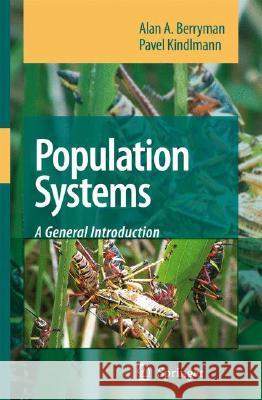
Alan A. Berryman; Pavel Kindlmann
Population Systems: A General Introduction Berryman, Alan A. 9781402068188 KLUWER ACADEMIC PUBLISHERS GROUP - książkaWidoczna okładka, to zdjęcie poglądowe, a rzeczywista szata graficzna może różnić się od prezentowanej.

Population Systems: A General Introduction

ISBN-13: 9781402068188 / Angielski / Twarda / 2008 / 222 str.

Alan A. Berryman; Pavel Kindlmann
cena 200,77
(netto: 191,21 VAT:  5%)

Najniższa cena z 30 dni: 192,74
Termin realizacji zamówienia:
ok. 22 dni roboczych
Dostawa w 2026 r.

Darmowa dostawa!

I had taught courses in applied ecology, population dynamics, and population management for many years and, like many of my colleagues, had grown acc- tomed to the blank stares of my students as we wove our way through the confused semantics and intricate concepts of traditional ecology and wrestled with elaborate mathematical arguments. I searched in vain for a central unifying concept on which to organize a theory of population ecology until, 30 years ago, I read a small book of essays edited by John Milsum of McGill University entitled Positive Feedback A General Systems Approach to Positive/Negative Feedback and Mutual Causality. Stimulated by the articles in this book, particularly those written by Milsum, M. Maruyama, and A. Rapoport, I began to structure my lectures around the central ideas of general systems theory. I first used this approach in my graduate courses in population dynamics and population management and then, encouraged by the results, in my undergraduate course in forest entomology and to teach population dynamics to practicing foresters. Almost without exception, my students found the general systems approach intuitively reasonable and easier to understand than traditional teaching methods. Even undergraduates seem to grasp the fundamental principles quite rapidly and, more important, to realize that a general understanding of population systems is an essential part of their education. These reactions by my students, and their continued encouragement, led me to write this book."


Kategorie:
Nauka, Biologia i przyroda
Kategorie BISAC:
Medical > Genetyka kliniczna
Science > Zoologia i nauki o zwierzętach
Science > Life Sciences - Evolution
Wydawca:
KLUWER ACADEMIC PUBLISHERS GROUP
Język:
Angielski
ISBN-13:
9781402068188
Rok wydania:
2008
Ilość stron:
222
Waga:
0.53 kg
Wymiary:
23.5 x 15.5
Oprawa:
Twarda
Wolumenów:
01

From the reviews of the second edition:

"This text aims to build a concept of models and thus show how the more complex ideas can be understood. ... This is a detailed, technical publication which would be best suited to students of theoretical ecology. ... the gradual building of the model means that a wide range of readers will gain something from the text. ... Overall, a good text for the specialist and a useful reference for those really wanting to understand the theory of modelling from the ground up." (Thermoelectric News, July, 2008)

"Berryman (Washington State Univ.) and Kindlmann (Academy of Sciences of the Czech Republic) address the general principles and theories of population ecology using simplified interpretations of general systems theory and graphical procedures. ... Summing Up: Recommended. Upper-division undergraduate through research and faculty collections." (R. L. Smith, Choice, Vol. 46 (4), December, 2008)

Contents. Preface to the first edition. Preface to the second edition. Acknowledgements. Part I. Population Systems. Introduction to Part I. 1. A Brief Look at General Systems. 1.1. What is a System? 1.2. The State of a System. 1.3. Dynamic Systems. 1.4. System Diagrams. 1.5. Feedback Control. 1.6. The Stability of Systems. 1.7. Anticipatory Feedforward. 1.8. Systems Analysis in Biology. 1.9. Chapter Summary. Exercises. Notes. 2. Population Dynamics and an Elementary Model. 2.1. What is a Population? 2.2. Dynamics in Populations. 2.3. An Elementary Population Model. 2.4. Analysis of the Model. 2.5. Environmental and Genetic Effects. 2.6. Chapter Summary. Exercises. Notes. 3. Population Regulation and a General Model. 3.1. Density-Dependant Mechanisms. 3.1.1. Competitive Processes. 3.1.2. Cooperative Processes. 3.2. Feedback Integration. 3.3. A General Population Model. 3.4. Analysis of the Model. 3.4.1. Environmental and Genetic Effects. 3.5. Populations in Changing Environments. 3.5.1. Environmental Feedback. 3.6. Complex Density-Dependant Relationships. 3.7. Chapter Summary. Exercises. Notes. Part II. Systems of Interacting Populations. Introduction to Part II. 4. Interactions between Two Species. 4.1. Population Interactions. 4.2. Cooperative Interactions. 4.3. Competitive Interactions. 4.3.1. Nonlinear Competitive Interactions. 4.3.2. Competition in Variable Environments. 4.3.3. Strategies of the Competitor. 4.4. Predator-Prey Interactions. 4.4.1. Nonlinear Predator-Prey Interactions. 4.4.2. Predator Functional Responses. 4.4.3. Predation in Variable Environments. 4.4.4. Predator and Prey Strategies. 4.5. Chapter Summary. Exercises. Notes. 5. Interactions in Space. 5.1. Introduction. 5.2. Movements in Space. 5.3. Dynamics in Space. 5.4. The Spread and Collapse of Pest Epidemics. 5.5. Stability in Space. 5.6. Population Quality in Space. 5.7. Environmental Stratification. 5.8. Chapter Summary. Notes. 6. Interactions between many Species (Ecological Communities). 6.1. Community Structure. 6.2. Community Stability. 6.2.1. Predation as a Stabilizing Influence. 6.3. Community Dynamics. 6.4. Chapter Summary. Exercises. Notes. Epilogue: The Human Dilemma. Answers to Exercises. Author Index. Subject Index.

Pavel Kindlmann is professor of ecology at the Charles University in Prague, Czech Republic and performs research on various aspects of biodiversity as the Head of the Biodiversity Research Centre, in the CzechGlobe - Global Change Research Centre, Academy of Sciences, in eské Bud jovice, Czech Republic. His main interests include population and metapopulation dynamics and life history strategies with a special emphasis on insect herbivores, their predators, and on the orchid family. He authored or edited several books on population systems, orchids and conservation biology and published about 100 scientific papers in prominent journals.

This book is concerned with the general principles and theories of population ecology, based on the idea that the rules governing the dynamics of populations are relatively simple, and that the rich behavior we observe in nature is a consequence of the structure of the system rather than of the complexity of the underlying rules. From this perspective, the dynamic behavior of single-species populations is examined and an elementary feedback model of the population system is developed. This single-species model is refined and generalized by examining the mechanisms of population regulation. Graphical procedures are developed for evaluating the behavior of populations inhabiting variable environments, which are then applied to the analysis of interactions between two species. Finally, spatial effects on population behavior and communities composed of many interacting species are examined.


Udostępnij

Facebook - konto krainaksiazek.pl


Opinie o Krainaksiazek.pl na Opineo.pl

Partner Mybenefit

Krainaksiazek.pl w programie rzetelna firma Krainaksiaze.pl - płatności przez paypal

Czytaj nas na:

Facebook - krainaksiazek.pl
  • książki na zamówienie
  • granty
  • książka na prezent
  • kontakt
  • pomoc
  • opinie
  • regulamin
  • polityka prywatności

Zobacz:

  • Księgarnia czeska

  • Wydawnictwo Książkowe Klimaty

1997-2025 DolnySlask.com Agencja Internetowa

© 1997-2022 krainaksiazek.pl
     
KONTAKT | REGULAMIN | POLITYKA PRYWATNOŚCI | USTAWIENIA PRYWATNOŚCI
Zobacz: Księgarnia Czeska | Wydawnictwo Książkowe Klimaty | Mapa strony | Lista autorów
KrainaKsiazek.PL - Księgarnia Internetowa

Polityka prywatnosci - link
Krainaksiazek.pl - płatnośc Przelewy24
Przechowalnia Przechowalnia






