• Wyszukiwanie zaawansowane
  • Kategorie
  • Kategorie BISAC
  • Książki na zamówienie
  • Promocje
  • Granty
  • Książka na prezent
  • Opinie
  • Pomoc
  • Załóż konto
  • Zaloguj się

Polymers on the Crime Scene: Forensic Analysis of Polymeric Trace Evidence » książka


zaloguj się | załóż konto
Logo Krainaksiazek.pl

koszyk

konto

szukaj
topmenu
Księgarnia internetowa
Szukaj
Książki na zamówienie
Promocje
Granty
Książka na prezent
Moje konto
Pomoc
 
 
Wyszukiwanie zaawansowane
Pusty koszyk
Bezpłatna dostawa dla zamówień powyżej 20 złBezpłatna dostawa dla zamówień powyżej 20 zł

Kategorie główne

• Nauka
 [2952079]
• Literatura piękna
 [1850969]

  więcej...
• Turystyka
 [71058]
• Informatyka
 [151066]
• Komiksy
 [35579]
• Encyklopedie
 [23181]
• Dziecięca
 [620496]
• Hobby
 [139036]
• AudioBooki
 [1646]
• Literatura faktu
 [228729]
• Muzyka CD
 [379]
• Słowniki
 [2932]
• Inne
 [445708]
• Kalendarze
 [1409]
• Podręczniki
 [164793]
• Poradniki
 [480107]
• Religia
 [510956]
• Czasopisma
 [511]
• Sport
 [61267]
• Sztuka
 [243299]
• CD, DVD, Video
 [3411]
• Technologie
 [219640]
• Zdrowie
 [100984]
• Książkowe Klimaty
 [124]
• Zabawki
 [2281]
• Puzzle, gry
 [3363]
• Literatura w języku ukraińskim
 [258]
• Art. papiernicze i szkolne
 [8020]
Kategorie szczegółowe BISAC

Polymers on the Crime Scene: Forensic Analysis of Polymeric Trace Evidence

ISBN-13: 9783319154930 / Angielski / Twarda / 2015 / 356 str.
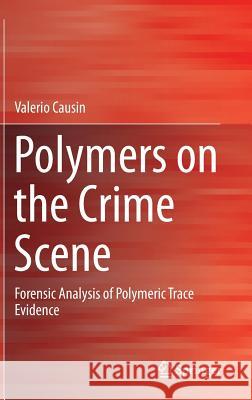
Valerio Causin
Polymers on the Crime Scene: Forensic Analysis of Polymeric Trace Evidence Causin, Valerio 9783319154930 Springer - książkaWidoczna okładka, to zdjęcie poglądowe, a rzeczywista szata graficzna może różnić się od prezentowanej.

Polymers on the Crime Scene: Forensic Analysis of Polymeric Trace Evidence

ISBN-13: 9783319154930 / Angielski / Twarda / 2015 / 356 str.

Valerio Causin
cena 402,53
(netto: 383,36 VAT:  5%)

Najniższa cena z 30 dni: 385,52
Termin realizacji zamówienia:
ok. 22 dni roboczych.

Darmowa dostawa!

This book approaches the analysis of forensic contact traces from a polymer science perspective. The development of characterization methods of new or unusual traces and the improvement of existing protocols is described. The book starts with a general introduction to polymers and the issues related to transfer, persistence and recovery of polymeric traces. The chapters present a distinctive feature of polymers, discussing how it can be measured, what the practical difficulties which can be encountered in the analysis, and how useful that information is for comparison or identification purposes. Practical tips for the realization of the forensic analyses are included.


Kategorie:
Nauka, Prawo i administracja
Kategorie BISAC:
Technology & Engineering > Textiles & Polymers
Medical > Forensic Medicine
Technology & Engineering > Materials Science - General
Wydawca:
Springer
Język:
Angielski
ISBN-13:
9783319154930
Rok wydania:
2015
Wydanie:
2015
Ilość stron:
356
Waga:
0.69 kg
Wymiary:
23.39 x 15.6 x 2.24
Oprawa:
Twarda
Wolumenów:
01

1. Introduction References 2. Polymers: an overview 2.1 Why polymers need their own science? 2.2 A short history of polymers 2.3 The fundamentals of polymer science: some definitions 2.4 Polymerisation reactions 2.5 Average molecular weight and molecular weight distribution 2.6 Classification of polymers 2.6.1. Source-based classification 2.6.2 Organic and inorganic polymers 2.6.3. Thermoplastic and thermosetting polymers 2.6.4. Application-based classification 2.7 Describing polymers: constitution, configuration, conformation 2.7.1. Constitution 2.7.2. Configuration 2.7.3. Conformation 2.8 Commercial polymers: a round up 2.8.1. Polyethylene 2.8.2. Polypropylene 2.8.3. Polystyrene 2.8.4. Polyacrylonitrile 2.8.5. Polyacrylates 2.8.6. Polyesters 2.8.7. Polyoxymethylene, polyoxyethylene, poly(ethylene glycol) and poly(propylene glycol) 2.8.8. Polycarbonates 2.8.9. Polysulphone 2.8.10. Polyamides 2.8.11. Polyurethanes 2.8.12. Poly(vinyl acetate) and poly(vinyl alcohol) 2.8.13. Poly(vinyl chloride) and other chlorinated polymers 2.8.14. Fluorinated polymers 2.8.15. Polyisobutylene 2.8.16. Polyisoprene: natural rubber and gutta percha 2.8.17. Elastomers derived from butadiene and its derivatives 2.8.18. Polychloroprene 2.8.19. Formaldehyde-based resins 2.8.20. Epoxy polymers 2.8.21. Silicone polymers 2.8.22. Cellulose and derivatives of cellulose 2.8.23. Rayon 2.8.24. Cellulose acetate 2.8.25. Other cellulose derivatives 2.8.24. Proteins References Suggested readings 3. Polymeric traces: transfer, persistence, recovery, analysis and interpretation of analytical data 3.1 Polymers as sources of evidence: transfer, persistence, recovery 3.2 The development of an analytical method 3.3. The statistical treatment of analytical data 3.3.1 Comparisons 3.3.2. Principal component analysis: the basics 3.3.3. Principal Component Analysis: some examples 3.3.4. Clustering 3.4. The interpretation of evidence 3.4.1. The frequency of traces: population and target studies 3.4.2. The levels of proposition [78-80] 3.4.3. The Bayesian analysis of the results References 4. Polymers on the crime scene 4.1. Textile fibres 4.1.1. A classification of fibres 4.1.2. Technological requirements for textile fibres 4.2.3. Transfer and persistence of fibres 4.1.4. Recovery of fibres 4.1.5. The characterisation of textile fibres 4.2. Paints 4.2.1. The composition of paints 4.2.2. Automotive paints 4.2.3. Recovery and sampling of paints 4.2.4. The characterisation of paint evidence 4.3 Adhesive tapes 4.3.1. The composition of adhesive tapes 4.3.2. Recovery and sampling of adhesive tapes 4.3.3. The characterisation of adhesive tape 4.4. Rubber gloves 4.4.1. The manufacturing of rubber gloves 4.4.2. Recovery and handling of gloves 4.4.3. Characterisation of latex gloves 4.5. Tyre rubber traces 4.5.1. Manufacturing of tyres 4.5.2. Sampling of tyre rubber traces 4.5.3. Characterisation of tyre rubber traces 4.6. Condom lubricants 4.6.1. The composition of condoms and lubricants 4.6.2. Collection and handling of condom related traces 4.6.3. The characterisation of condom-related traces 4.7. Foam fragments 4.7.1. The composition of foams 4.7.2. Collection and handling of foam traces 4.7.3. Characterisation of foam traces 4.8. Plastic bags 4.8.1. Composition of plastic bags 4.8.2. Sampling and handling of plastic films 4.8.3. Characterisation of plastic films 4.9. Polymers in documents: paper and toner 4.9.1. Paper 4.9.2. Toner 4.10. Post-fire traces 4.10.1. The identification of pyrolysis products in fire debris 4.10.2. Post fire materials identification References 5. Formulation: polymer matrix, fillers, dyes, pigments and other additives 5.1 The techniques: spectroscopy 5.1.1. UV-Visible Spectroscopy 5.1.2. Infrared (IR) Spectroscopy 5.1.3. Raman Spectroscopy 5.2 The techniques: atomic spectrometry 5.2.1. Optical atomic spectrometry 5.2.2. Atomic mass spectrometry 5.2.3. X-ray fluorescence 5.3. The techniques: chromatography 5.4. The techniques: pyrolysis 5.5. The techniques: mass spectrometry 5.6. The techniques: thermogravimetric analysis 5.7. The characterisation of the matrix 5.8. The characterisation of the fillers 5.9. The characterisation of dyes and pigments 5.10. Characterisation of other additives References 6. Synthesis-dependent parameters: molecularweight, constitution and configuration 6.1 Average molecular weight and molecular weight distribution 6.1.1. The techniques: size exclusion chromatography 6.1.2. Size exclusion chromatography: the forensic applications 6.1.3. The techniques: mass spectrometry for measuring high molecular weights 6.1.4. Other methods for molecular weight determination 6.2 Comonomers 6.3 Isotacticity 6.4 Stereoregularity References 7. Processing-dependent parameters: structure and morphology of polymeric materials 7.1 Morphology 7.2 Semicristallinity 7.2.1. The techniques: X-ray diffraction 7.2.2. The techniques: thermal analysis–differential scanning calorimetry 7.2.3. Other methods for the determination of the degree of crystallinity 7.3. The mobility of macromolecule 7.3.1. The glass transition temperature 7.3.2. The techniques: Time Domain Nuclear Magnetic Resonance 7.4. Orientation References

Born in 1975, Valerio Causin received in 2004 a PhD in Chemical Sciences at the University of Padova. From 2001 to 2003 he was First Lieutenant at the Chemistry, Explosives and Flammables section of the Forensic Branch of Carabinieri in Rome. Since 2015 he works as a researcher at the Department of Chemical Sciences at the University of Padova. His research interests are focused on the application of polymer characterization techniques to forensic sciences, in collaboration with Carabinieri in Rome, Messina, and Verona. He served as a forensic consultant for the Court, for the Prosecutor and for the Defense in over 100 civil and criminal cases. In 2009 he was awarded the AIM prize for young researchers in polymer science, and in 2011 he was elected a member of the Scientific Committee of POLYCHAR World Forum on Advanced Materials. An author of 75 papers in international journals, he was invited or keynote speaker at a number of international conferences and in universities and research centers worldwide.

This book approaches the analysis of forensic contact traces from a polymer science perspective. The development of characterization methods of new or unusual traces and the improvement of existing protocols is described.The book starts with a general introduction to polymers and  the issues related to transfer, persistence and recovery of polymeric traces. The chapters  present a distinctive feature of polymers, discussing how it can be measured, what the practical difficulties which can be encountered in the analysis, and how useful that information is for comparison or identification purposes. Practical tips for the realization of the forensic analyses are included.




Udostępnij

Facebook - konto krainaksiazek.pl


Opinie o Krainaksiazek.pl na Opineo.pl

Partner Mybenefit

Krainaksiazek.pl w programie rzetelna firma Krainaksiaze.pl - płatności przez paypal

Czytaj nas na:

Facebook - krainaksiazek.pl
  • książki na zamówienie
  • granty
  • książka na prezent
  • kontakt
  • pomoc
  • opinie
  • regulamin
  • polityka prywatności

Zobacz:

  • Księgarnia czeska

  • Wydawnictwo Książkowe Klimaty

1997-2026 DolnySlask.com Agencja Internetowa

© 1997-2022 krainaksiazek.pl
     
KONTAKT | REGULAMIN | POLITYKA PRYWATNOŚCI | USTAWIENIA PRYWATNOŚCI
Zobacz: Księgarnia Czeska | Wydawnictwo Książkowe Klimaty | Mapa strony | Lista autorów
KrainaKsiazek.PL - Księgarnia Internetowa

Polityka prywatnosci - link
Krainaksiazek.pl - płatnośc Przelewy24
Przechowalnia Przechowalnia




