• Wyszukiwanie zaawansowane
  • Kategorie
  • Kategorie BISAC
  • Książki na zamówienie
  • Promocje
  • Granty
  • Książka na prezent
  • Opinie
  • Pomoc
  • Załóż konto
  • Zaloguj się

Political, Economic and Financial Country Risk: Analysis of the Gulf Cooperation Council » książka


zaloguj się | załóż konto
Logo Krainaksiazek.pl

koszyk

konto

szukaj
topmenu
Księgarnia internetowa
Szukaj
Książki na zamówienie
Promocje
Granty
Książka na prezent
Moje konto
Pomoc
 
 
Wyszukiwanie zaawansowane
Pusty koszyk
Bezpłatna dostawa dla zamówień powyżej 20 złBezpłatna dostawa dla zamówień powyżej 20 zł

Kategorie główne

• Nauka
 [2939893]
• Literatura piękna
 [1808953]

  więcej...
• Turystyka
 [70366]
• Informatyka
 [150555]
• Komiksy
 [35137]
• Encyklopedie
 [23160]
• Dziecięca
 [608786]
• Hobby
 [136447]
• AudioBooki
 [1631]
• Literatura faktu
 [225099]
• Muzyka CD
 [360]
• Słowniki
 [2914]
• Inne
 [442115]
• Kalendarze
 [1068]
• Podręczniki
 [166599]
• Poradniki
 [468390]
• Religia
 [506548]
• Czasopisma
 [506]
• Sport
 [61109]
• Sztuka
 [241608]
• CD, DVD, Video
 [3308]
• Technologie
 [218981]
• Zdrowie
 [98614]
• Książkowe Klimaty
 [124]
• Zabawki
 [2174]
• Puzzle, gry
 [3275]
• Literatura w języku ukraińskim
 [260]
• Art. papiernicze i szkolne
 [7376]
Kategorie szczegółowe BISAC

Political, Economic and Financial Country Risk: Analysis of the Gulf Cooperation Council

ISBN-13: 9783319021768 / Angielski / Twarda / 2013 / 281 str.
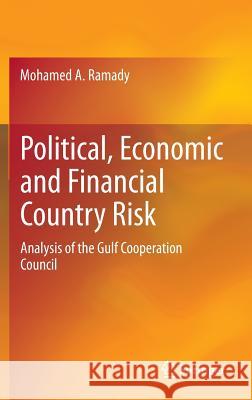
Mohamed Ramady
Political, Economic and Financial Country Risk: Analysis of the Gulf Cooperation Council Ramady, Mohamed A. 9783319021768 Springer - książkaWidoczna okładka, to zdjęcie poglądowe, a rzeczywista szata graficzna może różnić się od prezentowanej.

Political, Economic and Financial Country Risk: Analysis of the Gulf Cooperation Council

ISBN-13: 9783319021768 / Angielski / Twarda / 2013 / 281 str.

Mohamed Ramady
cena 201,24
(netto: 191,66 VAT:  5%)

Najniższa cena z 30 dni: 192,74
Termin realizacji zamówienia:
ok. 22 dni roboczych.

Darmowa dostawa!

"Decades go by and nothing happens; then weeks go by and decades happen." This apt saying encapsulates the dramatic convulsions taking place across the Arab world that first erupted in 2011 in Tunisia and which rapidly spread to other countries. These events have affected the lives of ordinary citizens in many more ways than had been intended when the 'Arab Spring' broke out, with the endgame still not very clear as demonstrated in countries like Egypt, Syria and Libya.By comparison, with some exceptions, the six countries comprising the Gulf Cooperation Council have been relatively unaffected by the general turbulence and uncertainties lapping around them. However, geopolitical shifts involving global superpower rivalries, combined with revolutionary breakthroughs in the non-conventional hydrocarbon energy sector are threatening to challenge the importance of the Arabian Gulf as the world's leading suppliers of energy, putting their economies under fiscal stress. The author examines such challenges by: - Providing the first in-depth statistical analytical assessment of the GCC countries using monthly data over the period 2001 -2013 for the three risk categories- economic, financial and political risks- and their sub -components so as to enable policymakers enhance components with low risk, while addressing components with perceived higher risk,
- Assessing FDI and capital inflows and outflows before and after the "Arab Spring," and how to encourage FDI inflows,
- Inter -Arab and GCC trade and synergies in power transmission, transportation links and establishing new hubs of centers of manufacturing excellence,
- Exploring private sector-led growth models to reduce forecasted unemployment. Being complacent is not an option for the GCC. The aim of the book is that having a better understanding of each of the GCC countries' individual risk parameters will enable the GCC meet future challenges and reduce the chances of a negative 'Arab Spring' occurring in the region.


Mohamed Ramady is a Visiting Associate Professor at the Department of Finance and Economics, King Fahd University of Petroleum and Minerals. His main research interests are the economics of the Middle East and Saudi Arabia in particular, as well as money and banking He also held senior positions with international financial institutions in the Arabian Gulf and Europe.

Kategorie:
Nauka, Ekonomia i biznes
Kategorie BISAC:
Business & Economics > Economics - General
Political Science > Ekonomia polityczna
Wydawca:
Springer
Język:
Angielski
ISBN-13:
9783319021768
Rok wydania:
2013
Wydanie:
2014
Ilość stron:
281
Waga:
0.64 kg
Wymiary:
23.39 x 15.6 x 2.06
Oprawa:
Twarda
Wolumenów:
01
Dodatkowe informacje:
Bibliografia
Wydanie ilustrowane

From the reviews:

"Political, Economic, and Financial Country Risk. Analysis of the Gulf Cooperation Council is an extremely resourceful book, offering a wide range of information not only on the GCC states but also on widespread rating practices. To a certain degree, the book can be used as a handbook ... . practitioners could also benefit from more links between the single facts that would at times make it easier to get a bigger picture of the issues at stake." (Annika Kropf, Review of Middle East Economics and Finance, Vol. 10 (1), 2014)

Part I.- Foundation and Key concepts.- GCC Country Risk and the " Arab Spring ".- Country Risk assessments.- Part II :  Indicators of Country Risk analysis.- Indicators of Financial Risk.- Determinants of Country economic risk.- Country political risk contents.- Part III :  GCC Country  economic , financial and political risk analysis.- Kingdom of Saudi Arabia  risk  analysis.- State of Kuwait risk  analysis.- State of Qatar  risk  analysis.- Kingdom of Bahrain risk  analysis.- Sultanate of Oman risk  analysis.- United Arab Emirates risk  analysis.- GCC Composite Risk : Political risk at the core.- Part IV: Current Challenges.- GCC Inward and Outward Foreign Direct Investment and Capital Flows.- GCC countries and the "Arab Spring:  : shielded but not immune.- Conclusions and  Recommendations.- Bibliography.- Index​.

Mohamed Ramady is Visiting Associate Professor at the Department of Finance and Economics, King Fahd University of Petroleum and Minerals. His main research interests are the economies of the Middle East and Saudi Arabia in particular, as well as money and banking. He also held senior positions with international financial institutions in the Arabian Gulf and Europe.

“Decades go by and nothing happens; then weeks go by and decades happen”. This apt saying encapsulates the dramatic convulsions taking place across the Arab world that first erupted in 2011 in Tunisia and which rapidly spread to other countries.  These events have affected the lives of ordinary citizens in many more ways than had been intended when the ‘Arab Spring’ broke out, with the endgame still not very clear as demonstrated in countries like Egypt, Syria and  Libya.

By comparison, with some exceptions, the six countries comprising the Gulf Cooperation Council have been relatively unaffected by the general turbulence and uncertainties lapping around them. However, geopolitical shifts involving global superpower rivalries, combined with revolutionary breakthroughs in the non-conventional hydrocarbon energy sector are threatening to challenge the importance of the Arabian Gulf as the world’s leading suppliers of energy, putting their economies under fiscal stress.  The author examines such challenges by:

• Providing the  first in-depth statistical  analytical assessment of  the GCC  countries  using monthly  data over the period 2001 -2013  for the three risk categories- economic, financial and political risks- and their  sub –components so as  to enable  policymakers  enhance  components  with low  risk , while  addressing components with perceived  higher risk,
• Assessing FDI and capital  inflows and outflows  before and after the “Arab Spring” , and how to  encourage FDI inflows,
• Inter –Arab and GCC trade and synergies in power transmission , transportation links and establishing new hubs of centers of manufacturing  excellence ,
• Exploring private sector-led growth models to reduce forecasted unemployment. 

Being complacent is not an option for the GCC. The aim of the book is that having a better understanding of each of the GCC countries’ individual risk parameters will enable the GCC meet future challenges and reduce the chances of a negative ‘Arab Spring’ occurring in the region.
 
Mohamed Ramady is a Visiting Associate Professor at the Department of Finance and Economics, King Fahd University of Petroleum and Minerals. His main research interests are the economics of the Middle East and Saudi Arabia in particular, as well as money and banking He also held senior positions with international financial institutions in the Arabian Gulf and Europe.


Udostępnij

Facebook - konto krainaksiazek.pl


Opinie o Krainaksiazek.pl na Opineo.pl

Partner Mybenefit

Krainaksiazek.pl w programie rzetelna firma Krainaksiaze.pl - płatności przez paypal

Czytaj nas na:

Facebook - krainaksiazek.pl
  • książki na zamówienie
  • granty
  • książka na prezent
  • kontakt
  • pomoc
  • opinie
  • regulamin
  • polityka prywatności

Zobacz:

  • Księgarnia czeska

  • Wydawnictwo Książkowe Klimaty

1997-2026 DolnySlask.com Agencja Internetowa

© 1997-2022 krainaksiazek.pl
     
KONTAKT | REGULAMIN | POLITYKA PRYWATNOŚCI | USTAWIENIA PRYWATNOŚCI
Zobacz: Księgarnia Czeska | Wydawnictwo Książkowe Klimaty | Mapa strony | Lista autorów
KrainaKsiazek.PL - Księgarnia Internetowa

Polityka prywatnosci - link
Krainaksiazek.pl - płatnośc Przelewy24
Przechowalnia Przechowalnia






