Poetic Logic and the Origins of the Mathematical Imagination » książka





Poetic Logic and the Origins of the Mathematical Imagination
ISBN-13: 9783031315817 / Angielski
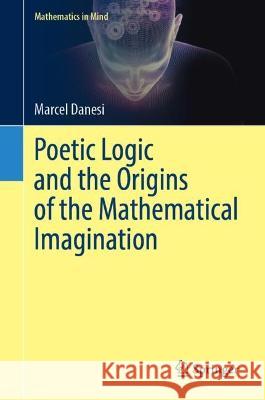
Poetic Logic and the Origins of the Mathematical Imagination
ISBN-13: 9783031315817 / Angielski
(netto: 498,38 VAT: 5%)
Najniższa cena z 30 dni: 501,19
ok. 22 dni roboczych.
Darmowa dostawa!
In 1940, two American mathematicians, Kasner and Newman, published a book titledMathematics and the Imaginationwhich was met with resounding success. The main claim of the book was that mathematics was a product of the imagination, arguably linking the two for the first time in the history of mathematics and even psychology. The ideas in Kasner and Newman’s work coincided largely with those of the eighteenth-century Italian philosopher Giambattista Vico (1688-1744), sometimes called the “philosopher of the imagination.” Vico put forth his views on how the imagination (which he called thefantasia) was at the root of all discoveries and inventions, and that its manifestation was through a form of thinking and expression that he called “poetic logic.” One of the main products of poetic logic can be discerned in metaphor, which until the work of Lakoff and Núñez, inWhere Mathematics Comes From, was hardly ever considered to be intrinsic to the creation of mathematical ideas. Missing from Kasner and Newman and Lakoff and Núñez is the notion of poetic logic, which would go a long way towards interconnecting metaphor, mathematics, and language in their origins.This book treats Vico’s theory of poetic logic for the first time as the originating force in mathematics, transforming instinctive counting and spatial perception into poetic (metaphorical) symbolism that dovetails with the origin of language. It looks at current work on mathematical cognition (from Lakoff and Núñez to Butterworth, Dehaene, and beyond), matching it against the poetic logic paradigm. In a sense, it continues from where Kasner and Newman left off, connecting contemporary research on the mathematical mind to the idea that the products of early mathematics were virtually identical to the first forms of poetic language, as documented in the founding myths and symbols of early cultures. As such, this book informs the current research on mathematical cognition from a different angle, by looking back at a still relatively unknown philosopher within mathematics.The aim of this volume is to look broadly at what constitutes the mathematical mind through the Vichian lens of poetic logic. Vico was among the first to suggest that the essential nature of mind could be unraveled indirectly by reconstructing the sources of its “modifications” (his term for “creations”); that is, by examining the creation and function of symbols, words, and all the other uniquely human artifacts—including mathematics—the mind has allowed humans to establish “the world of civil society,” Vico’s term for culture and civilization.The book is of interest to cognitive scientists working on math cognition. It presents the theory of poetic logic as Vico articulated it in his bookThe New Science, examining its main premises and then applying it to an interpretation of the ongoing work in math cognition. It will also be of interest to the general public, since it presents a history of early mathematics through the lens of an idea that has borne fruit in understanding the origin of language and symbols more broadly.
In 1940, two American mathematicians, Kasner and Newman, published a book titled Mathematics and the Imagination which was met with resounding success. The main claim of the book was that mathematics was a product of the imagination, arguably linking the two for the first time in the history of mathematics and even psychology. The ideas in Kasner and Newman’s work coincided largely with those of the eighteenth-century Italian philosopher Giambattista Vico (1688-1744), sometimes called the “philosopher of the imagination.” Vico put forth his views on how the imagination (which he called the fantasia) was at the root of all discoveries and inventions, and that its manifestation was through a form of thinking and expression that he called “poetic logic.” One of the main products of poetic logic can be discerned in metaphor, which until the work of Lakoff and Núñez, in Where Mathematics Comes From, was hardly ever considered to be intrinsic to the creation of mathematical ideas. Missing from Kasner and Newman and Lakoff and Núñez is the notion of poetic logic, which would go a long way towards interconnecting metaphor, mathematics, and language in their origins. This book treats Vico’s theory of poetic logic for the first time as the originating force in mathematics, transforming instinctive counting and spatial perception into poetic (metaphorical) symbolism that dovetails with the origin of language. It looks at current work on mathematical cognition (from Lakoff and Núñez to Butterworth, Dehaene, and beyond), matching it against the poetic logic paradigm. In a sense, it continues from where Kasner and Newman left off, connecting contemporary research on the mathematical mind to the idea that the products of early mathematics were virtually identical to the first forms of poetic language, as documented in the founding myths and symbols of early cultures. As such, this book informs the current research on mathematical cognition from a different angle, by looking back at a still relatively unknown philosopher within mathematics. The aim of this volume is to look broadly at what constitutes the mathematical mind through the Vichian lens of poetic logic. Vico was among the first to suggest that the essential nature of mind could be unraveled indirectly by reconstructing the sources of its “modifications” (his term for “creations”); that is, by examining the creation and function of symbols, words, and all the other uniquely human artifacts—including mathematics—the mind has allowed humans to establish “the world of civil society,” Vico’s term for culture and civilization. The book is of interest to cognitive scientists working on math cognition. It presents the theory of poetic logic as Vico articulated it in his book The New Science, examining its main premises and then applying it to an interpretation of the ongoing work in math cognition. It will also be of interest to the general public, since it presents a history of early mathematics through the lens of an idea that has borne fruit in understanding the origin of language and symbols more broadly.




Czytaj nas na:
KrainaKsiazek.PL - Księgarnia Internetowa


