• Wyszukiwanie zaawansowane
  • Kategorie
  • Kategorie BISAC
  • Książki na zamówienie
  • Promocje
  • Granty
  • Książka na prezent
  • Opinie
  • Pomoc
  • Załóż konto
  • Zaloguj się

Play and Stem Education in the Early Years: International Policies and Practices » książka


zaloguj się | załóż konto
Logo Krainaksiazek.pl

koszyk

konto

szukaj
topmenu
Księgarnia internetowa
Szukaj
Książki na zamówienie
Promocje
Granty
Książka na prezent
Moje konto
Pomoc
 
 
Wyszukiwanie zaawansowane
Pusty koszyk
Bezpłatna dostawa dla zamówień powyżej 20 złBezpłatna dostawa dla zamówień powyżej 20 zł

Kategorie główne

• Nauka
 [2949965]
• Literatura piękna
 [1857847]

  więcej...
• Turystyka
 [70818]
• Informatyka
 [151303]
• Komiksy
 [35733]
• Encyklopedie
 [23180]
• Dziecięca
 [617748]
• Hobby
 [139972]
• AudioBooki
 [1650]
• Literatura faktu
 [228361]
• Muzyka CD
 [398]
• Słowniki
 [2862]
• Inne
 [444732]
• Kalendarze
 [1620]
• Podręczniki
 [167233]
• Poradniki
 [482388]
• Religia
 [509867]
• Czasopisma
 [533]
• Sport
 [61361]
• Sztuka
 [243125]
• CD, DVD, Video
 [3451]
• Technologie
 [219309]
• Zdrowie
 [101347]
• Książkowe Klimaty
 [123]
• Zabawki
 [2362]
• Puzzle, gry
 [3791]
• Literatura w języku ukraińskim
 [253]
• Art. papiernicze i szkolne
 [7933]
Kategorie szczegółowe BISAC

Play and Stem Education in the Early Years: International Policies and Practices

ISBN-13: 9783030998295 / Angielski / Twarda / 2022
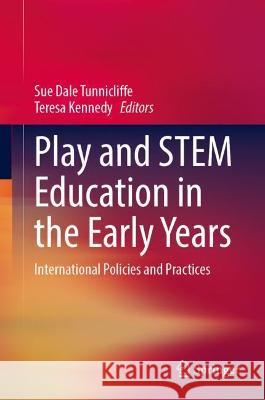
Tunnicliffe, Sue Dale
Play and Stem Education in the Early Years: International Policies and Practices Tunnicliffe, Sue Dale 9783030998295 Springer International Publishing - książkaWidoczna okładka, to zdjęcie poglądowe, a rzeczywista szata graficzna może różnić się od prezentowanej.

Play and Stem Education in the Early Years: International Policies and Practices

ISBN-13: 9783030998295 / Angielski / Twarda / 2022

Tunnicliffe, Sue Dale
cena 605,23 zł
(netto: 576,41 VAT:  5%)

Najniższa cena z 30 dni: 539,74 zł
Termin realizacji zamówienia:
ok. 22 dni roboczych
Bez gwarancji dostawy przed świętami

Darmowa dostawa!
inne wydania

This edited book provides an overview of unstructured and structured play scenarios crucial to developing young children’s awareness, interest, and ability to learn Science, Technology, Engineering and Mathematics (STEM) in informal and formal education environments. The key elements for developing future STEM capital, enabling children to use their intuitive critical thinking and problem-solving abilities, and promoting active citizenship and a scientifically literate workforce, begins in the early years as children learn through play, employing trial and error, and often investigating on their own.Forty-seven STEM experts come together from 16 countries (Argentina, Australia, Belgium, Canada, England, Finland, Germany, Israel, Jamaica, Japan, Malta, Mauritius, Mexico, Russia, Sweden, and the USA) and describe educational policies and experiences related to young learners 3–4 years of age, as well as students attending formal-nursery school, early primary school, and the early years classes post 5 years of age.The book is intended for parents seeking to provide STEM activities for their children at home and in playgroups, citizen scientists seeking guidance to provide children with quality educational activities, daycare practitioners providing educational structures for young children from birth to formal education, primary school teachers and preservice teachers seeking to teach preschool, kindergarten or children typically aged 5–8 years old in grades 1–3, as well as researchers and policy makers working in science didactics with small children.


Kategorie:
Podręczniki
Kategorie BISAC:
Science > Study & Teaching
Education > Schools - Levels - Early Childhood (Incl. Preschool & Kindergarten
Education > Comparative
Wydawca:
Springer International Publishing
Język:
Angielski
ISBN-13:
9783030998295
Rok wydania:
2022
Waga:
0.91 kg
Wymiary:
23.5 x 15.5
Oprawa:
Twarda
Dodatkowe informacje:
Wydanie ilustrowane

"The pictures and detailed instructions with sample questions for students and ways in which the teacher could direct conversation help the reader to replicate these projects for their own classes. A nice addition was the added description of how a workshop was conducted online, which could be very useful in our current times." (Ann Wheeler, MAA Reviews, March 20, 2023)

Chapter 1: Introduction.- Chapter 2: Exploring the possibilities of STEM and Play in preschool years in England.- Chapter 3: Psychology of children’s play, imagination, creativity and playful pedagogies in early childhood education in Russia.- Chapter 4:  Play-based Learning as a Natural Teaching Strategy in the Jamaican Preschool Environment.- Chapter 5:  Preparing Early Years Practitioners in Mauritius.- Chapter 6:  The Finnish Approach to Early Years STEM Education.- Chapter 7:  Early STEM Implementation in PreK and Kindergarten in Mexico.- Chapter 8:  Bee-Bot Robots and Learning in the Play-based Behaviour of Preschool Children in Canada.- Chapter 9:  Changes in Young Children’s Lives and Society through STEM Play in Japan.- Chapter 10:  Diverse STEM Interest Development Pathways in Early Childhood.- Chapter 11:  Play in Early Learning in Dioramas.- Chapter 12:  Engaging Children in Science Learning Through Outdoor Play.- Chapter 13:  GLOBE, STEM and Argentine Citizen Science:  Collaborations in the Early Years through Outdoor Play in Nature.- Chapter 14:  Research in Israel:  Does Constructional Play Improve Preschoolers' Engineering Habits of Mind?.- Chapter 15:  Fostering 6-year-olds Conceptual Knowledge of Gears with Guided Play in Germany.- Chapter 16:  Moving from Direct Teaching to Project-Based Learning in Pre-school Environments in Spain.- Chapter 17:  Play and Mathematics in an English Early Years Classrooms in England.- Chapter 18:  STEM in the Early Years in China.- Chapter 19:  STEM Integrated Play in Early Years: Policies and Practices in Pakistan.- Chapter 20:  Addressing Learner Variability Through Executive Function as a Preventive Measure for Early School Leaving in Malta.- Chapter 21:  Early Childhood Programming in Sub-Saharan Africa.- Chapter 22:  Play, Science and Engineering in the Early Years in Australia.- Chapter 23: Final Chapter: An overview what the contributions tell us.

Sue Dale Tunnicliffe, Ph.D., is a zoology graduate from Westfield College, Uof L, (PGCE IOE 1968). She taught all ages and was Head of Education at the Zoological Society of London. Her Ph.D. is from King’s College, London (1995). She is currently a Reader in Science Education at UCL Institute of Education. She supervises Ph.D., D.Ed. and master’s degree students. She was awarded the NSTA’s Faraday Award for Science Communication (USA) in 2016. She has published widely through papers and articles.

Teresa J. Kennedy, Ph.D., holds a joint appointment as Professor of International STEM Education in the College of Education and Psychology and in the College of Engineering at the University of Texas at Tyler, USA. She received her Ph.D. from the University of Idaho (1998). Prior to her position at UT Tyler, she served on the management team of NASA’s GLOBE Program for over 10 years (2001–2012). She has taught students of all ages, preK to doctoral studies, and has published widely.

This edited book provides an overview of unstructured and structured play scenarios crucial to developing young children’s awareness, interest, and ability to learn Science, Technology, Engineering and Mathematics (STEM) in informal and formal education environments. The key elements for developing future STEM capital, enabling children to use their intuitive critical thinking and problem-solving abilities, and promoting active citizenship and a scientifically literate workforce, begins in the early years as children learn through play, employing trial and error, and often investigating on their own.

Forty-seven STEM experts come together from 16 countries (Argentina, Australia, Belgium, Canada, England, Finland, Germany, Israel, Jamaica, Japan, Malta, Mauritius, Mexico, Russia, Sweden, and the USA) and describe educational policies and experiences related to young learners 3–4 years of age, as well as students attending formal-nursery school, early primary school, and the early years classes post 5 years of age.

The book is intended for parents seeking to provide STEM activities for their children at home and in playgroups, citizen scientists seeking guidance to provide children with quality educational activities, daycare practitioners providing educational structures for young children from birth to formal education, primary school teachers and preservice teachers seeking to teach preschool, kindergarten or children typically aged 5–8 years old in grades 1–3, as well as researchers and policy makers working in science didactics with small children.




Udostępnij

Facebook - konto krainaksiazek.pl


Opinie o Krainaksiazek.pl na Opineo.pl

Partner Mybenefit

Krainaksiazek.pl w programie rzetelna firma Krainaksiaze.pl - płatności przez paypal

Czytaj nas na:

Facebook - krainaksiazek.pl
  • książki na zamówienie
  • granty
  • książka na prezent
  • kontakt
  • pomoc
  • opinie
  • regulamin
  • polityka prywatności

Zobacz:

  • Księgarnia czeska

  • Wydawnictwo Książkowe Klimaty

1997-2025 DolnySlask.com Agencja Internetowa

© 1997-2022 krainaksiazek.pl
     
KONTAKT | REGULAMIN | POLITYKA PRYWATNOŚCI | USTAWIENIA PRYWATNOŚCI
Zobacz: Księgarnia Czeska | Wydawnictwo Książkowe Klimaty | Mapa strony | Lista autorów
KrainaKsiazek.PL - Księgarnia Internetowa

Polityka prywatnosci - link
Krainaksiazek.pl - płatnośc Przelewy24
Przechowalnia Przechowalnia




