Plato on God as Nous » książka





Plato on God as Nous
ISBN-13: 9780809319701 / Angielski / Miękka / 1995 / 104 str.
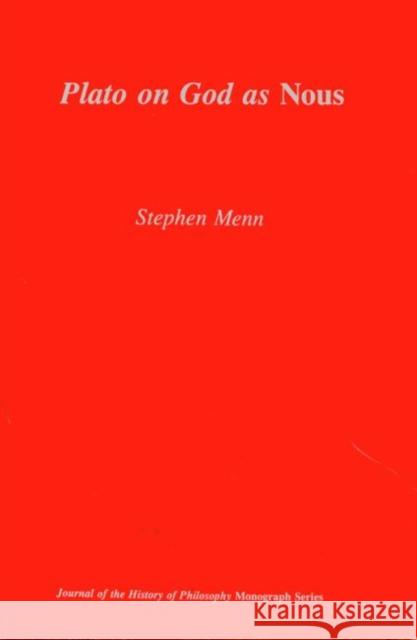
This book is the first sustained modern investigation of Plato s theology. A central thesis of the book is that Plato "had "a theologynot just a mythology for the ideal city, not just the theory of forms or the theory of cosmic souls, but also, irreducible to any of these, an account of God as "Nous "(Reason), the source of rational order both to souls and the world of bodies. The understanding of God as Reason, and of the world as governed directly or indirectly by Reason, is worked out in the dialogues of Plato s last period, the "Statesman, Philebus, Timaeus, "and "Laws. "These dialogues offer a strategy for explaining the physical world that goes beyond anything in the middle dialogues, and gives the best starting point for understanding the cosmologies and theologies of Aristotle, the Stoics, and later ancient thinkers.
Menn focuses on the "Timaeus "as Plato s most sustained effort to provide what (according to the "Phaedo) "Anaxagoras had failed to deliver: an explanation of the world through Reason, showing that things are as they are because it is best, or because it best serves the order of the world as a whole. Anaxagoras was disappointed because he explained things through their material constituents, without explaining why the constituents are ordered as they are; but the theory of forms has the same defect, since it cannot explain why different parts of the universe participate in different forms according to a particular order. The "Timaeus "and other late dialogues attempt to supply the missing explanation of the ordering of the physical world. These dialogues do not retreat from the middle dialogue theory of forms, nor do they escape into an esoteric theory of numbers; but they add to the middle dialogues an analysis of the principles necessary to account for the existence and partial intelligibility of the sensible worldnot only forms and a material substance but also "Nous "and souls.
Although the demiurge of the "Timaeus "(and his counterpart the "Nous "of "Philebus) "is represented as a cause both to souls and bodies, most scholars have been reluctant to identify the demiurge as a being separate from and superior to souls, because they think that both the meaning of the Greek word "nous "and Plato s own statements require that "Nous "is" "either a kind of soul (mind or rational soul) or something inseparable from souls (rational mental activity). Reexamining the linguistic evidence and the Platonic texts, Menn argues that "nous "can mean something separate from souls, namely the virtue of rationality or intelligence that souls participate in. Menn argues that Anaxagoras "Nous "should be construed as such a virtue; then he examines what status this virtue has in the context of the Platonic theory of forms, and how it is a cause both to souls and to bodies. Soul plays a crucial role in mediating the causality of "Nous "and introducing rational order into the world of bodies, but neither soul in general nor the world-soul in particular can be identified with "Nous."
Menn stresses the pre-Socratic context for the cosmology and theology of Plato s late dialogues; he argues for the importance of Diogenes of Appolonia in particular, and he reconstructs a possible new fragment of Diogenes from the "Timaeus "and from the Hippocratic treatise "On Breaths. "In the "Timaeus "and other late dialogues Plato attempts to do better than his predecessors by standards implicit in Socrates critique of Anaxagoras in the "Phaedo, "but what Plato offers remains consciously provisional. Aristotle argues that the "Timaeus "remains liable to some of the same criticisms that Socrates had leveled against Anaxagoras, and Aristotle s own cosmology and theology take up Plato s challenge to carry out Anaxagoras promise of an explanation of the world through "Nous, "and attempt to improve on the "Timaeus "as" "Plato had improved on Anaxagoras. In this way the "Timaeus "serves as an essential starting point, not only for those later ancient philosophers who took it as an authoritative statement on the world and on God but also for those who took it as a challenge to do better."




Czytaj nas na:
KrainaKsiazek.PL - Księgarnia Internetowa


